 By
We may earn a commission if you buy through links on this page, at no extra cost to you. This never affects which products we recommend. How we make money.
On this page 9 sections
Portable power stations work in cold weather, but with two limits: most stop charging below 32°F (0°C), and all give less usable energy when the battery is cold. The stations we review can power devices down to about 14°F (−10°C) or −4°F (−20°C), depending on the model. So in winter, keep the station somewhere above freezing when you charge it, and plan for shorter runtimes outdoors.
Do portable power stations work in cold weather? Yes, but charging stops at 32°F
The stations we review run below freezing, but almost all of them refuse to charge until the battery is above 32°F (0°C).
A power station has two temperature ranges, and they're not the same:
- Use (discharge) range: the temperatures it can power your devices in. On the stations we review this starts at 14°F (−10°C) or −4°F (−20°C).
- Charging range: the temperatures its battery can safely take a charge in. On almost every station we have figures for, it starts at 32°F (0°C).
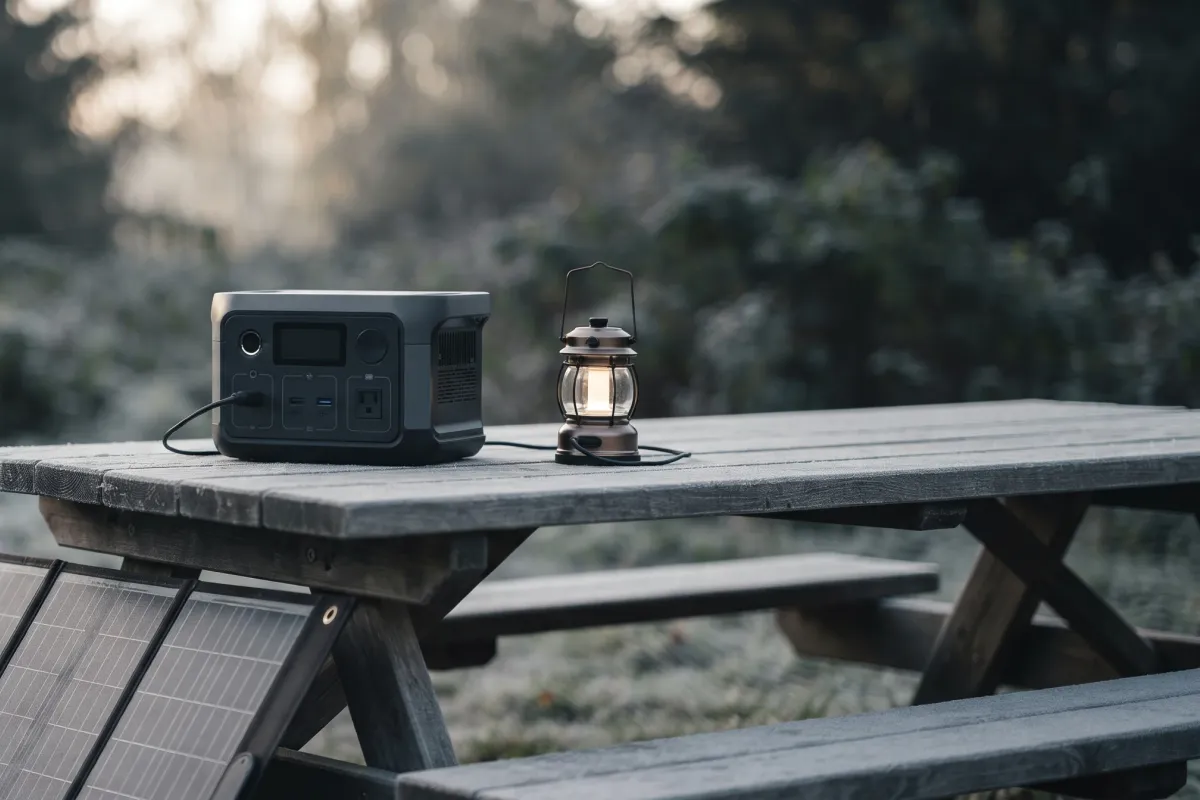
The gap matters because the battery protects itself. Charging a lithium battery below freezing can damage it, so the station's battery management system (BMS) blocks charging until the cells warm up. EcoFlow's manual for the Delta Pro, for example, says charging resumes automatically once the battery rises above 41°F (5°C). And EcoFlow notes the battery "can remain too cold to charge even after the surrounding air begins to warm," which is why a station brought in from the cold may still refuse a charge for a while.
So the short answer to "do power stations work in cold weather" is: they run, they lose some capacity, and they won't recharge until they're warm.
Charging and use temperature ranges by power station
Most stations we have figures for charge only from 32°F, and most run down to 14°F or −4°F.
These are the ranges makers publish for stations we review. The top of each range matters in summer; the bottom is the one to watch in winter.
| Station | Charging | Use (discharge) |
|---|---|---|
| Anker SOLIX C1000 Gen 2 | 32–104°F | −4–104°F |
| Anker SOLIX S5000 | 32–104°F | −4–104°F |
| Anker SOLIX F3800 Plus | 32–104°F | −4–104°F |
| Anker SOLIX S2000 | not published | −4–104°F |
| Anker SOLIX C300 DC | not published | −4–104°F |
| Bluetti AC180 | 32–104°F | −4–104°F |
| Bluetti Apex 300 | 32–104°F | −4–104°F |
| Bluetti Elite 30 V2 | 32–104°F | −4–104°F |
| Bluetti Elite 200 V2 | 32–104°F | −4–104°F |
| EcoFlow Delta 3 Plus | 32–113°F | 14–113°F |
| EcoFlow Delta Pro | 32–113°F | 14–113°F |
| EcoFlow Delta Pro 3 | 32–113°F | 14–113°F |
| EcoFlow Delta Pro Ultra X | self-heating | −4–113°F |
| EcoFlow TITAN 5000 Classic | 32–113°F | 14–113°F |
| Jackery Explorer 300 | 32–104°F | 14–95°F |
| Jackery Explorer 1000 v2 | 32–113°F | 14–113°F |
| Jackery Explorer 1000 Plus | 32–113°F | 14–113°F |
| Jackery HomePower 3600 Pro Max | 32–104°F | 14–104°F |
| Jackery Explorer 5000 Plus | 32–113°F | 5–113°F |
| GRECELL H2400 | 32–104°F | 14–104°F |
Two more with confirmed figures have no review yet: the Anker SOLIX C2000 Gen 2 (charging 32–104°F, use −4–104°F) and the Bluetti AC200L (the same). For a few current models (EcoFlow's Delta 3, River 3, River 3 Plus, DJI's Power 1000 V2 and Jackery's HomePower 2000 Plus v2), and for the older Bluetti EB3A, we couldn't confirm a range on a maker page; check the manual before winter use.
The pattern: Anker and Bluetti models generally run lower (−4°F) but stop charging at 104°F in summer; EcoFlow models and most Jackery models stop running at 14°F but charge up to 113°F. Bluetti's AC180 manual adds a detail worth knowing: between 86 and 104°F it limits output to 1,500 W.
What cold does to a power station's battery: less usable energy
Cold slows the battery's chemistry, so you get fewer watt-hours out of it until it warms up.
Inside a lithium battery, charge moves between the electrodes through an electrolyte. Cold makes that slower, which raises the battery's internal resistance. Two things follow:
- Less usable capacity. The station delivers fewer watt-hours before it cuts off. EcoFlow puts it plainly: the battery "can lose usable capacity," and "there is no universal percentage loss for every model."
- Lower peak output on a cold battery. A heavy load can pull the voltage down faster, so a station near its limit may shut off sooner than it would indoors.
Most of the lost energy comes back when the battery warms; it isn't permanent damage. What does cause lasting harm is charging a lithium battery below freezing, which is exactly what the BMS prevents.
For planning, use the site's runtime calculator for a normal estimate and then leave a margin for cold; a station that sits in the cold all night will run short of that estimate. LiFePO4 batteries, used in 24 of the 27 current stations in our data, handle heat and cycling well, but LiFePO4 and other lithium-ion batteries alike must be above freezing to charge; see LiFePO4 vs lithium-ion.
Charging in the cold: warm the battery first
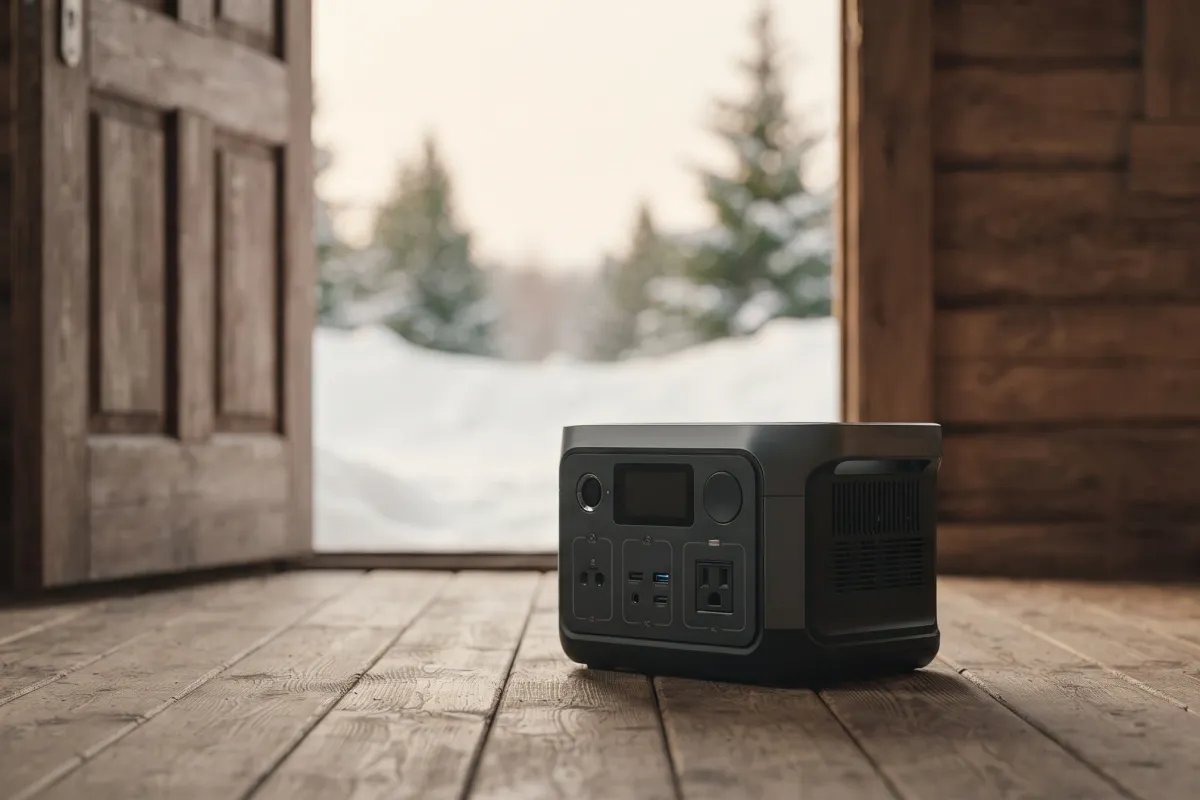
Bring the station into a dry place above freezing and let the battery warm before you plug in.
If a station has been outside or in a cold car, it will usually refuse to charge, or charge slowly, until the battery warms up. EcoFlow's advice:
- "Allow the unit to warm naturally in a dry, moderate environment before connecting a charging source."
- "Do not use an open flame, heat gun, or concentrated high-temperature airflow on the battery casing."
- After a night "in a cold vehicle", "check the battery temperature or app reading before you plug it into a charging source."
In practice:
- Bring it inside, to a dry spot away from a heater or stove.
- Wait. A large station holds the cold for hours; the outside of the case warms long before the cells do.
- Check the app or screen for a temperature or low-temperature warning before you plug in.
- Charge at room temperature, then take it back out.
If the screen shows a temperature warning while charging, stop and let it warm further; don't try to override it. The general fixes for a station that won't charge are in power station not charging.
Self-heating batteries: which stations warm themselves
Of the stations we review, only the Delta Pro Ultra X says it heats its batteries so it can charge in the cold.
Some stations have a heater built into the battery pack that warms the cells before charging. It's the one way to charge reliably outdoors in freezing weather without bringing the station inside.
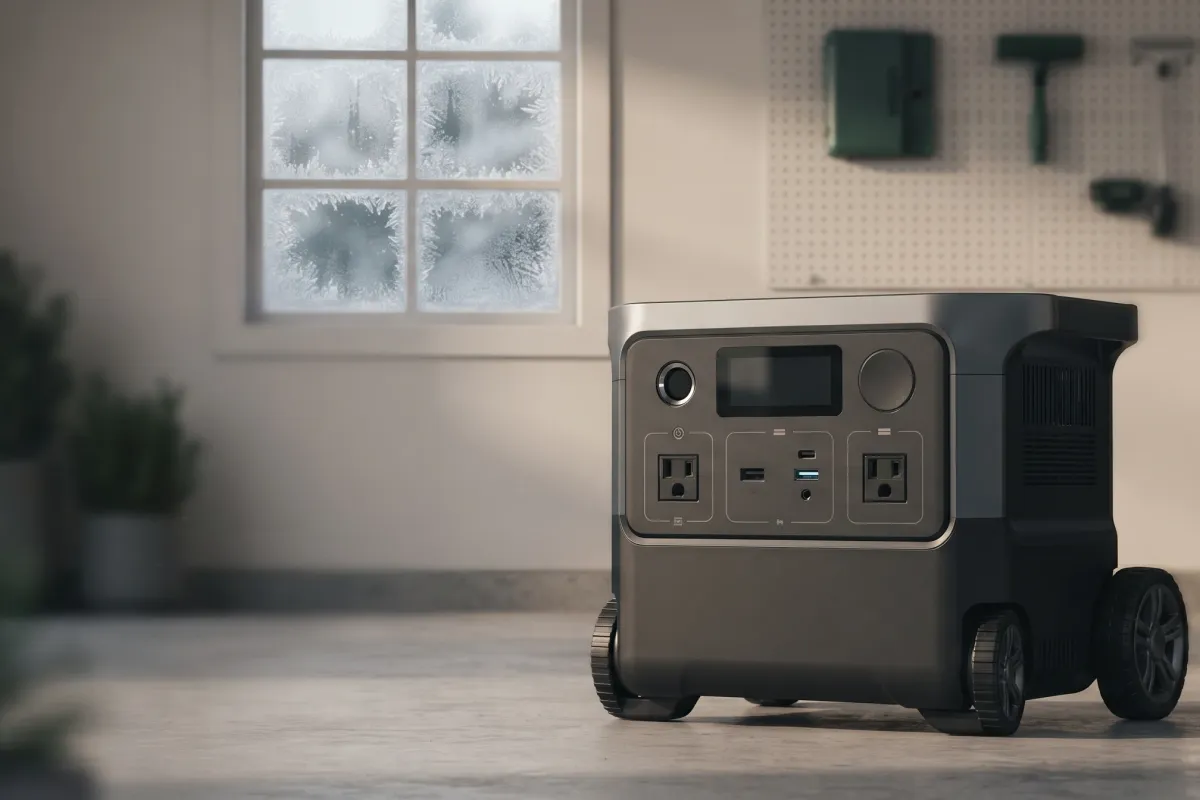
Among the stations we review, only the EcoFlow Delta Pro Ultra X says so on its product page: it "heats batteries in extreme cold for safe charging and longer runtime." EcoFlow doesn't give the temperature at which the heater starts. The heater uses some of the battery's own energy, so in deep cold you trade a little capacity for the ability to charge.
None of the other stations we review lists self-heating, so assume yours needs warming up unless its spec sheet says otherwise. If you're choosing a station that will sit in an unheated garage for winter backup, a self-heating model or one that's easy to bring indoors is worth the weight; see whole-home battery backup.
Keeping a power station warm in winter: tent, car and home
Keep the station in the warmest dry place available and run only the cables out into the cold.
The aim is to keep the battery inside its range without trapping heat or moisture around it.
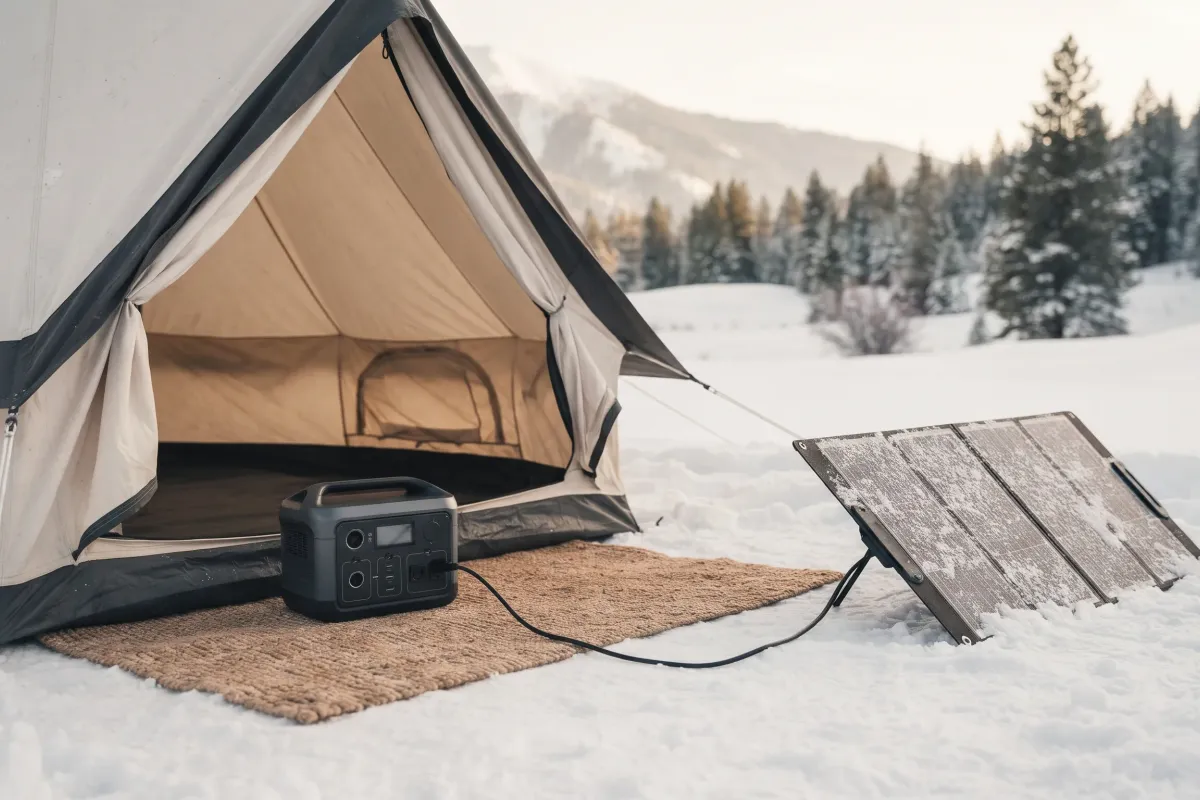
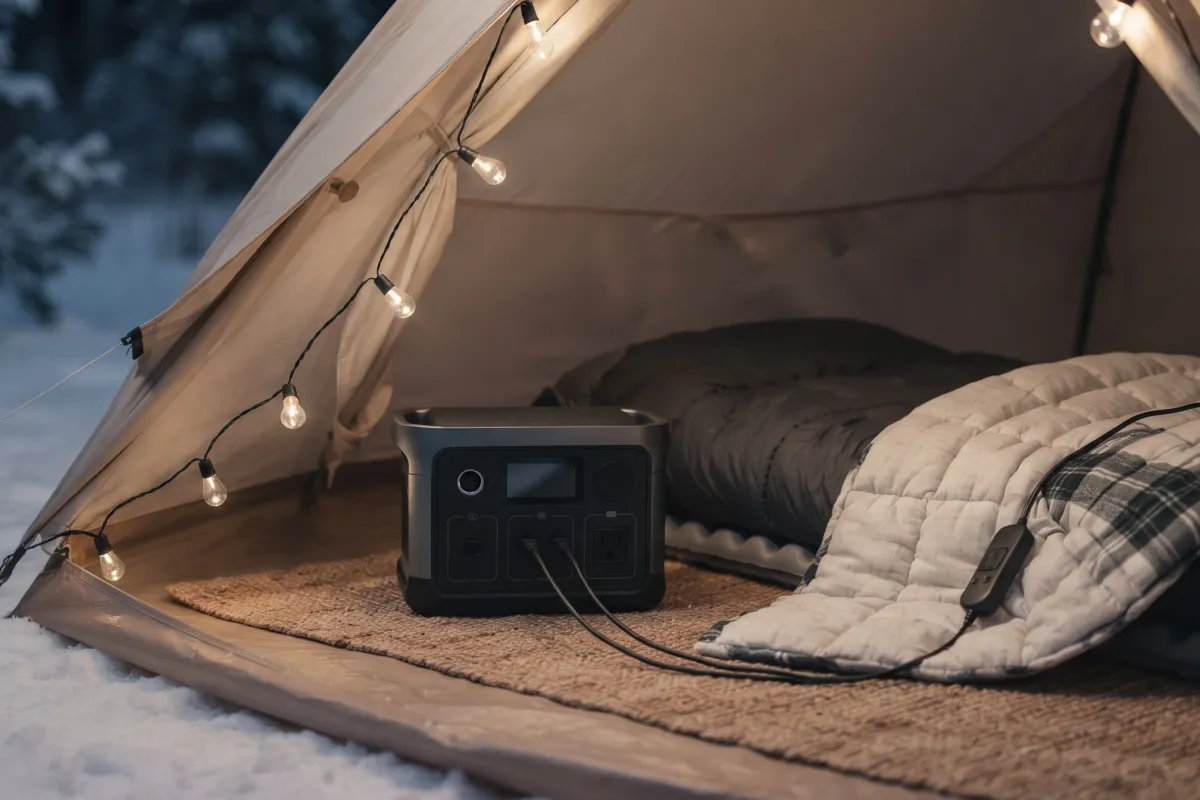
- Camping: keep the station in the tent porch, off the ground on a mat or box, and out of snow. Never seal it inside a closed tent with a fuel heater. Our camping guide covers which sizes suit winter trips.
- Vehicle: a cab is warmer than a truck bed or roof box, but a car left overnight in freezing weather gets just as cold. Bring the station inside overnight if you need to charge it in the morning.
- Winter storm: before a forecast storm, charge the station fully indoors, keep it indoors during the outage, and save it for low-draw essentials (lights, router, phone, a fridge in short runs) rather than heaters, which drain it fast. The AC outlets keep working within the use range, though a cold battery gives less peak output.
- Home backup: store it indoors, in a living space rather than an unheated garage, so it's ready to charge as soon as the power returns. EcoFlow advises keeping it "on a dry, stable surface" and leaving "the ventilation openings clear whenever the unit is running."
- Insulation: an insulated box or blanket slows how fast a warm station cools, but it doesn't make heat, and a running station needs its vents open. Never wrap a station that's charging or under heavy load.
Indoors is also the safe place in an outage: a battery power station makes no fumes, which is why it can be used inside where a generator can't; see are power stations safe indoors.
Solar charging in winter: shorter days and higher panel voltage
Cold panels work well, but winter sun is weaker and a frosty morning can push a series string over the voltage limit.
Solar panels themselves like the cold: their voltage rises as they cool. Winter's problems are elsewhere:
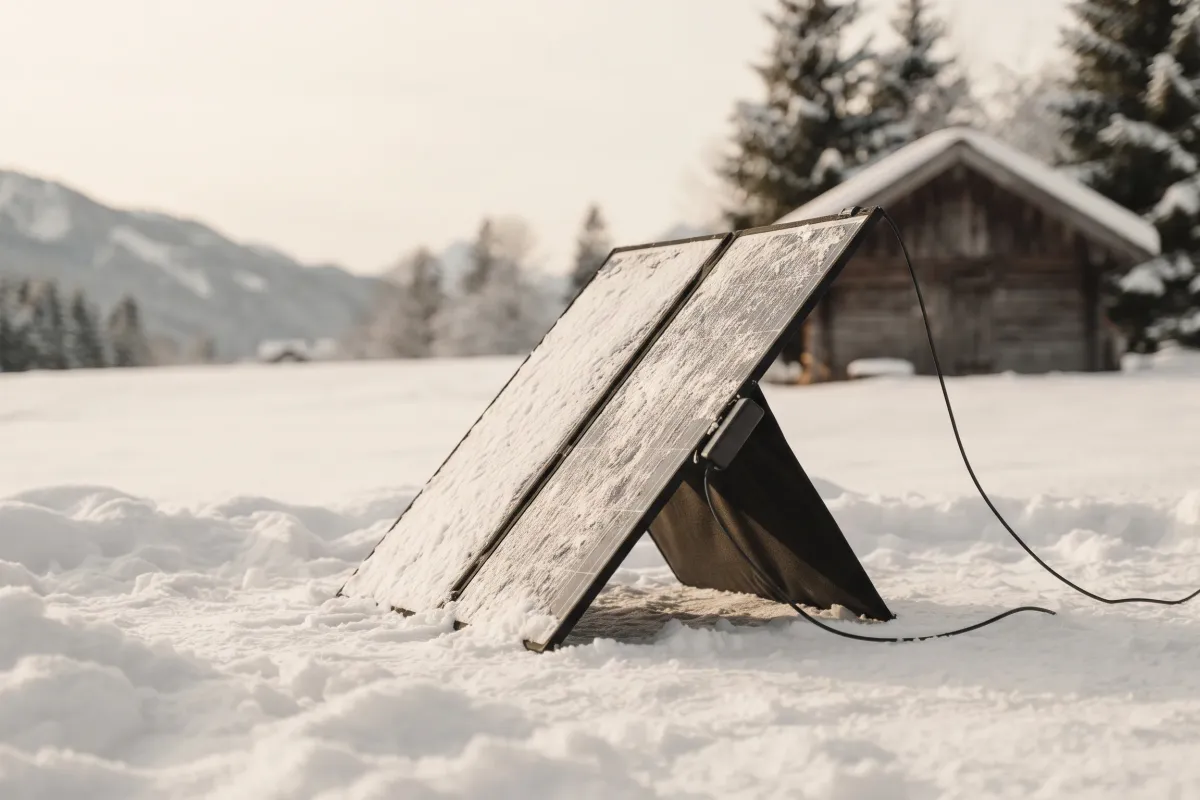
- Less sun. Short days and a low sun angle mean less energy, so a refill takes longer than in summer. Tilt the panel steeper to face the low sun and brush off snow.
- Higher voltage on cold mornings. A panel's open-circuit voltage rises in the cold, so two panels in series that are fine in summer can pass the station's maximum on a frosty morning. Leave a margin (we use about 10 to 15% as a rule of thumb); series vs parallel solar panels works through an example.
- A cold station won't take the charge. The panel can be making power while the station refuses it because its battery is below 32°F. Keep the station warm and only the panel out in the cold.
If the input reads 0 W on a winter morning, the solar not-charging fixes go through each cause.
Storing a power station through the winter
Store it indoors, part-charged, and top it up every few months; cold storage slows self-discharge but charging still needs warmth.
If you won't use the station until spring, cold storage is fine within the maker's storage range, but the charging rule still applies when you take it out. Jackery, for example, lists storage ranges of −4 to 113°F for a month but 32 to 77°F for a year on the Explorer 1000 Plus, so long storage belongs in a cool room, not a freezing shed.
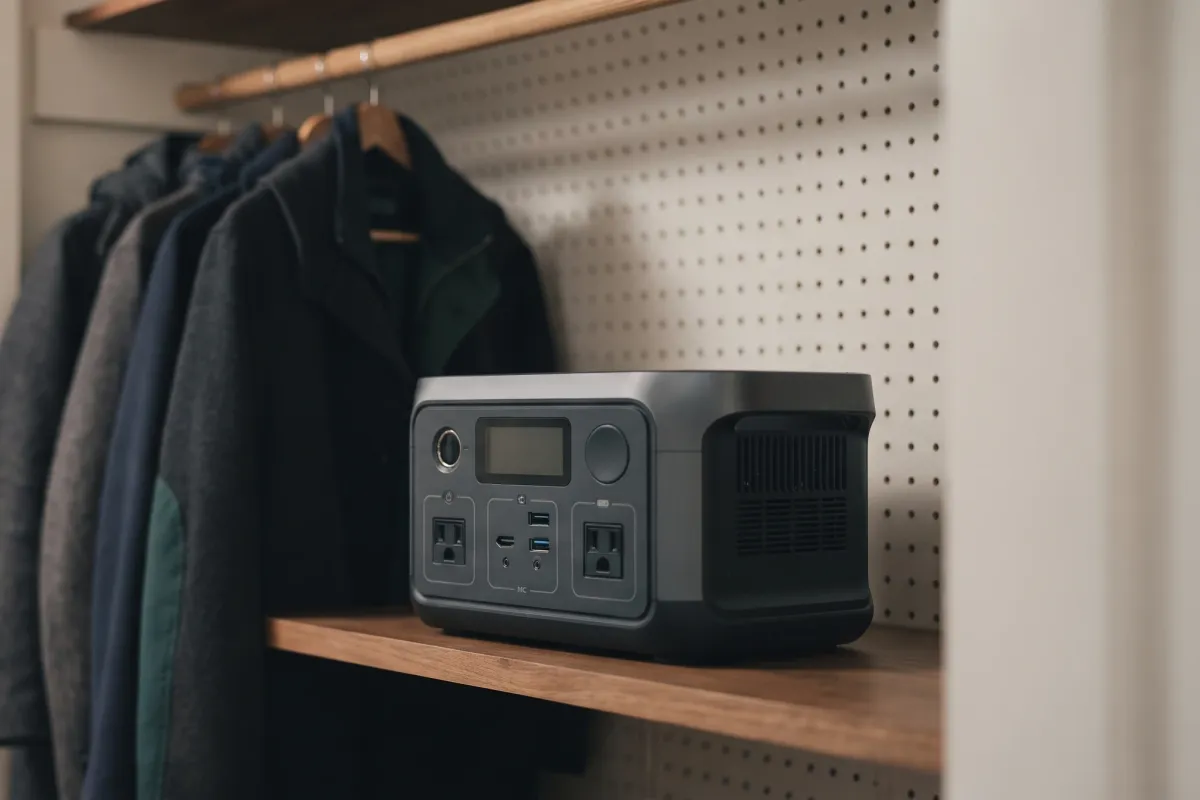
Store it part-charged, check it every few months, and bring it to room temperature before topping it up. The full routine, with each maker's storage advice, is in how to store a portable power station.
FAQ
Cold use, cold charging, cars, tents and the capacity question.
Do power stations work in cold weather?
Yes. The stations we review run down to 14°F (−10°C) or −4°F (−20°C), depending on the model. They deliver less energy when cold and, with rare exceptions, won't charge below 32°F (0°C).
Can a Jackery be out in the cold?
Jackery's current models we review can be used down to 14°F (−10°C); the Explorer 5000 Plus down to 5°F (−15°C). They charge only between 32°F and 104 or 113°F, so bring a Jackery inside to recharge.
Can EcoFlow batteries handle cold weather?
EcoFlow's Delta models we review run down to 14°F (−10°C) and charge from 32°F (0°C). The Delta Pro Ultra X goes further: its batteries run to −4°F and it heats them so it can charge in the cold.
How do I keep a power station warm in winter?
Keep it in the warmest dry place you have (tent porch, vehicle cab, indoors) and run only the cables outside. An insulated box slows cooling, but keep the vents clear when it's running and never use a flame or heat gun to warm it.
Can I leave a power station in a cold car overnight?
It won't be harmed within its storage range, but it will be too cold to charge in the morning and will deliver less until it warms. Bring it inside if you'll need to charge it.
How much capacity does a power station lose in the cold?
There's no single figure: EcoFlow says it varies by model and conditions. Most of the loss is temporary and comes back as the battery warms.
Is it safe to charge a power station below freezing?
Not unless it heats its own battery. Charging lithium cells below freezing can damage them, which is why most stations block it until the battery is above 32°F.