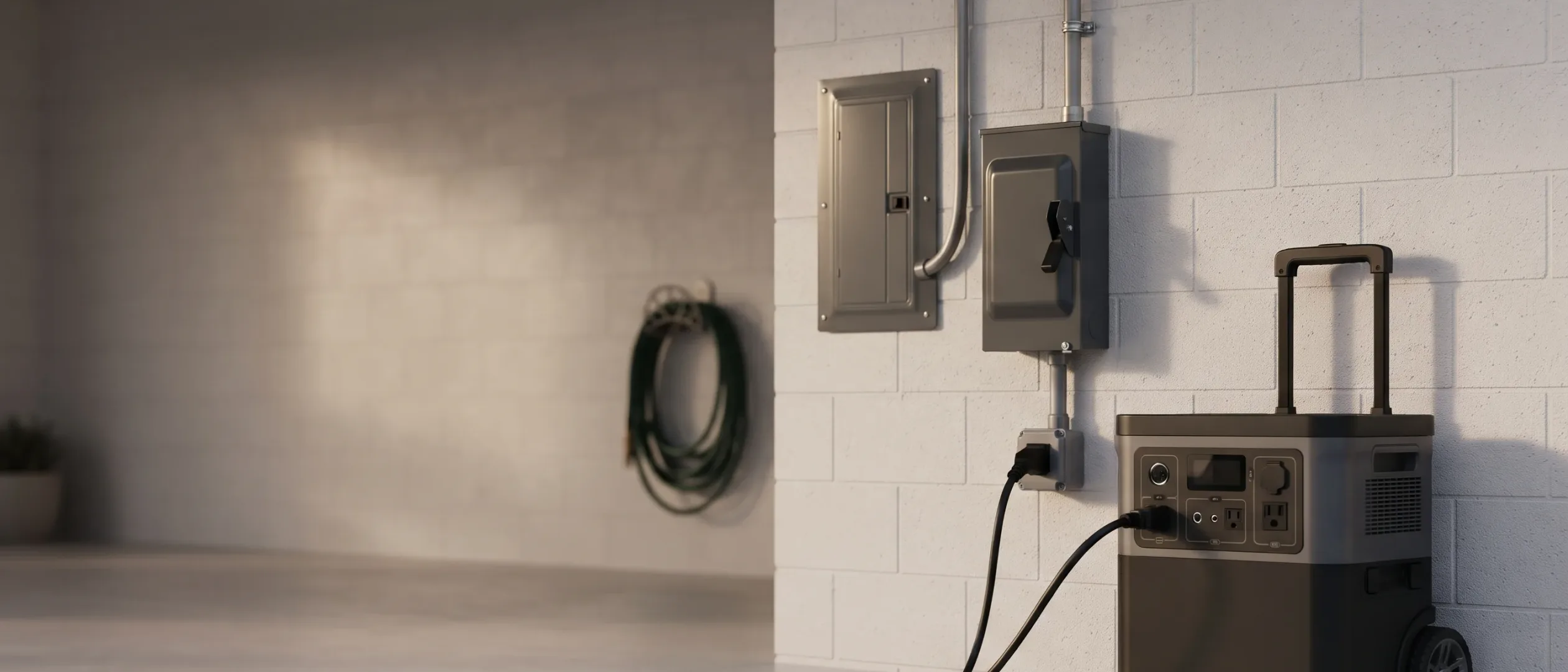
 By
We may earn a commission if you buy through links on this page, at no extra cost to you. This never affects which products we recommend. How we make money.
On this page 7 sections
To power home circuits from a portable power station, you need a transfer switch or a panel interlock with a power inlet, installed by a licensed electrician. It keeps your station and the grid apart, so power can't flow back onto the utility lines. Never plug a station into a wall outlet to feed the house.
Why you need a transfer switch
Backfeeding can energize lines crews think are dead
Connecting a power source to your home wiring without a transfer switch can send power back out onto the utility lines. The Electrical Safety Foundation International warns that this backfeeding can electrocute utility workers, and OSHA notes it can energize wiring for great distances.
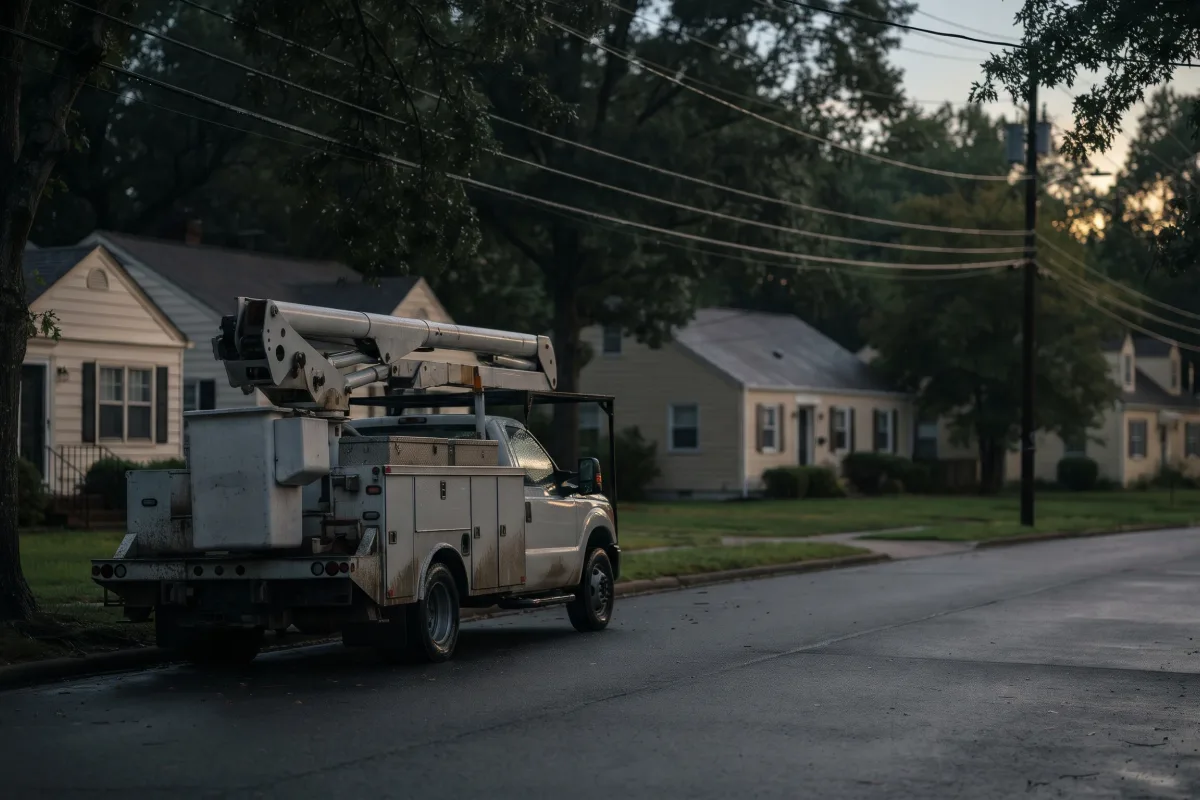
A transfer switch makes sure your home draws from either the grid or the power station, never both at once. It also protects the station when grid power returns.
Your three options
Manual switch, interlock or smart switch
- Manual transfer switch: a small panel next to your main panel, wired to a handful of chosen circuits. You flip each circuit from grid to station.
- Interlock with a power inlet: a mechanical plate on your main panel that stops the main breaker and a backfeed breaker from being on together, plus an outdoor or garage inlet the station plugs into. It can power any circuit in the panel, as long as you stay under the station's output.
- Smart or automatic switch: some makers sell their own, such as Jackery's Smart Transfer Switch for the Explorer 5000 Plus. These switch over automatically when the grid drops.
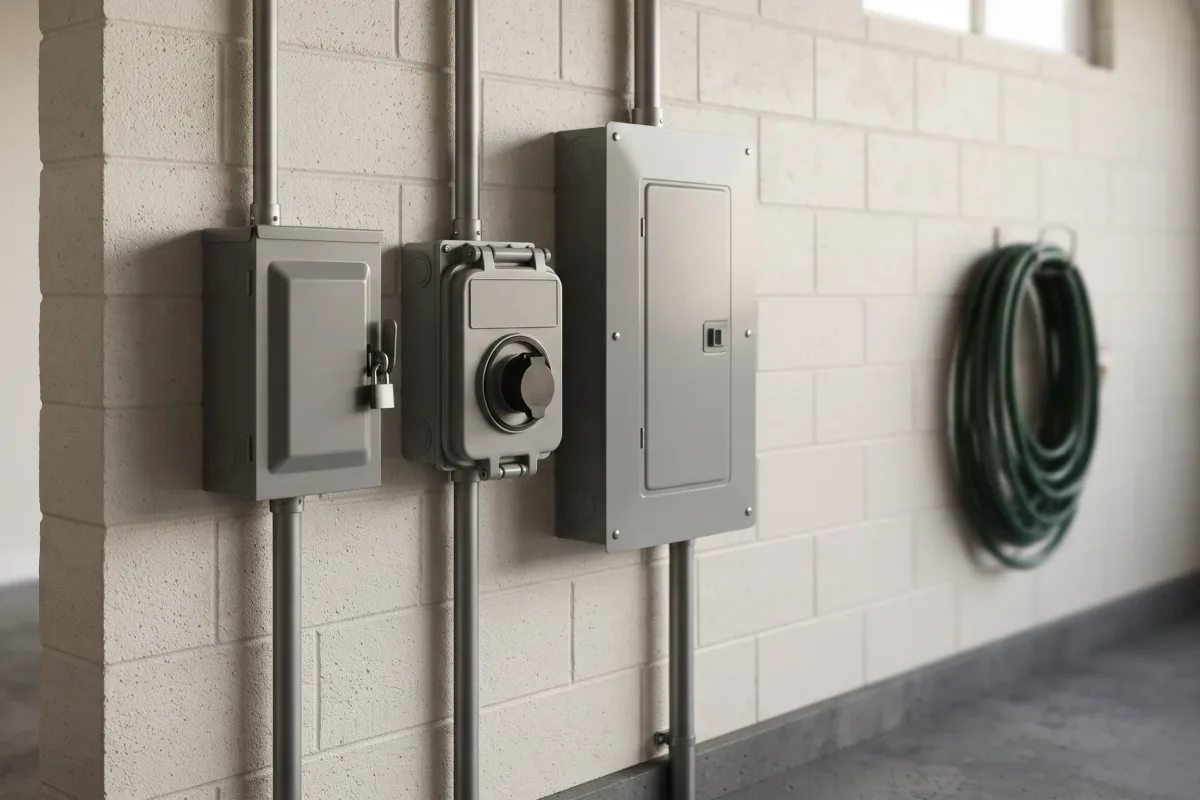
Your electrician will tell you which your panel and local code allow.
Matching the switch to your station
Voltage, output and plug
- Voltage: 120 V-only stations can feed 120 V circuits. To run 240 V circuits such as a well pump, you need a station with 240 V output.
- Output: the switch and its circuits should never ask for more than the station's continuous watts.
- Plug: the inlet or switch must match the station's high-power outlet. Check the station's manual for the exact outlet type before buying a switch.
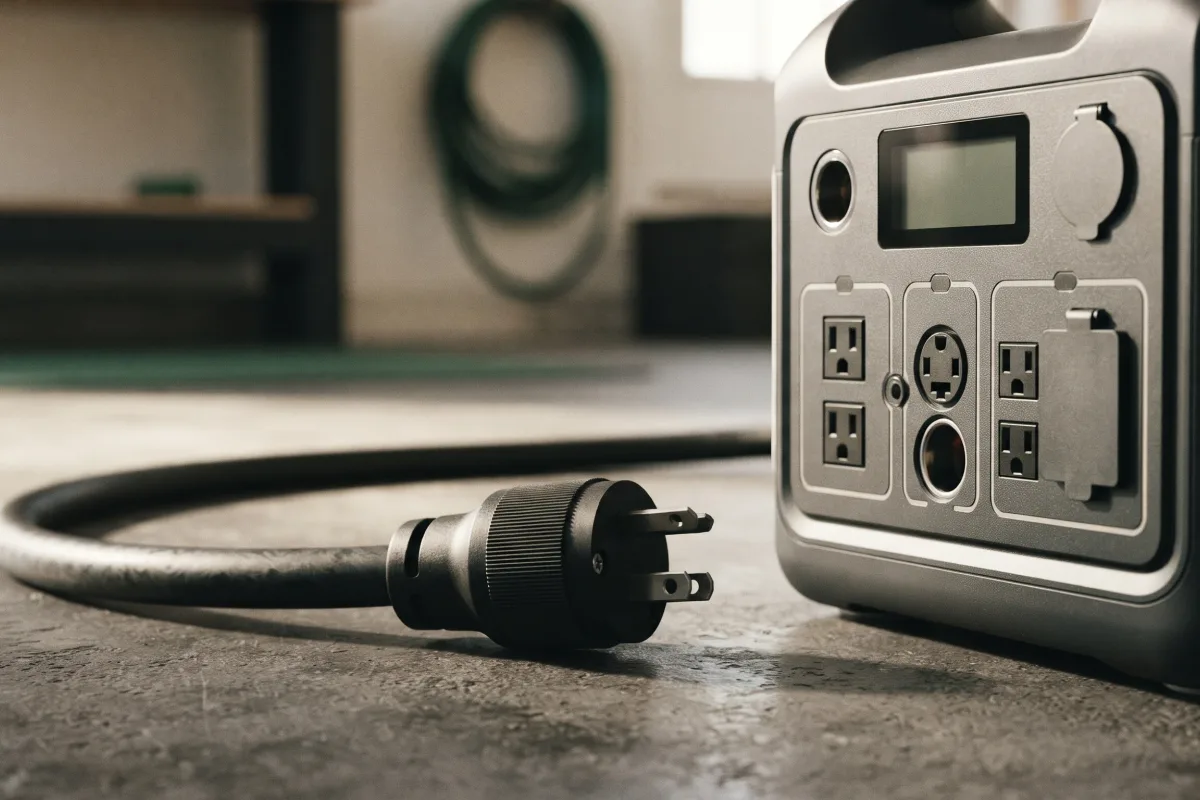
If the maker sells its own switch for your model, it's the simplest match.
Choosing which circuits to back up
Keep the total under the station's output
Start with the circuits that matter in an outage: the fridge, furnace fan, some lights, internet and, if you have one, a well pump. Add up their running watts and keep the total under the station's continuous output, leaving room for startup surges.
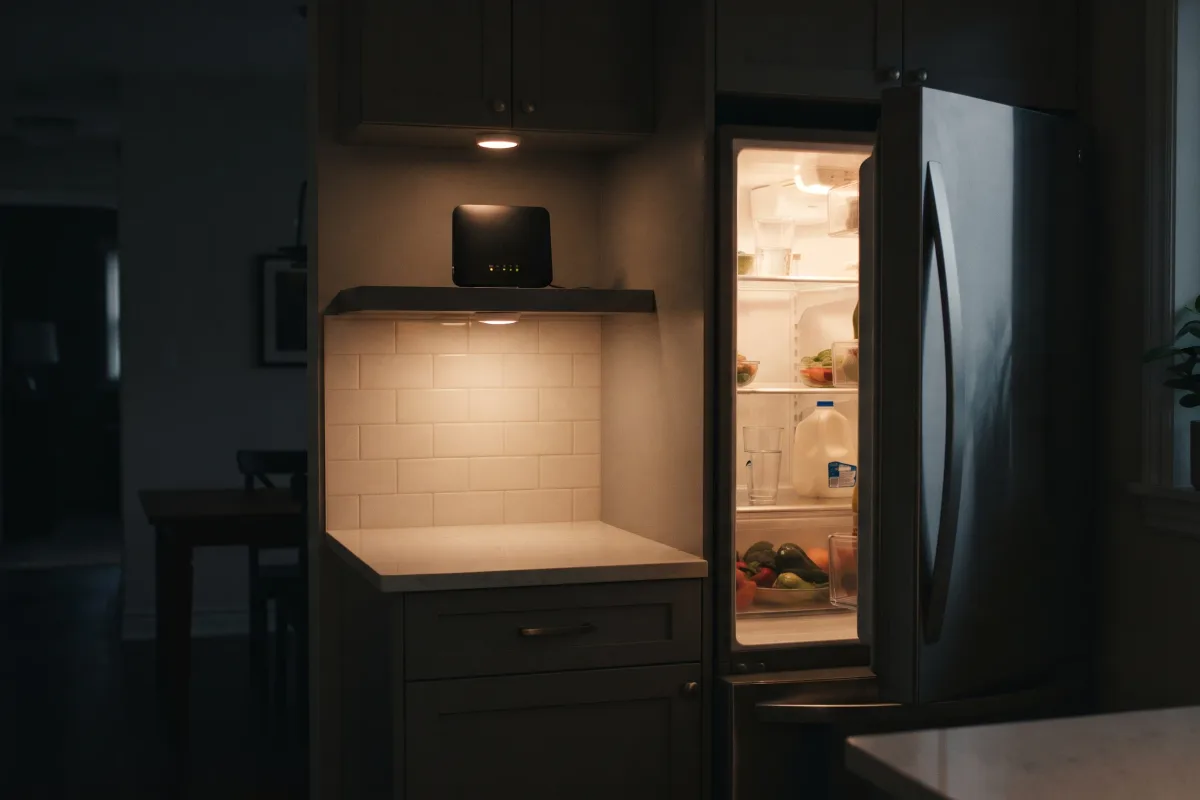
Leave out big loads such as central air, an electric range or a water heater unless your station is built for them. Use the runtime calculator to see how long your chosen circuits will last.
Installation and safety
A licensed electrician, not a DIY job
Have a licensed electrician install the switch or interlock; most areas need a permit and an inspection. Keep the station where it can stay dry and ventilated, and run its cord to the inlet without trip hazards.
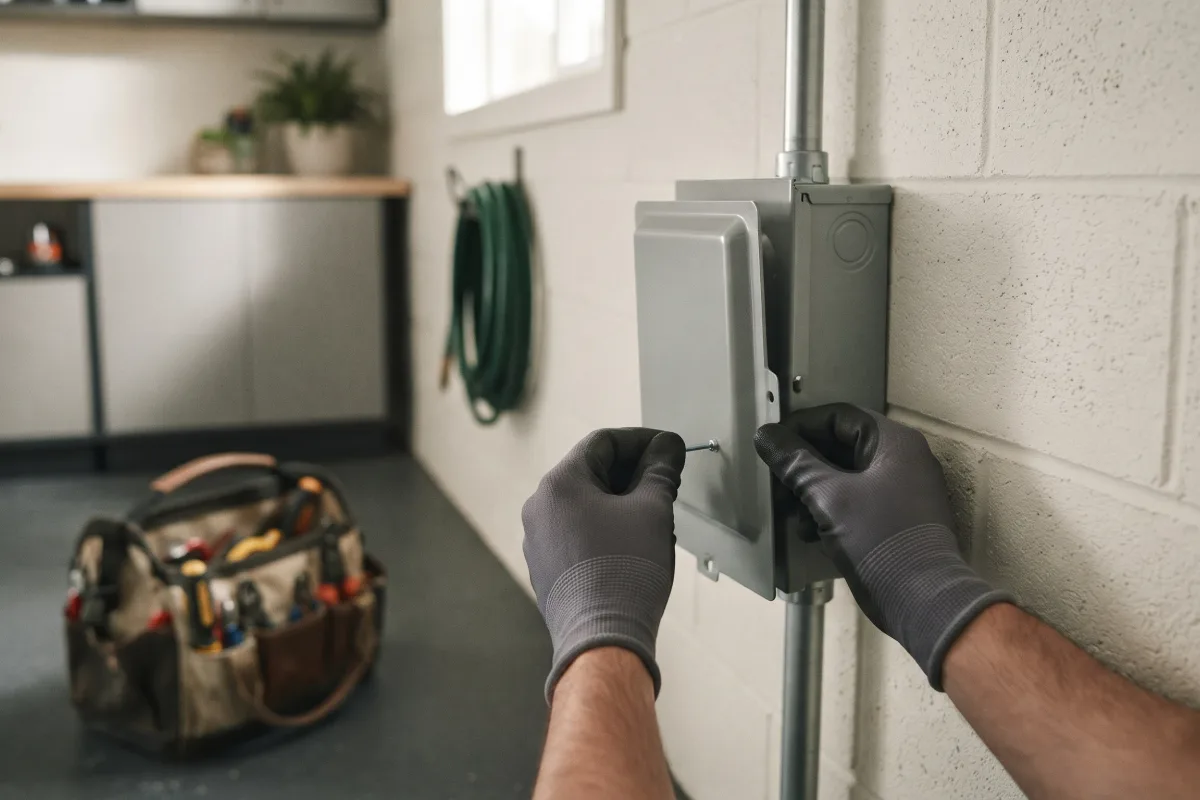
Never use a homemade cord with a plug on both ends to feed a wall outlet. It bypasses every safeguard and can backfeed the grid or give you a shock. See are power stations safe indoors for placement.
Stations that work with a transfer switch
Large 120/240 V stations we've reviewed
| Station | Output | Voltage | Switchover |
|---|---|---|---|
| Jackery Explorer 5000 Plus | 7,200 W | 120/240 V | 0 ms |
| Anker SOLIX F3800 Plus | 6,000 W | 120/240 V | 20 ms |
| Anker SOLIX S5000 | 4,500 W | 120/240 V | 10 ms |
| EcoFlow DELTA Pro 3 | 4,000 W | 120/240 V | 10 ms |
| Jackery HomePower 3600 Pro Max | 4,000 W at 240 V | 120/240 V | under 10 ms |
| Bluetti Apex 300 | 3,840 W | 120/240 V | 0 or 20 ms |
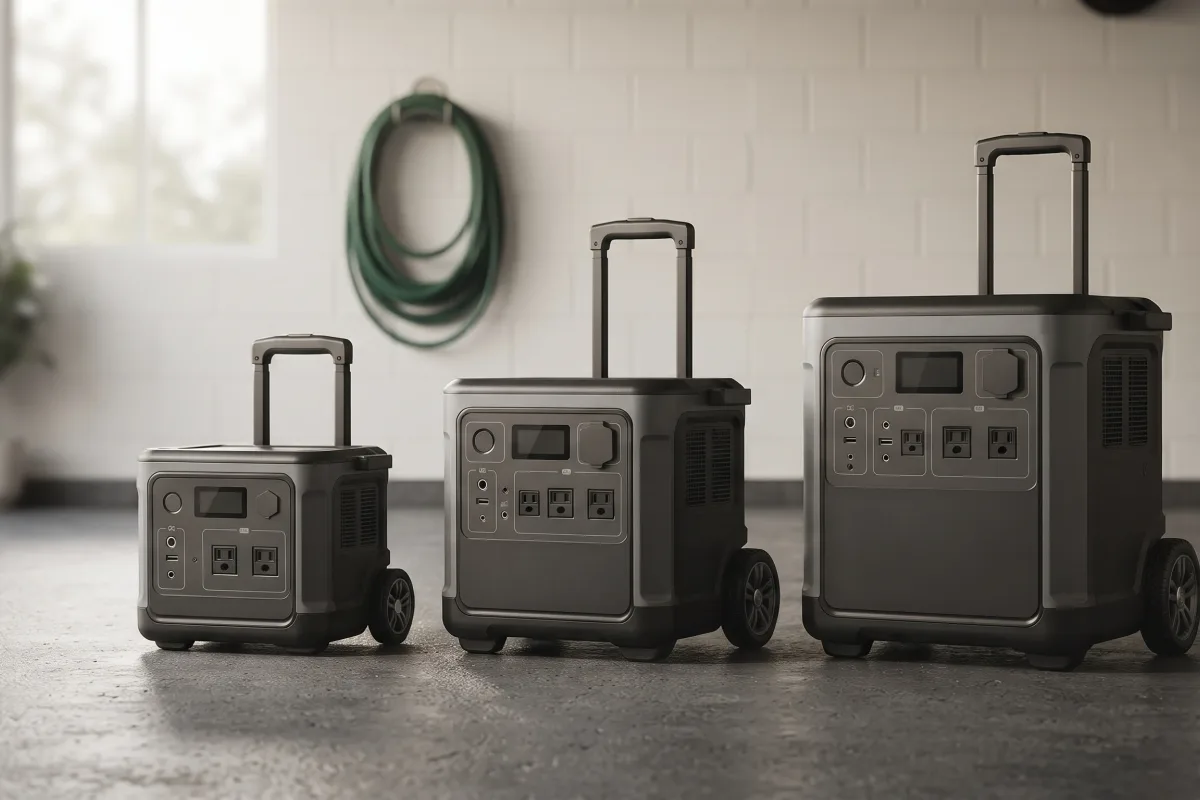
For picks, see the best whole-home battery backup (portable).
FAQ
Do I need a transfer switch for a portable power station?
Yes, to power home circuits. Without one, plug appliances into the station directly instead.
What type of transfer switch do I need?
One that matches your station's voltage, output and plug: a manual switch, an interlock with a power inlet, or the maker's own smart switch. An electrician can confirm what your panel allows.
Can a transfer switch switch over automatically?
Some smart switches sold by power station makers do, such as Jackery's Smart Transfer Switch for the Explorer 5000 Plus.
Can I make a homemade transfer switch?
No. Homemade setups and double-plug cords can backfeed the grid and are dangerous. Use a listed switch installed by a licensed electrician.
Can a 120 V station power my home circuits?
Yes, 120 V circuits through a suitable switch, within its output. It can't run 240 V circuits such as a well pump.