 By
We may earn a commission if you buy through links on this page, at no extra cost to you. This never affects which products we recommend. How we make money.
On this page 7 sections
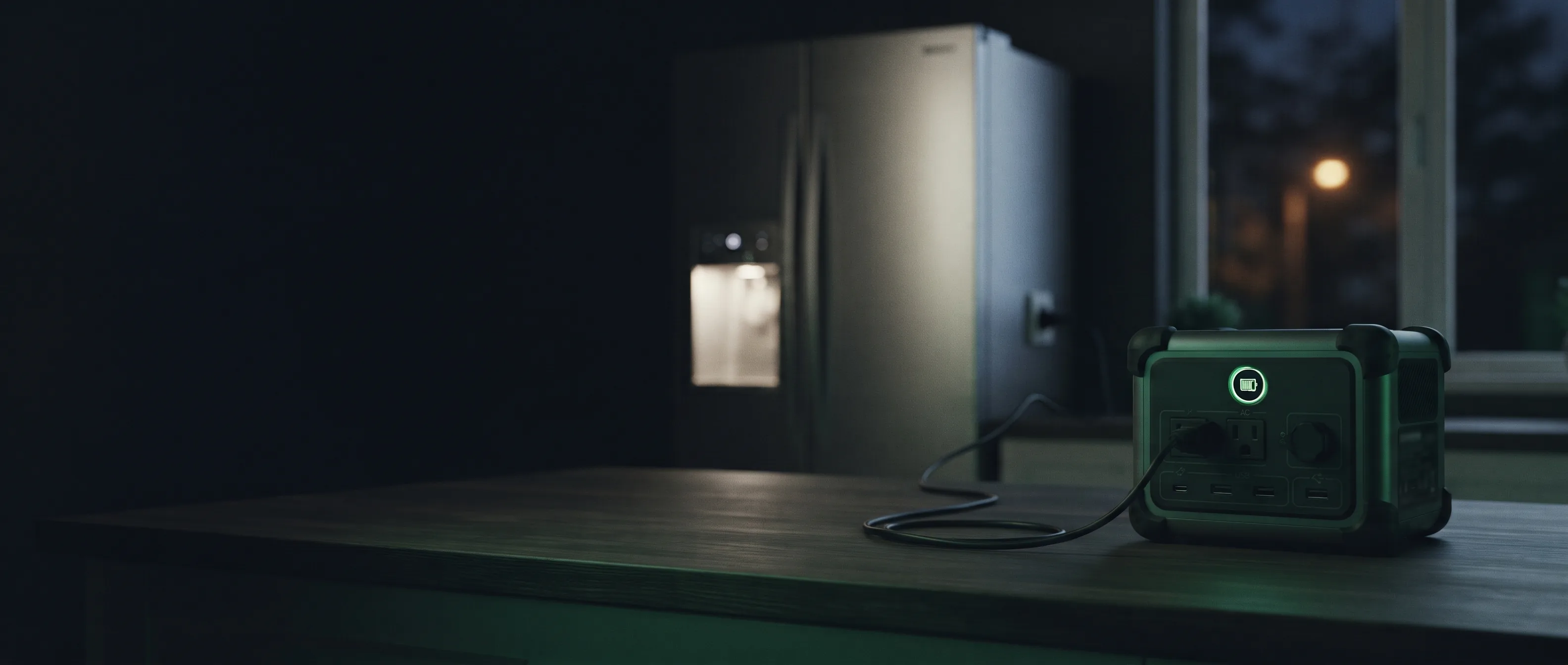
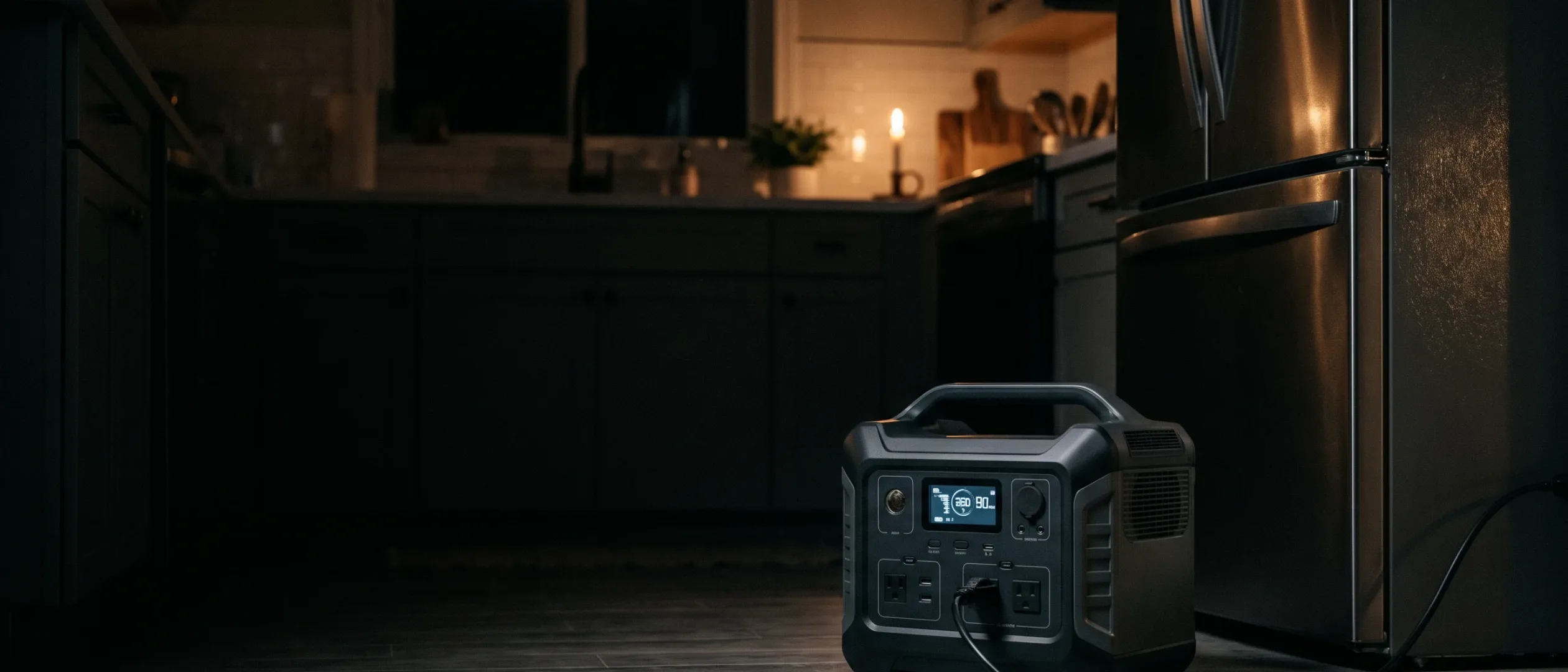
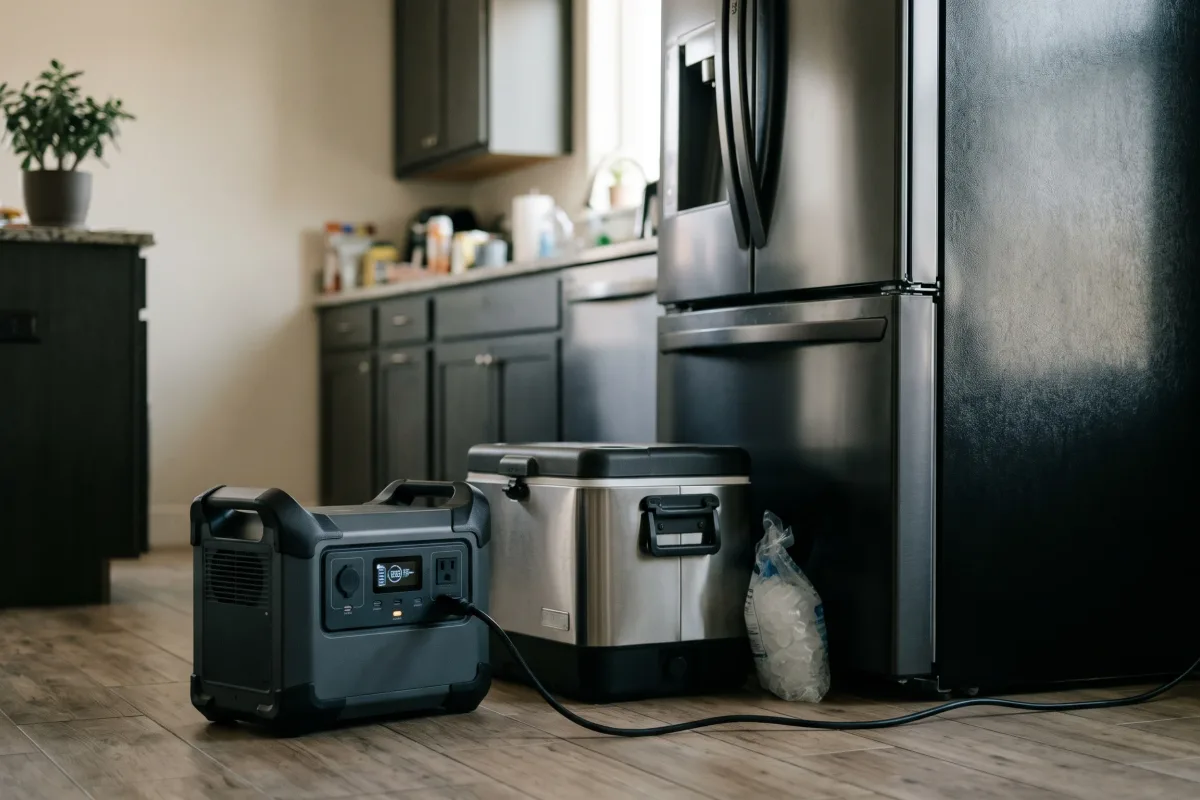
A 1 kWh portable power station runs a typical refrigerator for about 11 to 18 hours; a 2 kWh station for about a day; a 3.6 kWh station for about 1.5 to 2.5 days. The range depends mostly on how efficient your fridge is.
How much power a fridge really uses
Average watts, not the label's peak
A fridge's compressor switches on and off all day, so its average draw is far lower than its running draw. That average is what decides runtime.
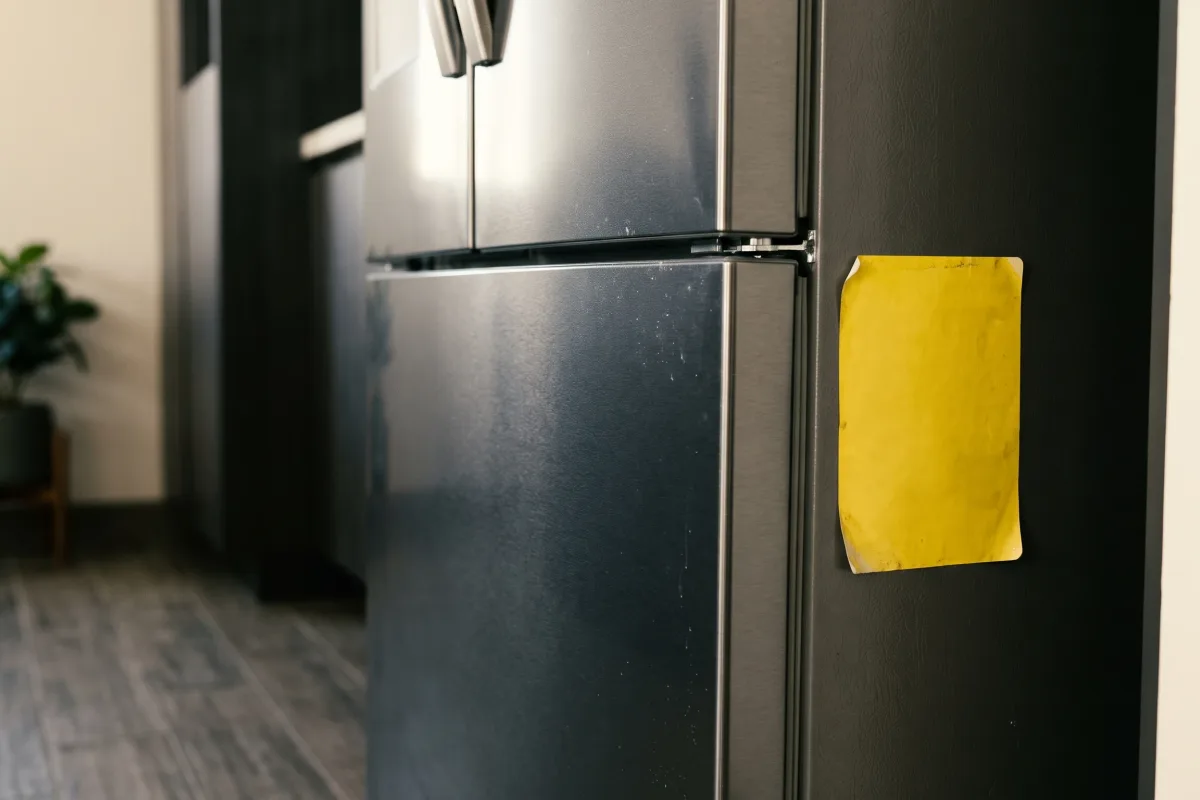
The US Department of Energy puts the average refrigerator-freezer at 588 kWh a year, about 1.6 kWh a day or 67 W on average. An Energy Star certified top-freezer model uses about 360 kWh a year, about 41 W. Your fridge's yellow EnergyGuide label shows its own yearly kWh; divide by 8,760 (hours in a year) and multiply by 1,000 to get its average watts.
Runtime by station size
Two fridges, three station sizes
| Station capacity | Efficient fridge (41 W) | Average fridge (67 W) |
|---|---|---|
| 1,024 Wh | ~17.6 h | ~11.5 h |
| 2,048 Wh | ~35.2 h | ~23.1 h |
| 3,584 Wh | ~61.5 h | ~40.4 h |
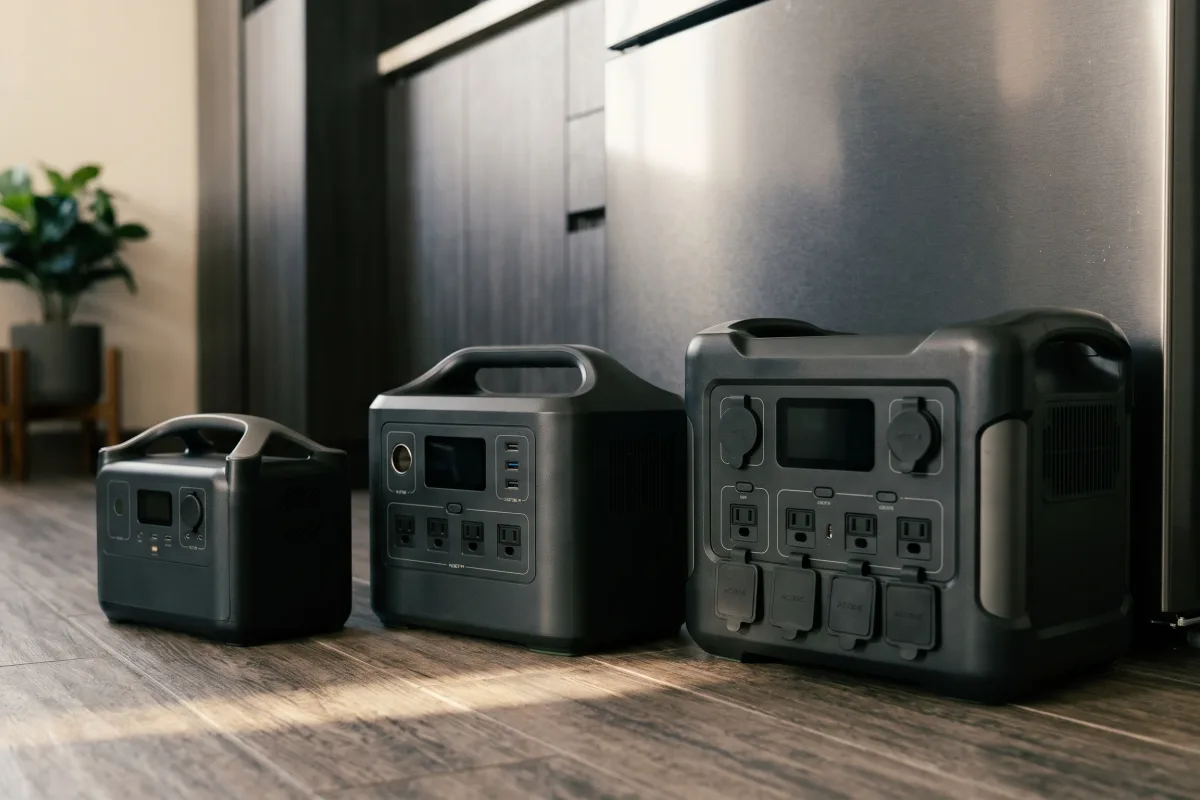
Average fridge (67 W) by station size
- 1,024 Wh (e.g. Delta 3 Plus)12 h
- 2,048 Wh (e.g. HomePower 2000 Plus v2)23 h
- 3,584 Wh (e.g. HomePower 3600 Pro Max)40 h
The formula
Work it out for your own fridge
Runtime (hours) = battery Wh ÷ (fridge average W ÷ 0.85 + 10)

The 0.85 covers energy lost converting battery power to household AC, and the 10 W covers the inverter's own draw. For a 50 W fridge on a 1,024 Wh station: 1,024 ÷ (50 ÷ 0.85 + 10) ≈ 14.9 hours.
Add a router, lights or a phone charger in the runtime calculator, and see watts vs watt-hours if the two numbers get confusing.
Startup surge: will it start?
The compressor needs a short burst
When the compressor starts, it briefly draws several times its running power. That's what a station's surge rating is for. Check the station's surge rating against your fridge; small, low-output stations are the most likely to struggle.
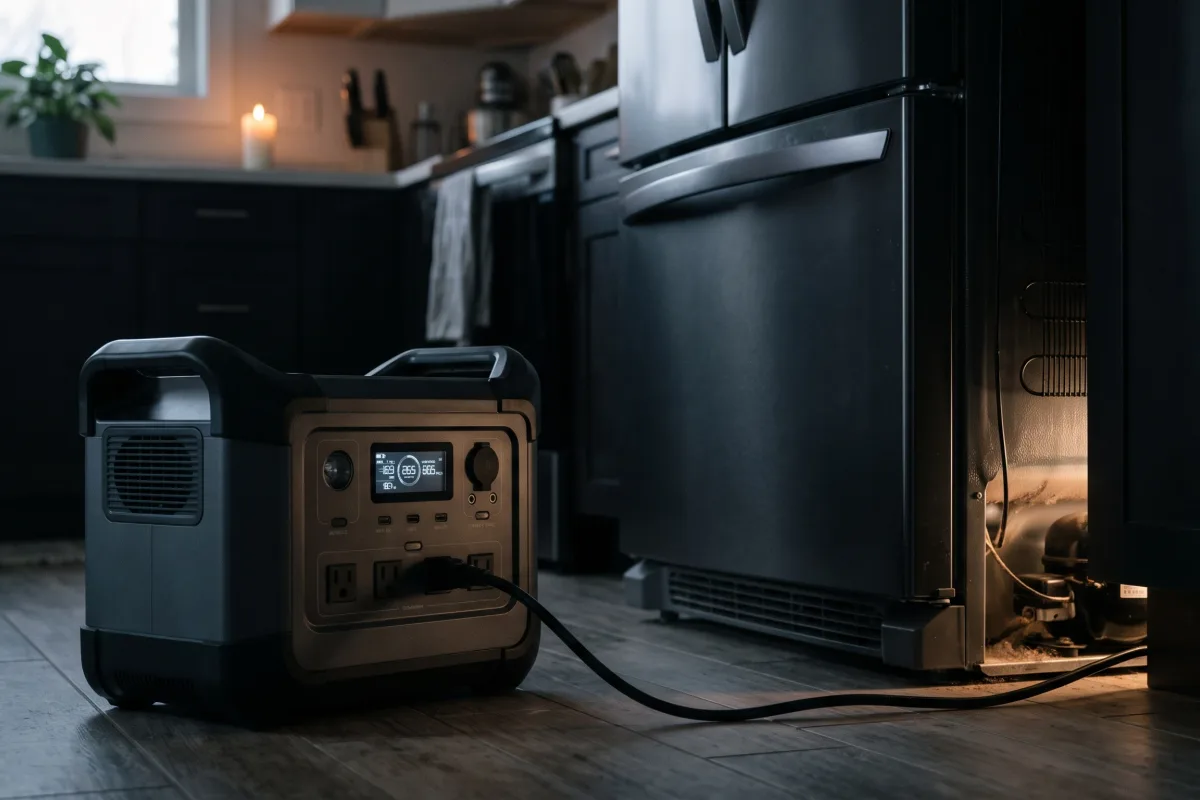
If a station shuts off the moment the fridge kicks on, it's the surge, not the battery. Check the fridge's running watts against the station's continuous rating, and leave headroom for the startup.
What shortens or stretches runtime
Small habits make a real difference
- Keep the door shut. Each opening lets cold air out and makes the compressor work.
- Keep it full. Food and water bottles hold cold better than empty space.
- Cooler room, longer runtime. A fridge in a hot garage runs much more.
- Add a freezer and runtime roughly halves. Both run on the same battery.
- Add solar. A few hundred watts of panels can cover a fridge's daytime use; see what size solar panel you need.
What this means when buying
Size for your outages
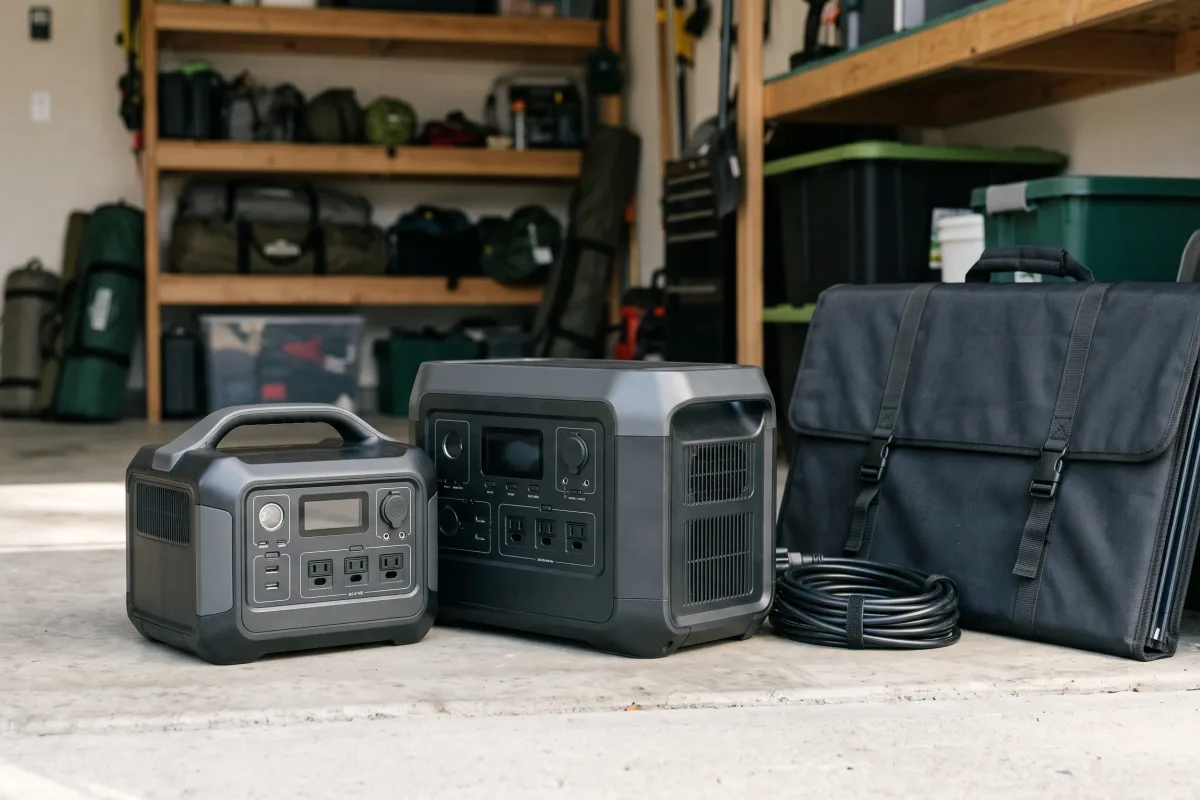
For overnight outages, a 1 kWh station like the EcoFlow Delta 3 Plus is enough. For a full day, look at 2 kWh, such as the Jackery HomePower 2000 Plus v2. For multi-day outages, a 3.6 kWh station like the Jackery HomePower 3600 Pro Max or the Anker SOLIX F3800 Plus, or a 4–5 kWh station like the EcoFlow DELTA Pro 3 or the Anker SOLIX S5000, ideally with solar. See our best portable power stations for home backup for picks at each size.
FAQ
Quick answers to common questions
Can you plug a fridge into a portable power station?
Yes. Plug it into an AC outlet, as long as the station's continuous and surge ratings cover the fridge.
What size power station do I need for a fridge?
About 1 kWh for overnight, 2 kWh for a full day and 3.6 kWh or more for multi-day outages, for an average fridge.
How long will a 1,000 Wh power station run a fridge?
About 11 hours for an average fridge (67 W) and about 18 hours for an efficient one (41 W).
Will it run a fridge and a freezer?
Yes, if the station's output covers both, but runtime roughly halves because they share the battery.
Can solar keep a fridge running?
With enough panels and sun, yes. Solar covers daytime use and recharges the battery for the night.