 By
We may earn a commission if you buy through links on this page, at no extra cost to you. This never affects which products we recommend. How we make money.
On this page 6 sections
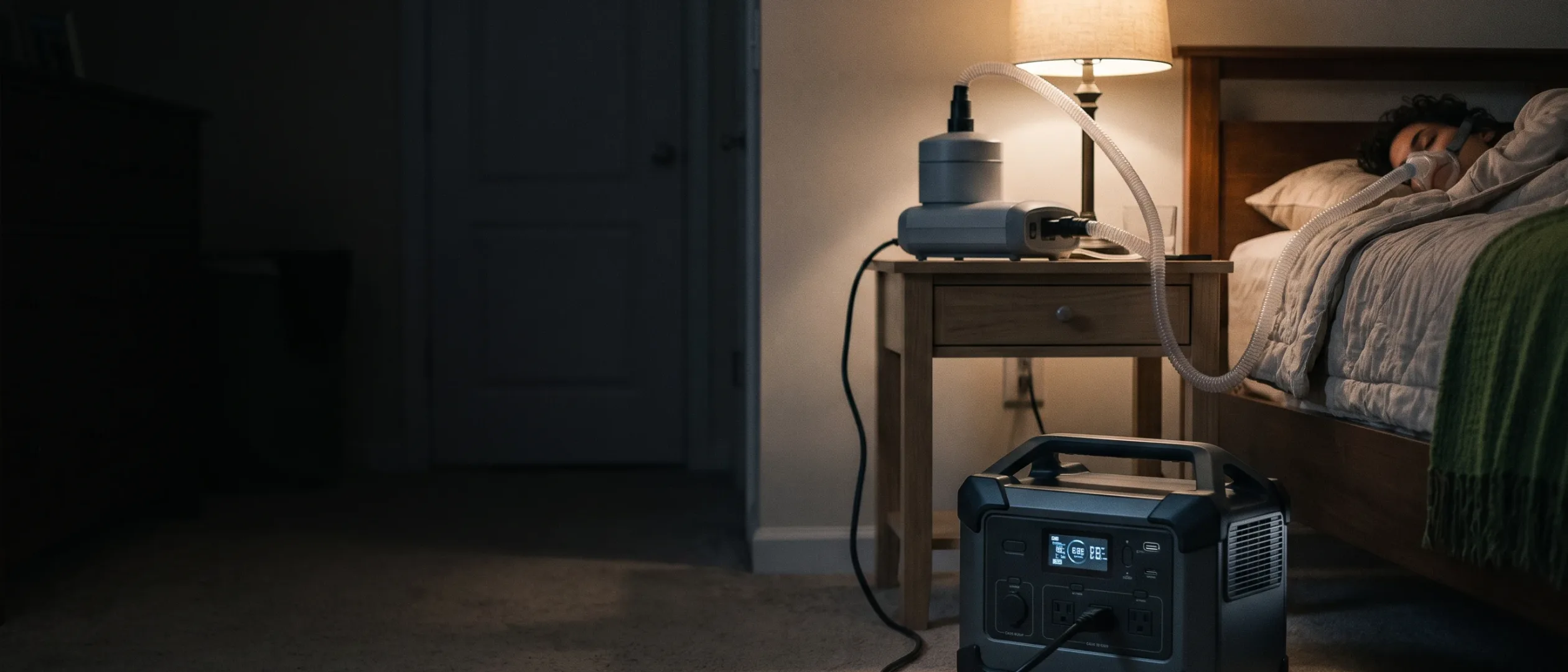
Without the humidifier, a 1 kWh portable power station runs a typical CPAP for about 10 nights on its DC cord; with the humidifier on, about 2 to 4 nights. The humidifier, not the blower, uses most of the power.
How much power a CPAP uses
The humidifier makes the difference
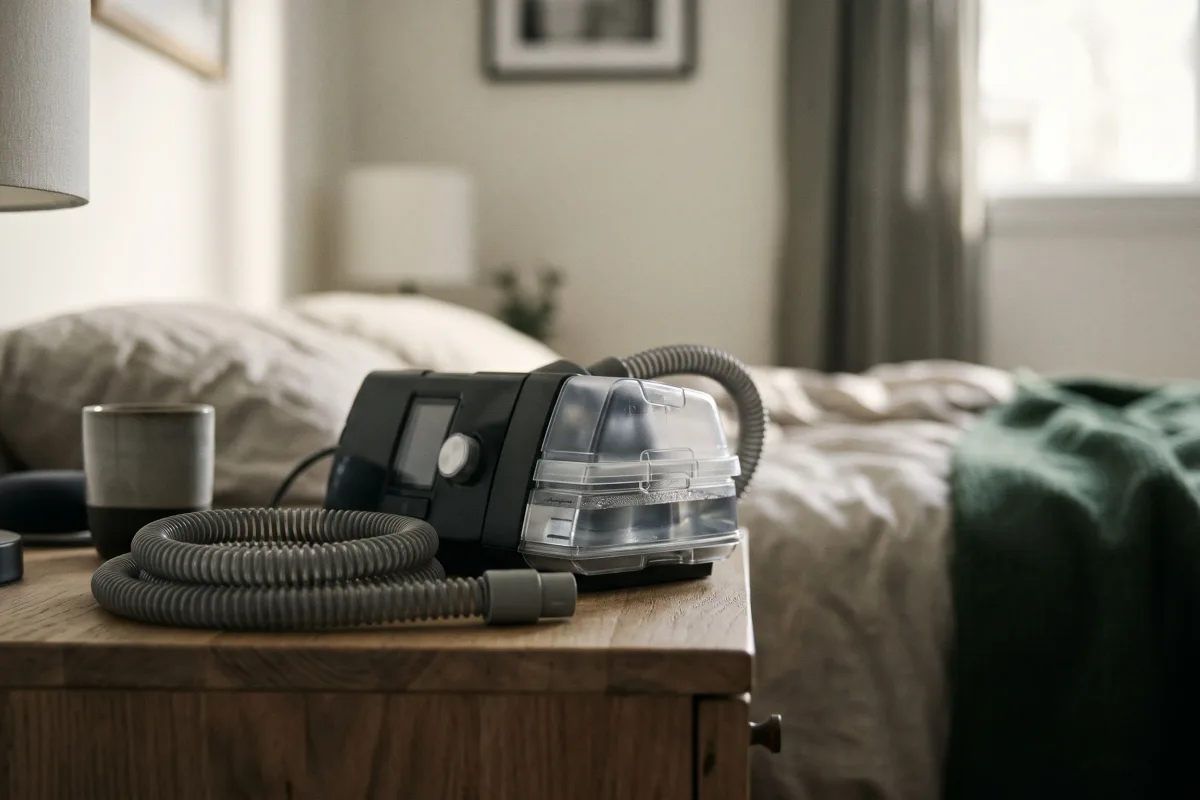
ResMed's battery guide lists the AirSense 10's draw at 12 V DC. At a pressure of 10 cm H₂O:
| Setup | Draw |
|---|---|
| No humidifier | ~11 W |
| Humidifier on 4 | ~28 W |
| Humidifier on 8 | ~44 W |
| Heated tube + humidifier on 8 | ~59 W |
Higher pressures draw a little more. For the newer AirSense 11, ResMed lists 56.1 W typical and 73.2 W peak. Other brands are in a similar range; check your machine's manual.
Nights by station size
Eight-hour nights, on DC
| Station capacity | No humidifier (11 W) | Humidifier on 4 (28 W) | Humidifier on 8 (44 W) | Heated tube (59 W) |
|---|---|---|---|---|
| 293 Wh | ~3 nights | ~1 night | under 1 | under 1 |
| 1,024 Wh | ~10.7 nights | ~4.2 nights | ~2.7 nights | ~2.0 nights |
| 2,048 Wh | ~21 nights | ~8.4 nights | ~5.4 nights | ~4.0 nights |
CPAP on a 1,024 Wh station (DC)
- No humidifier (11 W)3.6 days
- Humidifier on 4 (28 W)34 h
- Humidifier on 8 (44 W)21 h
- Heated tube + humidifier on 8 (59 W)16 h
DC vs AC: why the cord matters
Skip the inverter when you can
Running a CPAP from the station's 12 V DC outlet with the maker's DC cord or converter avoids the inverter. That keeps about 92% of the battery's energy usable, against about 85% on AC, with no inverter idle draw.
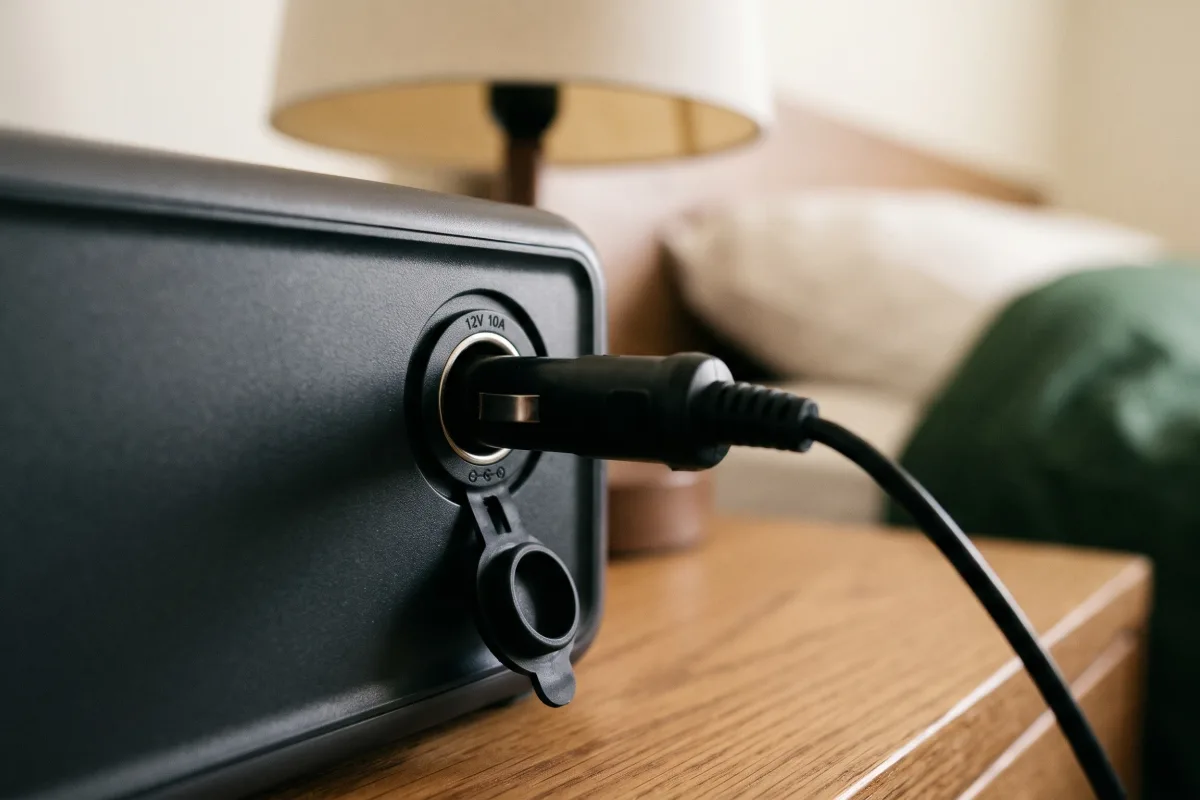
If you use AC, ResMed recommends a pure sine wave inverter; check that your station's AC output is pure sine wave. See the runtime calculator to compare DC and AC for your own machine.
The humidifier is the big drain
Where most of the power goes
The heated humidifier and heated tubing can multiply a CPAP's draw several times. A lower humidifier setting, or a heated-tube temperature set lower, stretches runtime the most.
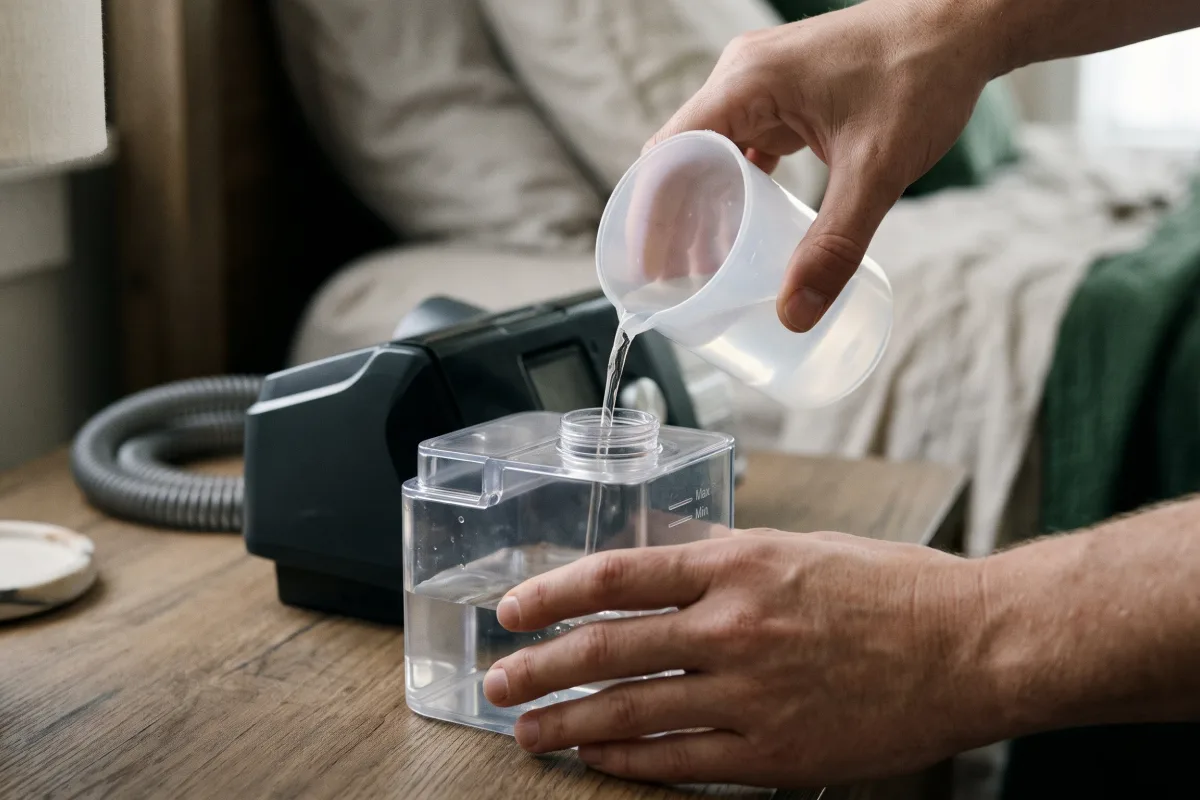
Your pressure and humidity settings are part of your treatment, though. Don't change prescribed settings without asking your doctor or equipment provider. If you need more nights, add battery or solar instead.
What this means when buying
Match the station to your nights away
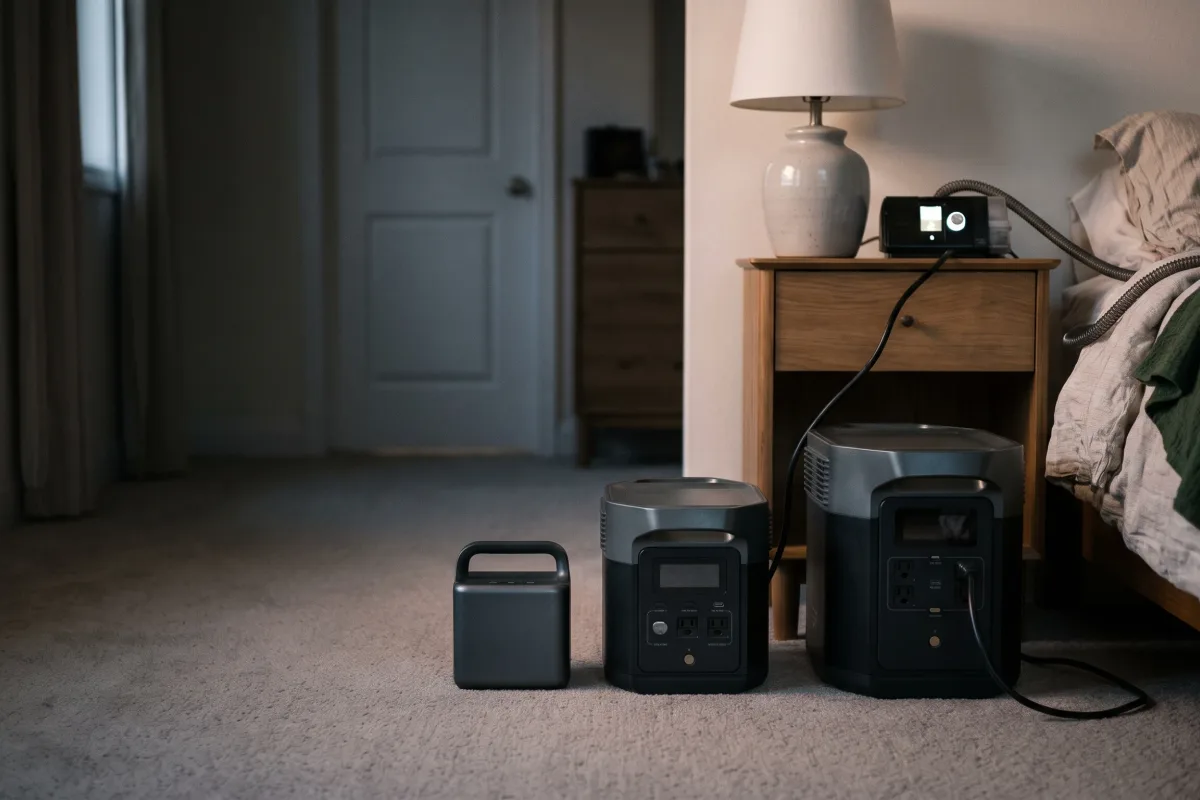
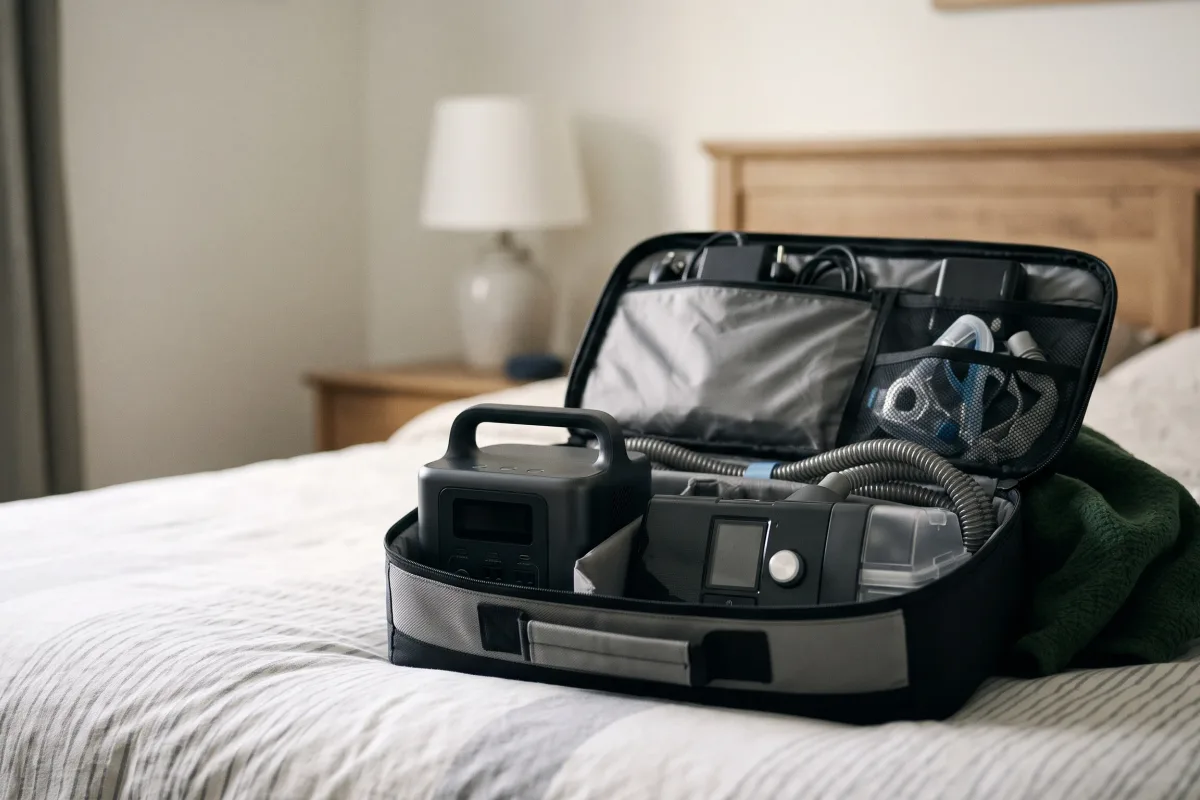
For a weekend without the humidifier, a small station like the Jackery Explorer 300 can be enough. For several nights or humidifier use, a 1 kWh station such as the Jackery Explorer 1000 v2 or Anker SOLIX C1000 Gen 2 covers most trips. Both 1 kWh models switch over in about 10 ms, so they also work as home backup if the power drops overnight. Adding solar panels extends any of them. See our best portable power station for CPAP for picks.
FAQ
Quick answers to common questions
How big a power station do I need for a CPAP?
About 300 Wh for one to three nights without the humidifier; about 1 kWh for several nights or with the humidifier.
How long will a Jackery 1000 run a CPAP?
A 1,024 Wh station like the Explorer 1000 v2 runs an AirSense 10 for about 10 nights without the humidifier, or 2 to 4 nights with it, on DC.
Will a 300 Wh station run a CPAP all night?
Yes, without the humidifier, with room for two or three nights. With the humidifier on, about one night at most.
Should I use DC or AC?
DC, if your CPAP has a DC cord or converter. It skips the inverter and runs longer.
Can solar keep a CPAP running?
Yes. A CPAP uses little power, so a modest panel can recharge a 1 kWh station during the day.