 By
We may earn a commission if you buy through links on this page, at no extra cost to you. This never affects which products we recommend. How we make money.
On this page 11 sections
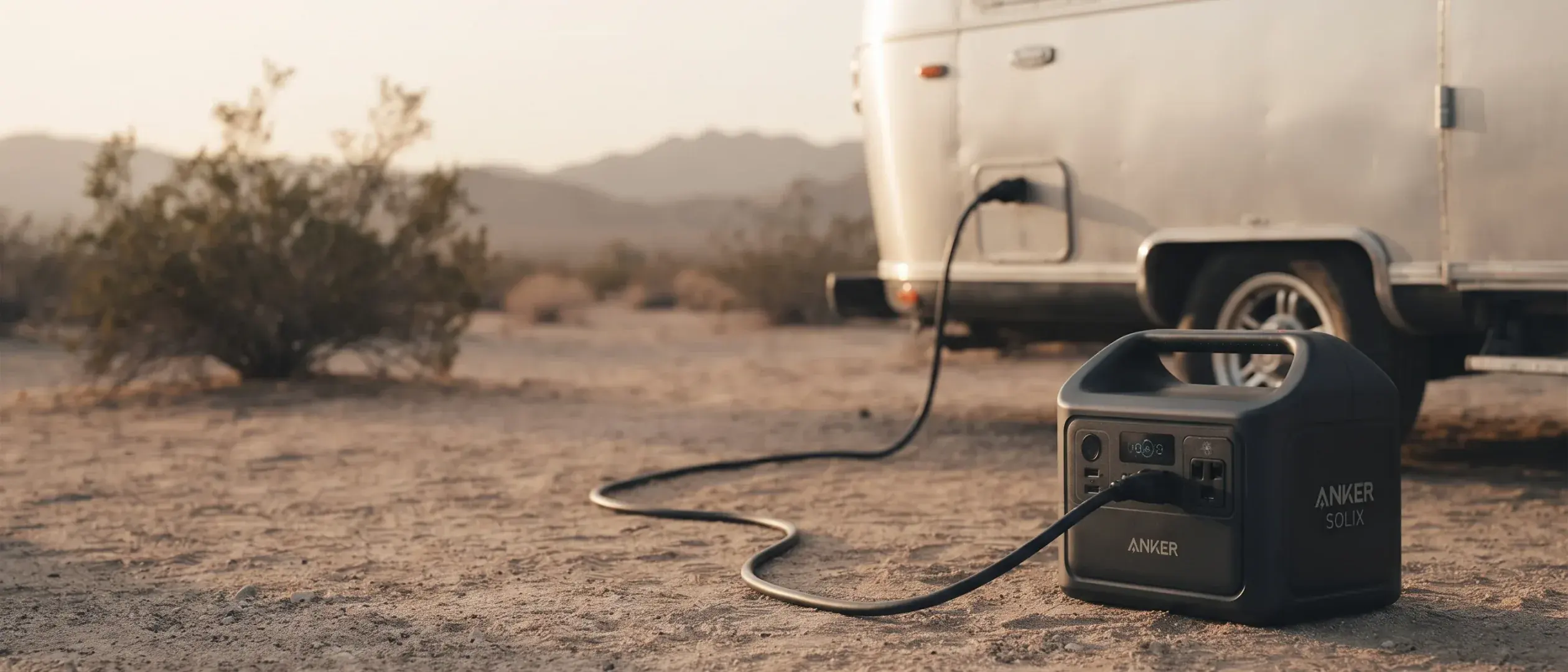
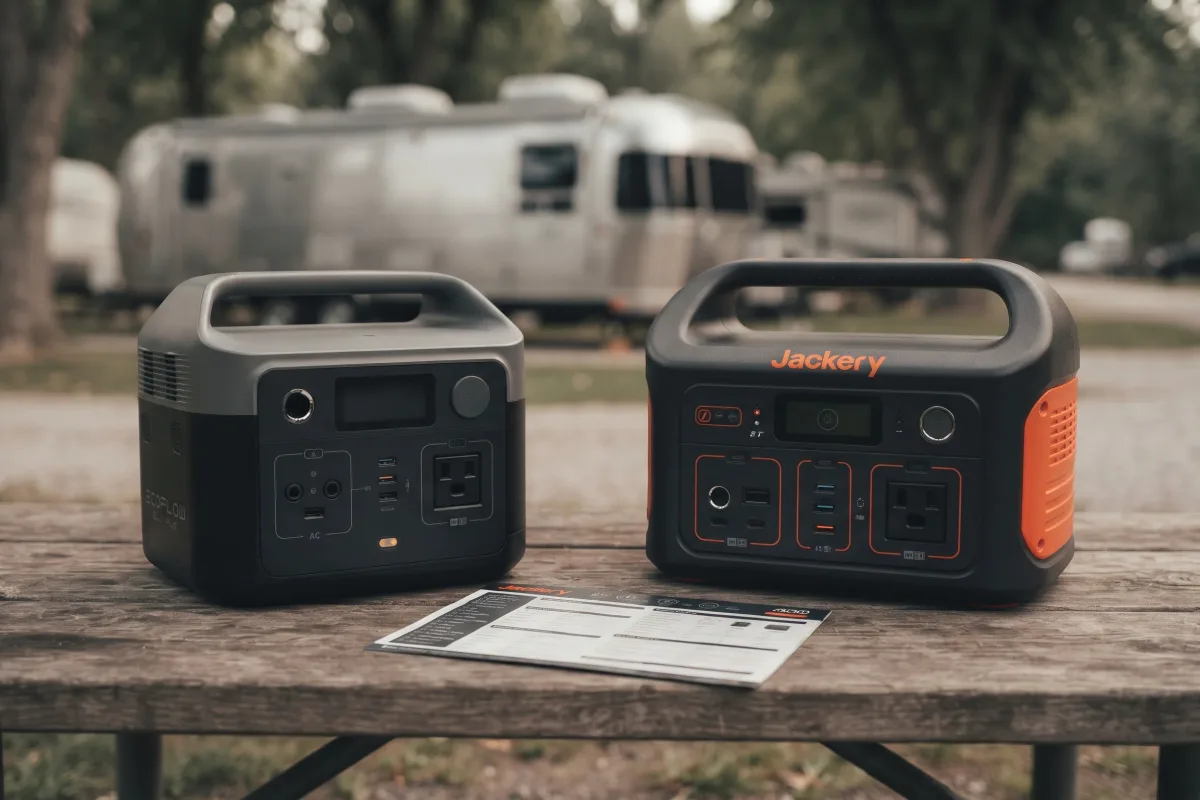
The Anker SOLIX F3800 Plus is the best portable power station for an RV with a 30-amp hookup. Its TT-30 outlet takes a travel trailer's 30-amp cord directly, at up to 3,000 W. For boondocking weekends, pick the Jackery HomePower 2000 Plus v2. For a camper van, the EcoFlow Delta 3 Plus pairs 1 kWh with 1,000 W of solar input. For 30-amp and 50-amp RV outlets in a lighter unit, look at the Bluetti Apex 300.
| Spec | Anker SOLIX F3800 Plus | Jackery HomePower 2000 Plus v2 | EcoFlow Delta 3 Plus | Anker SOLIX C1000 Gen 2 | Bluetti Apex 300 |
|---|---|---|---|---|---|
| Capacity (Wh) | 3840 | 2048 | 1024 | 1024 | 2764.8 |
| AC output, continuous (W) | 6000 | 2400 | 1800 | 2000 | 3840 |
| AC charge time | — | Not stated | 56 min | 49 min (UltraFast) | 80% in about 40 min (input not stated) |
| Max solar input (W) | 3200 | 800 | 1000 | 600 | Not stated for the unit alone (4,000 W with SolarX 4K add-on) |
| Weight (lb) | 136.7 | 41.5 | 27.6 | 24.9 | 83.8 |
| Warranty (years) | 5 | 3 + 2 with registration | 5 | 5 | Not stated |
| Price | Check price | Check price | Check price | Check price | Check price |
What you'll power in an RV
Everyday loads, and the one that's hard
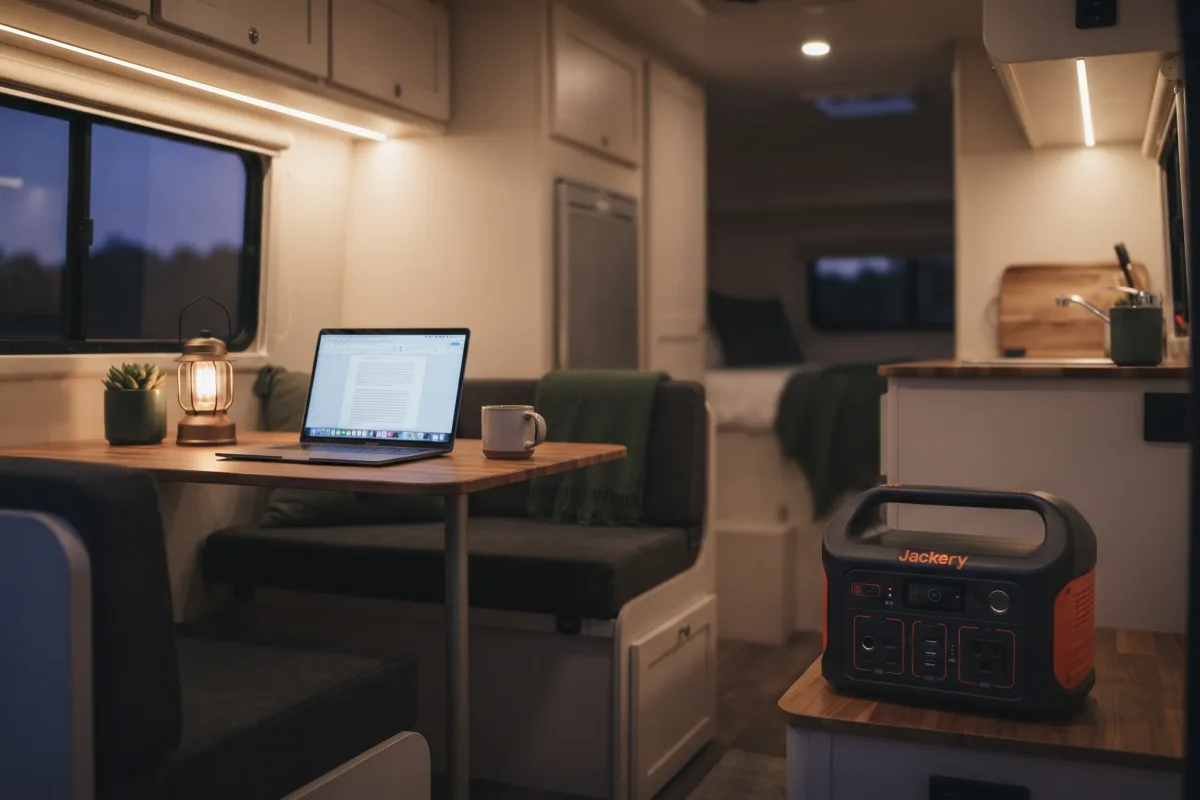
Most RV loads are small: lights, a fridge, fans, a router and devices. The rooftop air conditioner is the hard one. It draws a lot and surges at startup, so check its rated watts against the station's output before relying on it.
| Load | Typical draw | Notes |
|---|---|---|
| LED lights | About 10 W | Low, steady draw |
| Fridge | 41–67 W average | Residential-style, on AC |
| Router | About 12 W | Runs all the time |
| Laptop | About 60 W | Only while charging |
| Rooftop AC | Check the label | High draw and startup surge |
See how long a power station runs a refrigerator, or try your own loads in the runtime calculator.
How much capacity you need
Size for days off-grid
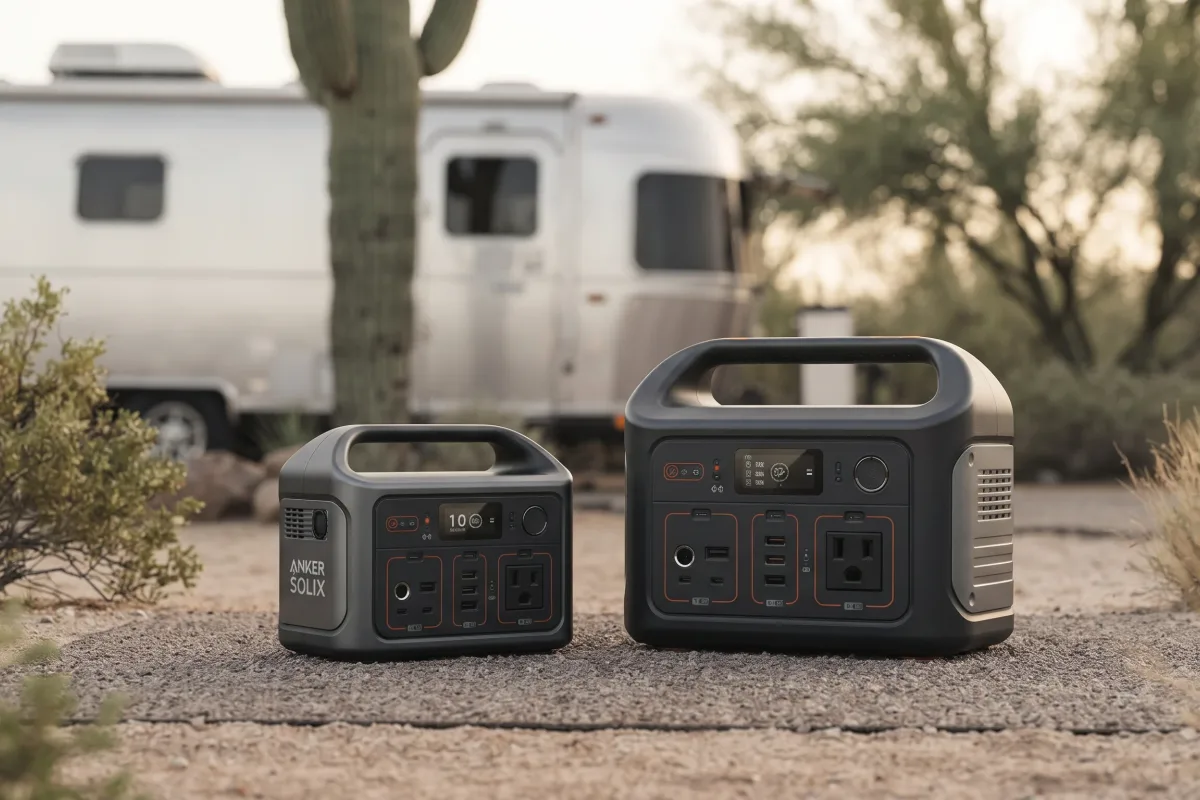
- Weekend at a site with no hookup (about 1 kWh): lights, devices and a fridge for most of a day.
- Boondocking weekends (about 2 kWh, plus solar): a fridge, lights and a router for most of the trip.
- Running the trailer through its inlet (3.8 kWh and up): a TT-30 station and solar for longer stays.
| Station | Capacity | Fridge + router + lights (89 W) |
|---|---|---|
| Anker SOLIX F3800 Plus | 3,840 Wh | About 33 hours |
| Jackery HomePower 2000 Plus v2 | 2,048 Wh | About 18 hours |
| EcoFlow Delta 3 Plus | 1,024 Wh | About 9 hours |
| Anker SOLIX C1000 Gen 2 | 1,024 Wh | About 9 hours |
These assume a 67 W fridge, 12 W router and 10 W of lights on AC, 85% inverter efficiency and 10 W of idle draw. Solar input during the day stretches each figure; see how to charge a power station with solar.
How we chose
RV criteria, scored from published specs
We picked from stations we've reviewed in full. For RVs, we weighted RV outlets, output, capacity, expansion, solar input, weight and warranty. Each station has an OffGrid Current rating out of 10, computed from its specs. The weights are on how we test. We haven't tested these units hands-on, and we don't rank by price.
Best for travel trailers: Anker SOLIX F3800 Plus
A TT-30 outlet and enough battery for days
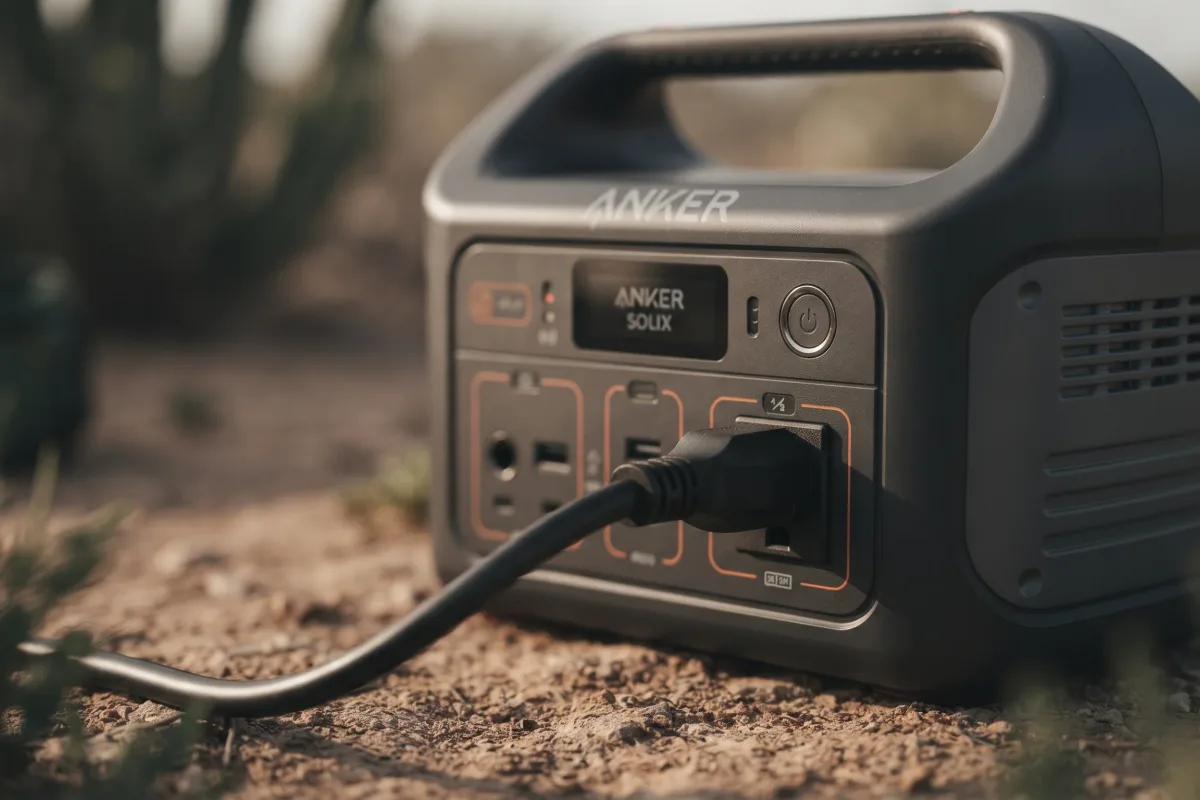
Best for travel trailers
Anker SOLIX F3800 Plus
The F3800 Plus is the only station we've reviewed with a TT-30 outlet. Plug the trailer's shore-power cord straight in and the whole trailer runs from it, within its output.
Pros
- TT-30 outlet takes a trailer's 30-amp cord, up to 3,000 W
- 3,840 Wh, expandable to 53.8 kWh
- Up to 3,200 W solar input
- 5-year warranty
Cons
- 136.7 lb, on wheels
- Regular 120 V outlets share 2,400 W
- No published surge rating
Best for boondocking weekends: Jackery HomePower 2000 Plus v2
About 2 kWh, with room to grow
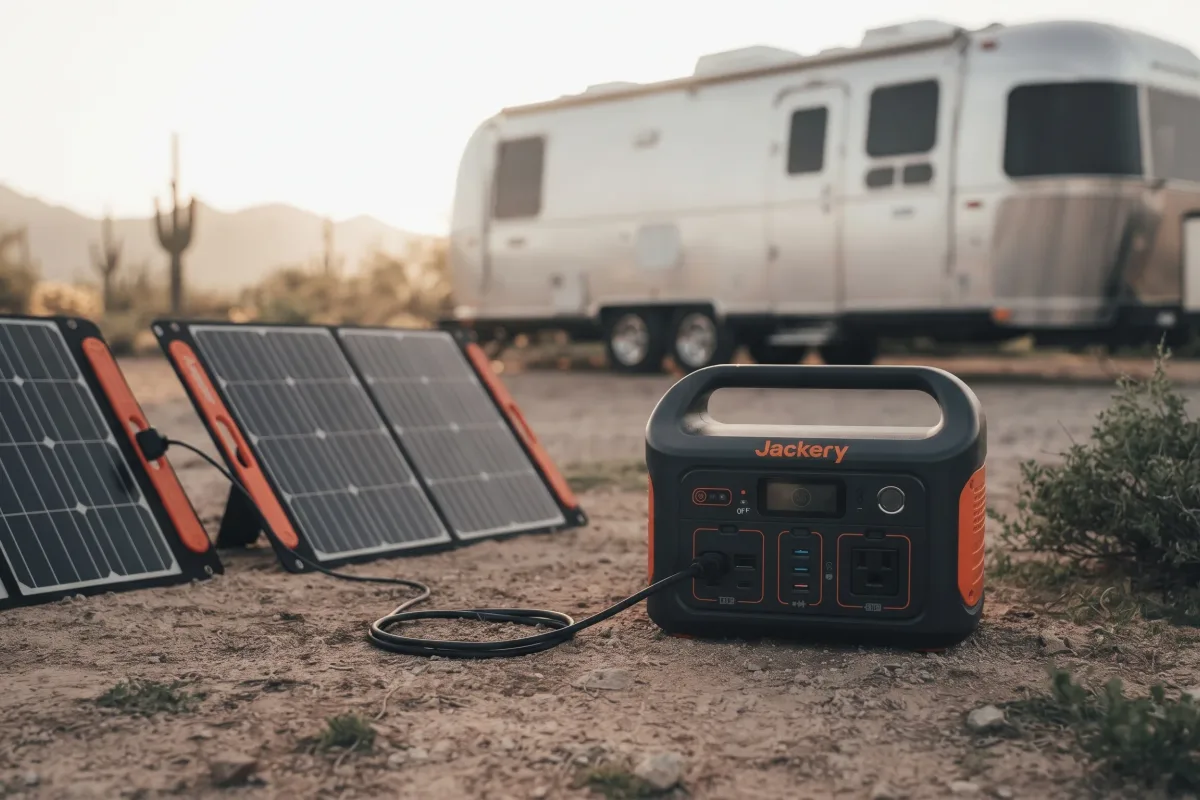
Best for boondocking weekends
Jackery HomePower 2000 Plus v2
For weekends away from hookups, the HomePower 2000 Plus v2 runs a fridge, lights and a router for most of a day per charge. Solar input and extra batteries stretch that.
Pros
- 2,048 Wh
- 2,400 W continuous, 4,800 W surge
- Expands to about 12 kWh
- 800 W solar input
Cons
- 41.5 lb
- No RV outlet
- Warranty is 3 years, plus 2 with registration
Best for van life: EcoFlow Delta 3 Plus
High solar input for a roof array
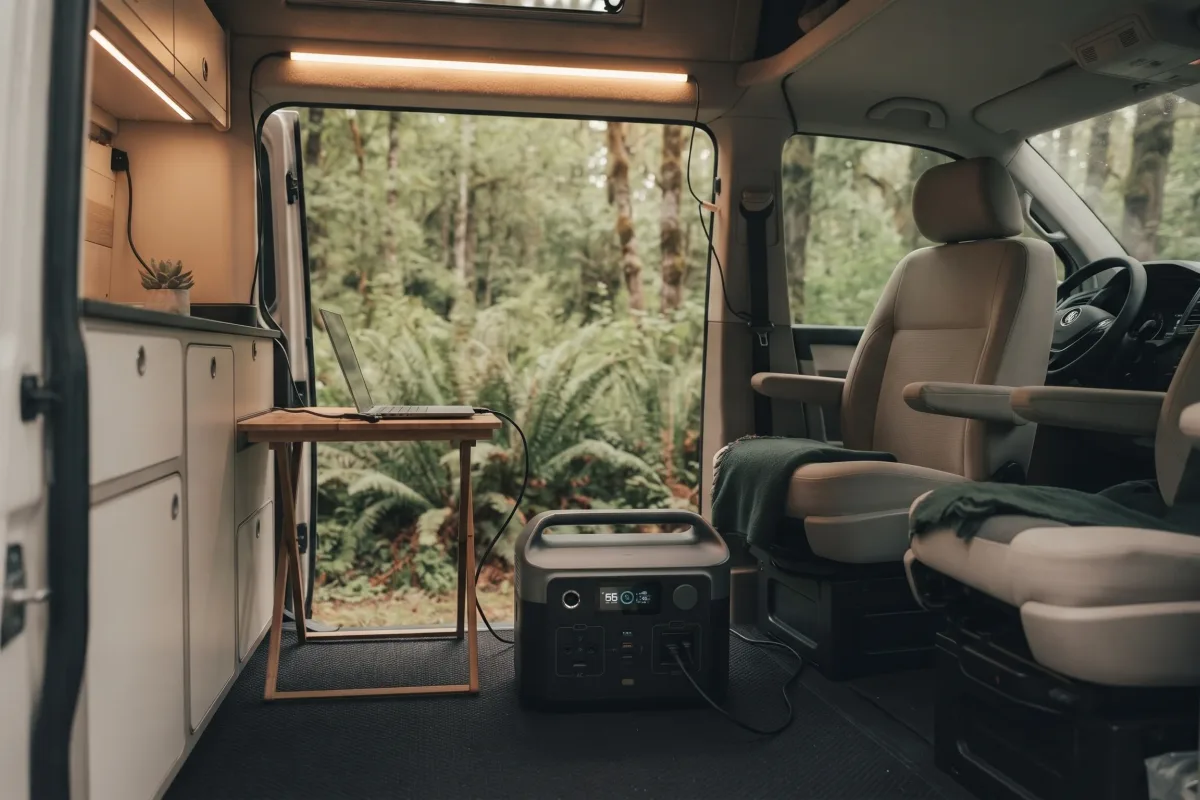
Best for van life
EcoFlow Delta 3 Plus
In a van, solar is what keeps you going. The Delta 3 Plus takes the most solar of the 1 kWh stations we've reviewed, and it fits behind a seat.
Pros
- Up to 1,000 W solar input
- Recharges from the wall in about 56 minutes
- Expands to 5 kWh
- 5-year warranty
Cons
- 1,800 W continuous
- 1,024 Wh alone covers about one day
Best for small campers: Anker SOLIX C1000 Gen 2
Plenty of output in a small, light unit
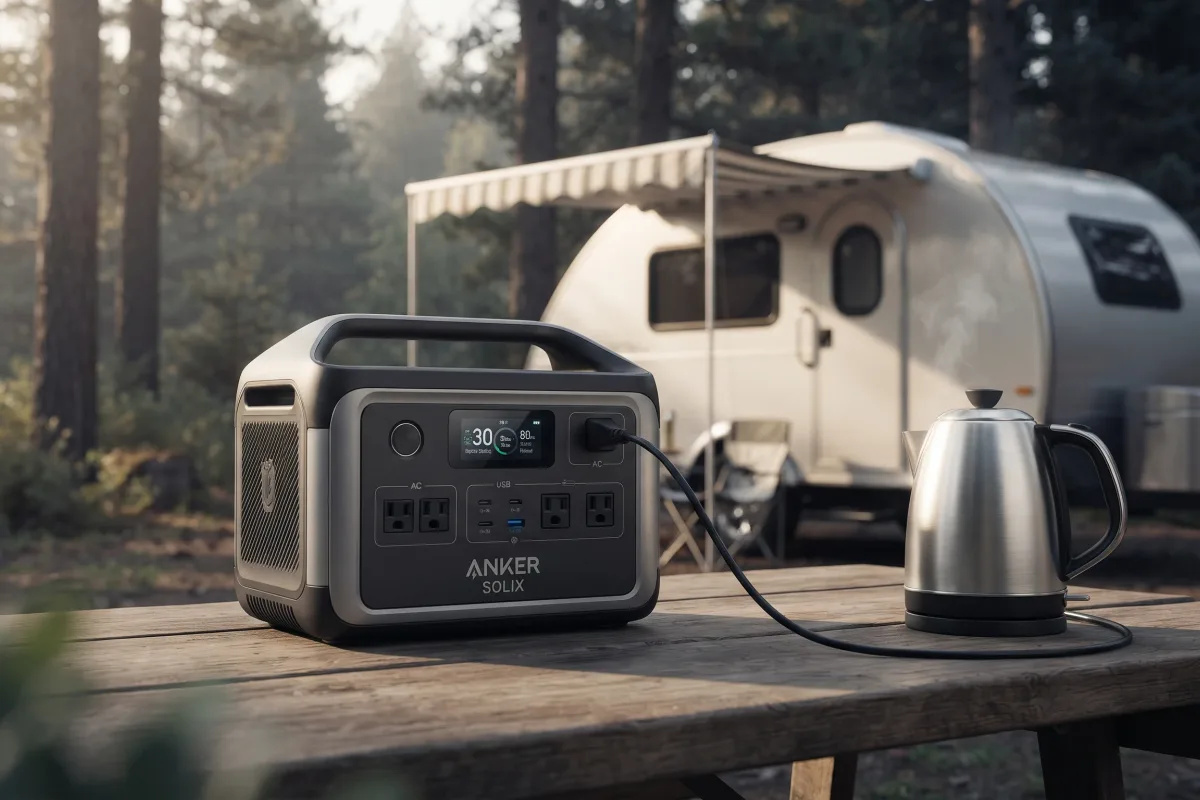
Best for small campers
Anker SOLIX C1000 Gen 2
For a teardrop or pop-up, the C1000 Gen 2 runs a kettle or small cooker and is easy to move between the camper and the car.
Pros
- 2,000 W continuous, 3,000 W surge
- 24.9 lb
- About 49 minutes to recharge from the wall
Cons
- Not expandable
- 600 W solar input
- No RV outlet
Best lighter RV station: Bluetti Apex 300
RV outlets without the F3800 Plus's weight
Best lighter RV station
Bluetti Apex 300
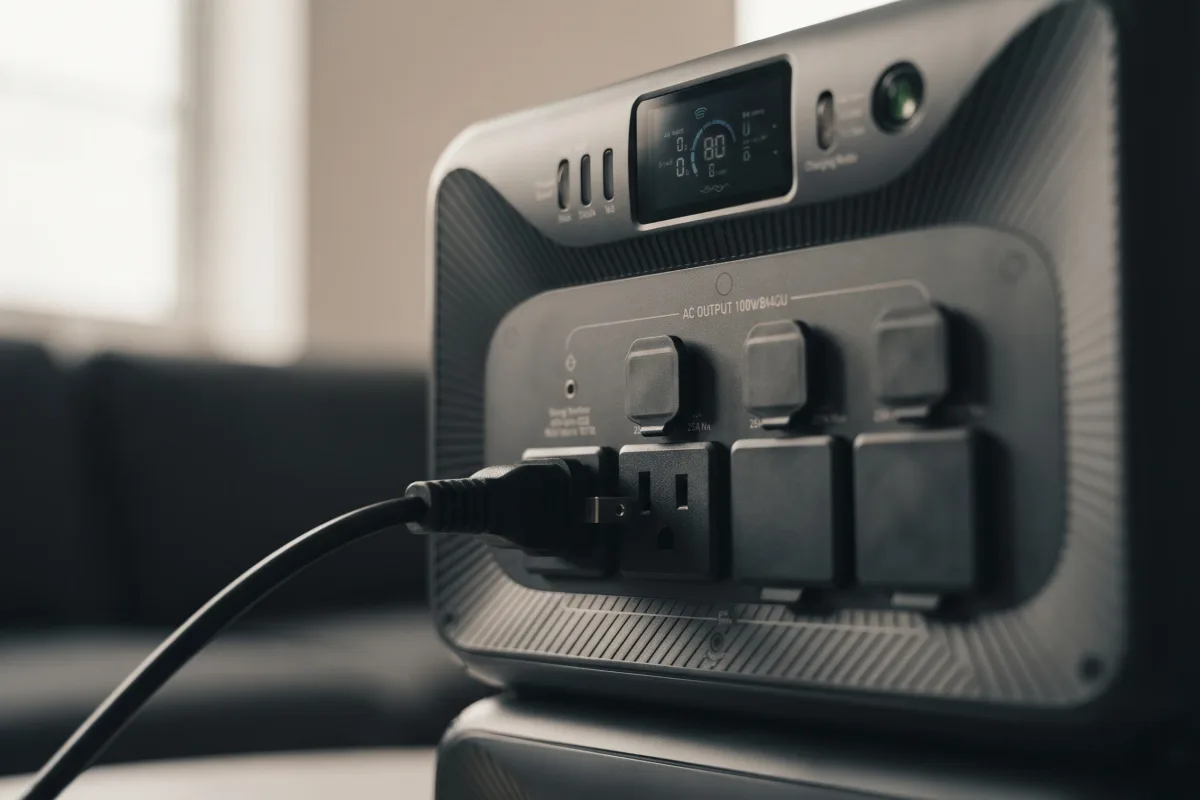
The Apex 300 gives an RV both 30-amp and 50-amp outlets in a unit that weighs 83.8 lb. It stores less than the F3800 Plus on its own, so add a battery if you boondock for more than a day or two.
Pros
- 30 A and 50 A RV outlets
- 3,840 W at 120/240 V
- 83.8 lb, about 53 lb lighter than the F3800 Plus
- 6,000 cycles to 80%
- Expands with B300K and B500K batteries
Cons
- 2,764.8 Wh on its own, less than the F3800 Plus
- Switchover is 0 or 20 ms depending on mode
- Rated 6.7/10
What to look for
The specs that matter for an RV
- RV outlet: a TT-30 outlet takes a 30-amp cord directly. Without one, plug devices in one by one.
- Output and surge: check every appliance's rated watts, especially the rooftop AC.
- Solar input: decides how long you can boondock. See solar panel sizing.
- Expansion: extra batteries stretch one station across longer trips.
- Weight: the biggest stations need wheels and a ramp.
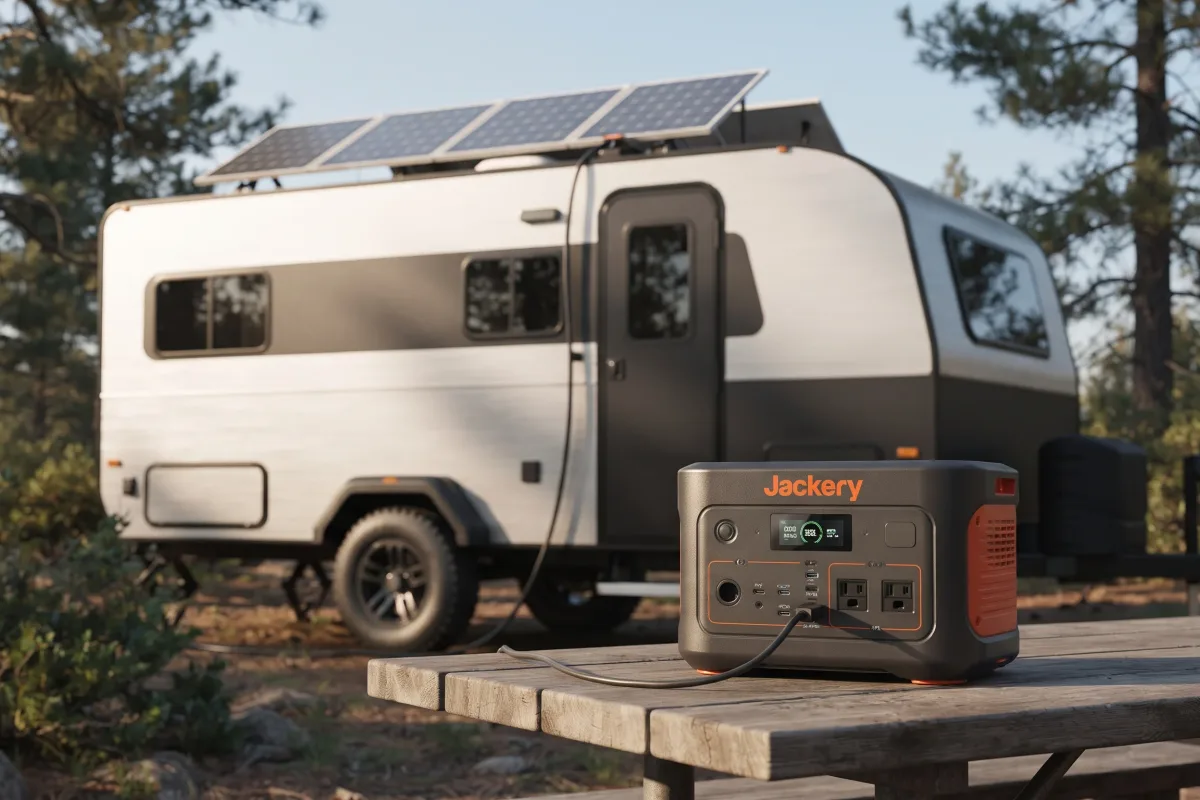
Have an RV technician or electrician check any adapters or wiring changes. For storage between trips, see how to store a power station.
Also considered
Good stations that missed a top spot
- Jackery HomePower 3600 Pro Max: a NEMA 14-50 outlet at up to 4,000 W, but a 1-year warranty.
- Jackery Explorer 5000 Plus: 5,040 Wh and 7,200 W at 120/240 V with 0 ms switchover, but about 134.5 lb.
- EcoFlow River 3 Plus: 286 Wh and 600 W in 10.4 lb for a van's devices and lights.
- Bluetti Elite 200 V2: 2,600 W output, but not expandable.
- EcoFlow Delta 3: same 1,024 Wh as the Delta 3 Plus, with 500 W solar input.
- Jackery Explorer 1000 Plus: 1,264 Wh, but 800 W solar input and a lower rating.
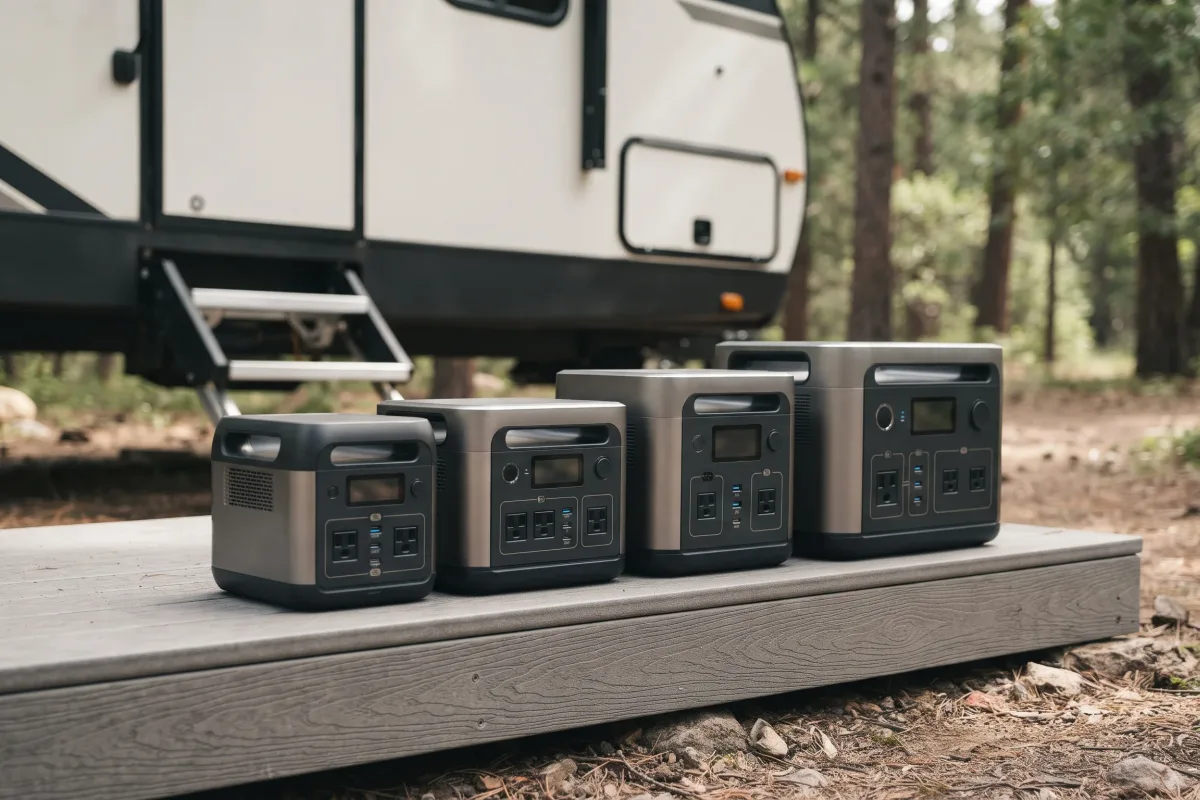
For tents and car camping, see the best portable power stations for camping.
For every use, see our best portable power stations overview.
FAQ
Can a portable power station run an RV?
Yes, within its output. A station with a TT-30 outlet, such as the Anker SOLIX F3800 Plus, can feed a trailer's 30-amp inlet at up to 3,000 W.
Can a power station run an RV air conditioner?
Only if its output covers the AC's running and startup watts. Check the AC's label against the station's continuous and surge ratings.
Can I plug my RV into a power station?
Yes, if the station has a matching outlet. The F3800 Plus has a TT-30 outlet for a 30-amp cord.
How big a power station do I need for boondocking?
About 2 kWh with solar covers a fridge, lights and a router for a weekend. Longer stays need more capacity or more solar.
Can solar keep an RV power station charged?
Yes. Solar input refills the station during the day. The F3800 Plus takes up to 3,200 W and the Delta 3 Plus up to 1,000 W.