
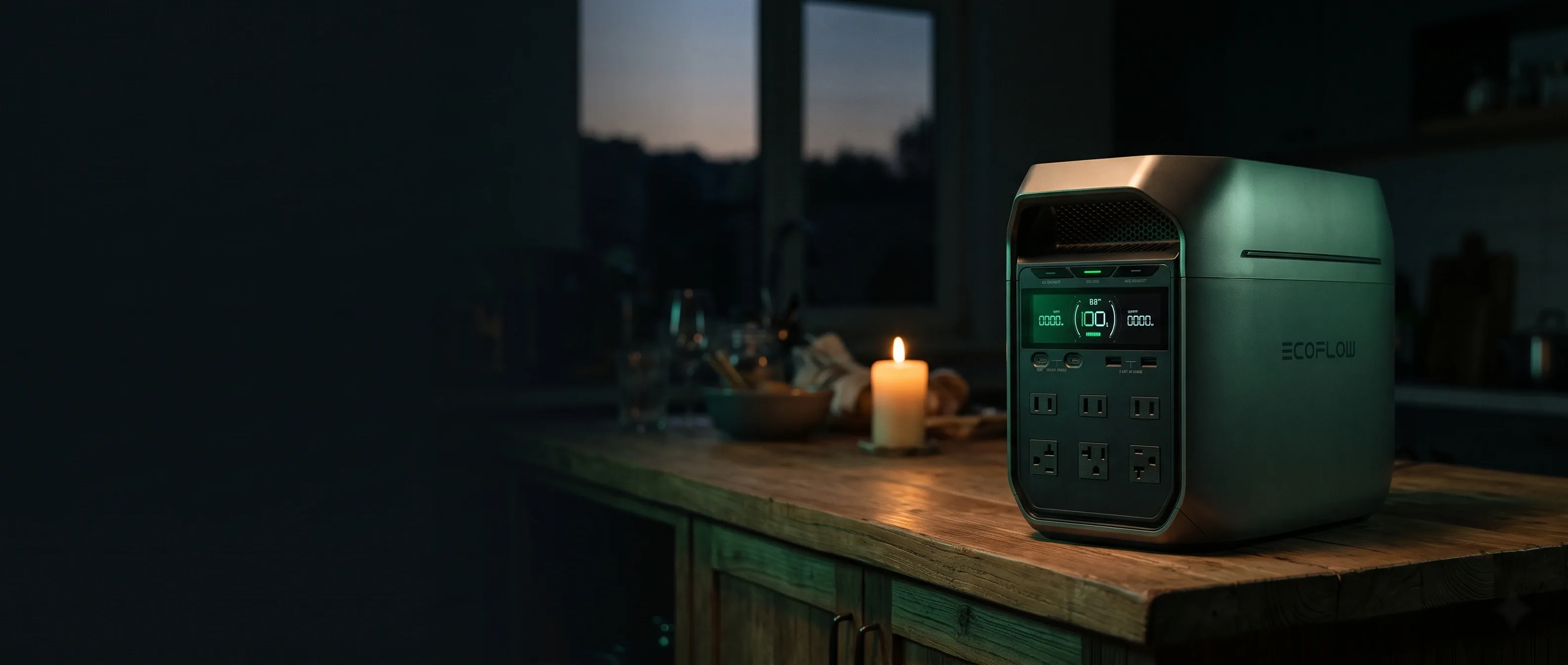
Portable power, measured

Portable Power Stations: Runtime-First Reviews & Guides

Find the power station that actually runs your stuff. Independent reviews and buying guides built around runtime, with the math shown and honest verdicts. No paid placements.

  • Runtime math on every pick
  • Real specs, never guessed
  • Honest "skip it if" verdicts

Runtime finder

How long will it actually last?

Pick a size and the devices you'll run. We'll show the runtime and the capacity you really need.

1 · Station size

2 · What you'll run at the same time

Estimated runtime

10.0 hours

Average load 87 W. To cover a full day you'd want about 2,400 Wh.

See home backup power stations

Estimate: capacity × 85% on AC (92% on DC or USB) ÷ average load. Typical device draws; check your own labels. Use the full calculator

Sizing in 30 seconds

Four sizes cover almost everyone

Most buying mistakes are sizing mistakes. Start with the class that matches how you'll use it, then compare models within it.

Full sizing guide →
  1. Under 1 kWh

    Compact

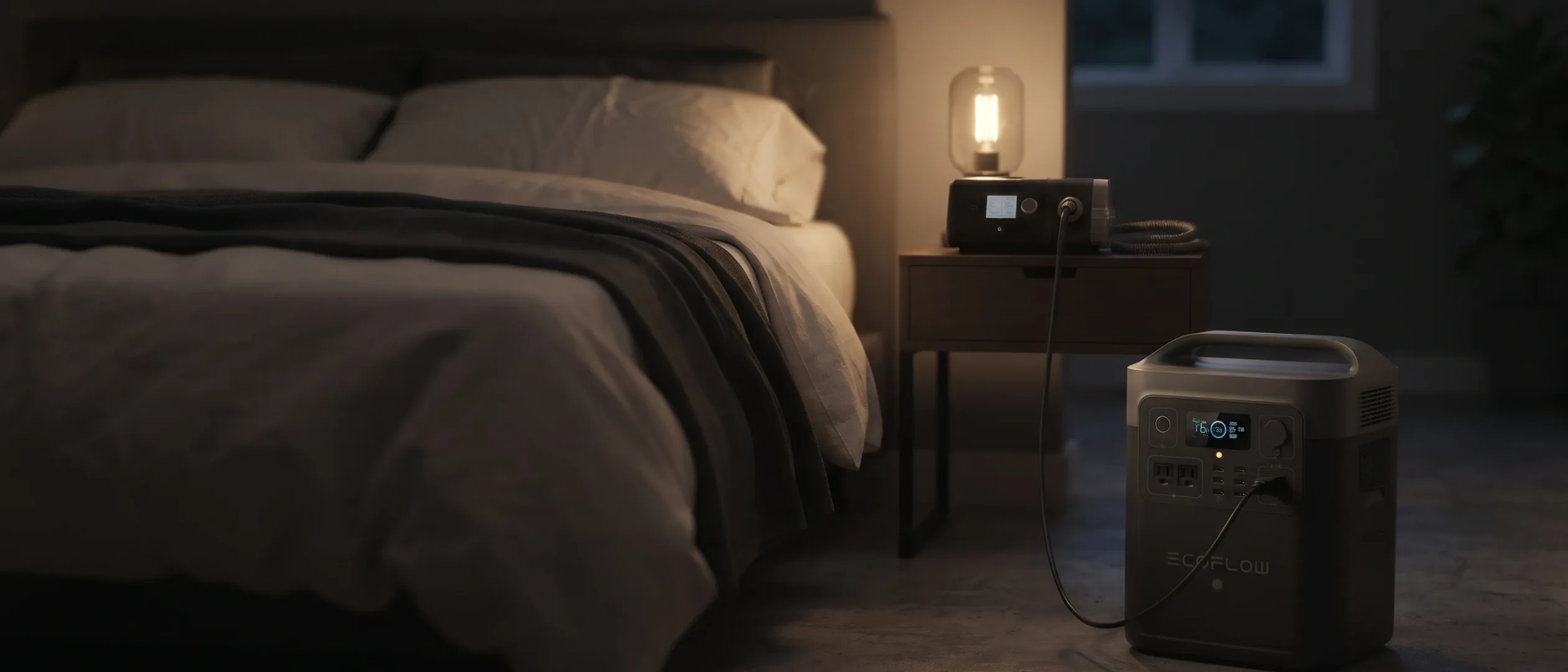
    Day trips, a night of CPAP, charging devices

    Phones (×3) 15 W
    ≈ 18 h on 300 Wh
    CPAP, no humidifier, DC cord 35 W
    ≈ 8 h on 300 Wh
    Typical weight
    Roughly 7–11 lb
    See compact picks →
  2. 2 to 3 kWh

    Large

    A full day of home essentials, RV boondocking

    Fridge + router + lights 110 W
    ≈ 16 h on 2,048 Wh
    Chest freezer, average 40 W
    ≈ 44 h on 2,048 Wh
    Typical weight
    Roughly 36–84 lb
    See large picks →
  3. 3.5 kWh and up

    Whole-home

    Multi-day outages and 240 V home circuits

    Fridge + router + lights 110 W
    ≈ 39 h on 5,040 Wh
    Home essentials 150 W
    ≈ 29 h on 5,040 Wh
    Typical weight
    Roughly 74–137 lb
    See whole-home picks →

Runtimes: capacity × 85% on AC outlets (92% on a DC or USB cord) ÷ average load. Weights are typical ranges for each class, not specific models.

Mid-size shortlist

Three 1 kWh stations, side by side

The mid-size models from EcoFlow, Anker SOLIX and Jackery with their key specs and estimated runtimes. Each has a full review.

All reviews →
Mid-size · 1.0 kWh
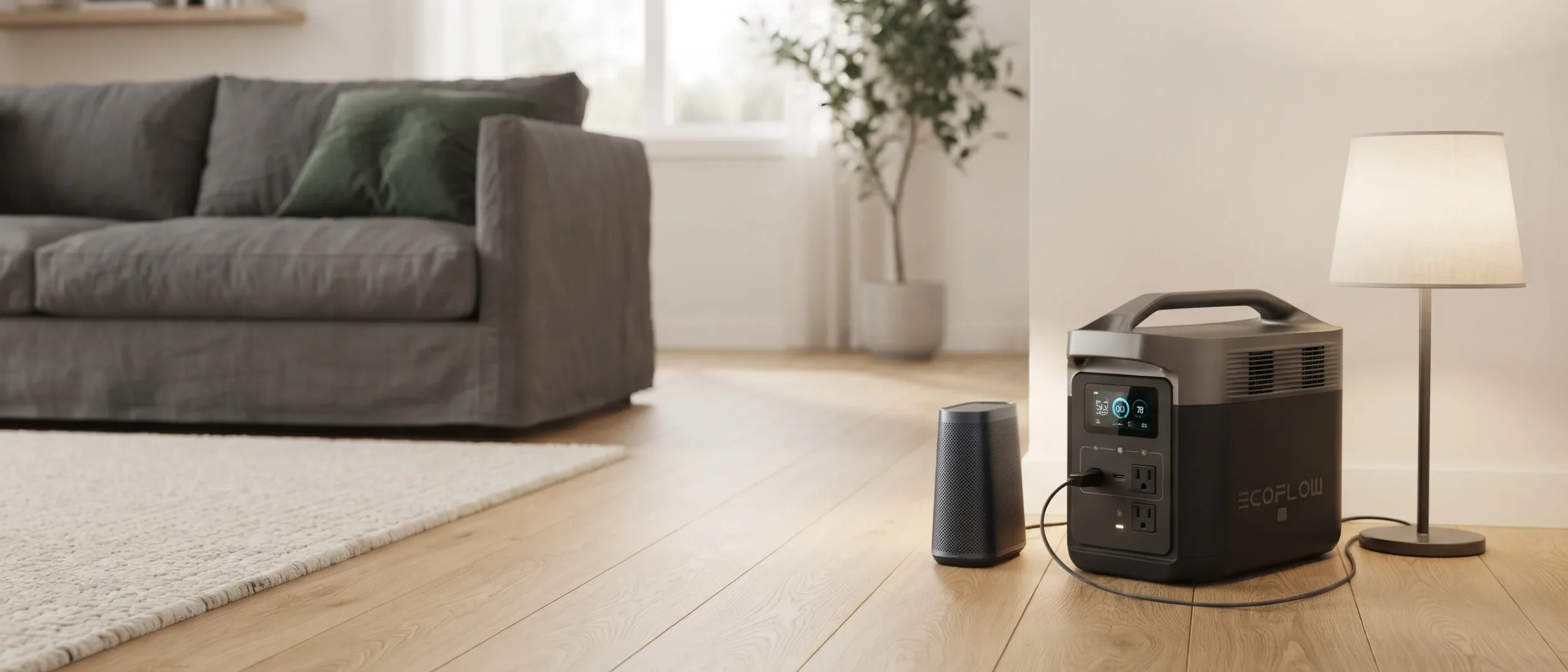
The EcoFlow Delta 3 Plus glowing on a kitchen island during an evening power outage

EcoFlow

EcoFlow Delta 3 Plus

A fast-charging, quick-switching 1 kWh station that's easy to grow.

Best for: Home backup for essentials, weekend trips and home offices that want a fast-charging, quick-switching 1 kWh station.

Capacity
1024 Wh
AC output
1800 W
Surge
3600 W
Chemistry
LiFePO4
Wall charge
56 min
Weight
27.6 lb

Est. runtime

  • Wi-Fi router3.3d
  • CPAP, DC cord27h
  • Fridge (avg draw)15h
Mid-size · 1.0 kWh
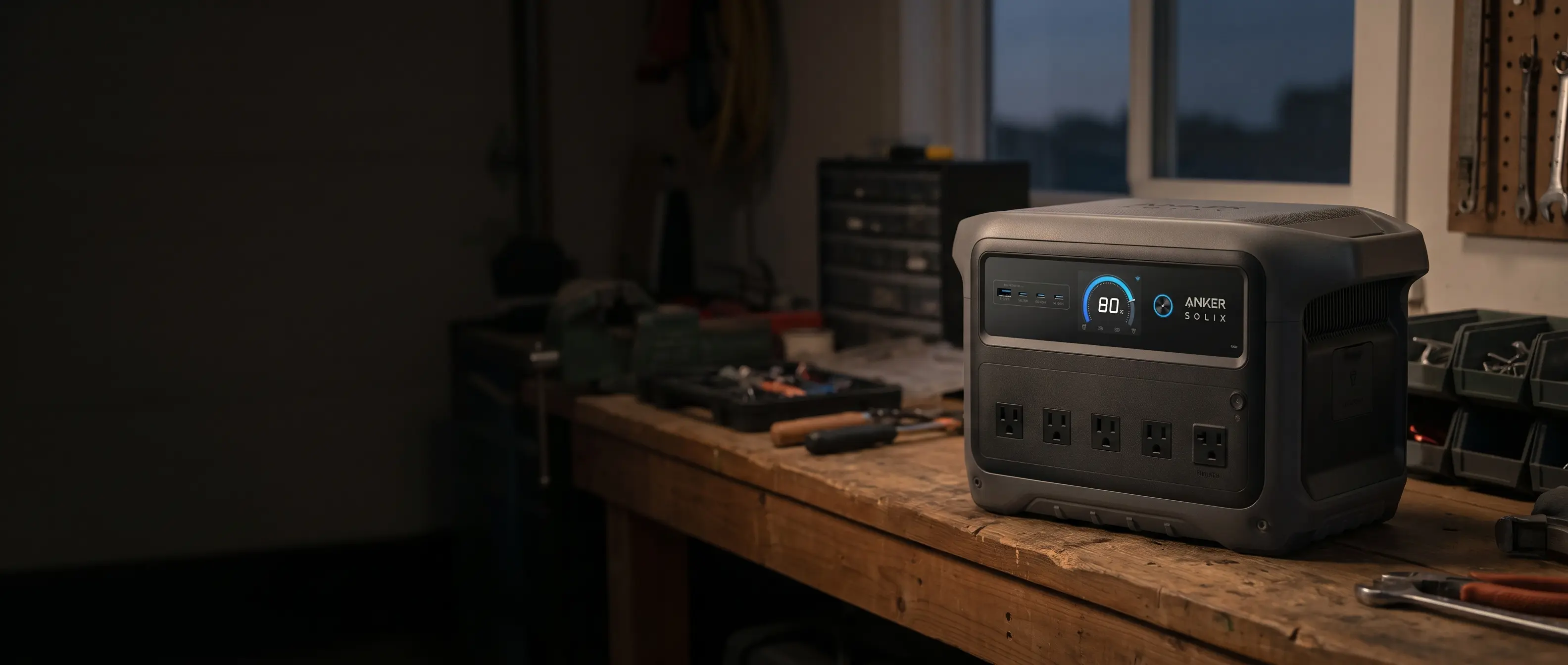
The Anker SOLIX C1000 Gen 2 on a wooden workbench at dusk

Anker SOLIX

Anker SOLIX C1000 Gen 2

The fastest-charging 1 kWh station, with class-leading output.

Best for: Essentials backup, home offices and car camping where fast recharging and 2,000 W of output matter more than room to grow.

Capacity
1024 Wh
AC output
2000 W
Surge
3000 W
Chemistry
LiFePO4
Wall charge
49 min
Weight
24.9 lb

Est. runtime

  • Wi-Fi router3.3d
  • CPAP, DC cord27h
  • Fridge (avg draw)15h
Mid-size · 1.0 kWh
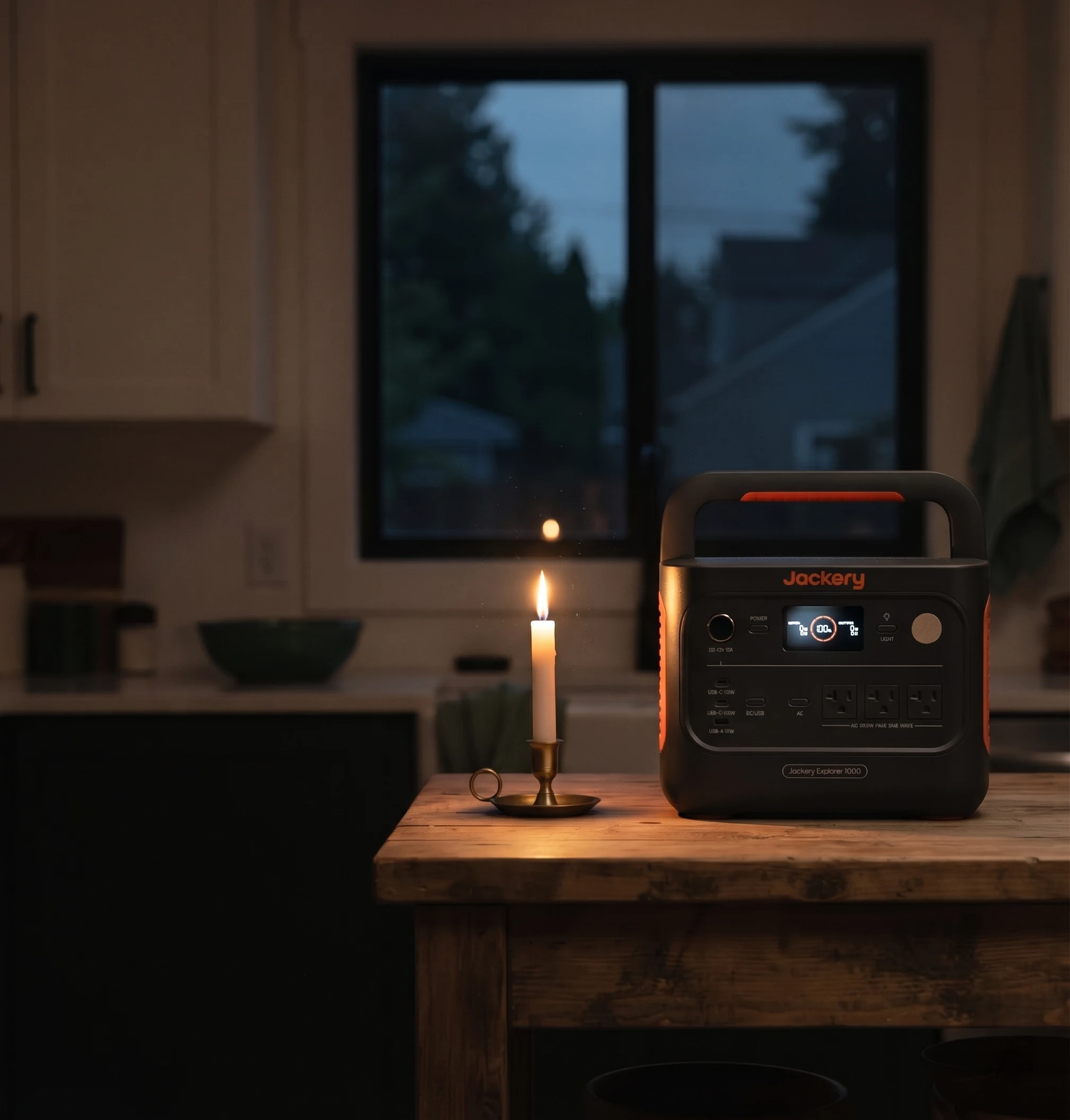
The Jackery Explorer 1000 v2 on a kitchen island during an evening power outage

Jackery

Jackery Explorer 1000 v2

A light, fast-charging 1 kWh station for essentials and camping.

Best for: Camping, car trips and essentials backup where low weight and a quick recharge matter more than output or expansion.

Capacity
1024 Wh
AC output
1500 W
Surge
3000 W
Chemistry
LiFePO4
Wall charge
50 min
Weight
23.8 lb

Est. runtime

  • Wi-Fi router3.3d
  • CPAP, DC cord27h
  • Fridge (avg draw)15h

Read a spec sheet like a pro

Six numbers that actually matter

Spec sheets list dozens of figures. These six decide whether a station will do the job you're buying it for.

Watts vs watt-hours, explained
01Capacity (Wh)
How long it lasts. Real usable energy is lower after conversion losses; we assume 85% for AC loads.
02Continuous output (W)
What it can run at once. Add up everything you'll power at the same time and stay under this figure.
03Surge (W)
Fridges, pumps and power tools need a short burst to start. Too little surge and the station shuts off.
04Battery chemistry
LiFePO4 is now standard on most new models: typically rated for thousands of cycles and more thermally stable than NMC.
05Solar input (W & volts)
Watts set charge speed; the voltage range decides which panels are compatible. Mismatched panels are a common mistake.
06UPS switchover (ms)
How fast it takes over when the grid drops. Matters for computers, routers and medical devices; check the spec sheet.

How we work

How we choose what to recommend

No paid placements and no guesswork: just the data that decides whether a station will do the job you're buying it for.

Read our methodology
  1. 01

    Real specs only

    Every number comes from the product's official specifications and is re-checked whenever we update a page.

  2. 02

    Runtime you can use

    We turn watt-hours into hours for the appliances you care about, with the same efficiency assumption on every page.

  3. 03

    Honest verdicts

    Every review says who should skip it, and our guides include the models we didn't pick.

  4. 04

    Kept current

    New generations, firmware and price shifts change recommendations; we update guides when they do.

Outage prep

Before the next outage

A power station only helps if it's charged, sized right and tested. Run through this list once.

Home backup picks
  1. List your essential devices and their watts (check the label or use a plug-in meter).
  2. Size for the longest outage you've had, then add a margin.
  3. Keep the station charged to the level its manual recommends for storage, and top it up every few months.
  4. Test it once: run your fridge or CPAP from it for an hour before you need it.
  5. Have a way to recharge: solar panels, car charging or a generator.
  6. Never back-feed your home through an outlet. Use a transfer switch installed by a licensed electrician.

Quick answers

Common questions

What size portable power station do I need?

Add up the watts of everything you'll run at once (that sets the output you need), then multiply each device's watts by the hours you'll use it (that sets the watt-hours). Allow roughly 15% for conversion losses. Our runtime calculator does the math for you. Sizing guides →

Can a portable power station run a refrigerator?

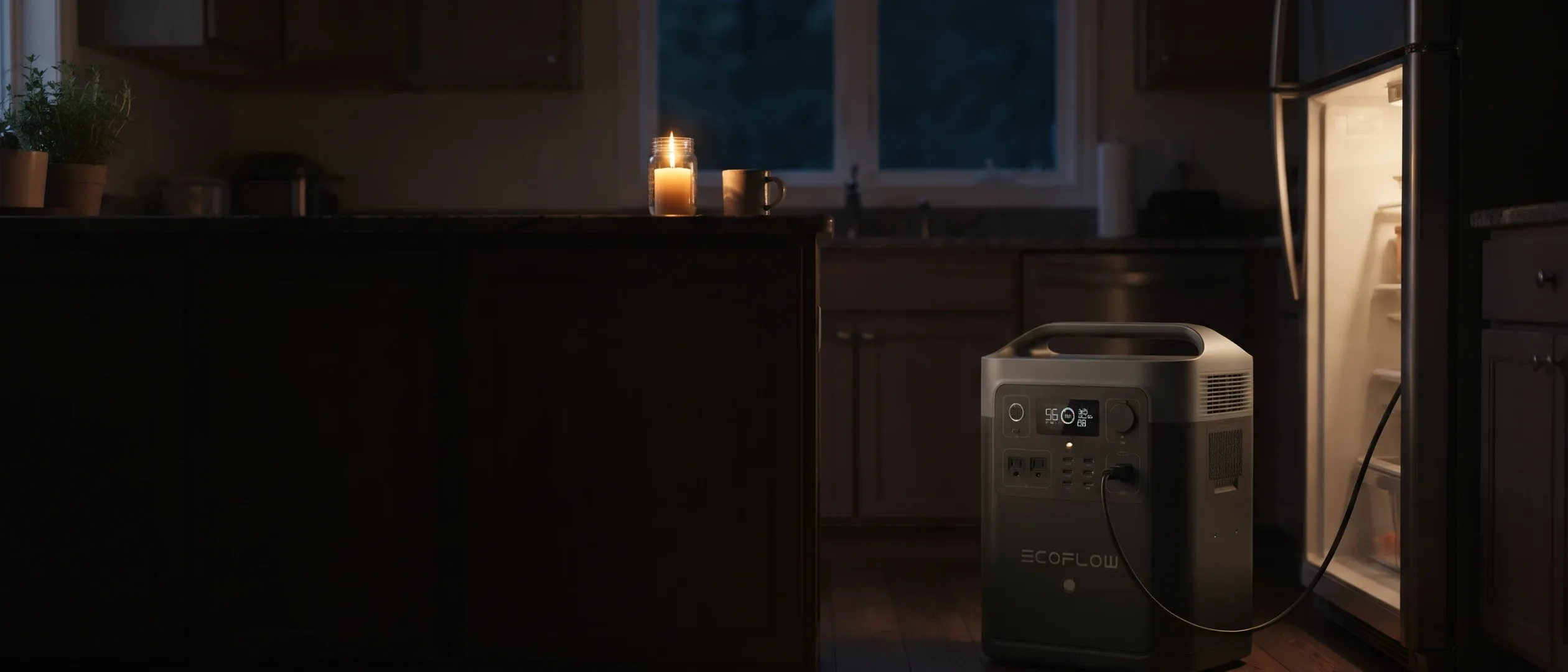
Usually, yes. A typical fridge averages far less than its running wattage because the compressor cycles on and off, but it needs a short burst of extra power to start. Check the station's surge rating as well as its capacity. Fridge runtime, in full →

Are portable power stations safe to use indoors?

They don't burn fuel, so unlike gas generators they produce no carbon monoxide. Follow the manual: keep vents clear, avoid heat and water, and use quality cables. Never run a gas generator indoors. Indoor safety, in full →

Is a power station the same as a solar generator?

"Solar generator" is a marketing term for a portable power station sold with, or able to charge from, solar panels. The battery and inverter are the same idea. Solar generator vs power station →

Not sure where to start?

Tell the calculator what you need to power and get a capacity recommendation in under a minute.

Open the runtime calculator