 By
We may earn a commission if you buy through links on this page, at no extra cost to you. This never affects which products we recommend. How we make money.
On this page 9 sections
Our verdict · EcoFlow
A true whole-home battery: 12 kW at 240 V and days of backup
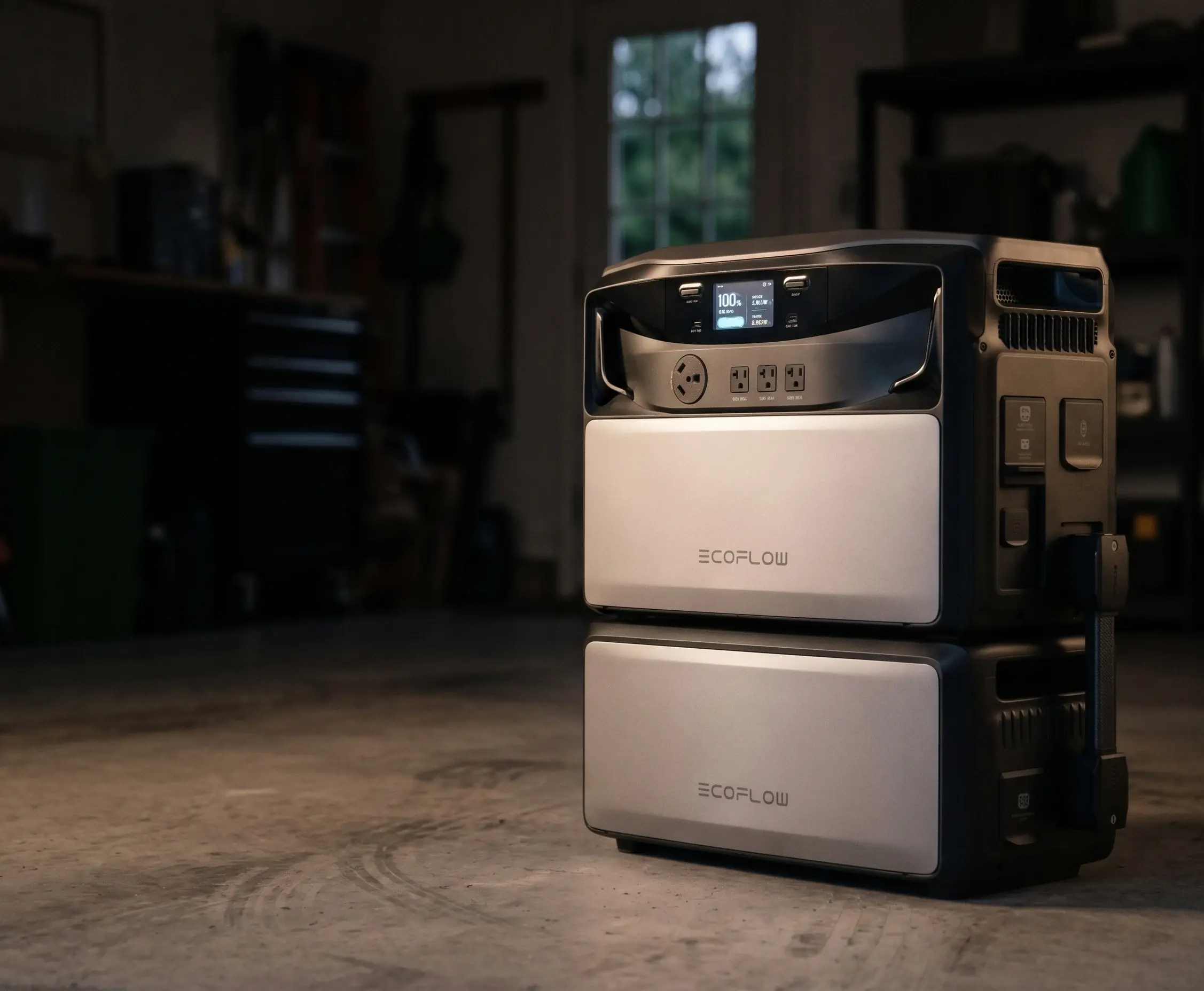
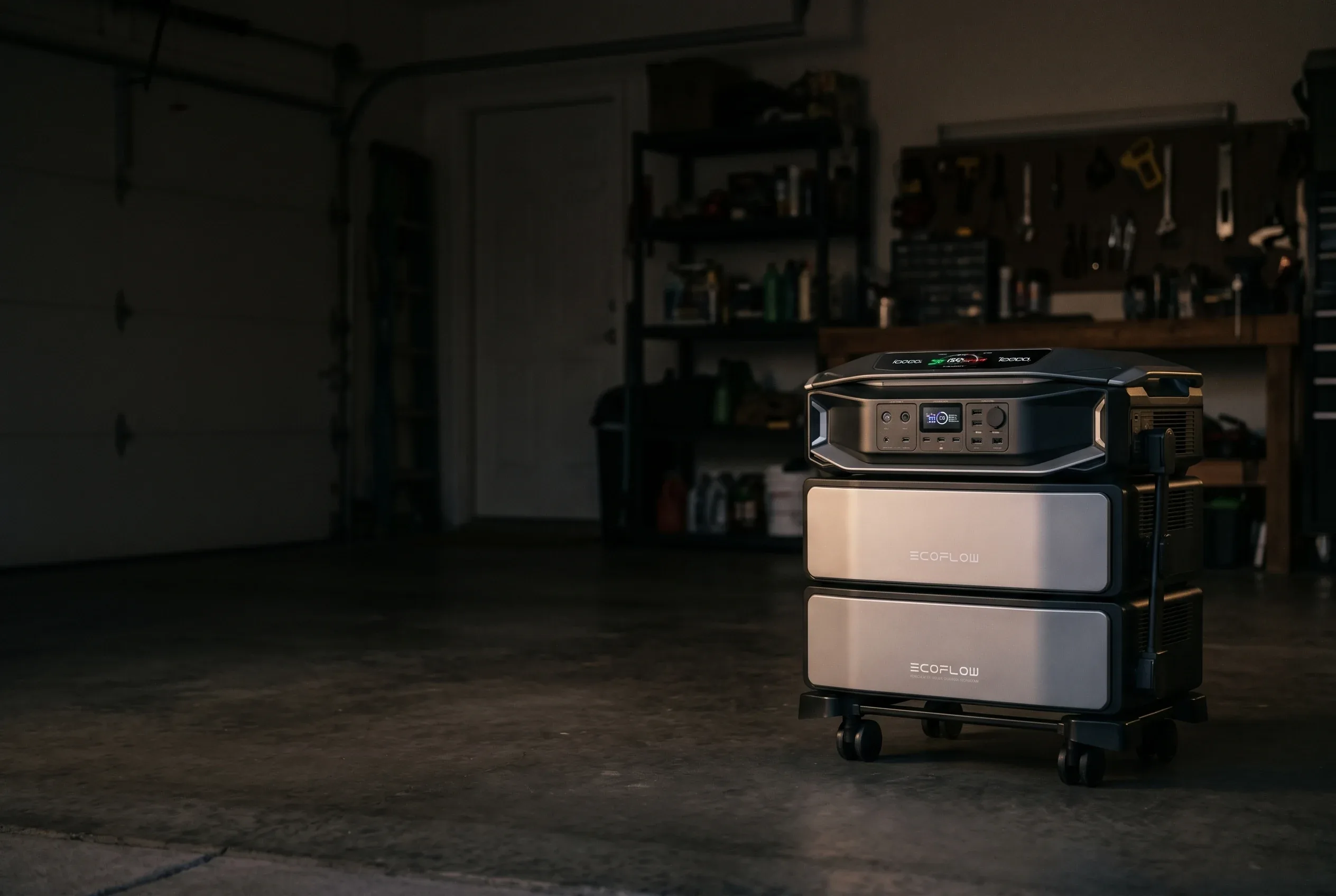
The EcoFlow Delta Pro Ultra X bundle pairs a 12 kW inverter with two 6,144 Wh LFP batteries, giving 12,288 Wh at 120/240 V, and connects to your home through the Smart Home Panel 3 or Smart Gateway. It can run central air, a well pump and the rest of the home through multi-day outages, but it is an installed home battery, not a station you carry.
- Capacity
- 12,288 Wh
- AC output
- 12,000 W
- Weight
- 299 lb
Best for
Homeowners who want central air, a well pump and the whole panel backed up
Skip it if
You want something portable or don't plan a professional install
- 12 kW split-phase 120/240 V output
- 12,288 Wh, expands to 61,440 Wh per inverter
- 10 kW solar on two 80–500 V inputs
- Under 10 ms standalone, under 20 ms with the panel
- About 299 lb across three pieces
- Smart Home Panel 3 needs an electrician
- No USB or DC outputs
Rating breakdown (whole-home (3.5 kwh and up) class)
| Criterion | Weight | Score | Based on |
|---|---|---|---|
| Wall charging speed | 20% | 10.0 | 12,000 W input |
| AC output | 20% | 10.0 | 12,000 W |
| Solar input | 10% | 10.0 | 10,000 W |
| Backup switchover | 15% | 10.0 | 10 ms |
| Portability | 10% | 10.0 | 41 Wh/lb |
| Expandability | 10% | 10.0 | to 61,440 Wh |
| Battery life & warranty | 15% | 7.0 | 5-year warranty, cycles not stated |
| Capacity (Wh) | 12288 |
|---|---|
| Battery chemistry | LiFePO4 |
| Rated cycle life | — |
| AC output, continuous (W) | 12000 |
| AC output, surge (W) | — |
| AC charge time | — |
| Max AC charging input (W) | 12000 |
| Max solar input (W) | 10000 |
| Solar input voltage range | 80–500 V (2 ports, 15 A, 5,000 W each) |
| UPS switchover (ms) | 10 |
| Weight (lb) | 299 |
| Expandable to (Wh) | 61440 |
| Warranty (years) | 5 |
Key specs at a glance: 12,288 Wh and 12 kW in three pieces
One inverter and two 6,144 Wh batteries make the base system; everything else is an add-on.
- 12,288 Wh capacity: two 6,144 Wh LFP batteries, about a day of whole-home essentials or about five days for a fridge and router.
- 12,000 W at 120/240 V, 60 Hz: enough for central air, a well pump, an electric dryer and the kitchen together. Three inverters in parallel reach 36 kW.
- LFP battery: long-life chemistry with a 5-year warranty. EcoFlow doesn't publish a cycle rating. See LiFePO4 vs lithium-ion.
- About 299 lb in three pieces: a 76 lb inverter (26.6 × 18.7 × 9.06 in.) and two 111.3 lb batteries (26 × 18 × 8 in.), set up once and left in place.
- Expansion, per inverter vs system: one inverter takes up to ten 6,144 Wh batteries (61,440 Wh); a three-inverter system takes thirty (184.32 kWh).
- IP54 and wide temperature range: batteries work from −4 to 113°F and heat themselves for cold charging; the inverter works to 122°F.
Spec sheets are easy to misread; watts vs watt-hours explains which number answers which question.
Charging speed: 12 kW from the grid, 10 kW from solar
EcoFlow quotes 0 to 80% in about an hour on 10 kW of solar; full-rate grid charging needs a 50 A circuit.
The inverter accepts up to 12 kW of AC input (100–120/200–240 V, 50 A), so a full 12,288 Wh takes about an hour by our estimate at that rate. EcoFlow doesn't publish a grid charge time. The supplied cable is a standard 15 A, 120 V plug into the side Power In/Out port; at about 1,800 W that is roughly 6.8 hours from empty by our estimate. It passes grid power straight through to the front outlets while it charges.
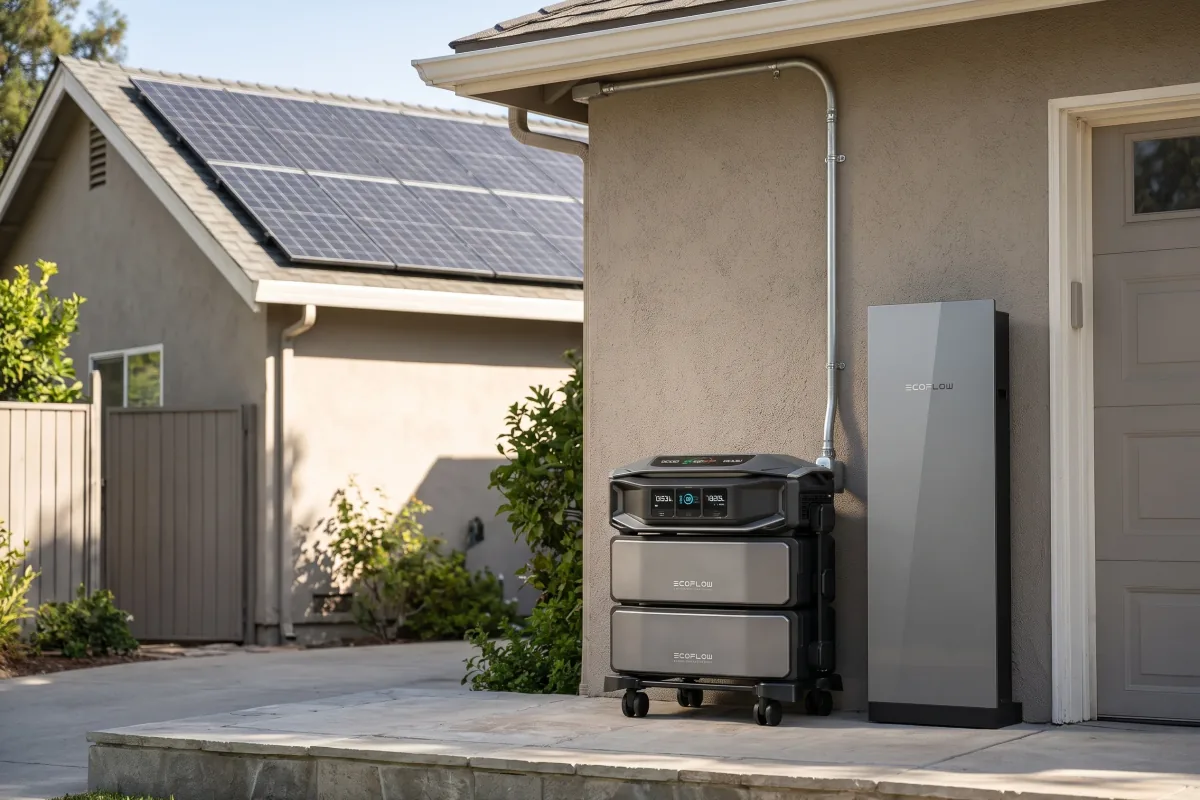
Solar: two inputs each take 80 to 500 V at up to 15 A and 5,000 W, for 10 kW in total, through EcoFlow's PV Switch Box, which comes in the box. EcoFlow says 10 kW of solar recharges 12 kWh to 80% in about an hour. By our method (75% of panel rating), a full 10 kW array refills the two-battery bundle in about 1.6 hours. That suits a rooftop array rather than folding panels; our solar panel sizing guide shows how to plan the strings.
Generators and EVs: EcoFlow lists 3 to 7.2 kW and 12 kW generators, plus EV charging piles and guns, as compatible. A generator connects to the Power In/Out port through EcoFlow's Generator Charging Adapter, or to the solar port through the optional FlowMaster Generator Rectifier, which EcoFlow says charges while the system delivers up to 12 kW.
Capacity and real runtime: about a day of essentials per 12 kWh
About five days for a fridge and router on the two-battery bundle, and over four days of essentials with ten batteries.
Estimated runtimes on the Delta Pro Ultra X (12,288 Wh)
- CPAP with humidifier, typical (56 W, AC)6.7 days
- Fridge only (67 W average, AC)5.8 days
- Fridge + Wi-Fi router5.0 days
- Essentials: fridge, lights, router, furnace fan21 h
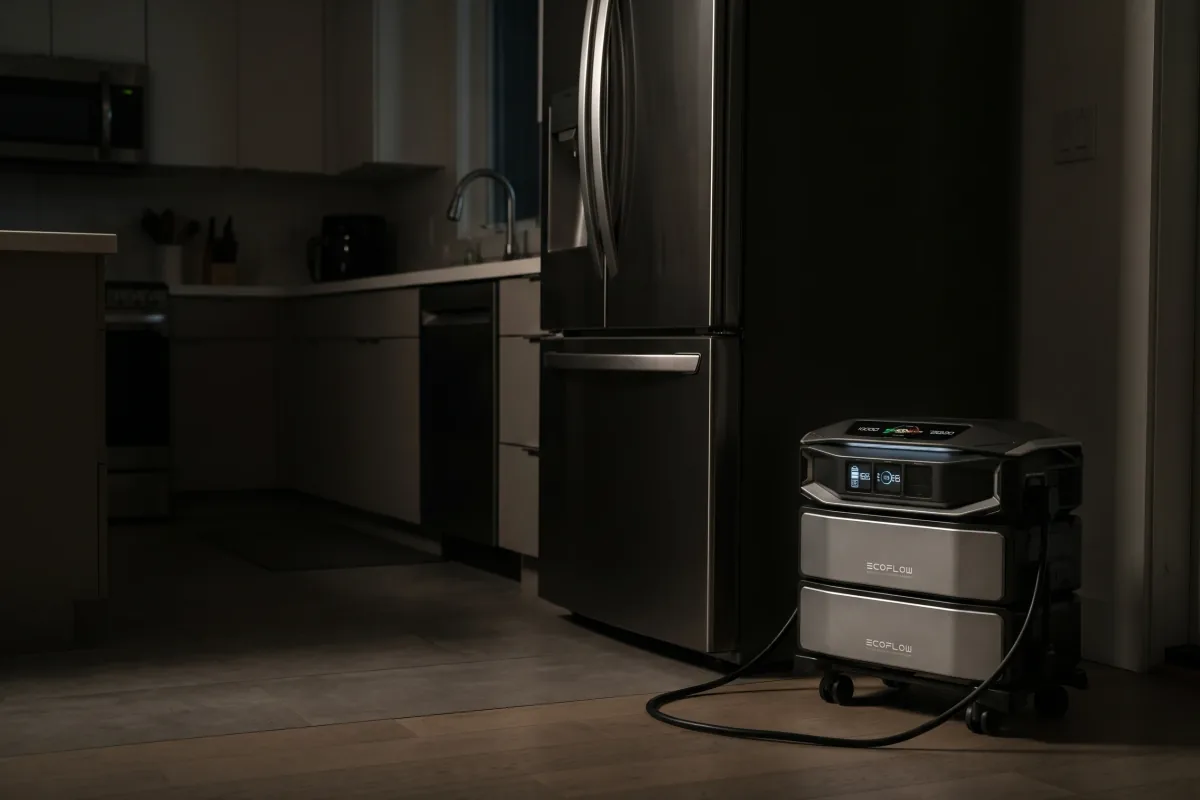
The two-battery bundle keeps about 500 W of essentials running for roughly 20 hours, and a fridge with a router for about five days. Because there are no DC outputs, even a router runs through the inverter, so small loads cost a little more than on a station with USB ports.
Capacity scales by battery, not by bundle. With ten batteries on one inverter (61,440 Wh), the same 500 W of essentials runs for about 103 hours, or just over four days, by our estimate. Central air drains any size much faster, so for long summer outages add batteries or pair the system with solar. EcoFlow says tagging circuits by priority in the app, so non-essentials are throttled, extends backup by up to 42%. Try your own loads in the runtime calculator.
Output: 12 kW at 120/240 V, no USB or DC ports
Four outlets on the front, one 50 A port on the side, and up to 32 circuits through the Smart Home Panel 3.
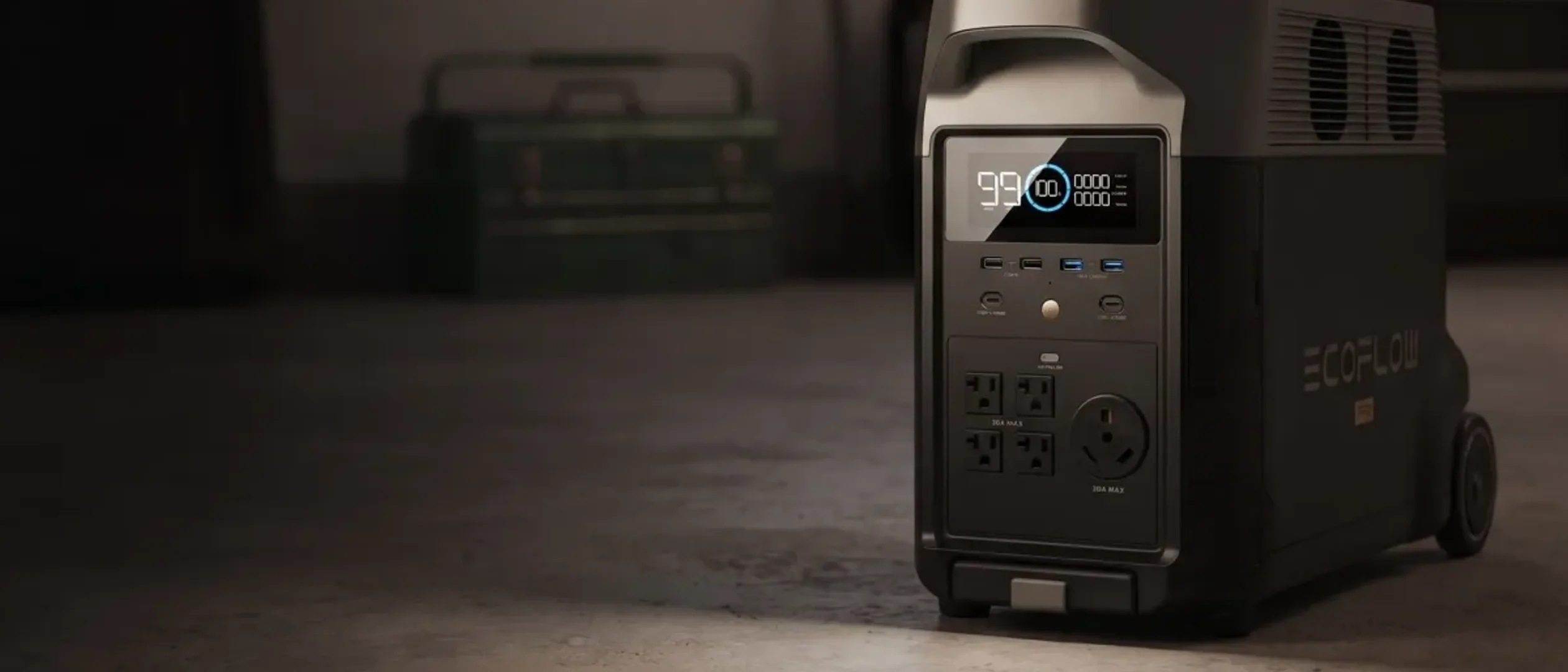
12 kW of split-phase 120/240 V output runs almost anything in a typical home, and three inverters in parallel reach 36 kW. On the front are two NEMA 5-20 outlets (120 V, 20 A), an L14-30 (120/240 V, 30 A) and a 14-50 (120/240 V, 50 A) for RVs, EV charging or a generator-style inlet. The side 5+8 Power In/Out port (120/240 V, 50 A) links to the Smart Home Panel 3, which backs up to 32 circuits, or to the Smart Gateway.
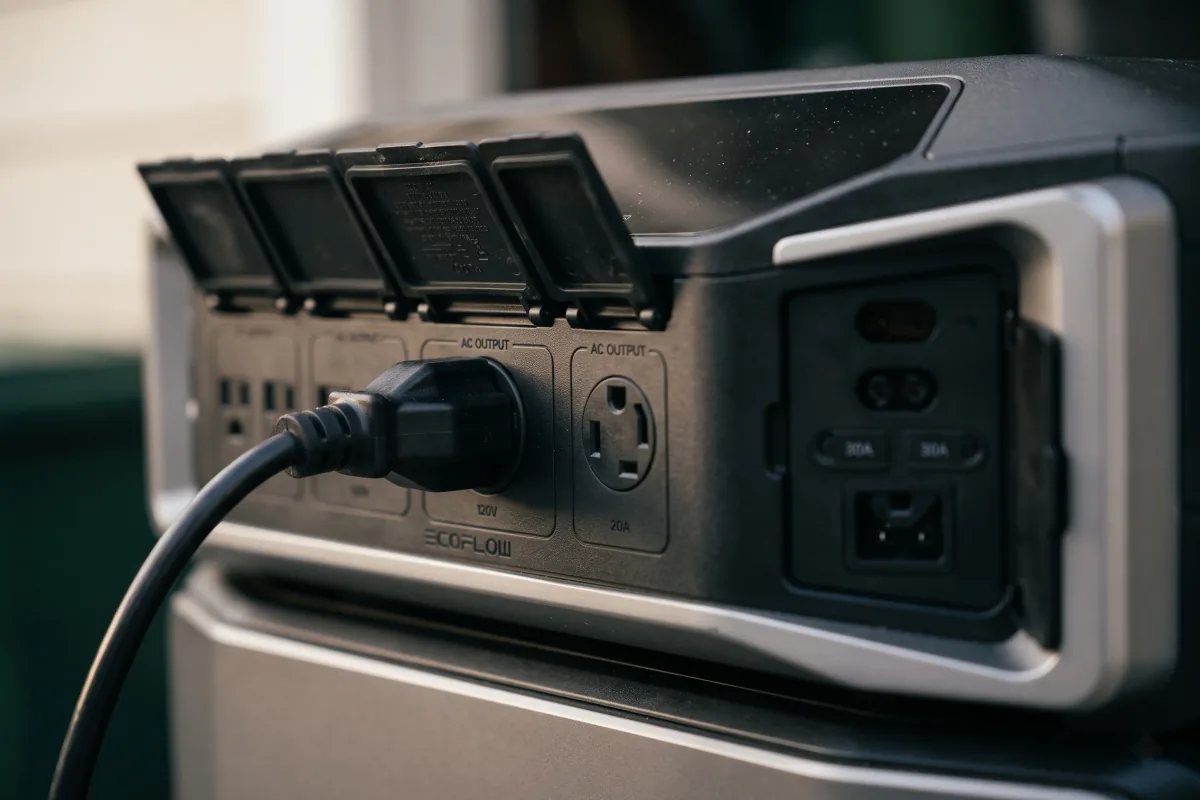
Full 12 kW output needs batteries on both of the inverter's battery ports; EcoFlow says that if the two ports carry unequal numbers of batteries, output may not reach 12 kW. For motor starts, EcoFlow's product page says its Adaptive Start feature handles surges up to 45 kW and appliances such as a 5-ton AC, but the spec table lists no surge rating, so check large motors with your installer. It has no USB or DC ports, so phones and laptops charge through their wall adapters, and output is fixed at 60 Hz.
Backup (UPS) and app: under 20 ms with the home panel
Under 10 ms on its own; the Smart Home Panel 3 or Smart Gateway must be installed by a licensed electrician.
Wired through the Smart Home Panel 3 or Smart Gateway, the system switches the home to battery in under 20 ms; with devices plugged into its own outlets it switches in under 10 ms. Routers, PCs and lights stay on through a cut. See our UPS guide for which devices need faster switching.
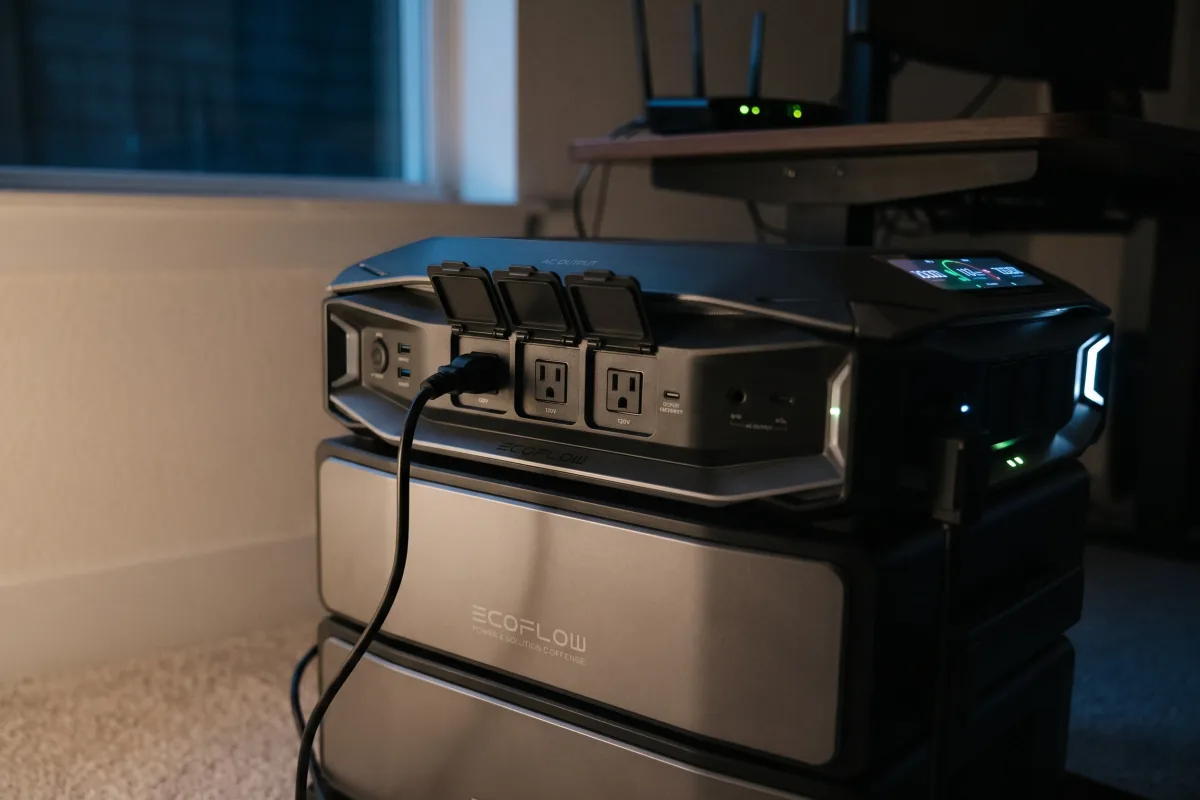
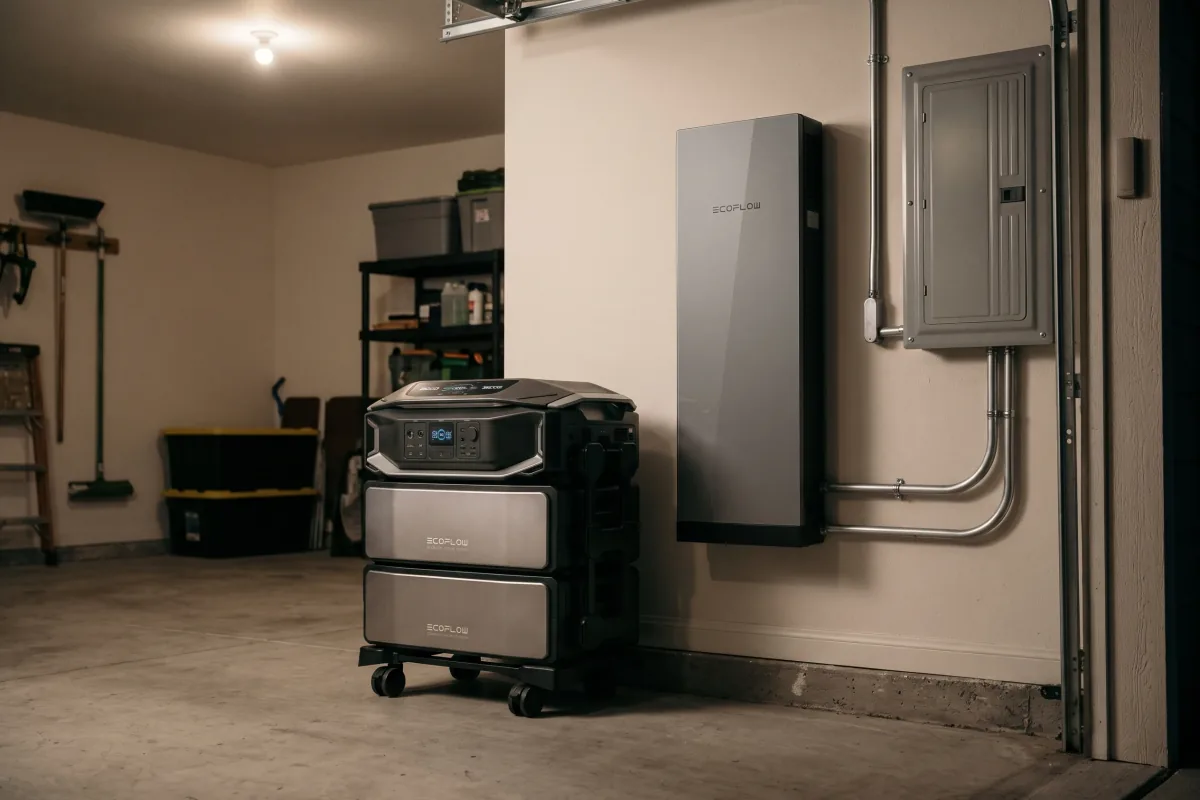
Installation: the Smart Home Panel 3 connects to your main panel, so a licensed electrician installs it, usually with a permit. The inverter and batteries stand on the floor with no wall mounting, and EcoFlow sells its own installation through authorized installers, quoting about seven days from permit to a one-day install. The system is not grid-tied: EcoFlow says it only draws from the grid and never sends power back, which keeps approval simpler than for a grid-tied battery. Never connect any station to a house by plugging it into a wall outlet; our transfer switch guide explains the safe options.
App: the EcoFlow app sets backup reserve, circuit priorities, time-of-use charging and generator auto start and stop. Storm Guard mode sends weather alerts and can charge the batteries to 100% from solar or the grid before a storm.
Noise: under 30 dB at 0.5 m at 4 kW
Quiet enough for a garage beside living space, with IP54 dust and splash protection.
EcoFlow rates the inverter at under 30 dB at 0.5 m, at 25°C ambient, while delivering 4 kW. That is quieter than a whisper at close range. EcoFlow doesn't publish a figure at full 12 kW output, when the fans work harder. The IP54 rating also protects it from dust and splashes in a garage.
How it compares: the most output, but the least portable
Against the Anker SOLIX F3800 Plus, Explorer 5000 Plus and Delta Pro 3, the Ultra X leads on output, solar and expansion.
| Spec | EcoFlow Delta Pro Ultra X | Anker SOLIX F3800 Plus | Jackery Explorer 5000 Plus | EcoFlow Delta Pro 3 |
|---|---|---|---|---|
| Capacity (Wh) | 12288 | 3840 | 5040 | 4096 |
| AC output, continuous (W) | 12000 | 6000 | 7200 | 4000 |
| AC charge time | — | — | About 3.5 hr on a 120 V outlet; 1.7 hr via Smart Transfer Switch or 4,000 W high-PV (per Jackery) | 0–80% in about 50 min (EcoFlow; setup not stated) |
| Max solar input (W) | 10000 | 3200 | 4000 | 2600 |
| Weight (lb) | 299 | 136.7 | 134.5 | 113.5 |
| Warranty (years) | 5 | 5 | 5 + 2 optional | 3 + 2 with app registration |
| Price | Check price | Check price | Check price | Check price |
The Delta Pro Ultra X rates 9.6, above the Jackery Explorer 5000 Plus (8.5), the Anker SOLIX F3800 Plus (7.8) and the EcoFlow Delta Pro 3 (7.0). It scores top marks on charging, output, solar, switchover and expansion; only battery life holds it back, because EcoFlow publishes no cycle rating.
- Anker SOLIX F3800 Plus: 6,000 W at 120/240 V with 3,840 Wh on wheels. Half the output and under a third of the capacity, but you can roll it around.
- Jackery Explorer 5000 Plus: 7,200 W and 5,040 Wh with a 0 ms switchover in Online UPS mode (20 ms by default). Less output and solar, but a single unit.
- EcoFlow Delta Pro 3: 4,000 W and 4,096 Wh at 113.5 lb. The portable EcoFlow if you don't need whole-home power.
- Original Delta Pro Ultra: the X raises output from 7,200 to 12,000 W, batteries per inverter from five to ten, and solar from 5,600 to 10,000 W. Older Delta Pro Ultra batteries can connect, but EcoFlow says only to the rightmost battery port during their firmware upgrade.
For the portable alternatives, see our best whole-home battery backup guide.
Who should buy the Delta Pro Ultra X: homeowners backing up a whole panel
Built for 240 V loads, long outages and large rooftop arrays, not for renters or portable use.
Good fit: homeowners who want the whole panel, including 240 V central air or a well pump, backed up for days; who have room for a 10 kW solar array; and who plan a professional installation of the Smart Home Panel 3 or Smart Gateway.
Look elsewhere if: you want a portable station, rent your home, want to sell power back to the grid, or only need to keep a fridge and router running. A smaller station such as the Delta Pro 3 covers those needs.
FAQ
What buyers ask about the Delta Pro Ultra X's backup time, install, expansion and the original Ultra.
How long can the Delta Pro Ultra X power a house?
About 20 hours for essentials drawing around 500 W, and about five days for just a fridge and router, on the 12,288 Wh bundle by our estimate. With ten batteries on one inverter, essentials run for just over four days.
What is the difference between the Delta Pro Ultra and the Ultra X?
The Ultra X outputs 12,000 W instead of 7,200 W, takes ten batteries per inverter instead of five, and accepts 10,000 W of solar instead of 5,600 W.
Is the EcoFlow Delta Pro Ultra X worth it?
If you want a whole home, including 240 V loads, backed up for days, it is the highest-rated system we cover (9.6). If you only need a few circuits, a portable station costs less and needs no installation.
Does the Delta Pro Ultra X need an electrician?
The Smart Home Panel 3 or Smart Gateway connects to your main panel, so a licensed electrician should install it. The unit's own outlets work without installation.
Can it run central air?
Yes. It outputs 12 kW at 120/240 V, and EcoFlow says it starts a 5-ton AC. Runtime drops quickly under that load, so plan extra batteries or solar.
How much solar can the Delta Pro Ultra X take?
Up to 10,000 W across two inputs of 80 to 500 V and 15 A, at most 5,000 W each, through the included PV Switch Box.
How far can it expand?
Up to ten 6,144 Wh batteries per inverter (61,440 Wh). A system of three inverters takes thirty batteries for 184.32 kWh and 36 kW.
Can it send power back to the grid?
No. EcoFlow says it only draws power from the grid and never feeds it back.