 By
We may earn a commission if you buy through links on this page, at no extra cost to you. This never affects which products we recommend. How we make money.
On this page 9 sections
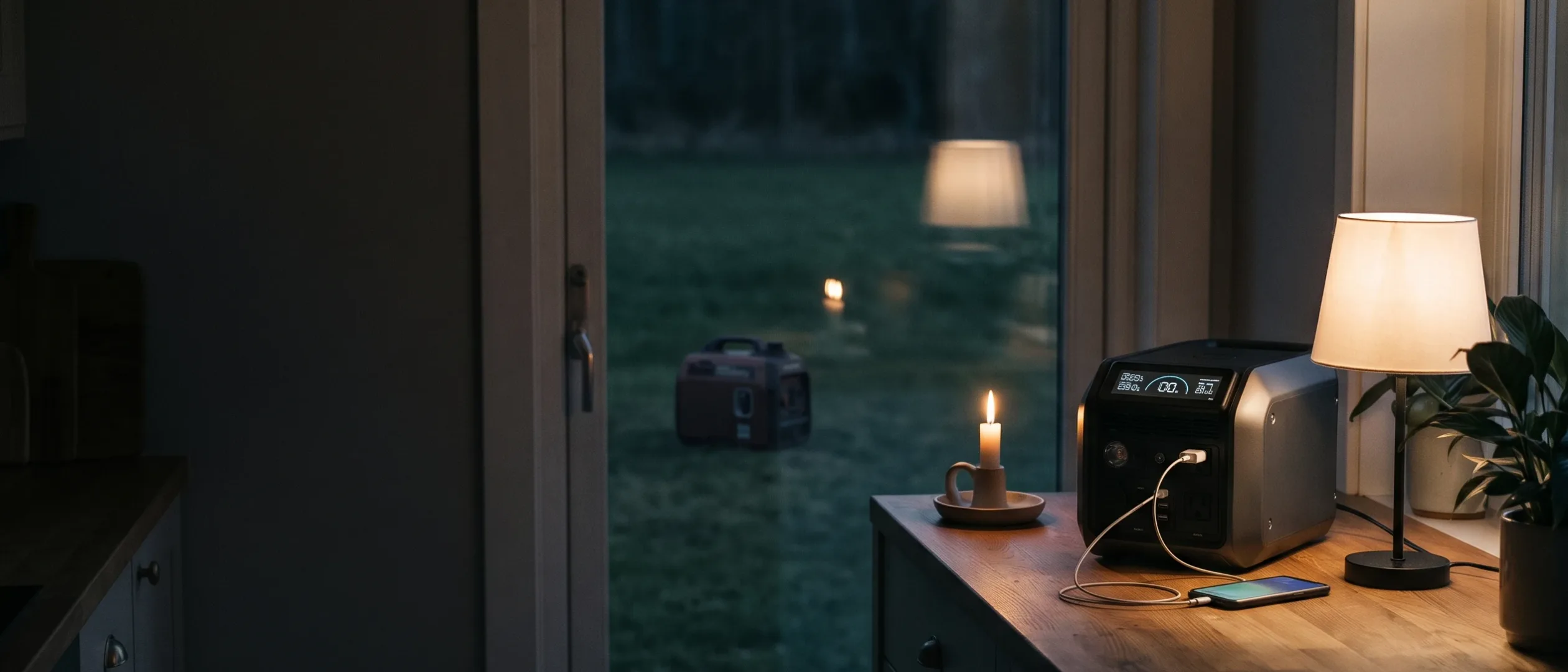
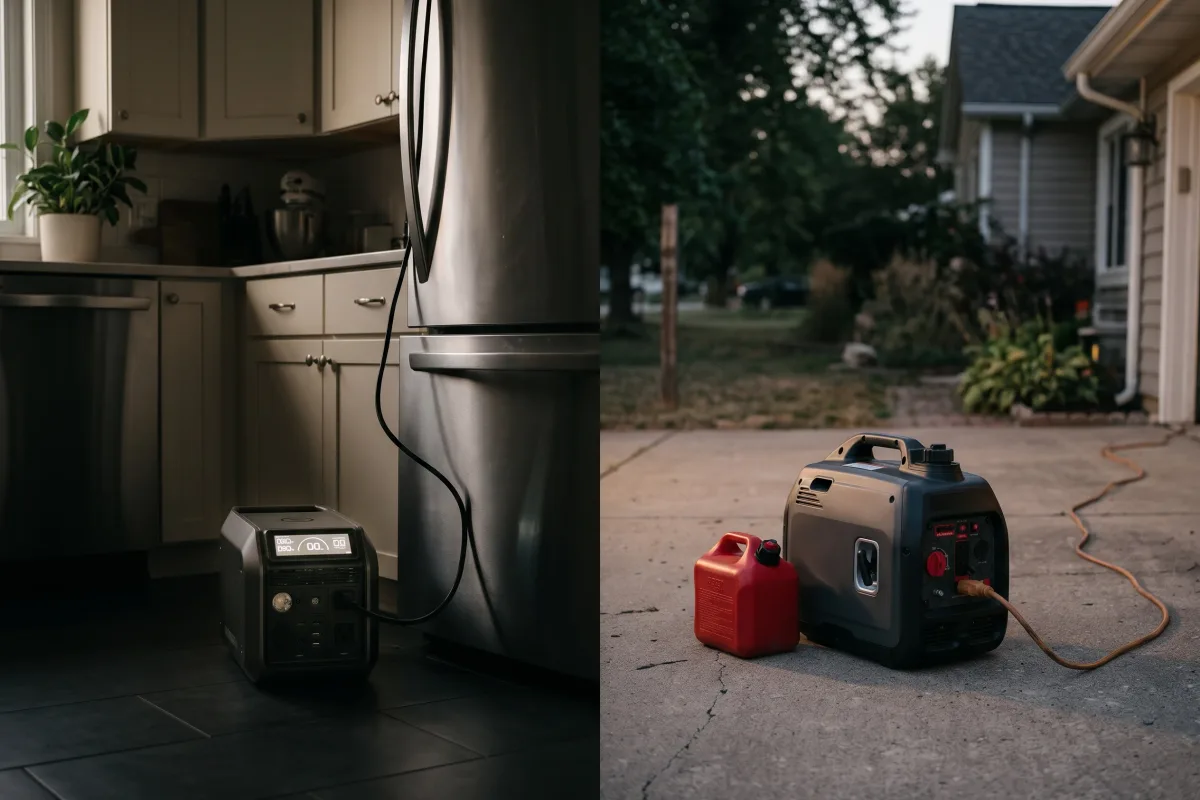
Choose a portable power station for quiet, indoor-safe power through short outages; choose a generator when you need power for days and can run it safely outside. Many people end up with both.
Power station vs generator at a glance
The trade-offs in one table
| Feature | Portable power station | Inverter generator |
|---|---|---|
| Where it runs | Indoors or out | Outdoors only, 20+ ft from the house |
| Power source | Battery (watt-hours) | Gasoline or propane |
| How long it runs | Until the battery is empty | As long as you have fuel |
| Refill | Wall, solar, car | Refuel by hand |
| Noise | Fans only | Engine noise |
| Upkeep | Charge it every few months | Oil, fresh fuel, test runs |
Where you can use them
The biggest difference is safety
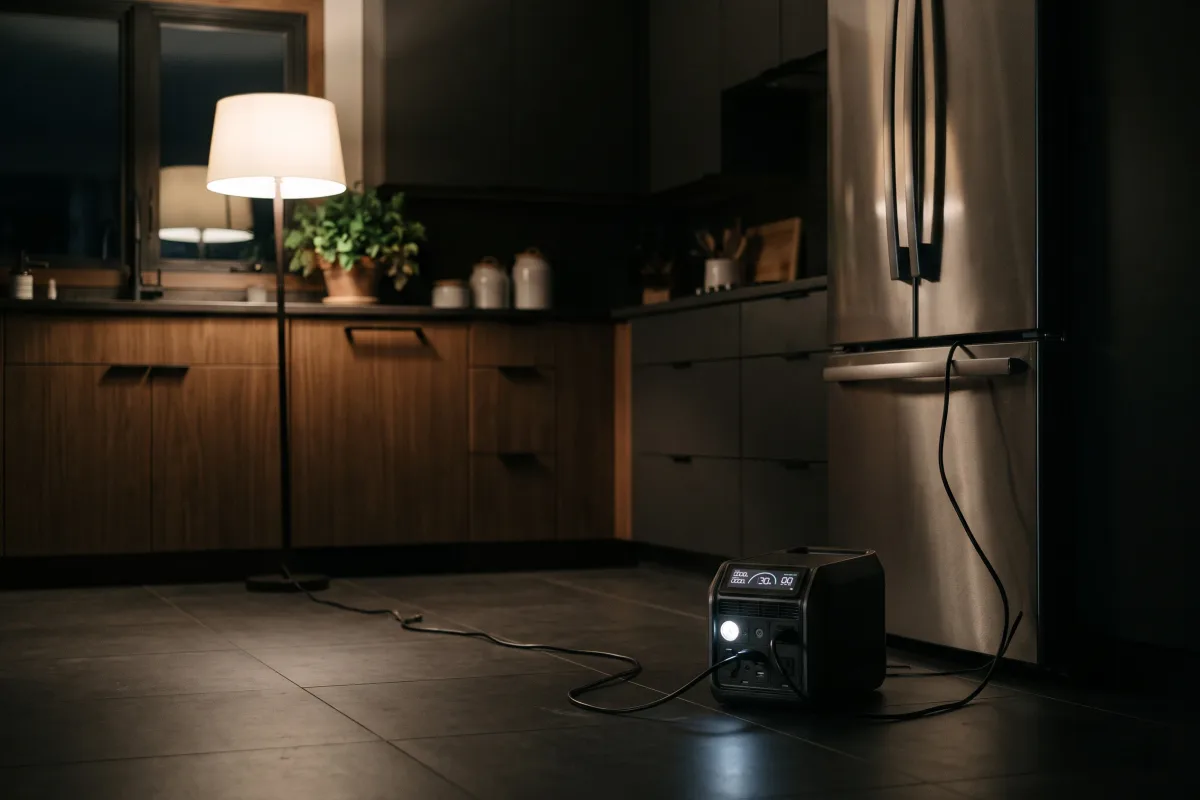
A power station makes no exhaust, so it can sit in a kitchen, bedroom or home office; see are portable power stations safe indoors for the battery precautions.
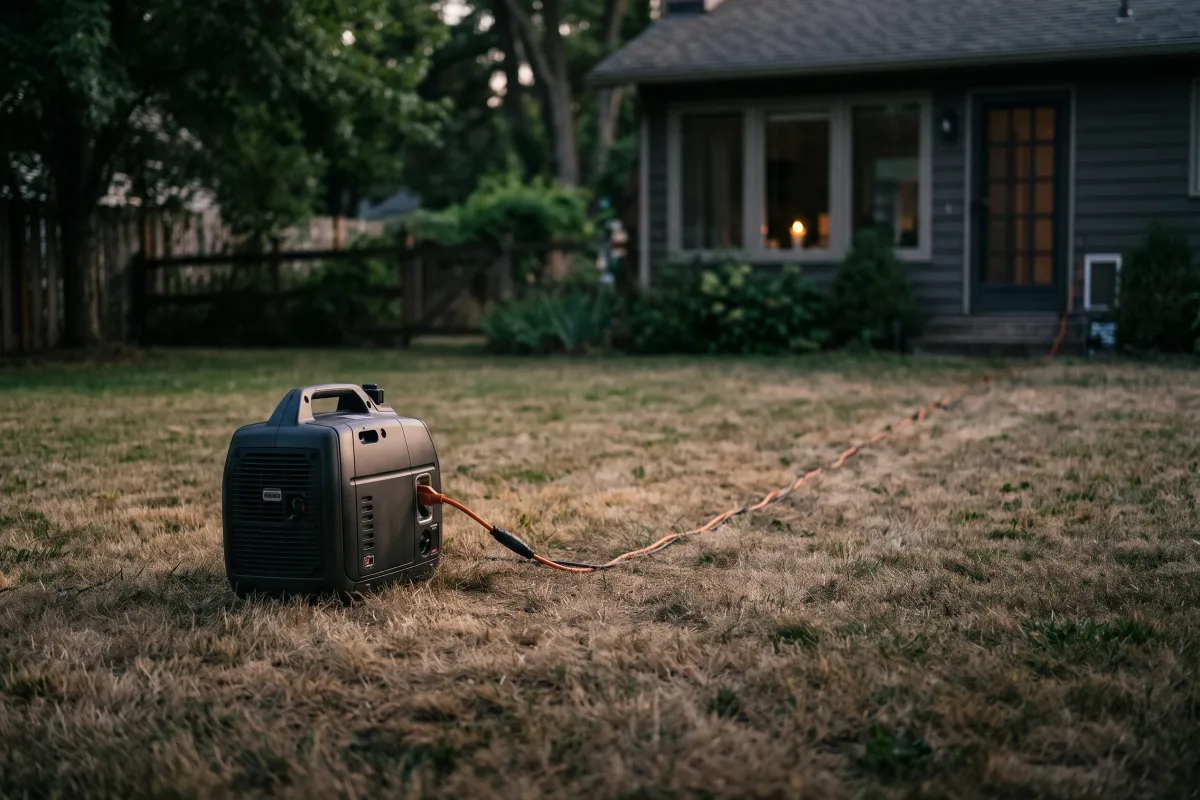
A generator makes carbon monoxide (CO). The CPSC says to run portable generators outdoors only, at least 20 feet from the house, with the exhaust pointed away. Never run one inside a home or garage, even with doors and windows open, and not on a porch or in a carport. The CPSC estimates about 85 people a year in the US die from CO from portable generators. Fit battery-backed CO alarms if you use one.
How much they can run
Watts decide what you can plug in
Most power stations deliver 1,800–2,400 W, enough for a fridge, lights, a router and one kitchen appliance at a time. Larger home models go further: the Jackery HomePower 3600 Pro Max adds 240 V, and the Anker SOLIX F3800 Plus delivers 6,000 W.
A popular inverter generator, the Honda EU2200i, is rated at 1,800 W (2,200 W max), similar to a mid-size station. Larger open-frame generators make more power, but they're louder and heavier.
See watts vs watt-hours for how to read both numbers.
How long they run
Fixed battery vs refillable tank
A power station runs until its battery is empty. A generator keeps going as long as you refuel it.
Estimated runtimes on a 1 kWh power station
- CPAP, no humidifier, DC cord27 h
- CPAP with humidifier, AC11 h
- Fridge + Wi-Fi router11 h
The Honda EU2200i runs 3.2 hours at full load or 8.1 hours at a quarter load on its 0.95-gallon tank. For an outage of a few days, that means storing and pouring fuel safely. Try your own devices in the runtime calculator.
Recharging and refuelling
Sun and sockets vs gas cans
A station refills from a wall outlet (under an hour on fast models like the EcoFlow Delta 3 Plus), from a car, or from solar panels. With enough sun, solar can keep it going through a long outage; a station sold with panels is often called a solar generator. See how to charge a power station with solar.
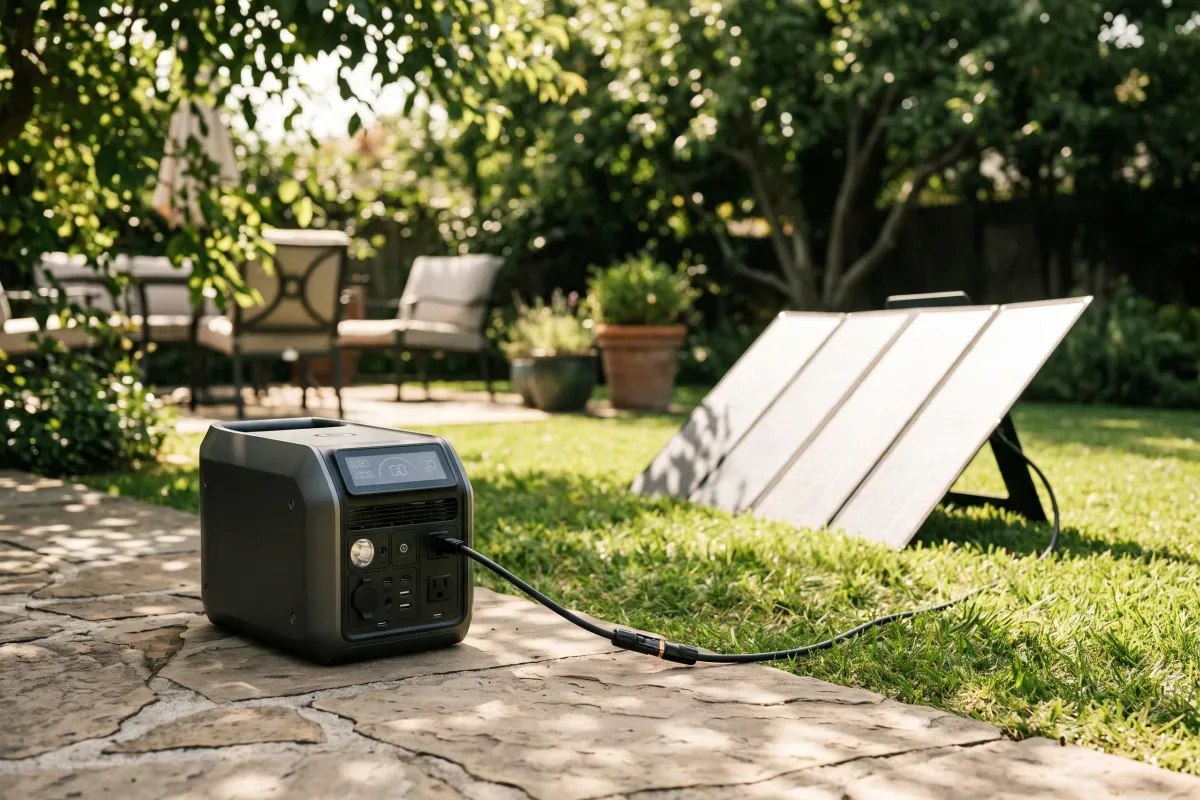
A generator needs fuel on hand. Gasoline goes stale in storage, and during a widespread outage stations may be closed.
Noise and upkeep
Quiet and simple vs loud and hands-on
A power station is silent at light loads; only its fans run when it works hard or charges fast. That makes it fine for bedrooms and CPAP use.
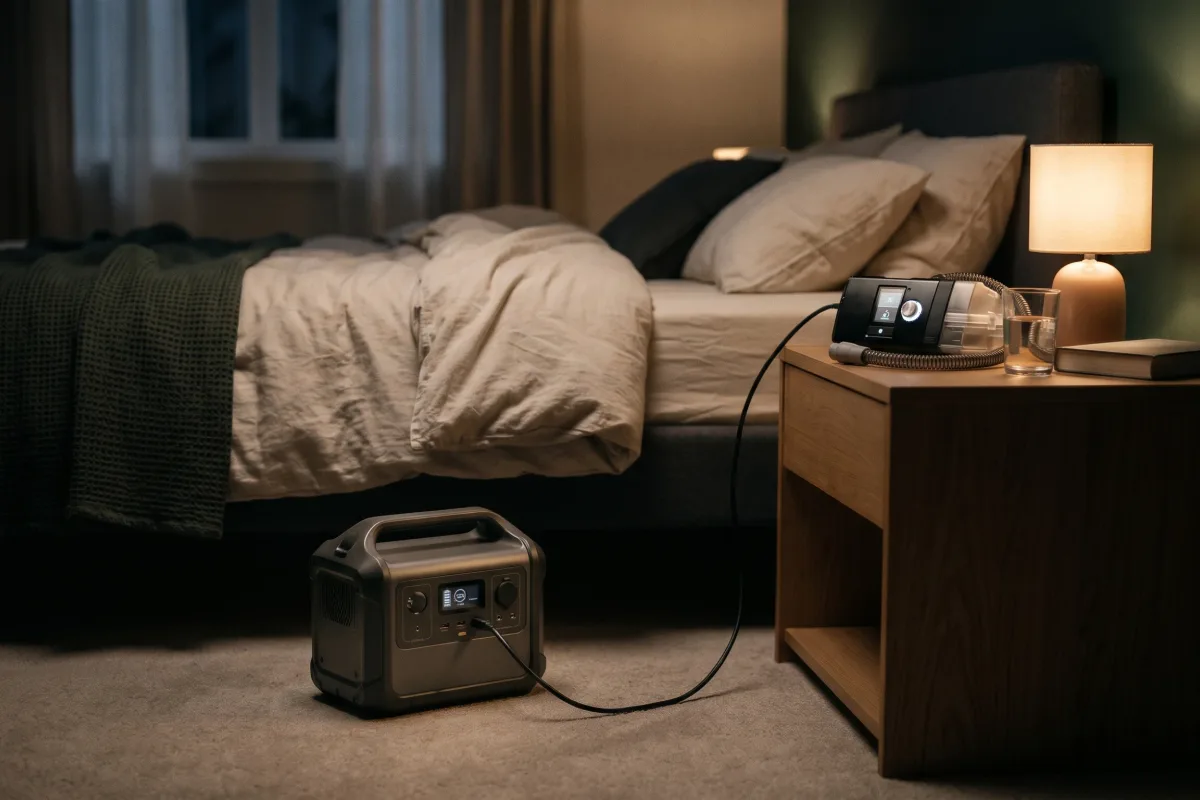
The Honda EU2200i, one of the quieter inverter generators, measures 48–57 dBA at 23 feet. Generators also need oil changes, fresh fuel and regular test runs. A station just needs a top-up charge every few months. Its LiFePO4 battery lasts thousands of cycles.
Using both together
Common for long outages
A generator can recharge a power station during a long outage. Run the generator outside at a safe distance for an hour or two, then power the house quietly from the station overnight.
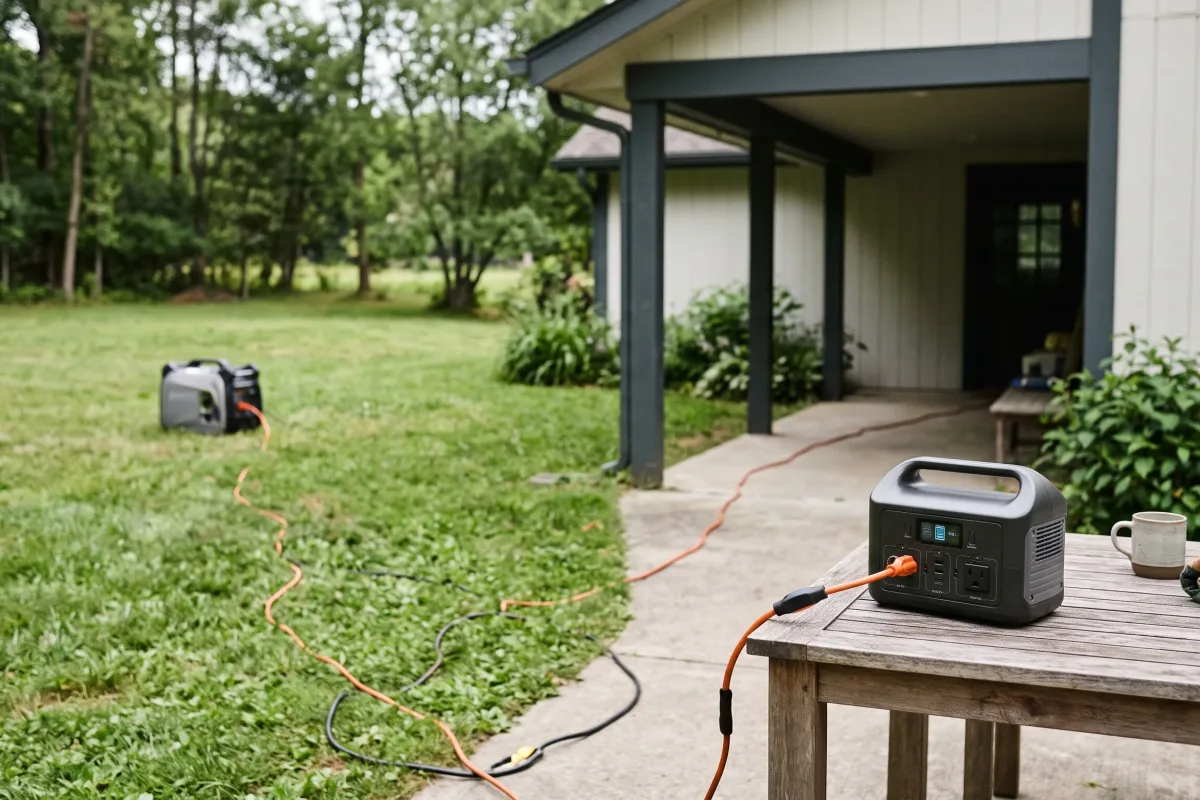
Some stations are built for this. The F3800 Plus takes generator input with Anker's adapter, the HomePower 3600 Pro Max lists generator charging among its recharge options, and the Delta 3 Plus works with EcoFlow's Smart Generator.
Who should buy a station or a generator
Matched to how you'll use it
- Short outages (hours to a day): a power station. Quiet, indoor-safe and ready instantly. See the best portable power stations for home backup.
- Long outages (several days): a large station plus solar, or a station with a generator to recharge it.
- Whole-home or 240 V loads: a large station such as the F3800 Plus or HomePower 3600 Pro Max with a transfer switch, or a larger generator.
- RV and camping: a station where generators are banned or quiet hours apply; a generator for heavy air conditioning use.
- Apartments: a power station. You likely have nowhere to run a generator safely.
The three power stations named in this guide, side by side:
| Spec | EcoFlow Delta 3 Plus | Jackery HomePower 3600 Pro Max | Anker SOLIX F3800 Plus |
|---|---|---|---|
| Capacity (Wh) | 1024 | 3584 | 3840 |
| AC output, continuous (W) | 1800 | 4000 | 6000 |
| AC charge time | 56 min | 1.3 h (240 V, optional 40 A cable) | — |
| Max solar input (W) | 1000 | 1200 | 3200 |
| Weight (lb) | 27.6 | 73.9 | 136.7 |
| Warranty (years) | 5 | 1 | 5 |
| Price | Check price | Check price | Check price |
FAQ
Quick answers to common questions
Is a portable power station better than a generator?
For indoor use, noise and short outages, yes. For running heavy loads for days, a generator is better, as long as it runs safely outside.
Can a portable power station power a house?
Large ones can run selected circuits through a transfer switch installed by an electrician. Most portable stations run essentials, not a whole house.
Can I run a generator in my garage?
No. The CPSC says never to run a generator in a garage, even with the door open. Keep it outside, at least 20 feet from the house.
How long will a power station run a refrigerator?
About 11 hours for a typical fridge and router on a 1 kWh station. Larger stations run proportionally longer.
What are the downsides of a power station?
Its runtime is limited by its battery, and recharging takes time or sun. Large models are also heavy to move.