 By
We may earn a commission if you buy through links on this page, at no extra cost to you. This never affects which products we recommend. How we make money.
On this page 15 sections
To choose a portable power station, list what you'll run and for how long, then pick a station whose continuous output covers everything running at once and whose capacity covers the hours you need. After that, compare battery type, charging speed, ports, backup switchover, weight, expansion and warranty, in that order. This guide walks through each step with the real ranges from the 24 current stations we've reviewed.
What a portable power station is: a battery, inverter and outlets, not a generator
A portable power station is a rechargeable battery with an inverter and AC outlets, from 286 Wh to 12,288 Wh among stations we've reviewed.
A portable power station stores energy in a lithium battery and delivers it through household AC outlets, USB ports and usually a 12 V car socket. It recharges from a wall outlet, solar panels or a car, and it makes no fumes, so it can run indoors.
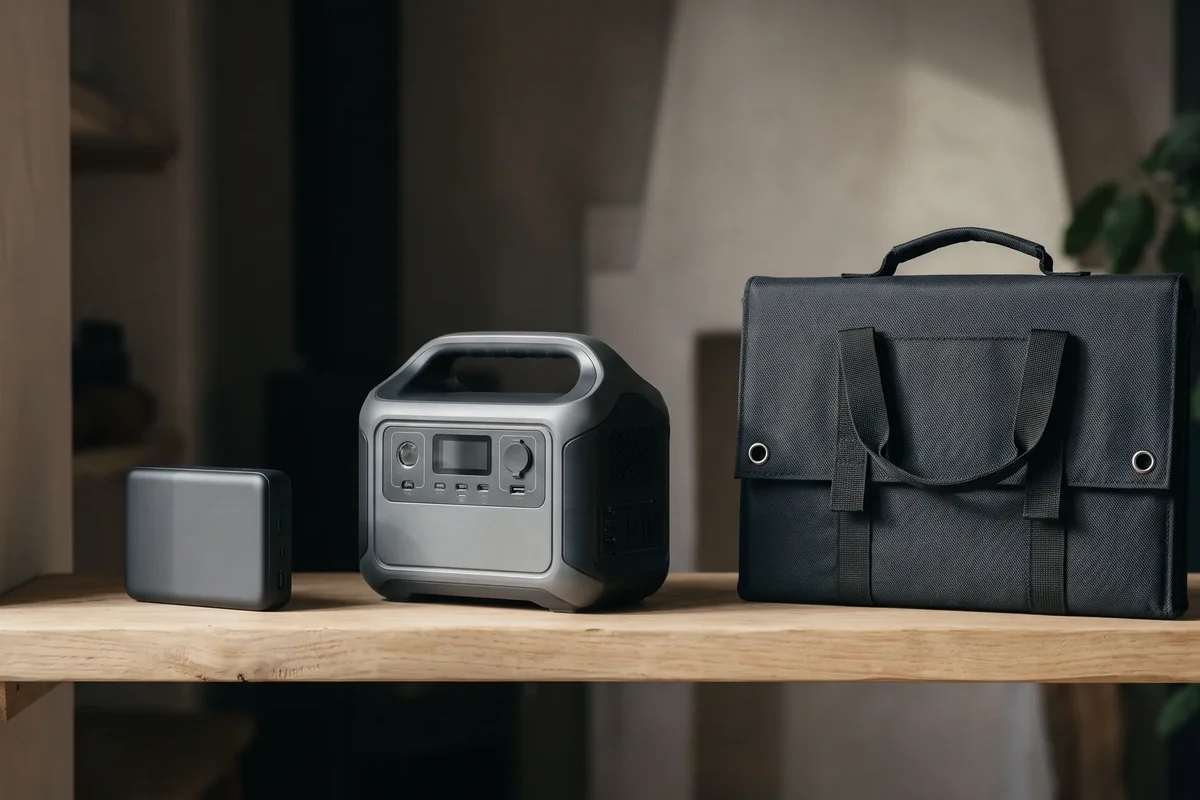
- Not a power bank. A power bank holds under 100 Wh and charges phones and laptops over USB; a station adds AC outlets and far more capacity.
- Not a generator. A gas generator runs as long as there's fuel but must stay outdoors; a station is silent and runs indoors but holds a fixed amount of energy. See power station vs generator.
- A "solar generator" is a station plus panels. It's the same product sold in a bundle; see solar generator vs portable power station.
Step 1: list your loads, with watts and hours
Write down every device, its running watts and how many hours a day it runs; that list sets every other spec.
For each device, note its running watts from the label or manual, whether it has a motor or compressor (fridges, pumps and some fans need a startup surge), and how many hours a day you'll run it. Fridges and freezers cycle on and off, so use their average draw over a day, not the label's running figure.
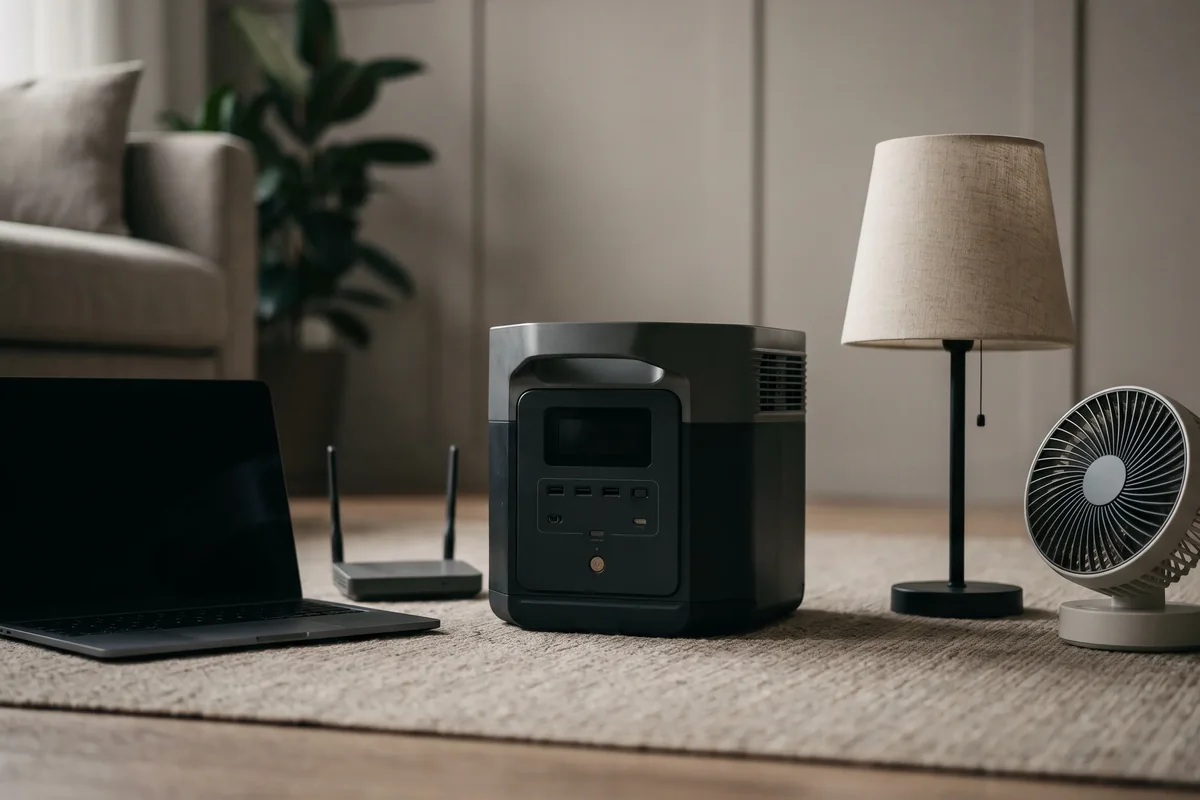
A worked list for a home-office outage: a laptop at 60 W for 8 hours, a router at 12 W around the clock, and a lamp at 10 W for 5 hours. That's 82 W at most at one time and about 818 Wh over the day before any losses. Our watts vs watt-hours guide explains the two units, and the runtime calculator does the sums for you.
Step 2: output, matching continuous and surge watts to your loads
Continuous output must cover everything running at once; the surge rating must cover the biggest motor start.
For the method and an appliance chart, see surge vs continuous watts.
A station's continuous output is the most it can deliver steadily; among stations we've reviewed it runs from 300 W to 12,000 W. Add up everything that may run together and pick a station above that total. The surge rating covers the brief startup draw of a fridge, pump or power tool. Look for a pure sine wave inverter, so sensitive electronics and motors run as they would from the wall.
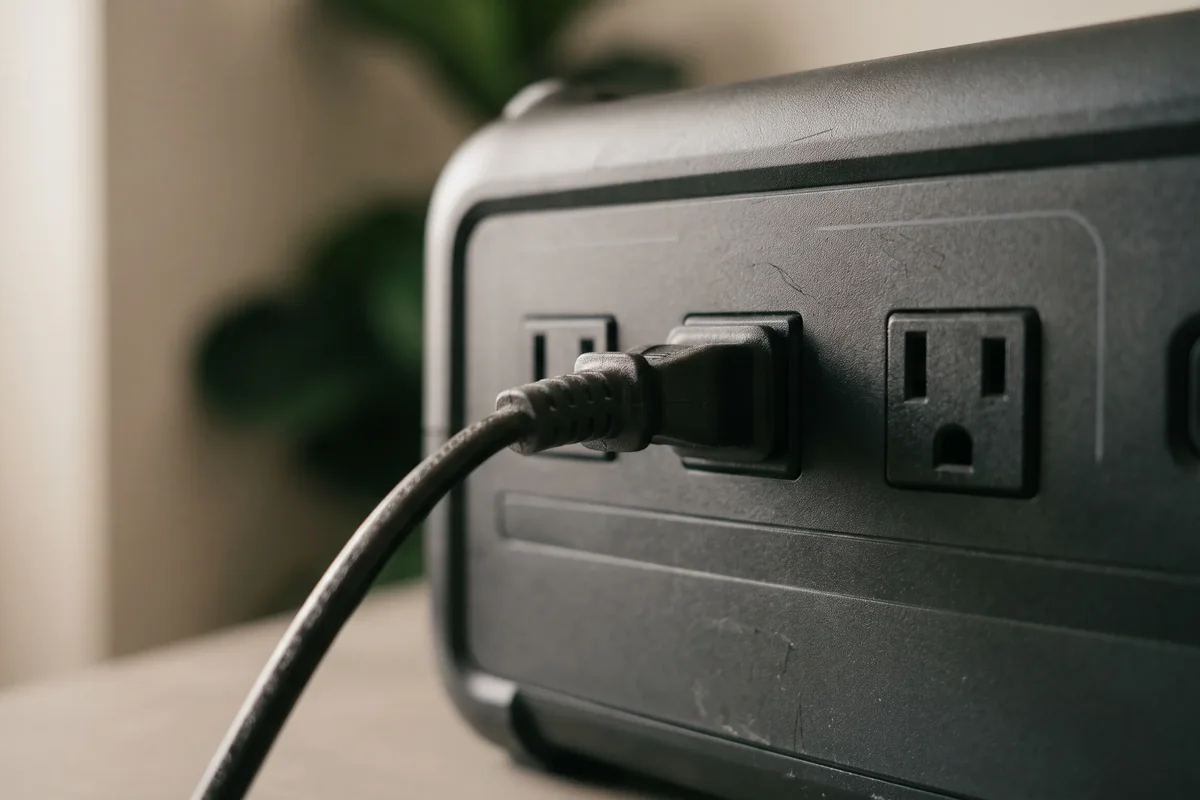
Rough steps: about 300 to 600 W runs devices, lights and a CPAP; about 1,500 to 2,600 W adds a fridge, microwave, kettle or coffee maker; 3,600 W and up, often at 120/240 V, runs home circuits and 240 V appliances through a transfer switch. Some stations run certain heating loads above their rating (EcoFlow calls it X-Boost); it isn't continuous output, so treat it as a bonus. For a full list of what runs in an outage, see what a portable power station can run in an outage.
Step 3: capacity, sized to your hours with about 15% lost on AC
On AC you get about 85% of the rated watt-hours, minus about 10 W the inverter uses itself; size up accordingly.
Capacity in watt-hours (Wh) decides how long a station runs. Our runtime method assumes about 85% efficiency on AC, plus about 10 W the inverter draws while on, and about 92% on DC. So the home-office list above (about 818 Wh of loads) needs about 1.2 kWh from the battery with everything on AC and the inverter on all day; running the router from a DC port and switching AC off overnight brings it to about 1.1 kWh. A 1 kWh station falls just short of a full day.
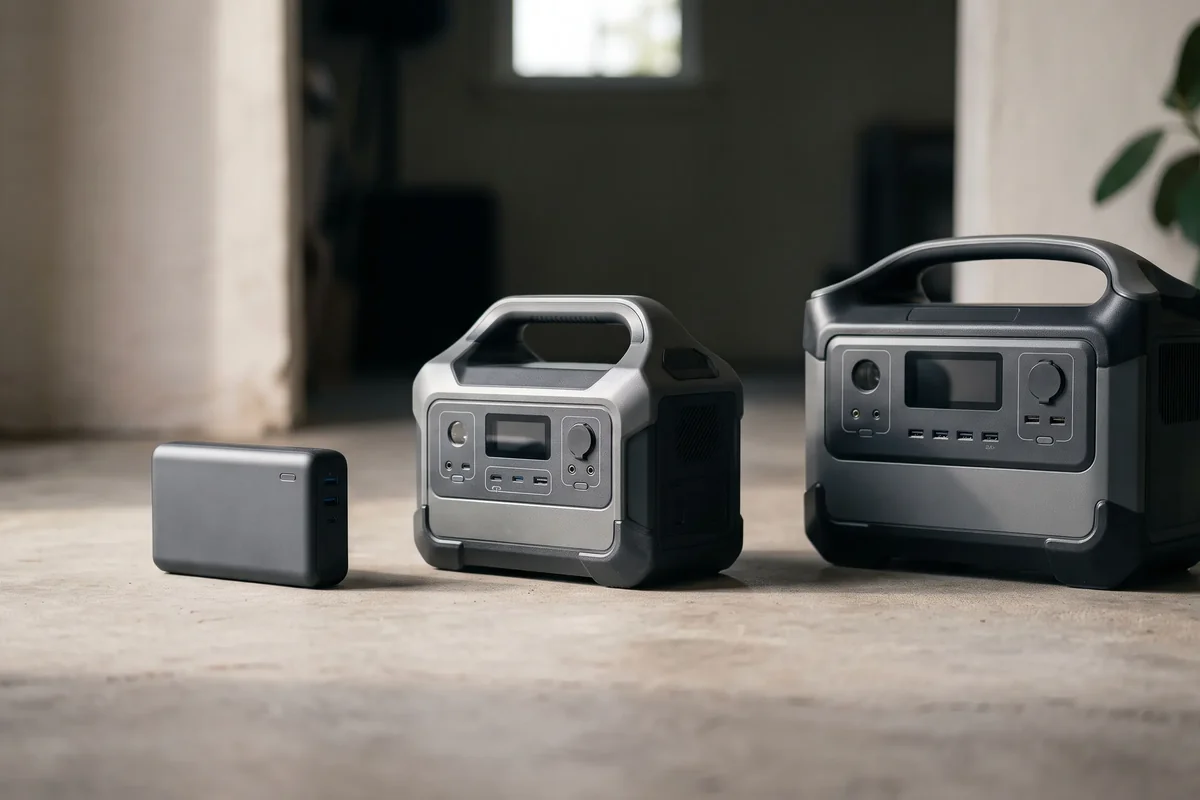
| Size band | Capacity | Typical use | Example |
|---|---|---|---|
| Compact | Under 1 kWh | Devices, lights, a CPAP for a few nights | Bluetti Elite 30 V2 |
| Mid-size | 1 to 1.5 kWh | A fridge overnight, trips, short outages | EcoFlow Delta 3 Plus |
| Large | 2 to 3 kWh | About a day of essentials | Jackery HomePower 2000 Plus v2 |
| Whole-home | 3.5 kWh and up | Home circuits, multi-day outages | Jackery Explorer 5000 Plus |
Add about 20% headroom for cold weather, a reserve setting and battery ageing. All runtimes here are estimates.
Step 4: battery type and cycle rating, LiFePO4 over NMC
LiFePO4 stations we've reviewed are rated for 3,000 to 6,000 cycles; the older NMC battery for 500.
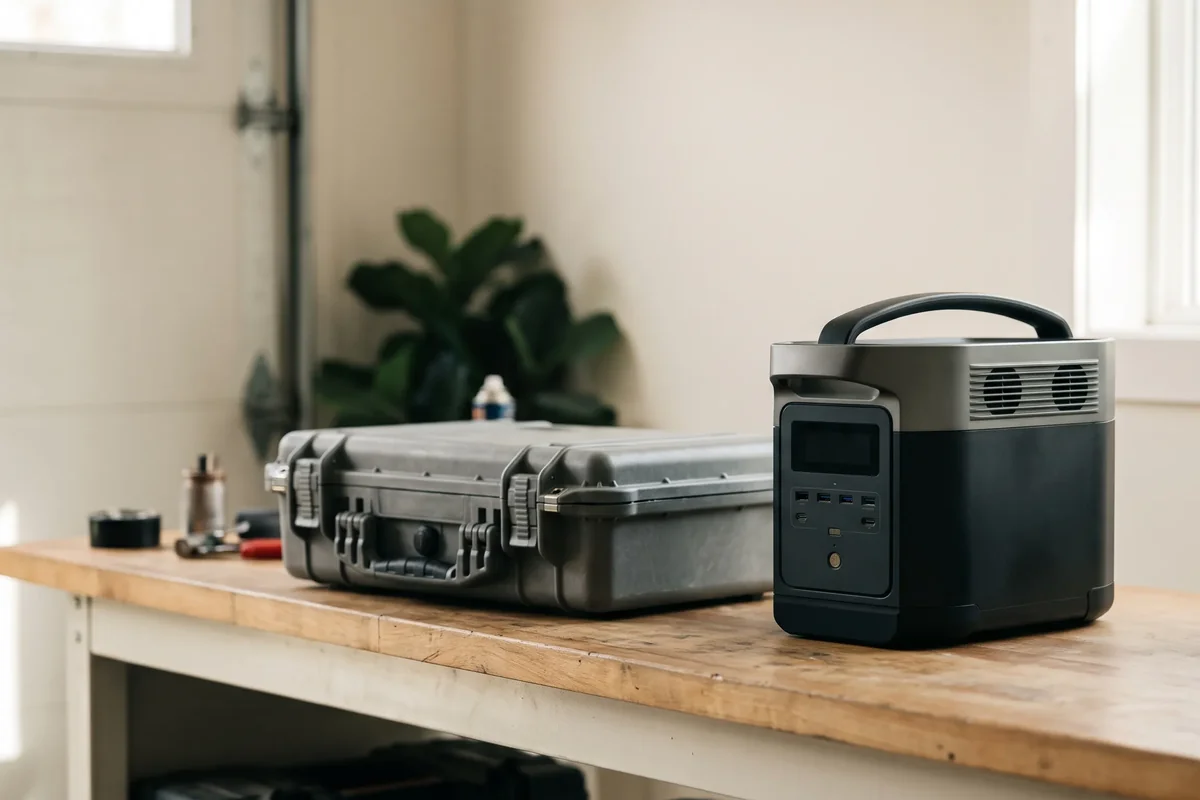
Almost every current station uses LiFePO4 (lithium iron phosphate). Compare the cycle rating and its end point: "4,000 cycles to 80%" means the battery still holds 80% of its capacity after 4,000 full cycles, which beats 4,000 cycles to 70%. Capacity times cycles gives a rough lifetime figure: a 1,024 Wh station rated for 4,000 cycles delivers about 4,100 kWh over its rated life, while a 293 Wh NMC station rated for 800 cycles delivers about 230 kWh.
See LiFePO4 vs lithium-ion and how long portable power stations last.
Step 5: charging from the wall, solar, a car or a generator
Wall charging runs from 90 W to 12,000 W among stations we've reviewed; solar input from 100 W to 10,000 W.
- Wall: a fast-charging 1 kWh station refills in about 50 minutes to an hour; older or small stations take hours. Some fast modes must be switched on in the app. If a station stops taking a charge, see why a portable power station isn't charging.
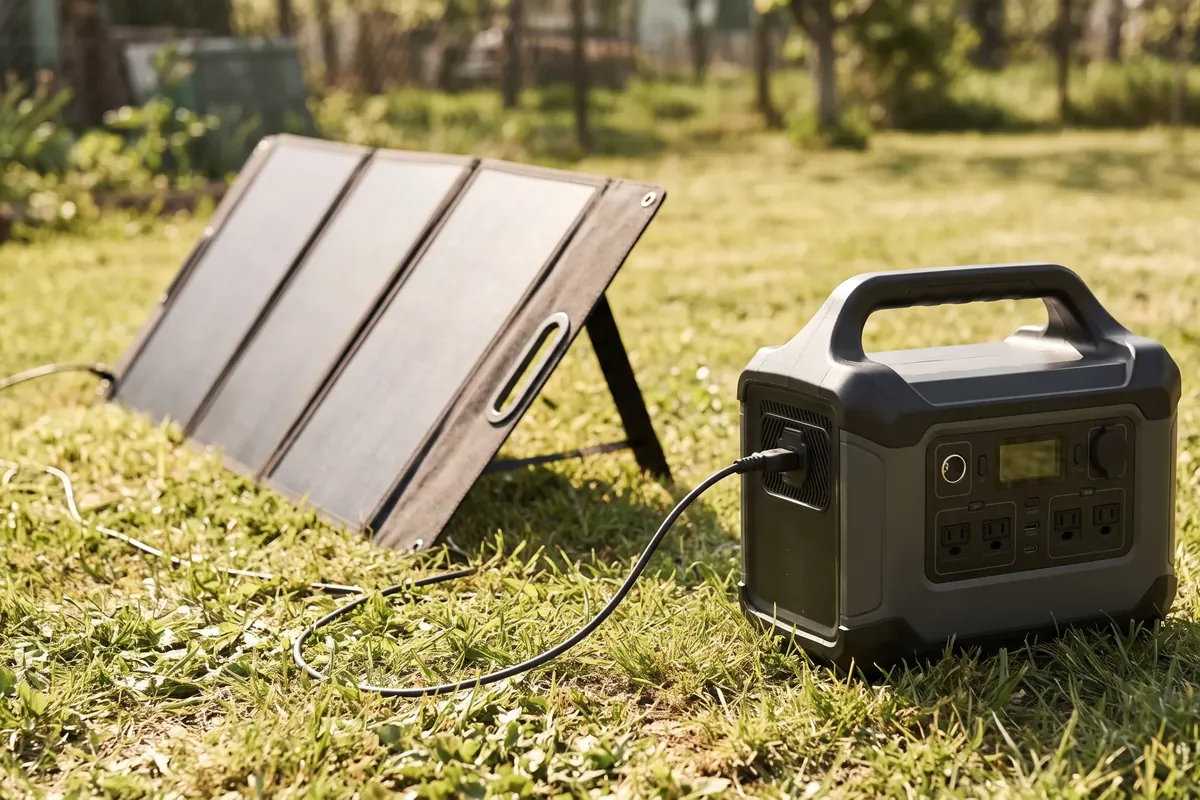
- Solar: check both the maximum watts and the voltage range. Plan on about 75% of a panel's rated watts in good sun, for 3 to 6 peak sun hours a day; a panel above the station's voltage limit won't charge it. See solar panel sizing and how to charge a power station with solar.
- Car: a 12 V outlet gives about 100 to 120 W, slow for anything above a small station.
- Generator or 240 V: whole-home stations can take a generator or 240 V input for a fast refill in a long outage.
Step 6: ports and outlets, including USB-C and a 12 V socket
USB-C wattage and a 12 V car socket matter as much as the number of AC outlets, and some large stations have no 12 V output at all.
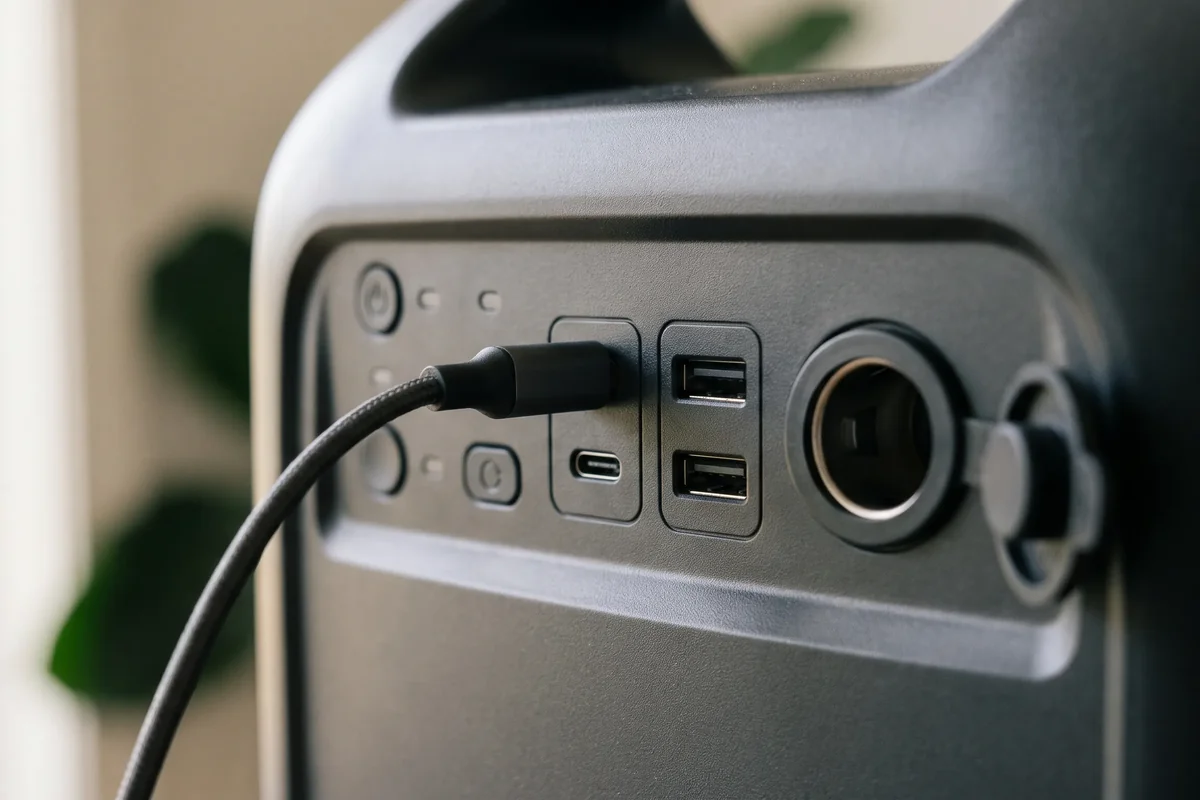
Count the AC outlets you'll use at once. Then match USB-C wattage to your laptop's charger (several stations offer 140 W ports) and check whether there's a 12 V car socket: a CPAP, 12 V cooler or router runs longer from DC than from AC. The Anker SOLIX S2000 and S5000 have no 12 V output. For RVs, a TT-30 or NEMA 14-50 outlet takes the trailer's shore cord; for home circuits, an L14-30 outlet connects to a transfer switch.
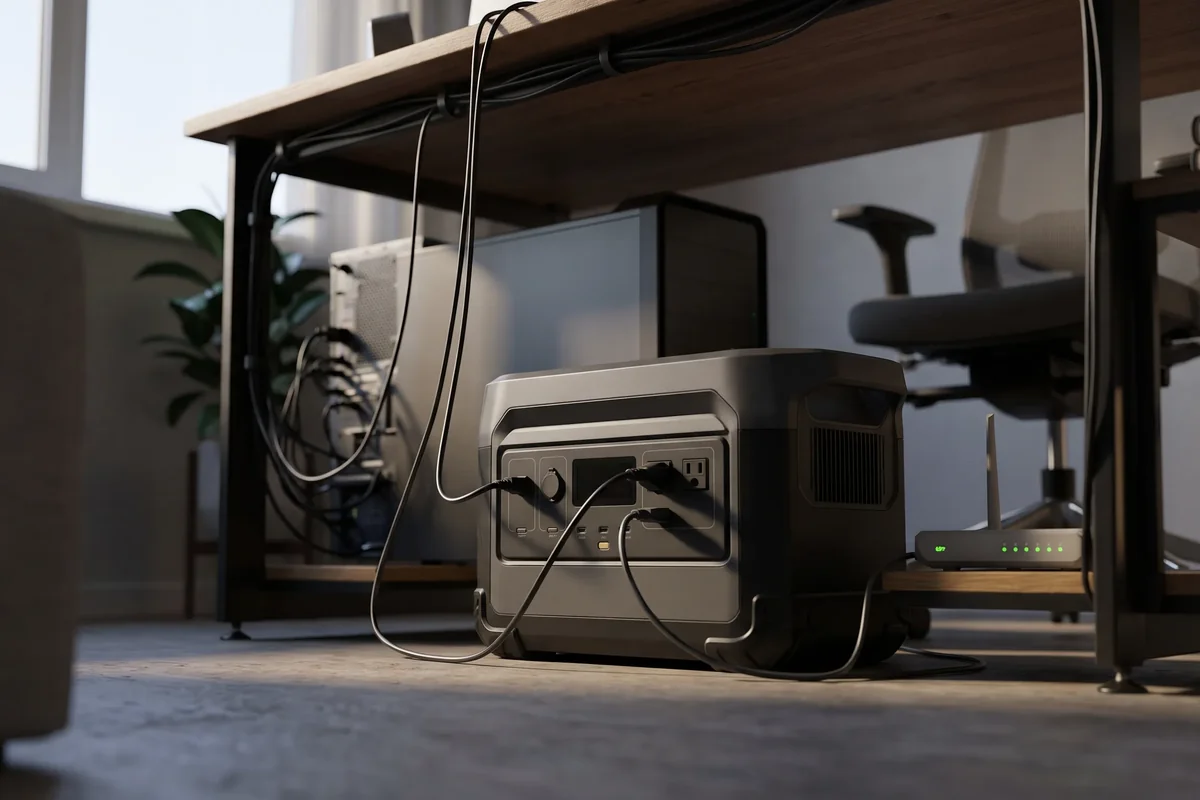
Step 7: backup switchover of 10 ms or less for computers
Switchover runs from 0 to 20 ms among stations we've reviewed; 10 ms or less keeps a desktop PC running.
If the station will sit between the wall and your devices as a backup, its switchover time decides whether they notice an outage. At 10 ms or less, desktop PCs, routers and a CPAP keep running; at 15 to 20 ms, a desktop PC may restart. Some makers don't publish a time and call the feature EPS; treat that as unknown. See using a portable power station as a UPS.
Step 8: weight and portability, from 6 lb to over 290 lb
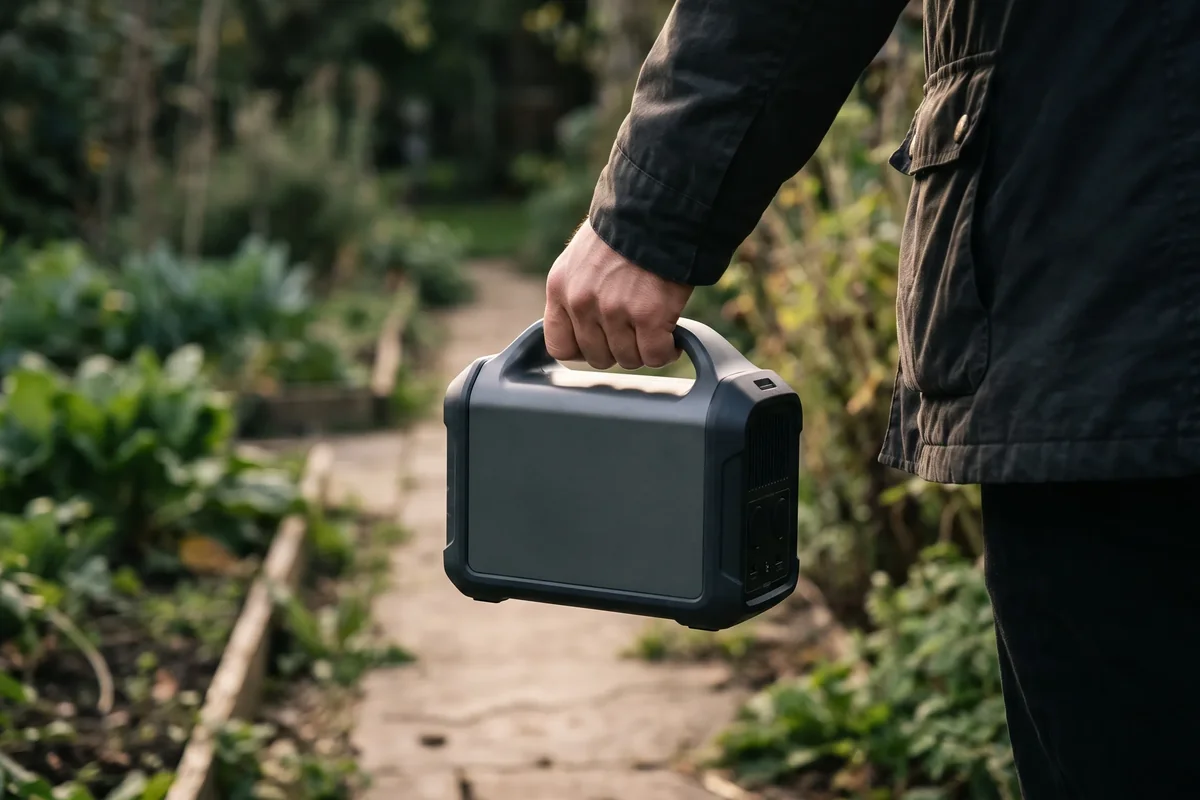
Stations we've reviewed weigh from 6.17 lb to 299 lb; watt-hours per pound runs from about 28 to 56.
A 1 kWh station weighs about 24 to 31 lb, a two-hand carry; 2 kWh stations weigh 35 to 55 lb; whole-home stations run about 74 lb and up, and most roll on wheels. Divide capacity by weight to compare: the Jackery Explorer 1000 v2 carries about 43 Wh per pound, the Delta 3 Plus about 37. If you'll carry it often, buy the lightest station that covers your list.
Step 9: expansion batteries and their limits
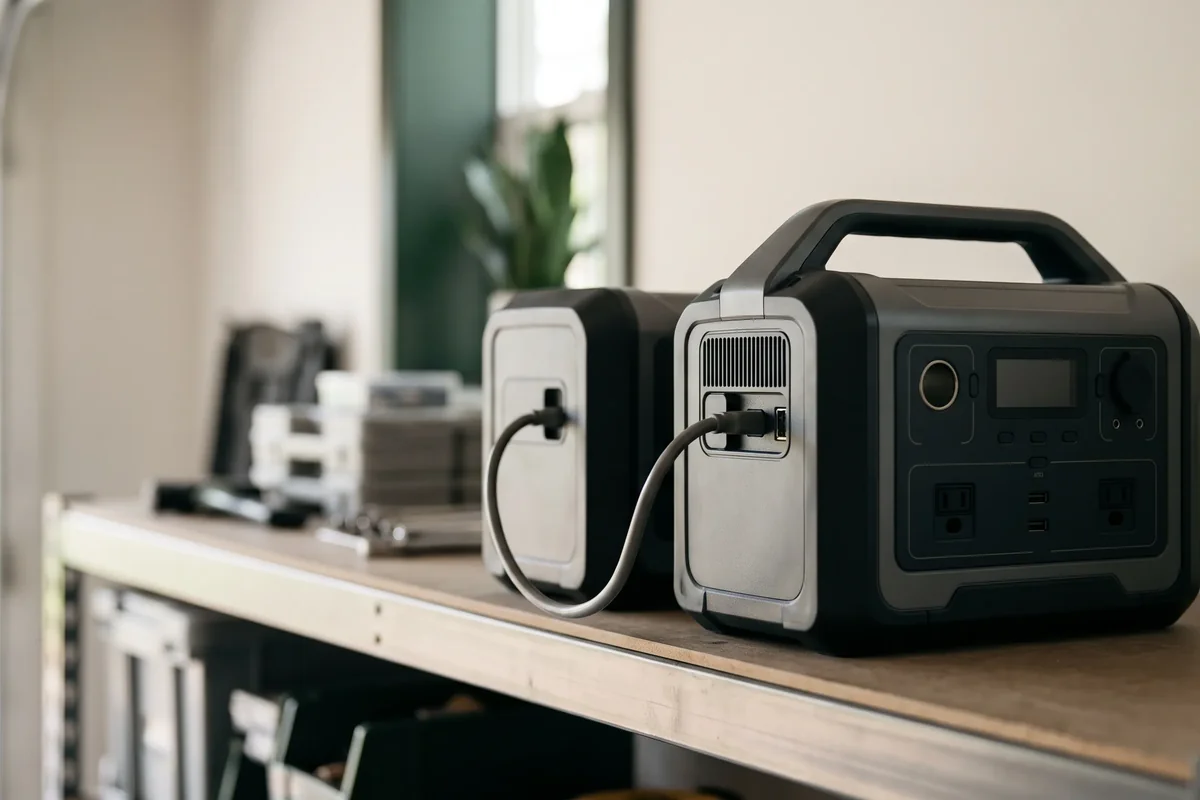
Extra batteries fit only the models their maker lists, and some headline maximums need two linked units.
An expandable station lets you start small and add capacity later. Check three things: which batteries fit (only the maker's listed models), how much one unit takes, and whether the headline maximum needs two linked units. The Anker SOLIX F3800 Plus, for example, takes about 26.9 kWh per unit and reaches 53.8 kWh only with two units. Non-expandable stations, such as the Anker SOLIX C1000 Gen 2, suit you if your list won't grow.
Step 10: warranty, app, noise and temperature range
Warranties run from 1 to 5 years among stations we've reviewed, and some add 2 years only after registration.
- Warranty: 5 years is common; some makers give 3 years plus 2 with registration, Jackery offers 2 optional extra years on the Explorer 5000 Plus, and one station we reviewed has 1 year.
- App: most stations set charge limits, fast-charge modes and backup behaviour in an app.
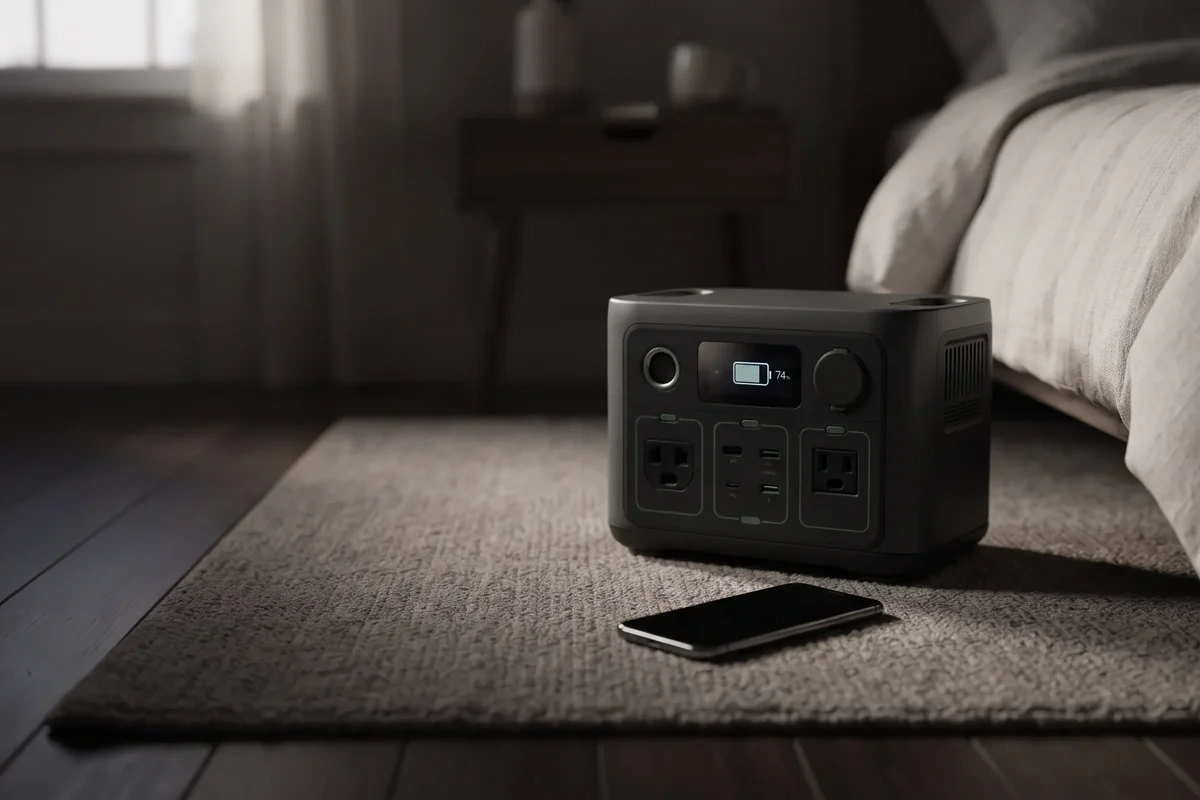
- Noise: many stations list 30 dB or less at moderate loads, quiet enough for a bedroom or campsite.
- Temperature: check the charging range; the Bluetti Elite 30 V2 and Anker SOLIX S5000, for example, charge only between 32 and 104°F, which matters in a cold garage or car.
Check for recalls before buying a used or older model; see portable power station recalls.
Matching a portable power station to your use: about 1 kWh for most homes
For most homes a 1 kWh station with a 10 ms switchover is the starting point; each use has its own guide with picks.
| Use | Size to start with | Specs that matter most | Guide |
|---|---|---|---|
| Everyday all-round | About 1 kWh | Fast charging, 10 ms switchover | Best overall |
| Home outages | 1 to 2 kWh | Switchover, expansion, surge | Home backup |
| Home circuits | 3.5 kWh and up | 240 V, transfer switch, solar | Whole-home |
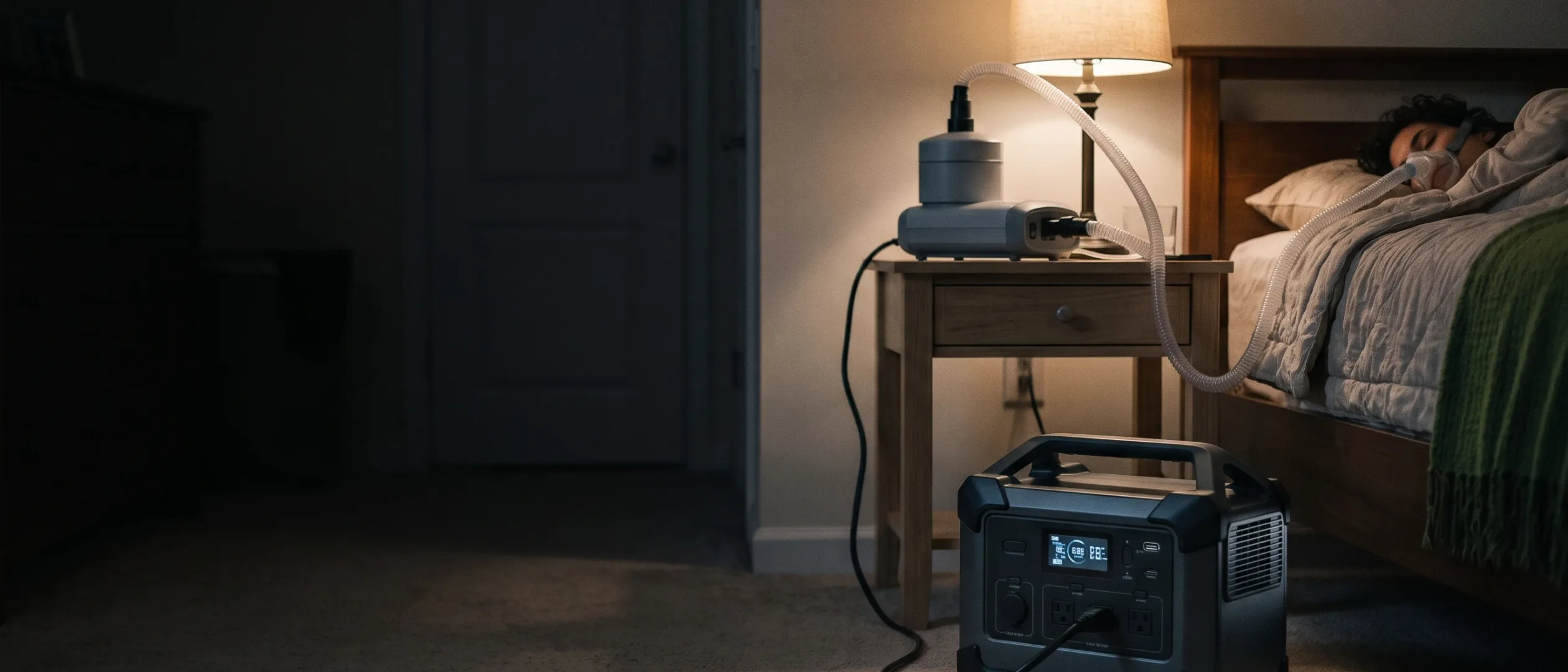
| CPAP | 300 Wh to 1 kWh | 12 V outlet, switchover | CPAP |
| Camping | 300 Wh to 1 kWh | Weight, solar input | Camping |
| RV | 1 to 4 kWh | RV outlet, solar, idle draw | RV |
| Light and small | Under 1 kWh | Weight, USB-C | Small |
| Most for the size | Any | Cycles, warranty, Wh per lb | Best value |
Red flags when comparing portable power station specs
A peak figure in place of continuous output, a missing switchover time or a 500-cycle battery are reasons to look closer.
- Peak watts in the headline. A big "peak" or boost figure isn't continuous output; find the continuous rating.
- No switchover time. "EPS" or "UPS-like" with no millisecond figure may be too slow for a computer.
- No cycle rating, or one without an end point. "3,000 cycles" means little without "to 80%".
- An older NMC battery. Fine for occasional use, but rated for hundreds of cycles, not thousands.
- Expansion that needs two units. Read whether the maximum is per unit or per system.
- A short or conditional warranty. One year, or extra years only after registration.
- Older models. Check for a current successor before buying a model the maker has replaced.
Whatever you buy, never connect it to home wiring through a wall outlet; home circuits need a transfer switch or inlet fitted by a licensed electrician. See transfer switches for portable power stations and are portable power stations safe indoors.
Quick checklist before you buy a portable power station: ten checks in order
Ten checks, from your load list to the warranty, cover every spec printed on a station's box.
- My list of loads, with running watts, startup surge and hours.
- Continuous output above everything running at once; surge above the biggest start.
- Capacity for my hours, plus about 20% headroom.
- LiFePO4, with cycles rated to 80%.
- Wall charging fast enough; solar watts and voltage that fit my panels.
- The outlets I need, including USB-C wattage and a 12 V socket.
- A switchover of 10 ms or less if it backs up a computer.
- A weight I can carry, or wheels.
- Expansion only if my list will grow, with the maker's batteries.
- A warranty of 5 years, and a charging range that suits where it lives.
FAQ
Watts, sizes, solar, camping, recommendations and whether a station is worth it, answered from the 24 stations we've reviewed.
How do I know which portable power station to buy?
List what you'll run, with watts and hours. Pick continuous output above everything running at once and capacity for your hours, then compare battery type, charging, ports, switchover, weight and warranty. Our best portable power stations guide names a pick for each size.
How many watts is a good portable power station?
For devices, lights and a CPAP, 300 to 600 W of output is enough. For a fridge, microwave or kettle, look for about 1,500 to 2,600 W. For home circuits, 3,600 W and up, often at 240 V.
What will a 1000 watt power station run?
A station with 1,000 W of continuous output runs anything that draws under 1,000 W, such as a fridge, laptop, TV, fan and lights, but not a 1,100 W microwave. If "1000" means a 1,024 Wh station, it runs an average fridge (67 W over a day) for about 11.5 hours or a router (12 W) for about 79 hours from a DC port by our estimate (about 42 on AC). See what a power station can run in an outage for larger stations and more appliances.
Do I need solar panels with a portable power station?
No. Every station recharges from a wall outlet, and most from a car's 12 V socket. Solar matters for camping off-grid and outages longer than a day. Plan on about 75% of the panel's rated watts in good sun: a 200 W panel gives about 150 W, so it refills a 1,024 Wh station in about 6.8 peak sun hours by our estimate, roughly one to two sunny days. Check that the panel's voltage fits the station's solar input range; see solar panel sizing.
How do I choose a portable power station for camping?
Weigh weight against nights. A compact station (under 1 kWh) covers phones, lights and a CPAP for a weekend; about 1 kWh adds a 12 V cooler. Look for a 12 V car socket, enough solar input for your panels and a weight you can carry: the Anker SOLIX C1000 Gen 2 holds 1,024 Wh at 24.9 lb and takes up to 600 W of solar. Our camping guide has picks.
Which portable power station is the most recommended?
Our top pick for most people is the EcoFlow Delta 3 Plus, rated 8.9 out of 10, for its 1,024 Wh, fast charging, under 10 ms switchover and expansion to 5 kWh.
Is a portable power station worth it?
Yes, if you have loads to run away from an outlet: outages, camping, a CPAP or an RV. Sized to your list and with a LiFePO4 battery, a station can deliver thousands of cycles over many years. If you only charge phones, a power bank is enough.
What are the downsides of a portable power station?
It holds a fixed amount of energy and must be recharged; it can't run heaters or 240 V appliances for long; and big ones are heavy. In return it's silent, makes no fumes and runs indoors.