 By
We may earn a commission if you buy through links on this page, at no extra cost to you. This never affects which products we recommend. How we make money.
On this page 10 sections
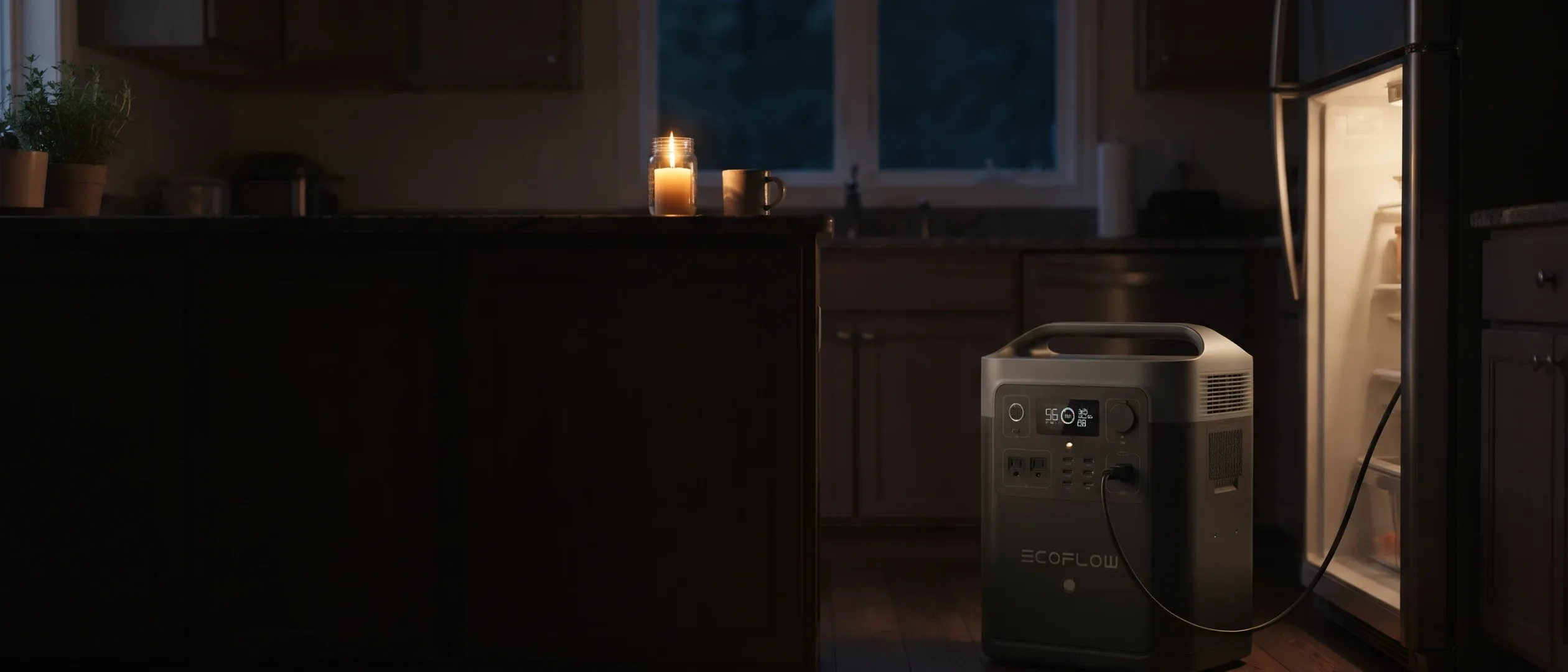
The EcoFlow Delta 3 Plus is the best portable power station for home backup for most homes: 1,024 Wh, under 10 ms switchover, a 5-year warranty and expansion to 5 kWh. For a full day of essentials, pick the Jackery HomePower 2000 Plus v2. To run home circuits at 120/240 V, pick the Jackery Explorer 5000 Plus.
| Spec | EcoFlow Delta 3 Plus | Jackery HomePower 2000 Plus v2 | Jackery Explorer 5000 Plus | Anker SOLIX C1000 Gen 2 |
|---|---|---|---|---|
| Capacity (Wh) | 1024 | 2048 | 5040 | 1024 |
| AC output, continuous (W) | 1800 | 2400 | 7200 | 2000 |
| AC charge time | 56 min | Not stated | 1.7 hr (fastest mode, per Jackery) | 49 min (UltraFast) |
| Max solar input (W) | 1000 | 800 | 4000 | 600 |
| Weight (lb) | 27.6 | 41.5 | 134.5 | 24.9 |
| Warranty (years) | 5 | 3 + 2 with registration | 5 + 2 optional | 5 |
| Price | Check price | Check price | Check price | Check price |
What you'll power in an outage
The usual essentials, and what they draw
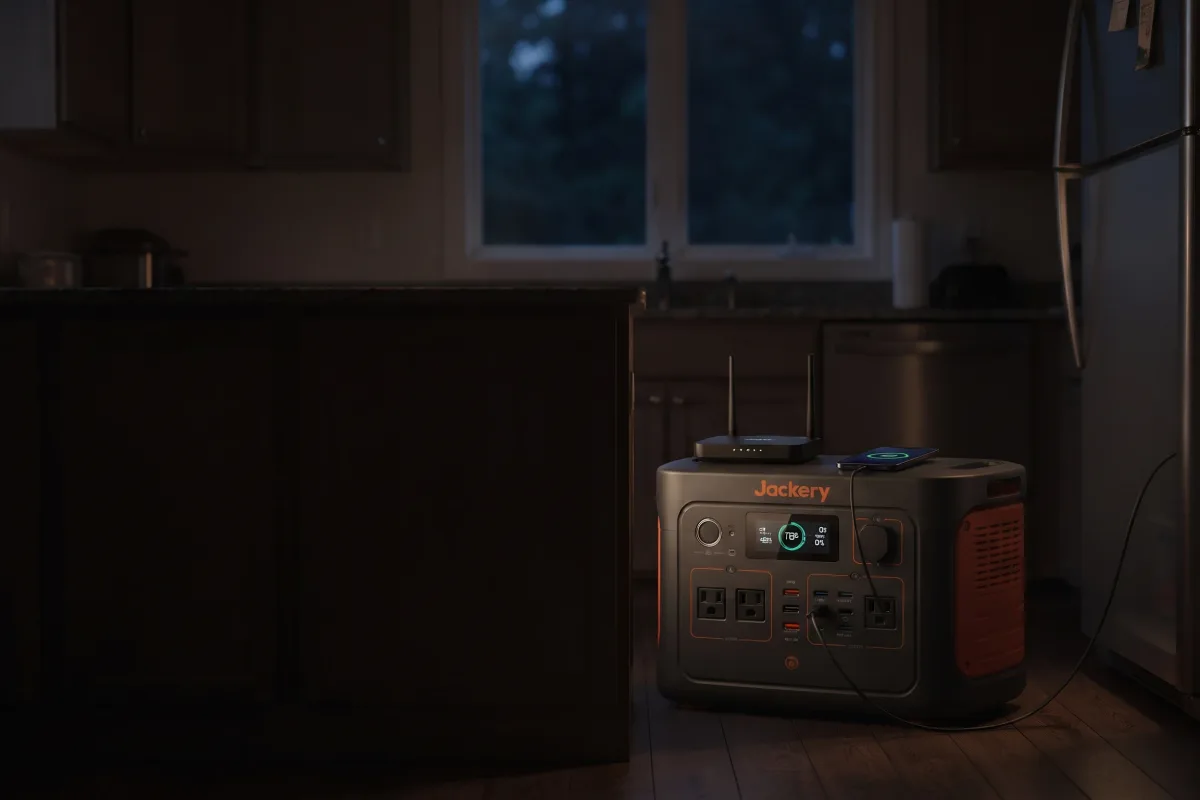
Most outages come down to a short list. Keep food cold, stay online, charge phones and run a light or two. If someone in the house uses a CPAP, that goes on the list too. These loads are small, which is why a portable power station can cover them.
| Load | Typical draw | Notes |
|---|---|---|
| Refrigerator | 41–67 W average | Surges much higher at startup |
| Wi-Fi router | About 12 W | Runs all the time |
| CPAP | 11–59 W | Depends on humidifier setting |
| LED lights | 5–10 W each | Low, steady draw |
| Phone charging | 5–20 W | Only while charging |
A fridge cycles on and off, so its average draw is far below its startup surge. See how long a power station runs a refrigerator and how long it runs a CPAP for the full numbers, or plug your own devices into the runtime calculator.
How much capacity you need
Match capacity to how long your outages last
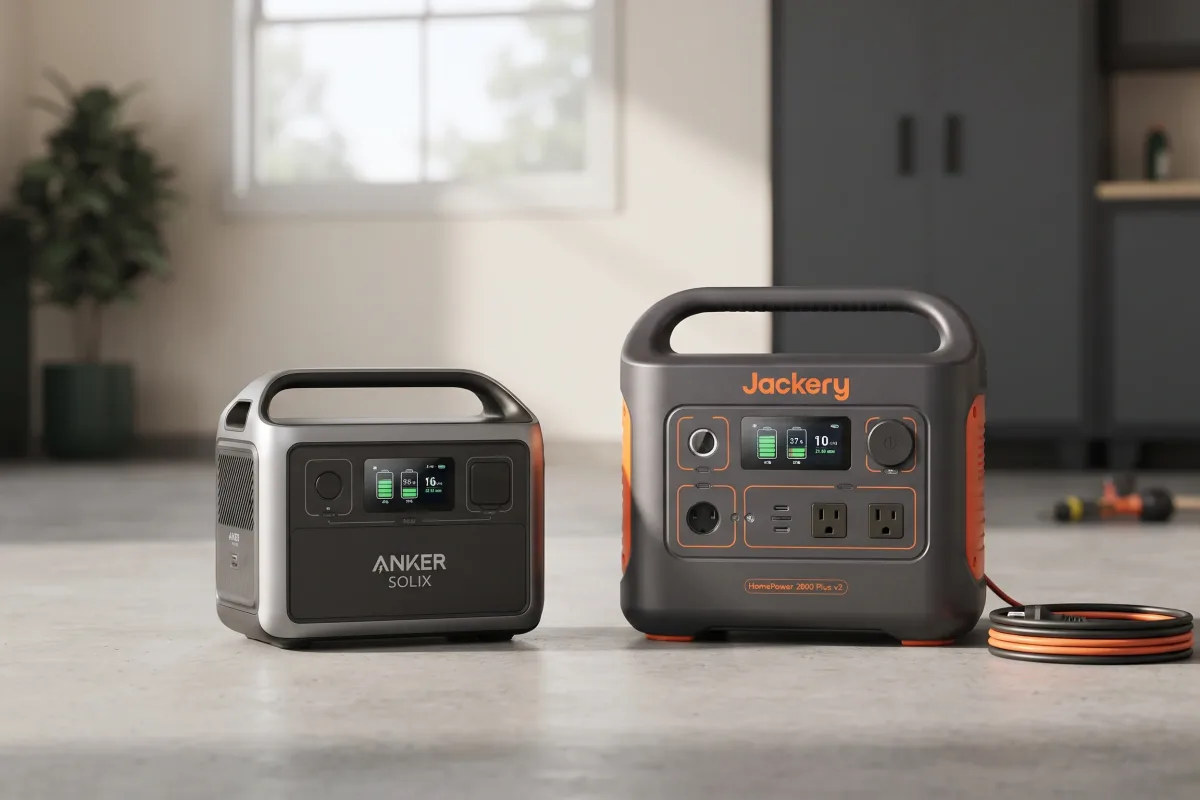
Capacity is measured in watt-hours (Wh); output in watts (W). If the two get mixed up, read watts vs watt-hours first. For home backup, think in three tiers:
- Overnight (about 1 kWh): a fridge and router through a typical evening-to-morning outage.
- Full day (about 2 kWh): the same loads for about 20 hours, or more devices for less time.
- Multi-day (3.6 kWh and up, or expandable plus solar): longer outages, storms and hurricanes, or home circuits through a transfer switch.
| Station | Capacity | Fridge + router | Fridge only |
|---|---|---|---|
| EcoFlow Delta 3 Plus | 1,024 Wh | About 10 hours | About 11.5 hours |
| Anker SOLIX C1000 Gen 2 | 1,024 Wh | About 10 hours | About 11.5 hours |
| Jackery HomePower 2000 Plus v2 | 2,048 Wh | About 20 hours | About 23 hours |
| Jackery Explorer 5000 Plus | 5,040 Wh | About 49 hours | About 57 hours |
These runtimes assume a 67 W fridge and a 12 W router on AC. We use 85% inverter efficiency and 10 W of idle draw. A newer, efficient fridge runs longer.
How we chose
Home-backup criteria, scored from published specs
We picked from the stations we've reviewed in full. We weighted what matters in an outage: capacity, output, switchover time, expansion, solar input, 240 V support, battery and warranty. Each one has an OffGrid Current rating out of 10, computed from its specs. The weights are on how we test. We haven't tested these units hands-on, and we don't rank by price.
Best overall: EcoFlow Delta 3 Plus
Fast charging, fast switchover and room to grow
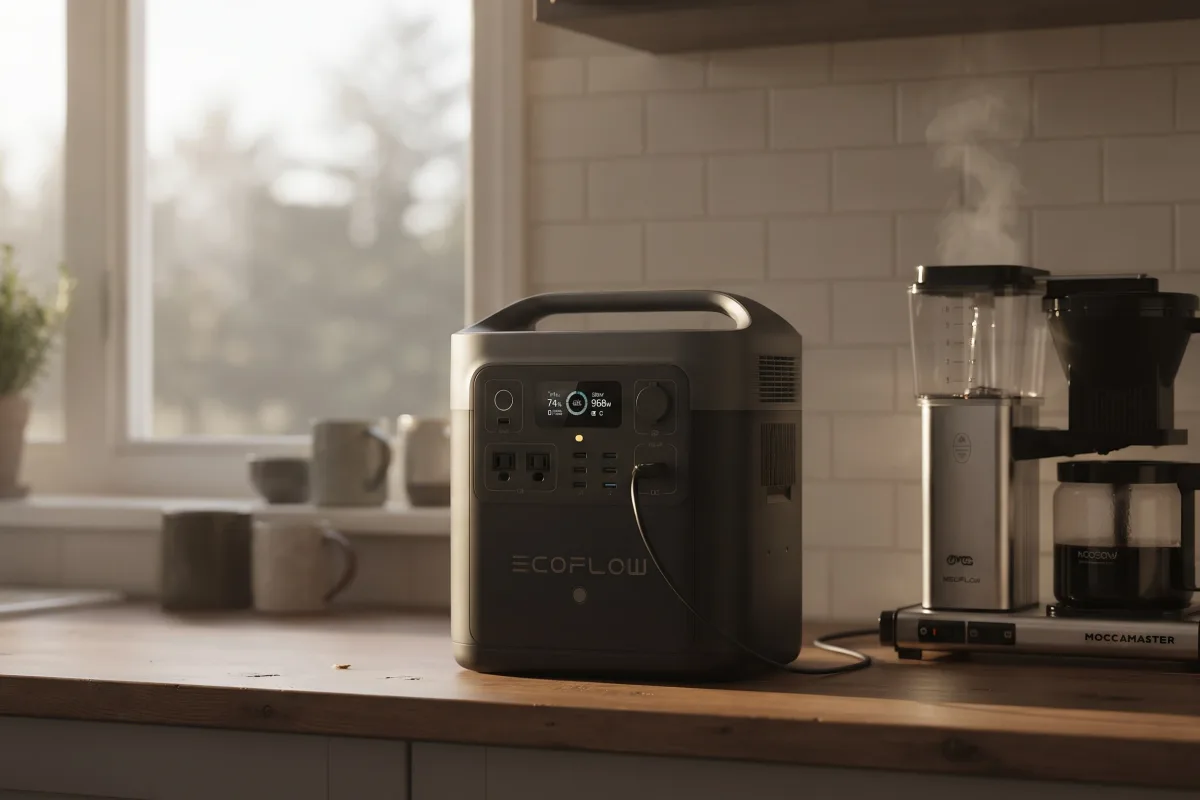
Best overall
EcoFlow Delta 3 Plus
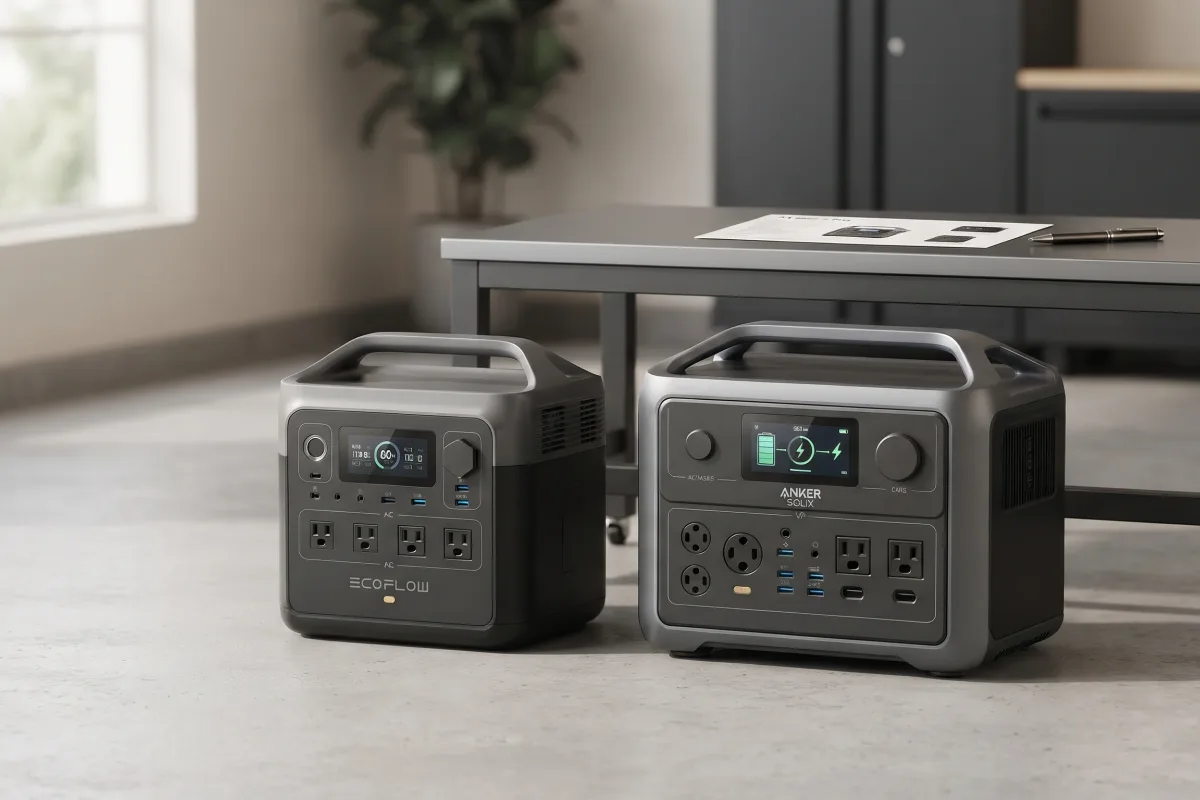
The Delta 3 Plus is the station most homes should start with. It covers a fridge and router overnight. It recharges from the wall in about 56 minutes and can grow to 5 kWh.
Runtimes on the Delta 3 Plus (1,024 Wh)
- Wi-Fi router (12 W)43 h
- Fridge, average draw (67 W)12 h
- Fridge + router (79 W)9.9 h
Pros
- Under 10 ms switchover keeps computers and routers on
- Up to 1,000 W solar input across two ports
- Expands to 5 kWh with extra batteries
- 5-year warranty
Cons
- 1,024 Wh alone covers about one night
- 1,800 W continuous is less than the C1000 Gen 2
Best for a full day: Jackery HomePower 2000 Plus v2
About a day of essentials from one unit
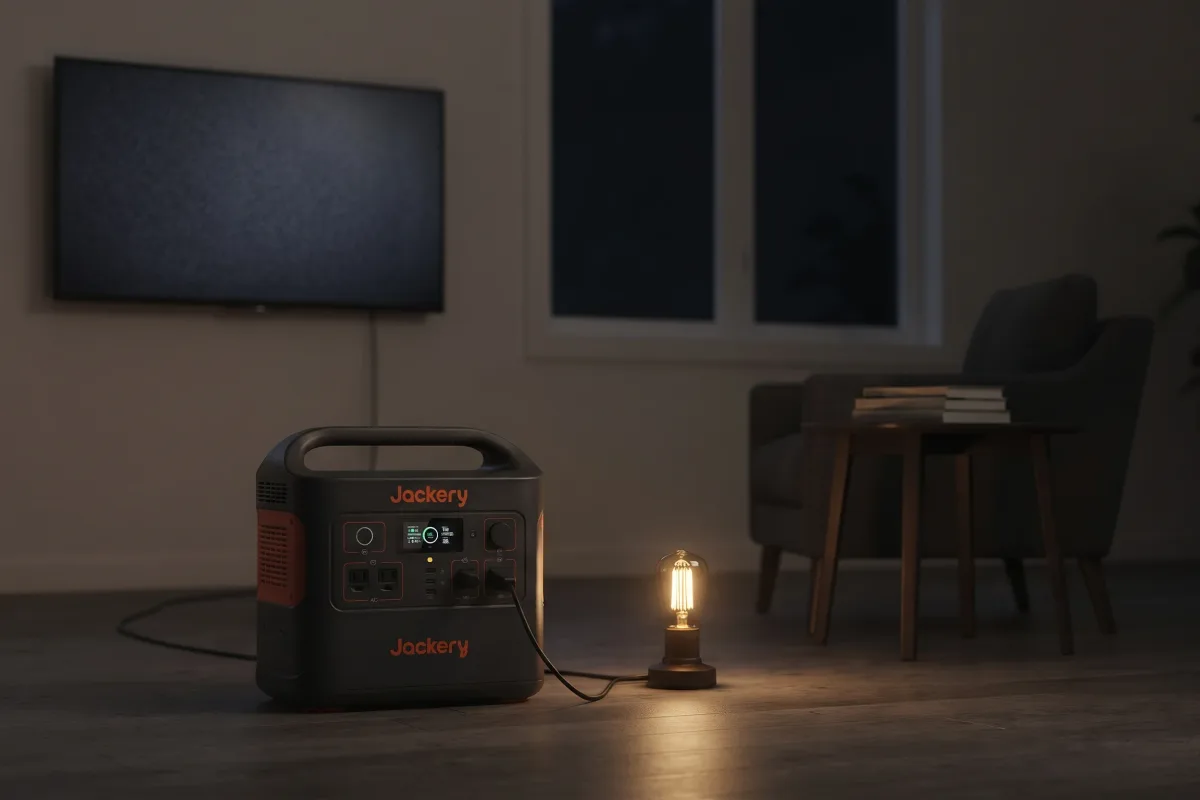
Best for a full day
Jackery HomePower 2000 Plus v2
If one night isn't enough, the HomePower 2000 Plus v2 doubles the capacity. Its 2,400 W output handles a fridge's startup surge alongside other loads.
Runtimes on the HomePower 2000 Plus v2 (2,048 Wh)
- Fridge, average draw (67 W)23 h
- Fridge + router (79 W)20 h
Pros
- 2,048 Wh runs a fridge and router for about 20 hours
- 2,400 W continuous, 4,800 W surge
- 10 ms switchover
- Expands to about 12 kWh
Cons
- 41.5 lb
- Warranty is 3 years, plus 2 with registration
Best for whole-home circuits: Jackery Explorer 5000 Plus
120/240 V for home circuits and long outages
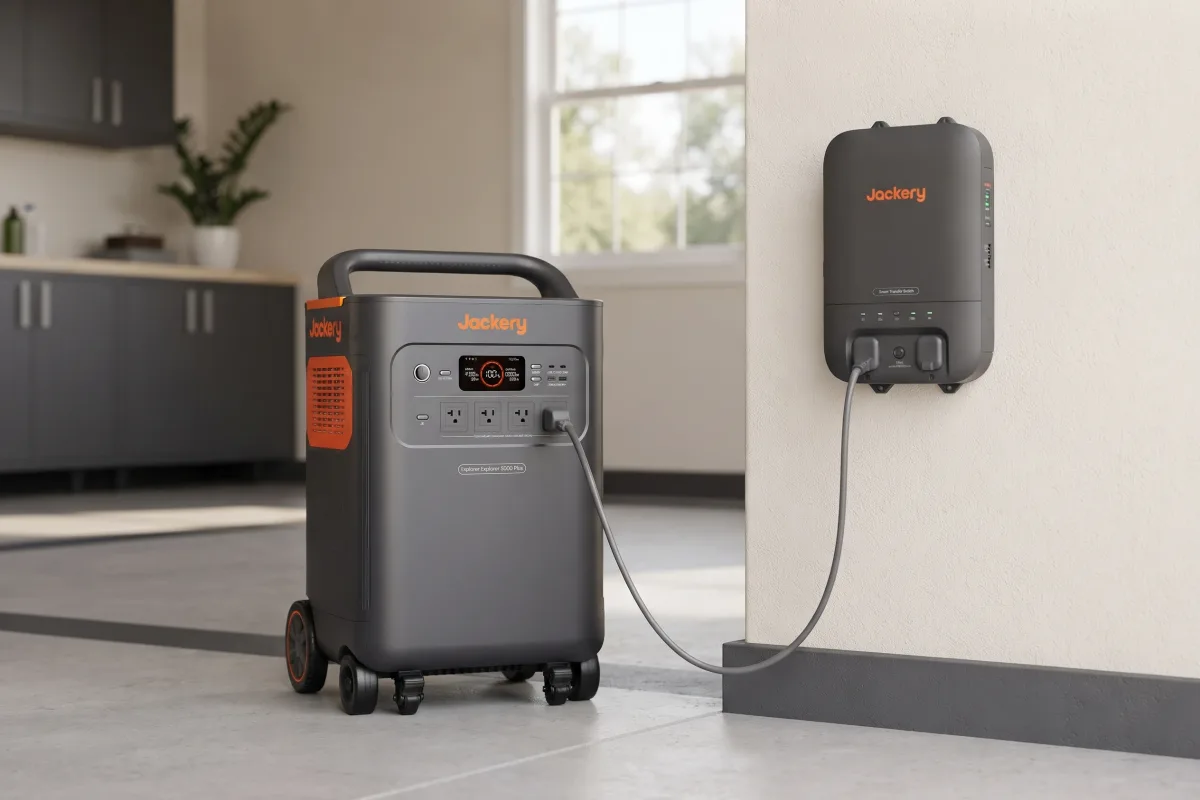
Best for whole-home circuits
Jackery Explorer 5000 Plus
The 5000 Plus is the pick for running household circuits, including 240 V ones. That needs a transfer switch installed by a licensed electrician; Jackery sells a Smart Transfer Switch for it.
Runtimes on the Explorer 5000 Plus (5,040 Wh)
- Fridge, average draw (67 W)2.4 days
- Fridge + router (79 W)2.0 days
Pros
- 5,040 Wh, 7,200 W at 120/240 V
- 0 ms switchover
- Up to 4,000 W high-voltage solar
- 5-year warranty, plus 2 optional
Cons
- About 134.5 lb
- 1,800 W charging on a standard outlet
Best lighter pick: Anker SOLIX C1000 Gen 2
Plenty of output in a unit you can carry
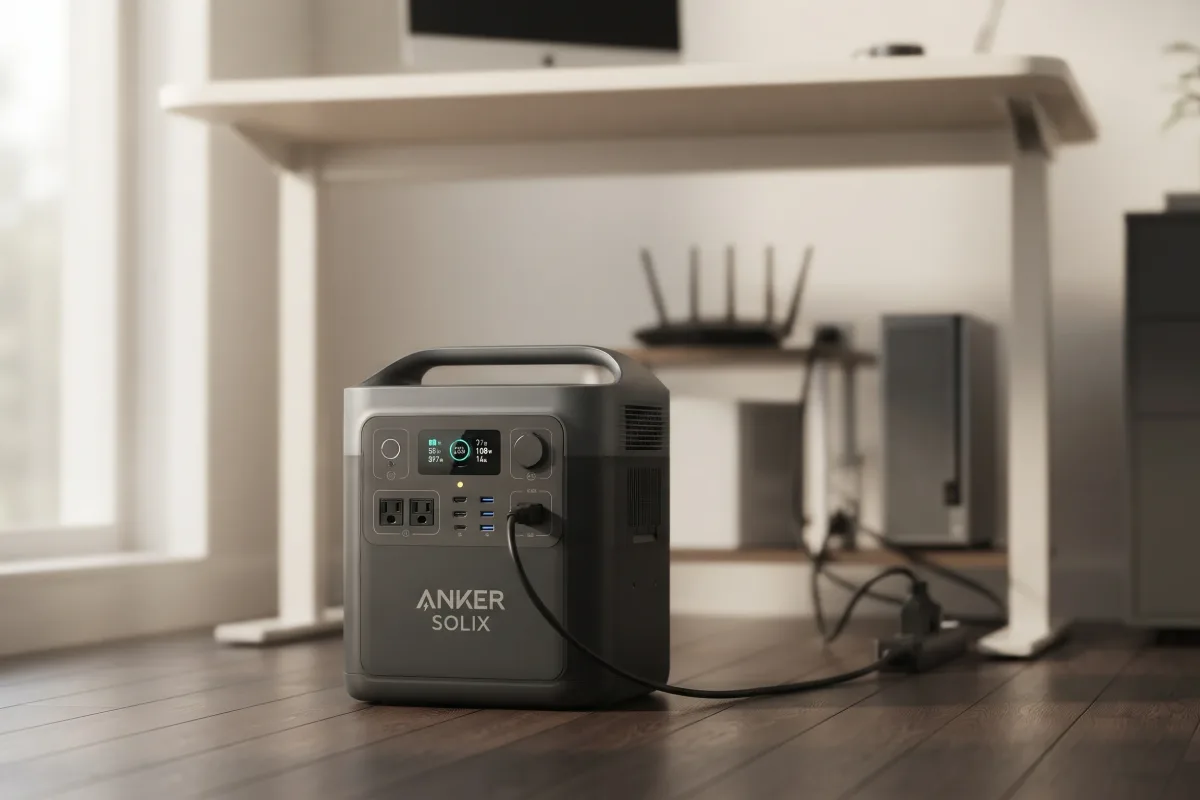
Best lighter pick
Anker SOLIX C1000 Gen 2
The C1000 Gen 2 matches the Delta 3 Plus on capacity. It puts out more power and weighs less. It can't add batteries, so it suits homes where outages are usually short.
Pros
- 2,000 W continuous, 3,000 W surge
- 10 ms switchover
- About 49 minutes to recharge from the wall
- 24.9 lb
Cons
- Not expandable
- 600 W solar input
What to look for
The specs that matter when the power goes out
- Switchover time: 10 ms or less keeps most computers and routers running when the grid drops. See using a power station as a UPS.
- Surge output: fridges and pumps draw several times their running watts for a moment at startup.
- Expansion: extra batteries stretch one station across longer outages.
- Solar input: recharging during the day is what makes multi-day outages workable. See solar panel sizing.
- 240 V and transfer switch support: needed for well pumps and other 240 V circuits.
- Battery and warranty: LiFePO4 and a 5-year warranty point to a longer life. See how long power stations last.
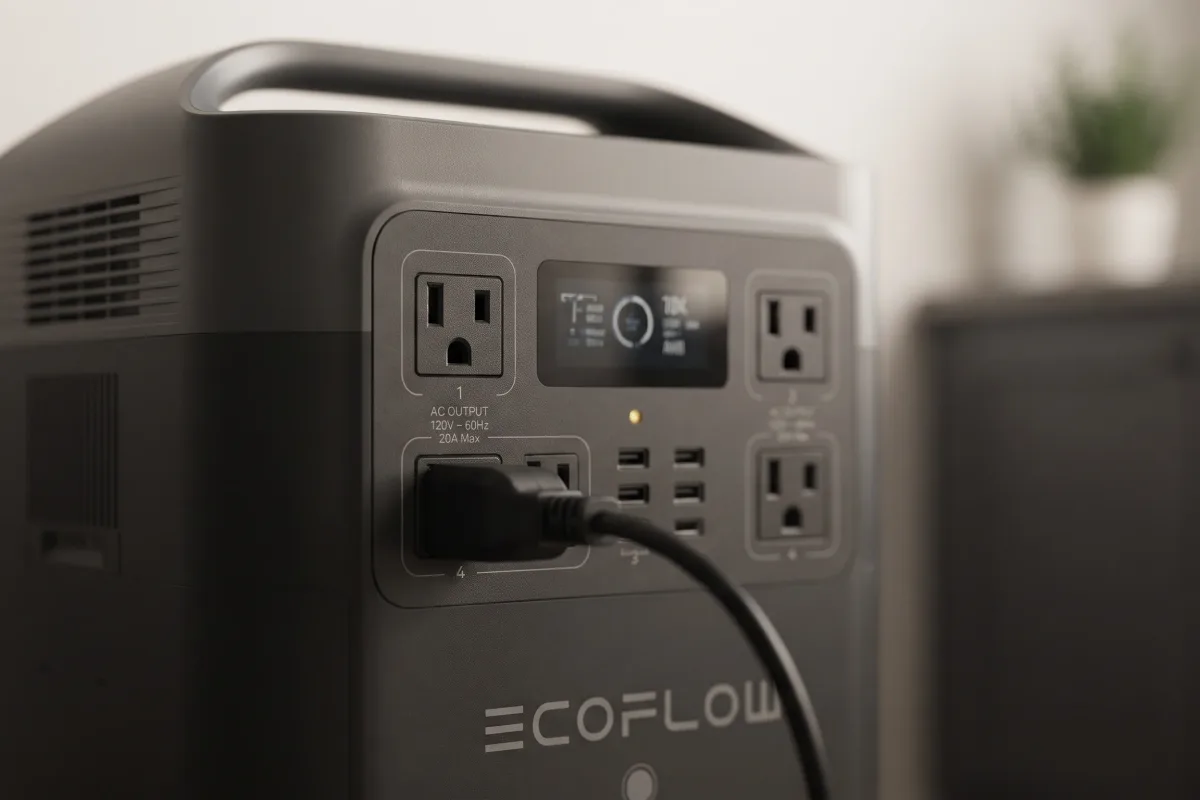
Unlike a generator, a power station makes no fumes, so it can run indoors. Read are power stations safe indoors for placement and charging tips, and power station vs generator if you're weighing both.
Also considered
Good stations that missed a top spot
- Jackery HomePower 3600 Pro Max: 3,584 Wh and 240 V, but a 1-year warranty.
- Bluetti Elite 200 V2: 2,600 W output, but not expandable.
- Bluetti AC180: compact, but a 20 ms switchover.
- EcoFlow Delta 3: the same 1 kWh platform as the Delta 3 Plus, with 500 W solar input.
- Jackery Explorer 1000 v2 and Explorer 1000 Plus: lighter Jackery options with lower ratings.
- Anker SOLIX F3800 Plus: 6,000 W at 120/240 V and expands to 53.8 kWh, but a 20 ms switchover.
- Anker SOLIX S2000: 2,010 Wh in 35.7 lb with a 6 W idle draw, but 1,500 W and not expandable.
- EcoFlow DELTA Pro: 3,600 Wh at 120 V only from one unit.
Backing up home circuits through a transfer switch? See the best whole-home battery backup (portable).
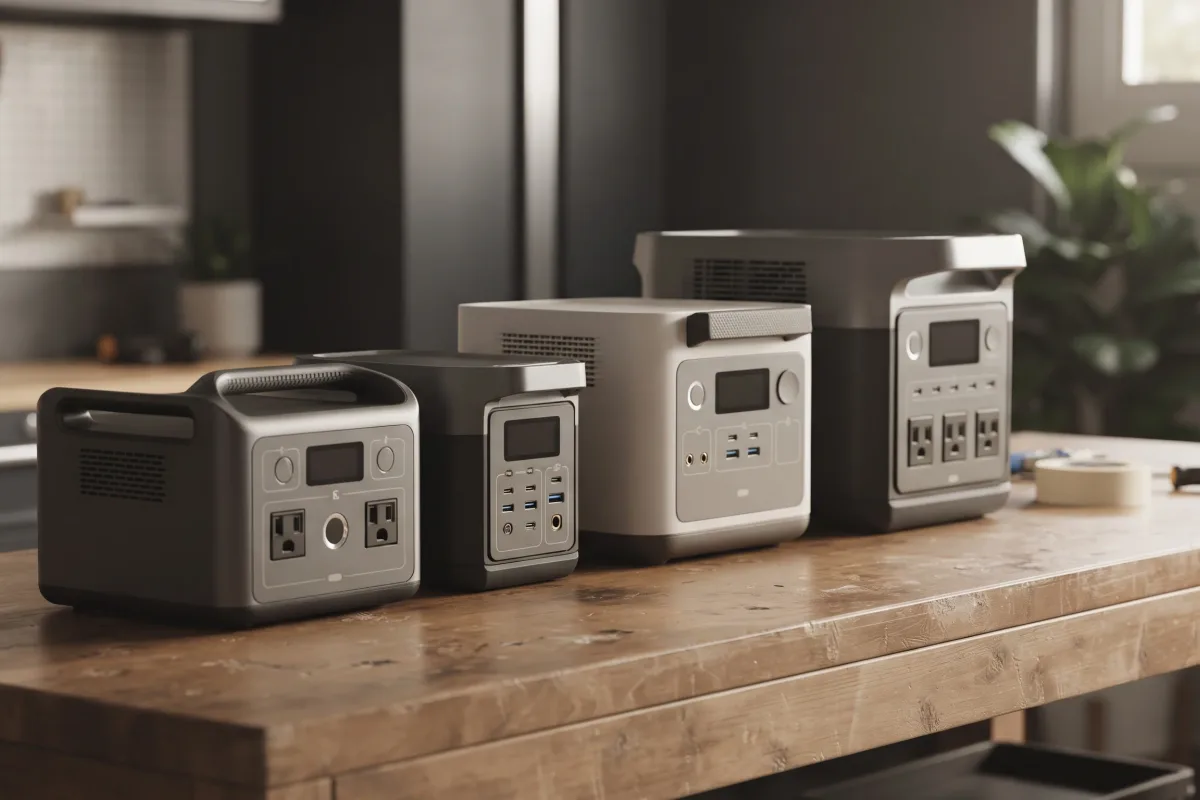
For every use, see our best portable power stations overview.
FAQ
What size power station do I need for home backup?
About 1 kWh covers a fridge and router overnight, about 2 kWh covers them for a day, and 3.6 kWh or an expandable station with solar covers multi-day outages.
Can a portable power station run a house?
Not a whole house with central air. A large station such as the Jackery Explorer 5000 Plus can run selected circuits through an electrician-installed transfer switch.
How long will a power station run a fridge?
A 1,024 Wh station runs a 67 W average fridge for about 11.5 hours, and a 2,048 Wh station for about 23 hours.
Can a power station work as a UPS?
Yes. Stations that switch over in 10 ms or less keep most computers and routers running. The Delta 3 Plus, C1000 Gen 2 and HomePower 2000 Plus v2 all qualify.
Is it safe to use a power station indoors?
Yes. Power stations produce no exhaust, so they can be used indoors. Keep them ventilated, away from heat and water, and charge them on a hard surface.