 By
We may earn a commission if you buy through links on this page, at no extra cost to you. This never affects which products we recommend. How we make money.
On this page 10 sections
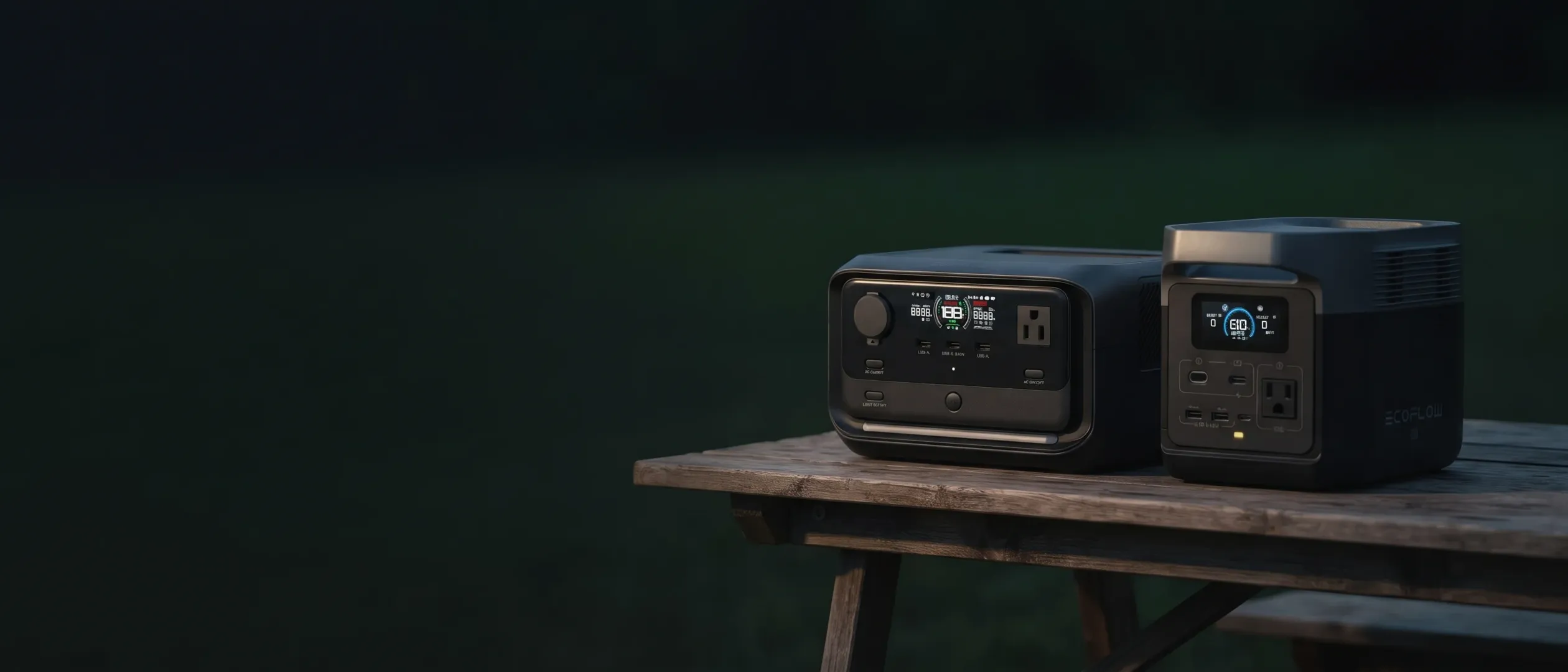
It's close: the Bluetti Elite 30 V2 rates 7.8 and the EcoFlow River 3 Plus 7.6. Pick the Elite 30 V2 for faster Turbo charging, a 140 W USB-C port and a lighter 9.5 lb. Pick the River 3 Plus for more solar (220 W), a third AC outlet, faster car charging and the option to add a battery later. Both hold under 300 Wh of LiFePO4 and deliver 600 W, so they run the same devices for about the same time.
The short answer: Elite 30 V2 vs River 3 Plus
Same capacity and output; the differences are in how they charge, what plugs in and whether they can grow
Both are small LiFePO4 stations built for camping, CPAP nights and keeping a router or laptop going through an outage. Neither runs a kettle, microwave or space heater.
- Choose the Bluetti Elite 30 V2 if you charge mostly from the wall and want it fast, charge a large laptop over USB-C, or want the lightest unit.
- Choose the EcoFlow River 3 Plus if you'll charge from solar or the car, need three AC outlets, or might want more capacity later.
Elite 30 V2 vs River 3 Plus specs
Nearly identical batteries; the Elite 30 V2 charges faster from the wall, the River 3 Plus from the sun
| Spec | Bluetti Elite 30 V2 | EcoFlow River 3 Plus |
|---|---|---|
| Capacity (Wh) | 288 | 286 |
| AC output, continuous (W) | 600 | 600 |
| AC charge time | About 70 min | 1 hr (0–100%) |
| Max solar input (W) | 200 | 220 |
| Weight (lb) | 9.5 | 10.4 |
| Warranty (years) | 5 | 5 |
| Price | Check price | Check price |
- Same: 600 W output, LiFePO4 cells rated to 80% capacity (3,000+ vs 3,000 cycles), under 10 ms switchover, 5-year warranty.
- Elite 30 V2 wins: wall charging (380 W in Turbo vs 360 W), USB-C (140 W + 100 W vs 100 W), USB-A (15 W vs 12 W per port), weight (9.5 vs 10.4 lb), cold use (to −4°F vs 14°F).
- River 3 Plus wins: solar (220 W vs 200 W, and a wider voltage window), car charging (220 W vs 120 W at 12 V), AC outlets (3 vs 2), expansion (to 858 Wh vs none), charging in heat (to 113°F vs 104°F).
Our ratings put the Elite 30 V2 at 7.8 and the River 3 Plus at 7.6 in the compact class. The Elite 30 V2 scores higher for wall charging (8.5 vs 8) and portability (4.1 vs 3); the River 3 Plus scores higher for solar (9.5 vs 8.2). Both score full marks for output and the same for battery life. How We Test explains the method.
Charging speed and solar: Elite 30 V2 vs River 3 Plus
The Elite 30 V2's Turbo mode is quicker to 80%; the River 3 Plus takes more solar and car power
From the wall, the two land close together:
- Elite 30 V2: Bluetti gives three modes: Standard (200 W, about 2 hours, the default), Turbo (380 W, 80% in 45 minutes, about 70 minutes to full) and Silent (200 W, about 3 hours). You switch modes in the Bluetti app.
- River 3 Plus: EcoFlow quotes 0 to 100% in 1 hour at 360 W, with no mode to change.
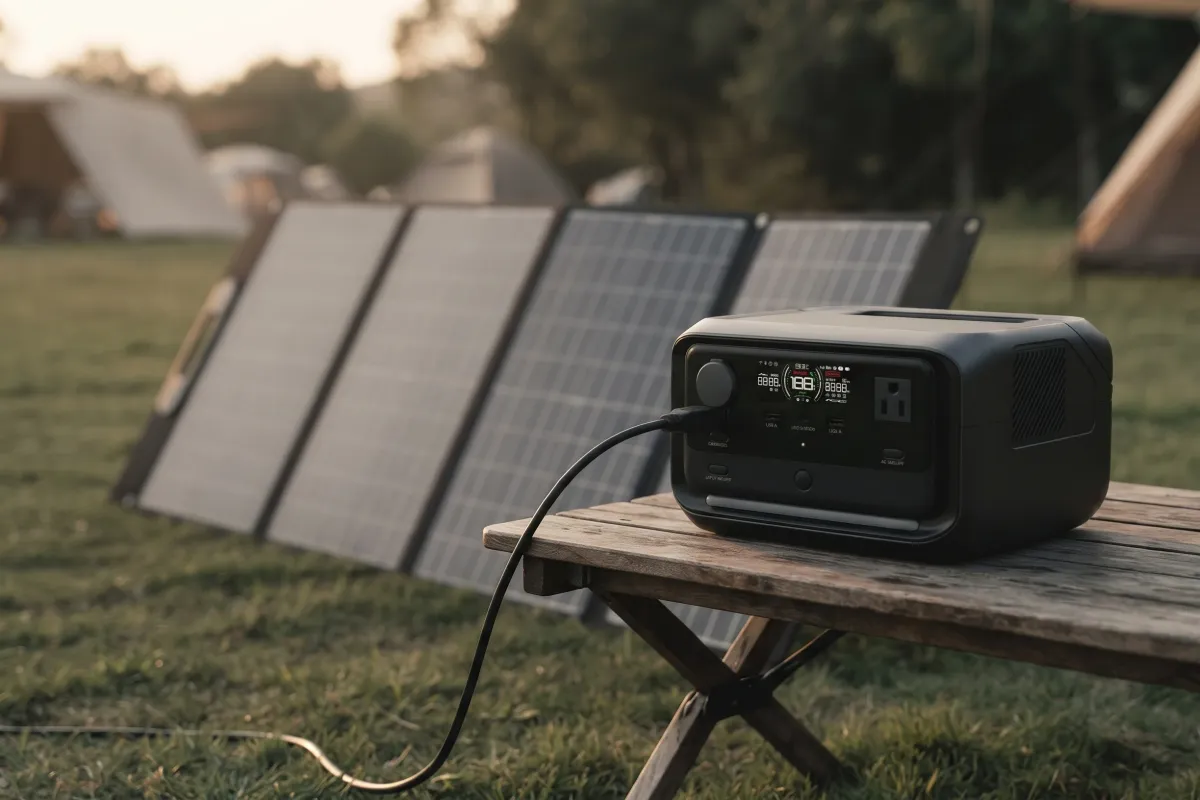
From solar, the River 3 Plus takes 220 W at 11–55 V (13 A), and EcoFlow quotes a full charge in 1.5 hours. The Elite 30 V2 takes 200 W at 12–28 V (10 A), and Bluetti quotes 2.2 hours. The River's wider voltage window lets you wire two panels in series; on the Elite 30 V2, keep the panels' open-circuit voltage (Voc) at 28 V or less, which in practice means one panel or two in parallel. Bluetti also says that after a full discharge, the Elite 30 V2 should be charged from AC or from more than 60 W of solar. See what size solar panel you need.
From the car: the River 3 Plus takes 220 W and EcoFlow quotes 3.3 hours. The Elite 30 V2 takes 120 W from a 12 V socket (Bluetti: 4.2 hours) or 240 W from 24 V (2.2 hours), so it only matches the River on a 24 V truck or van system.
Using both at once: on the Elite 30 V2, AC plus solar is capped at 380 W in Turbo and 200 W in Standard or Silent mode.
Output and outlets: Elite 30 V2 vs River 3 Plus
The Elite 30 V2 suits laptops; the River 3 Plus suits more AC plugs
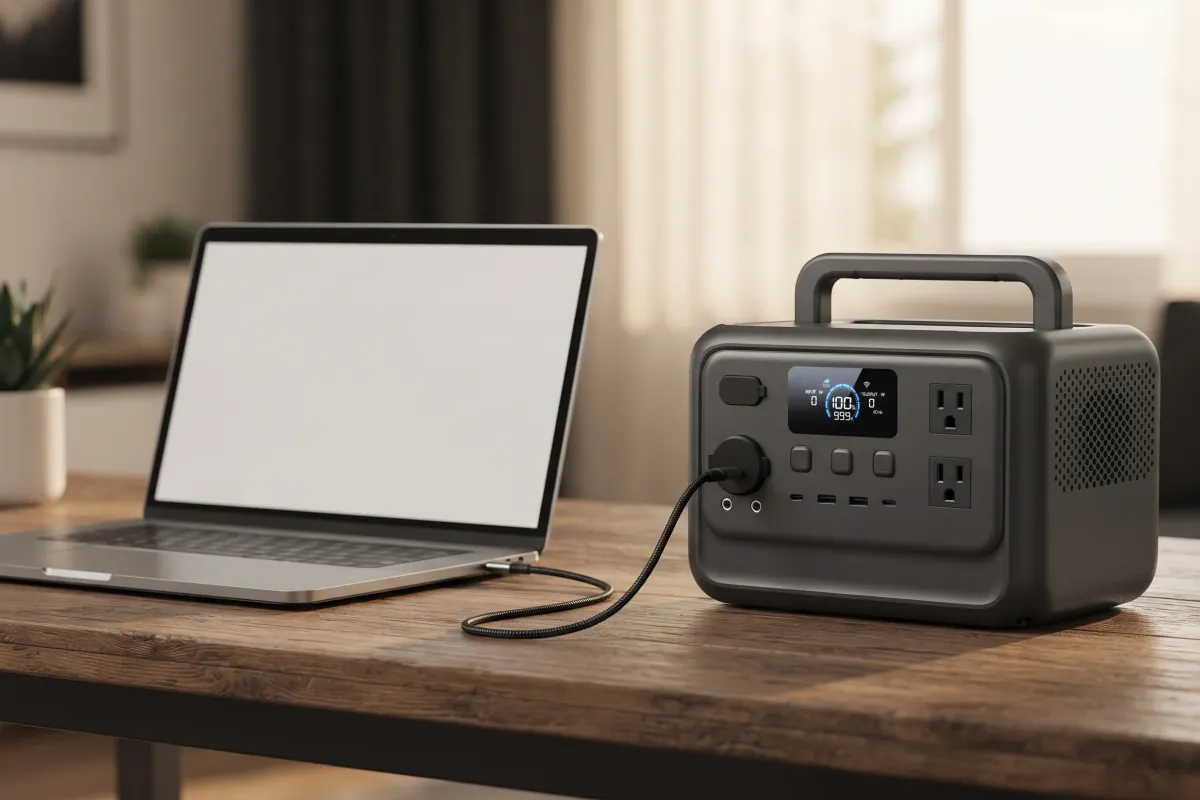
Both deliver 600 W in total. The Elite 30 V2's 140 W port is USB-C PD (Power Delivery), Bluetti says; the River 3 Plus has one 100 W USB-C port. EcoFlow lists a 1,200 W surge for the River 3 Plus, plus a separate 1,200 W X-Boost for resistive loads. Bluetti publishes no surge figure for the Elite 30 V2; its Power Lifting runs pure resistive loads of 600–1,500 W while the actual output stays at 600 W, and its manual warns that motor loads start at 2 to 4 times their rated power and can overload it. For a small fridge or fan motor, the River 3 Plus has more starting headroom. See surge vs continuous watts.
| Use | Elite 30 V2 | River 3 Plus |
|---|---|---|
| AC outlets | 2 | 3 |
| USB-C | 140 W + 100 W | 100 W |
| USB-A | 2 × 15 W | 2 × 12 W |
| 12 V DC | car outlet 120 W + 2 × DC5521 | car outlet 126 W |
- Large laptop (over 100 W): Elite 30 V2.
- CPAP on DC, router, lights: both; the Elite 30 V2's two DC5521 barrel ports suit 12 V routers and lights without an adapter.
- Three AC devices at once (a fan, a light and a phone charger, say): River 3 Plus.
Runtime: Elite 30 V2 vs River 3 Plus
288 Wh against 286 Wh: runtimes differ by less than 1%
With 288 Wh and 286 Wh, the two run the same device for practically the same time. These are for the Elite 30 V2; the River 3 Plus comes within 1% of each (about 10 minutes on the CPAP figure).
Estimated runtimes: Elite 30 V2 (288 Wh); River 3 Plus within 1%
- CPAP, no humidifier, low-draw (11 W, DC)24 h
- Wi-Fi router (12 W, DC)22 h
- Box fan (50 W, AC)4.2 h
- CPAP with humidifier, typical (56 W, AC)3.8 h
- Laptop (60 W, AC)3.6 h
- Fridge (67 W, AC) + router (12 W, DC)2.8 h
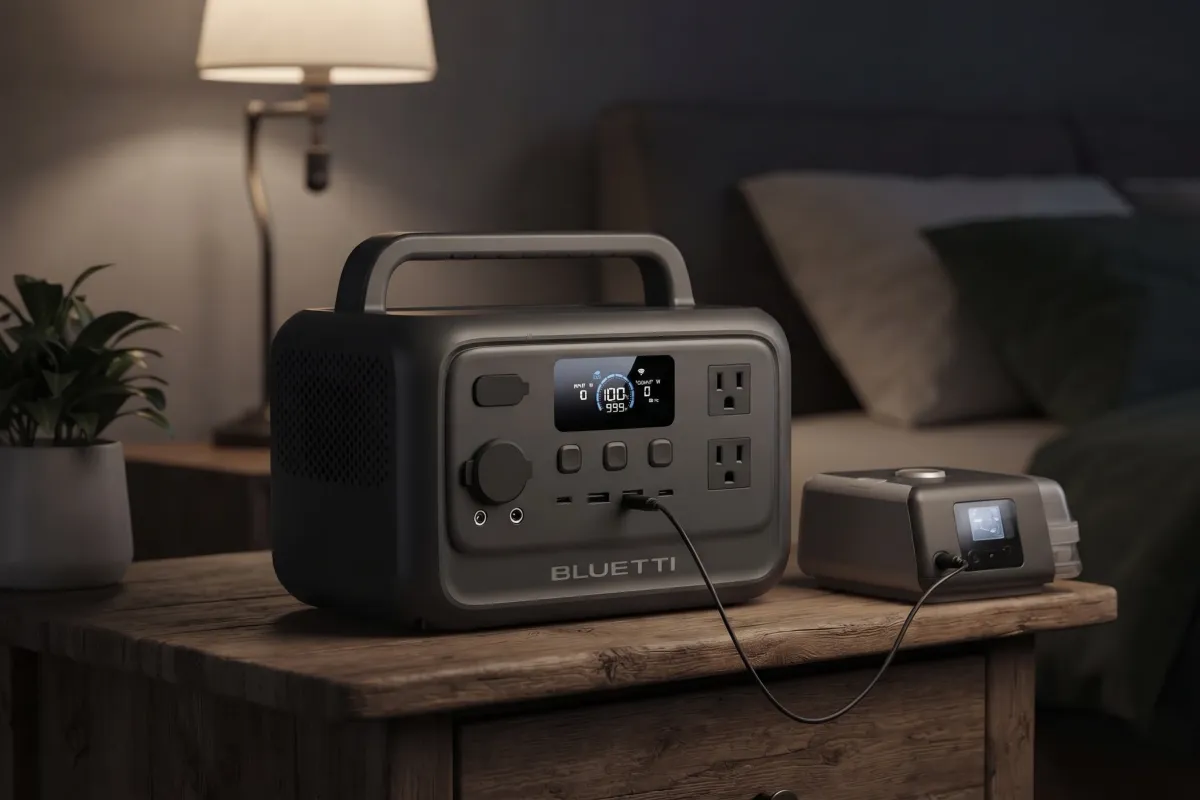
- CPAP: about three nights without the humidifier on a DC cable; with the humidifier on AC, under 4 hours. See how long a power station runs a CPAP.
- Fridge: a 67 W average fridge plus router runs under 3 hours, a short outage, not a weekend. A mini fridge draws less and lasts longer; check its watts in the runtime calculator.
- Router and modem: about 22 hours on DC from either.
Put your own devices into the runtime calculator. In the cold, with an older battery or a reserve set in the app, expect less.
Expandability: Elite 30 V2 vs River 3 Plus
Only the River 3 Plus can add capacity
The River 3 Plus takes EcoFlow extra batteries: with the 286 Wh EB300 it becomes a 572 Wh system (sold as the River 3 Max, 8.4 kg, about 18.5 lb), and with the 572 Wh EB600 an 858 Wh system (the River 3 Max Plus, 10.8 kg, about 23.8 lb). At 858 Wh a fridge and router run about 8.4 hours and a low-draw CPAP about 72 hours, by our estimate.
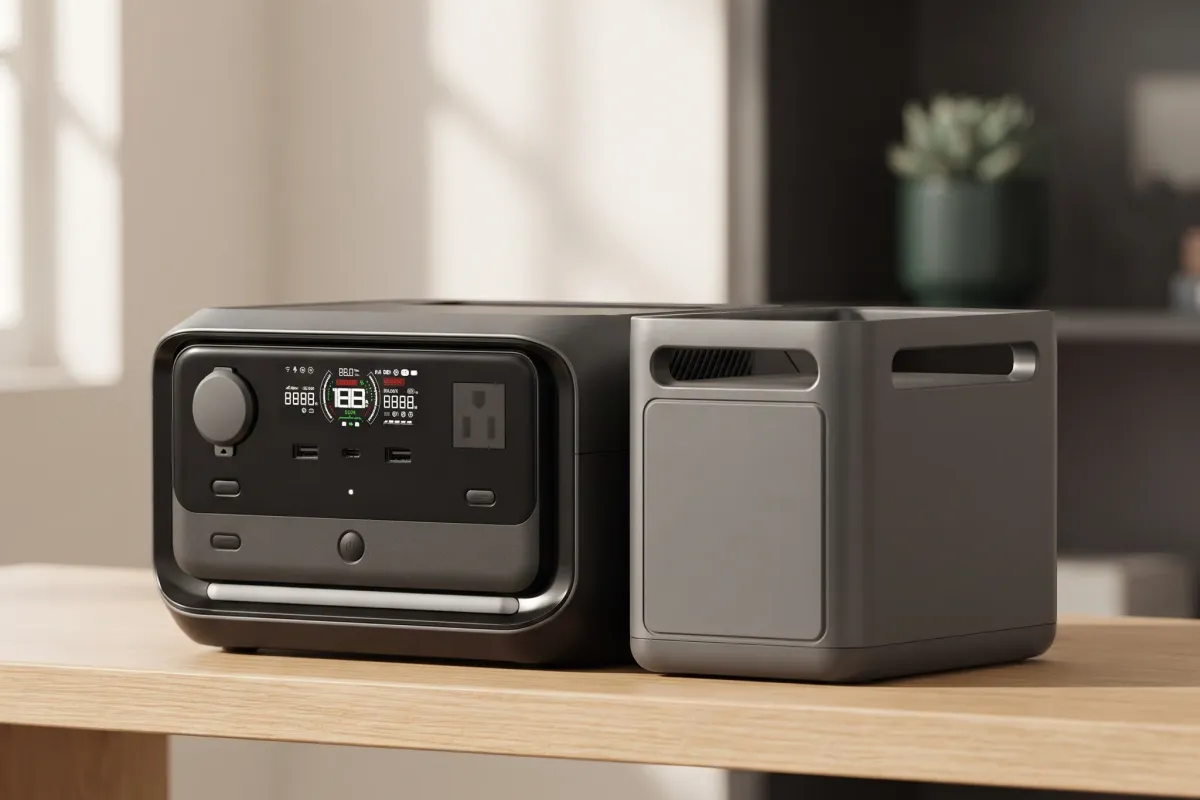
The Elite 30 V2 can't add batteries. It can be recharged by a Bluetti B80 in that battery's power bank mode, but that refills it rather than extending it. If you think you'll want more than about 300 Wh, the River 3 Plus is the safer buy; if not, the Elite 30 V2's lower weight and faster wall charging matter more.
Backup (UPS), noise and app: Elite 30 V2 vs River 3 Plus
Both keep a router or CPAP running through a cut; check the Elite 30 V2's ECO settings first
Bluetti rates the Elite 30 V2 at 10 ms or less and EcoFlow rates the River 3 Plus at under 10 ms to switch to battery when the wall power drops. The Elite 30 V2 passes through about 980 W while plugged in; the River 3 Plus carries backup on its 3 AC outlets.
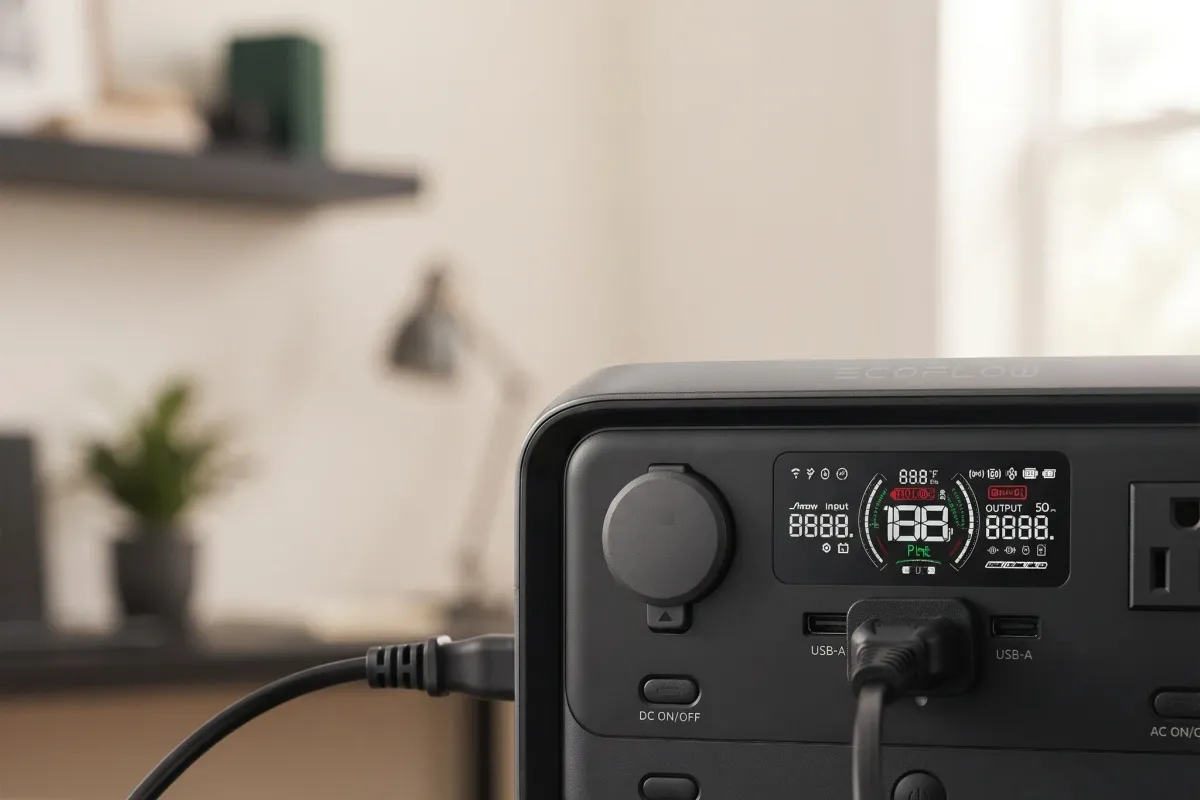
One setting to know: the Elite 30 V2 ships with AC-ECO and DC-ECO on, which switch outputs off after a period at low or no load. Bluetti's manual says to turn them off for devices under 10 W or for critical loads, such as a router you rely on overnight, and that AC-ECO isn't available while charging from AC. See using a power station as a UPS.
Both have phone apps over Wi-Fi and Bluetooth. Bluetti's sets the Elite 30 V2's charging mode and power limits, schedules, UPS modes (Standard, Time Control, PV Priority, Customized) and firmware updates. EcoFlow's app handles monitoring and settings on the River 3 Plus.
Noise: Bluetti rates the Elite 30 V2 below 30 dB under light loads; EcoFlow rates the River 3 Plus under 30 dB at half a metre. Both suit a bedroom.
Battery life, weight and warranty: Elite 30 V2 vs River 3 Plus
The Elite 30 V2 is 0.9 lb lighter; both carry 5-year warranties
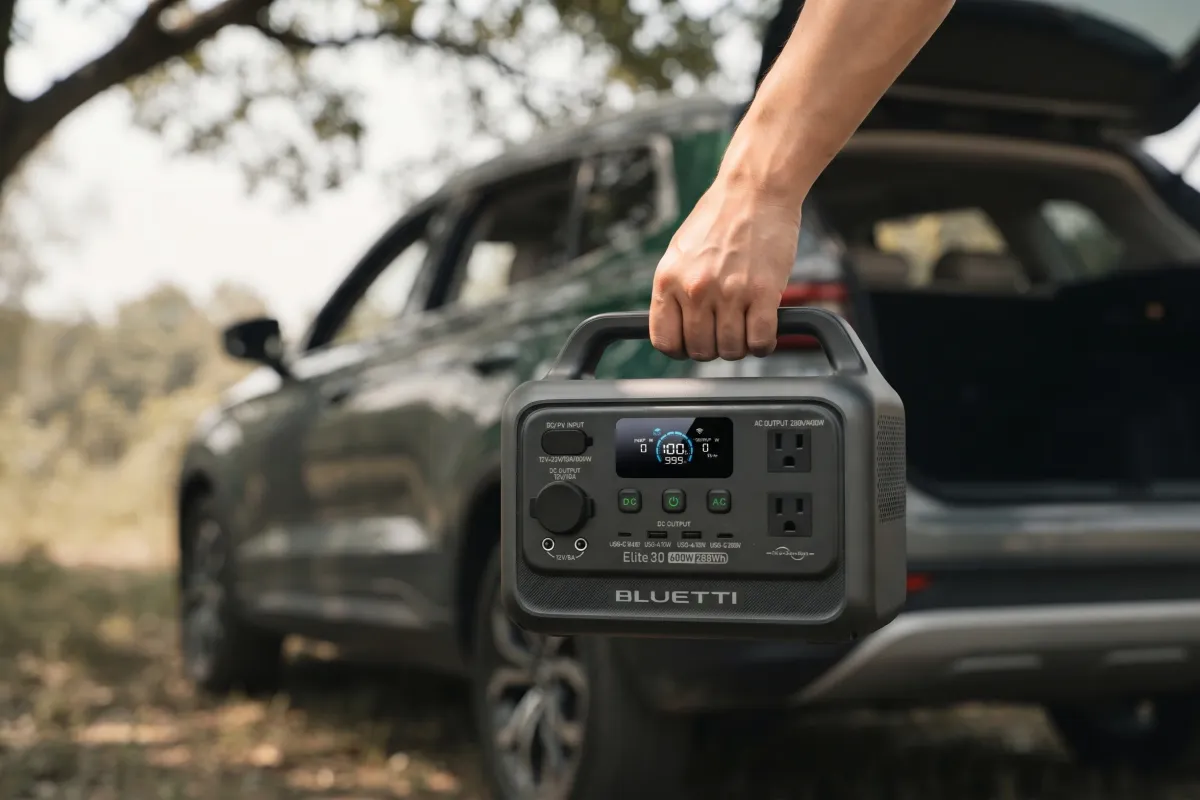
- Weight: Elite 30 V2 9.5 lb, River 3 Plus 10.4 lb.
- Size: Elite 30 V2 9.8 × 7 × 6.6 in; River 3 Plus 9.2 × 9.1 × 5.7 in.
- Battery life and warranty: LiFePO4 on both, rated 3,000+ (Elite 30 V2) and 3,000 (River 3 Plus) cycles to 80%, with 5-year warranties.
- Temperature: Elite 30 V2 charges at 32–104°F and runs at −4–104°F; River 3 Plus charges at 32–113°F and runs at 14–113°F. The Elite 30 V2 handles winter camping better; the River 3 Plus handles a hot car better.
- Weather: neither is water-resistant (the Elite 30 V2 is rated IP20). Keep both dry.
Our best small portable power stations guide covers other options at this size, including the DC-only Anker SOLIX C300 DC at 6.17 lb.
Who should buy the Elite 30 V2, and who the River 3 Plus
Decide by how you'll charge it and whether you'll ever need more than 300 Wh
Best for fast wall charging and laptops
Bluetti Elite 30 V2
Pick it for desk backup, laptop work on the road, CPAP trips with wall power and light camping.
Pros
- 80% in 45 min in Turbo (Bluetti)
- 140 W USB-C
- 9.5 lb
Cons
- Not expandable
- Solar limited to 28 V
- 2 AC outlets
Best for solar, car charging and room to grow
EcoFlow River 3 Plus
Pick it for camping with solar, road trips charging from the car, and anyone who may need more capacity later.
Pros
- 220 W solar, full in 1.5 h (EcoFlow)
- 3 AC outlets
- Expands to 858 Wh
Cons
- 10.4 lb
- 100 W USB-C
- CPAP: either for one to three nights without the humidifier; see best portable power station for CPAP.
- Camping: River 3 Plus with a solar panel; Elite 30 V2 for weekend trips with a 24 V truck or van socket, or a wall outlet before you leave. See best portable power stations for camping.
- Need more power? Delta 3 Plus vs River 3 Plus covers the step up to 1 kWh, and EcoFlow vs Bluetti compares the two brands across sizes.
FAQ
Elite 30 V2 or River 3 Plus: questions from small-station buyers
Which is better, the EcoFlow River 3 Plus or the Bluetti Elite 30 V2?
They're close: 7.8 for the Elite 30 V2 and 7.6 for the River 3 Plus in our ratings. The Elite 30 V2 charges faster from the wall and has a 140 W USB-C port; the River 3 Plus takes more solar and car power, has three AC outlets and can add a battery.
Is the Bluetti Elite 30 V2 good?
Yes. It's the highest-rated compact station in our reviews, with LiFePO4 cells rated for 3,000+ cycles to 80%, a 5-year warranty and a switchover of 10 ms or less. Its main limits are no expansion and a 28 V solar limit.
What is better than Bluetti at this size?
In our compact class, the Elite 30 V2 is the top-rated model, ahead of EcoFlow's River 3 Plus (7.6) and Anker's C300 DC (6.8). For a bigger Bluetti, see EcoFlow vs Bluetti.
What is the best Bluetti to buy?
At under 300 Wh, the Elite 30 V2. For larger Bluetti models, see EcoFlow vs Bluetti; the Apex 300 rates highest of them (8.7).
Is the Elite 30 V2 the same as the Elite 30?
This page compares the Elite 30 V2, Bluetti's current model, and every figure here applies to the V2 only; we haven't reviewed an earlier Elite 30. If a listing doesn't say "V2", check the model name before buying.
How does the River 3 compare?
The EcoFlow River 3 is EcoFlow's smaller model below the River 3 Plus: 245 Wh, 300 W and 7.7 lb, rated 5.2. The River 3 Plus is the one that takes extra batteries.
Can either run a CPAP all night?
Yes, without the humidifier on a DC cable: about 24 hours, roughly three nights. With the humidifier on AC, neither lasts a full night (about 3.8 hours).
Which charges faster from solar?
The River 3 Plus: EcoFlow quotes 1.5 hours at 220 W, against Bluetti's 2.2 hours at 200 W for the Elite 30 V2.
Can I add a battery to either?
Only to the River 3 Plus: up to 858 Wh with EcoFlow's 572 Wh extra battery. The Elite 30 V2 can't add batteries.