 By
We may earn a commission if you buy through links on this page, at no extra cost to you. This never affects which products we recommend. How we make money.
On this page 9 sections
For a one-day solar recharge, you need roughly 1 W of panel for every 3.75 Wh of battery: about 300 W for a 1 kWh station and 600 W for a 2 kWh station. Then check that the panels stay inside your station's solar input limits for watts and voltage.
The quick formula
Two numbers and a 75% rule
To estimate how long a solar recharge takes:
Hours of good sun to full = battery capacity (Wh) ÷ (panel watts × 0.75)
A 1,024 Wh station with a 200 W panel needs about 1,024 ÷ 150 = 6.8 hours of good sun. Double the panel to 400 W and it's about 3.4 hours.
To work backwards from how fast you want to recharge:
Panel watts needed = battery capacity (Wh) ÷ (hours of good sun × 0.75)
For a full recharge in a typical 5-sun-hour day, that's capacity ÷ 3.75: about 273 W for a 1,024 Wh station. Round up to the next common panel size, 300 W. If you're unsure what the Wh number means, see watts vs watt-hours.
Peak sun hours
Daylight isn't the same as full sun
A peak sun hour is one hour of full-strength sunlight. A clear 12-hour summer day might deliver only 5 or 6 peak sun hours, because morning and evening sun is weak.
| Where and when | Peak sun hours a day |
|---|---|
| Southwest, summer | 7–8 |
| Most of the US, summer | 5–6 |
| Most of the US, spring/fall | 4–5 |
| Northern states, winter | 1–2.5 |
Clouds can cut output to a small fraction of that, so plan an outage or trip around your worst likely day, not your best.
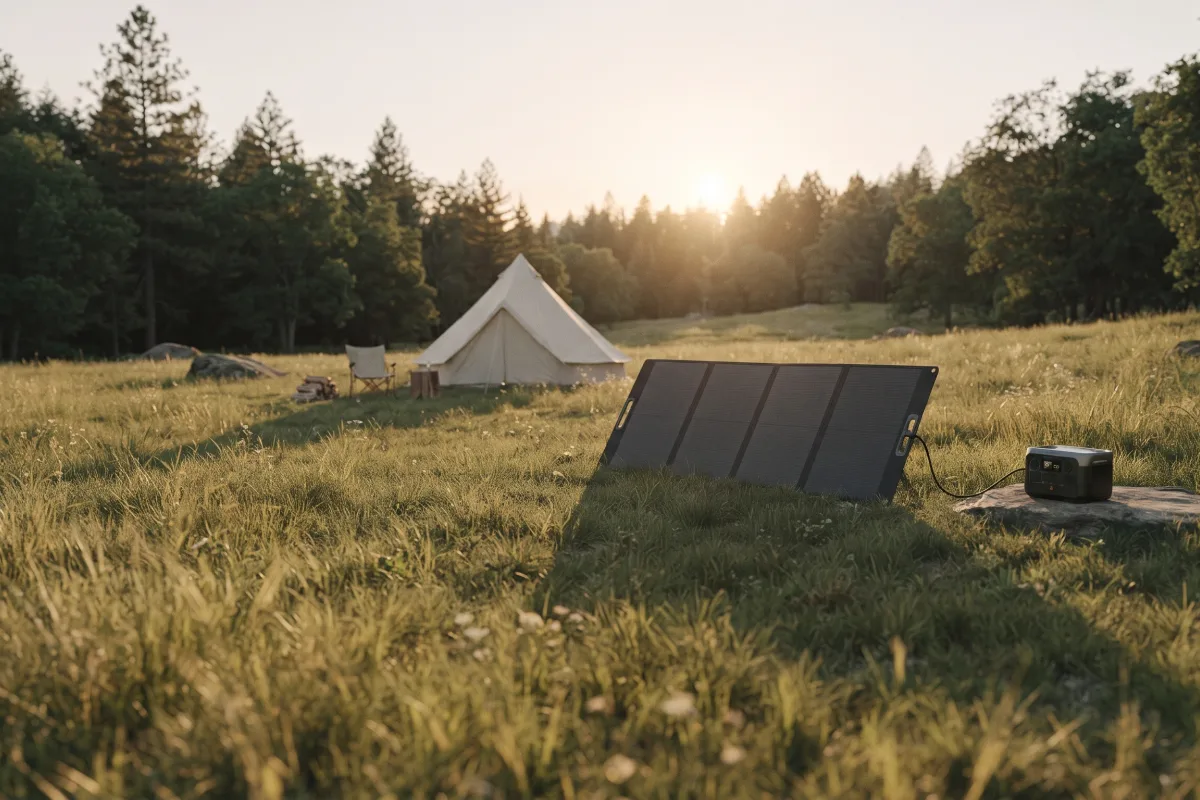
Real panel output vs the rating
Why a 200 W panel gives you about 150 W
A panel's rated watts are measured in ideal lab conditions. Outdoors it delivers less because of:
- Heat: panels lose output as they get hot.
- Angle: a panel lying flat, or not facing the sun, collects less.
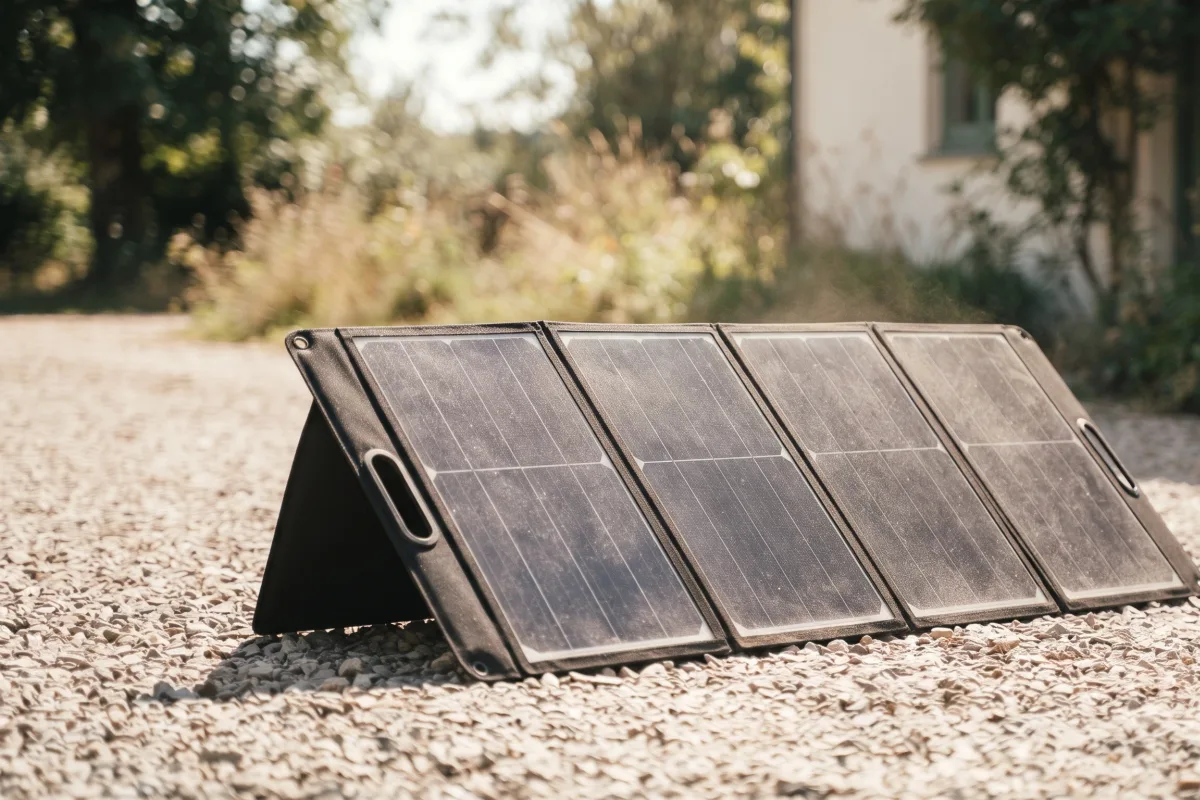
- Dust and partial shade.
- Cable and charge-controller losses inside the station.
That's why this guide plans on about 75% of the rated watts. On a cool, clear day with the panel aimed at the sun you may see more; on a hot or hazy one, less.
Match the panels to your station's solar input
The limits that matter most
Every station has three solar input limits:
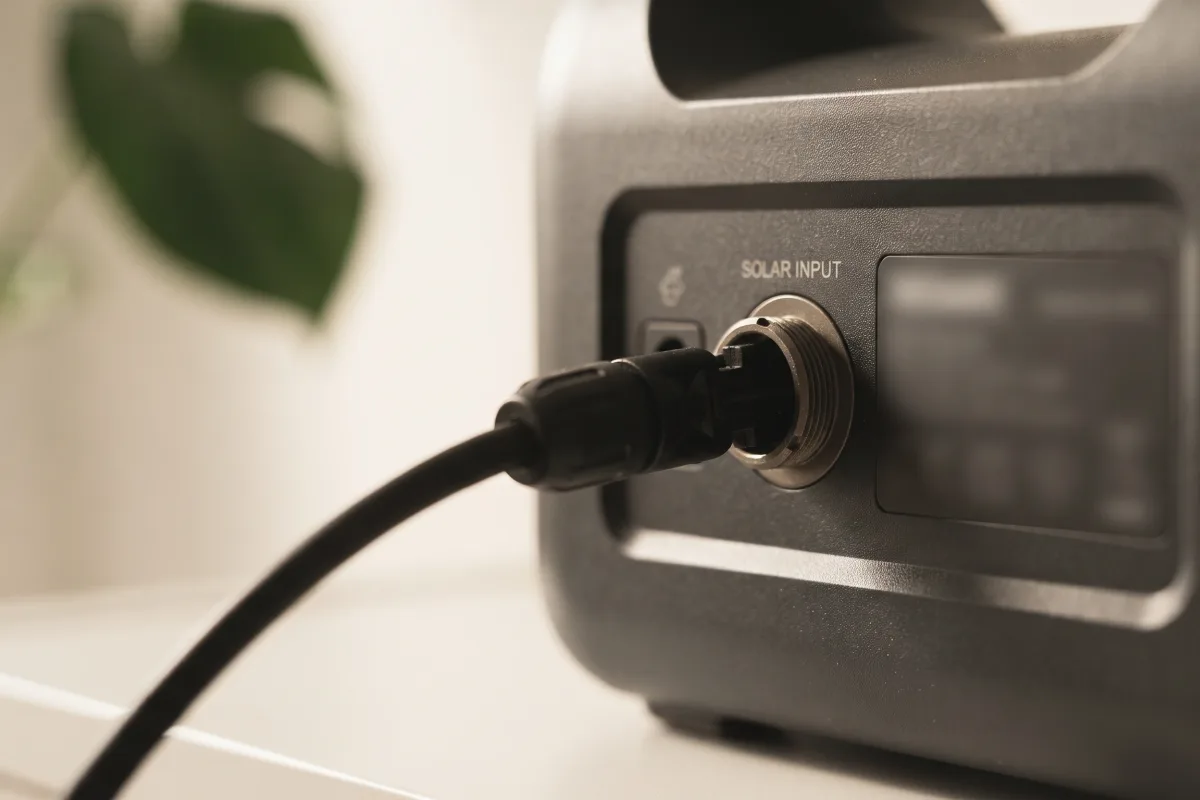
- Maximum watts: extra panel watts beyond this are simply not used.
- Voltage range: panels must sit inside it. Above the maximum can damage the station; below the minimum, it won't charge.
- Maximum current (amps): matters mostly when you connect panels in parallel.
| Station | Max solar input | Voltage range |
|---|---|---|
| EcoFlow Delta 3 Plus | 1,000 W (2 × 500 W) | 11–60 V |
| EcoFlow Delta 3 | 500 W | 11–60 V |
| Anker SOLIX C1000 Gen 2 | 600 W | 11–60 V |
| Bluetti AC180 | 500 W | 12–60 V |
| Bluetti Elite 200 V2 | 1,000 W | 12–60 V |
| Jackery HomePower 2000 Plus v2 | 800 W | 16–60 V |
| Anker SOLIX F3800 Plus | 3,200 W (2 × 1,600 W) | 11–165 V |
Panel size by station size
For a full recharge in one sunny day
These sizes assume about 5 peak sun hours and 75% real output.
| Station capacity | Panel for a one-day recharge | Typical use |
|---|---|---|
| 300–500 Wh | 100–150 W | Phones, lights, a weekend |
| 1,000 Wh | 300 W | Camping, essentials backup |
| 2,000 Wh | 600 W | Fridge backup, RV |
| 3,800 Wh | 1,000 W or more | Home backup |
A smaller panel still works; it just takes more than one day. For the energy your devices use each day, try the runtime calculator: if your panels can replace that daily use, you can keep going through a long outage.
Connecting more than one panel
Series adds volts, parallel adds amps
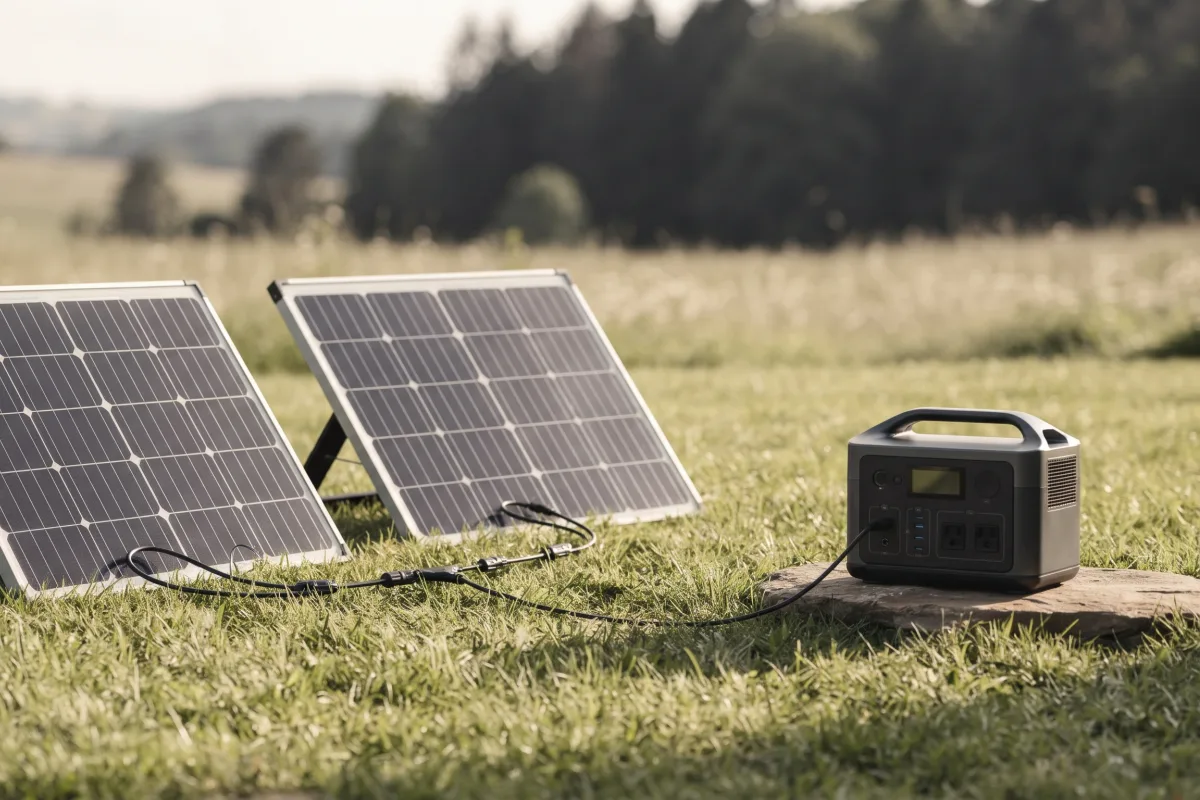
- In series (positive of one to negative of the next), voltages add and current stays the same. Two 22 V panels make about 44 V. This is the usual way to stay inside a 60 V limit with two portable panels, but three can exceed it.
- In parallel (with a branch connector), current adds and voltage stays the same. Use it when series would exceed the voltage limit, as long as the total current stays under the station's maximum.
Use panels of the same model when you combine them, and check the totals against your station's limits before plugging in. For the full setup, see how to charge a power station with solar.
Common mistakes
What slows a solar recharge
- Expecting the rated watts. Plan on about 75%.
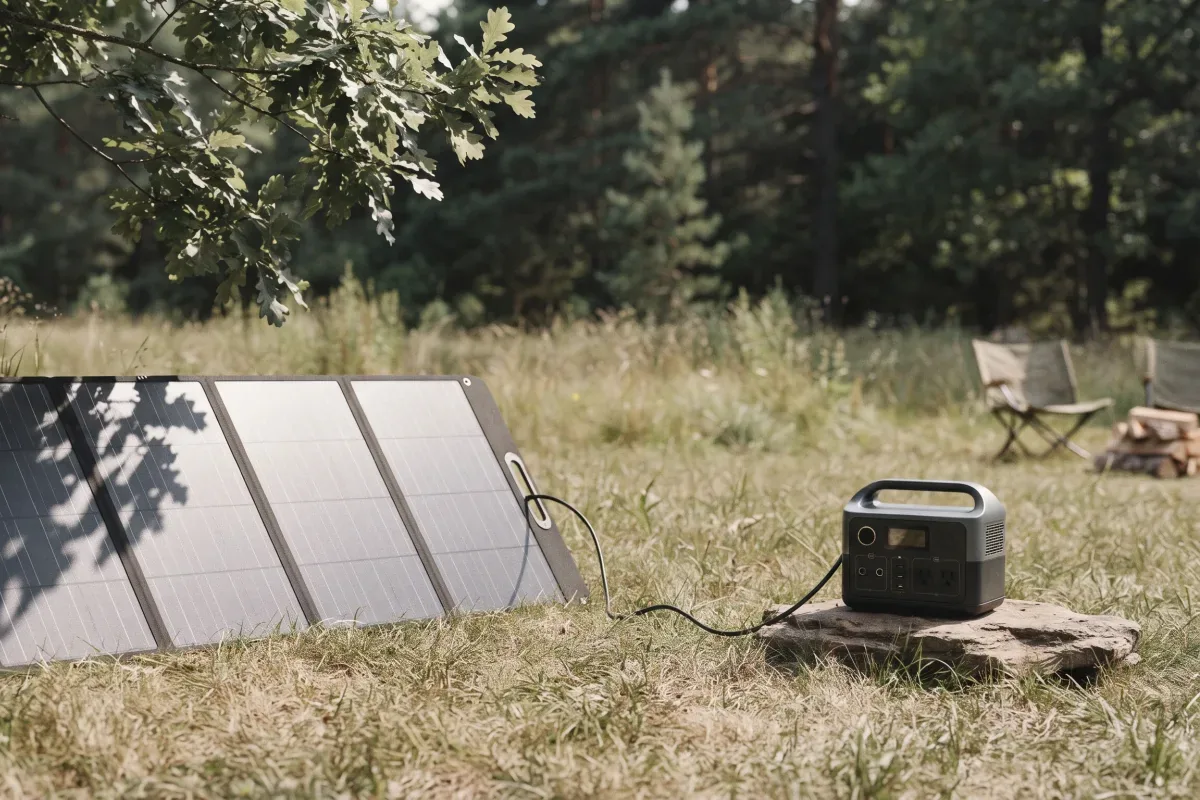
- Partial shade. A shaded corner can cut a whole panel's output sharply.
- Laying the panel flat. Tilt it toward the sun and adjust it every couple of hours.
- Charging through a window. Glass cuts output noticeably.
- Too many panels in series. Exceeding the maximum voltage can damage the station.
- Buying more panel than the input allows. Extra watts beyond the limit aren't used at midday.
What this means when buying
Pick the station, then size the panels
Choose the station for the capacity and output you need, then size panels to its solar input. Buying both together as a solar generator bundle? Check that the bundled panels are big enough for the battery. If solar is your main way to recharge, favour a higher solar input: the EcoFlow Delta 3 Plus and Bluetti Elite 200 V2 both take 1,000 W, while many 1 kWh stations stop at 500–600 W.
Ready to choose a station? See Best Portable Power Stations for Camping.
FAQ
Quick answers to common questions
Can I use a bigger solar panel than my power station's input?
Yes, as long as the voltage stays inside the station's range. The station only draws up to its input limit, so the extra watts help mainly on cloudy days or in early and late sun.
How long does it take to charge a 1,000 Wh power station with a 100 W panel?
About 13 hours of good sun (1,000 ÷ 75), so two to three days in most places.
Do I need a separate charge controller?
No. Portable power stations have a built-in MPPT solar charge controller.
Can I charge a power station with solar on a cloudy day?
Yes, but slowly. Heavy cloud can cut output to a small fraction of the panel's rating.