 By
We may earn a commission if you buy through links on this page, at no extra cost to you. This never affects which products we recommend. How we make money.
On this page 11 sections
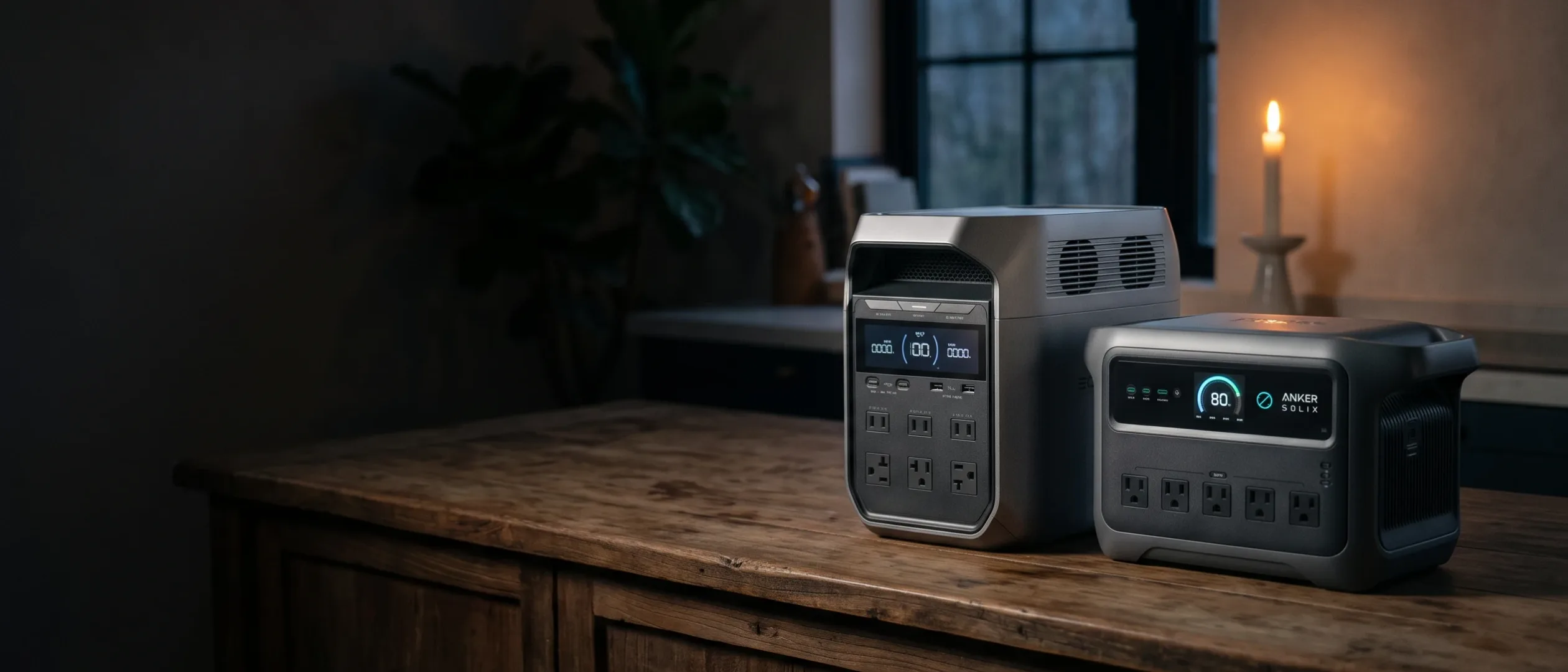
Pick the EcoFlow Delta 3 Plus if you want room to grow (to 5 kWh) and strong solar charging; pick the Anker SOLIX C1000 Gen 2 if you want more output in a lighter box. Both have the same 1,024 Wh LiFePO4 battery.
The short answer: Delta 3 Plus vs C1000 Gen 2
Same battery, different strengths
Both hold 1,024 Wh of LiFePO4, last 4,000 cycles, switch over in about 10 ms and carry a 5-year warranty. The differences are in growth, solar and output.
- Choose the EcoFlow Delta 3 Plus if you may want more capacity later (it expands to 5 kWh), plan to charge from a lot of solar (1,000 W) or want six AC outlets.
- Choose the Anker SOLIX C1000 Gen 2 if you want more output (2,000 W), the lightest unit (24.9 lb) and the quietest rating, and 1 kWh will always be enough.
Delta 3 Plus vs C1000 Gen 2 specs
The numbers side by side
| Spec | EcoFlow Delta 3 Plus | Anker SOLIX C1000 Gen 2 |
|---|---|---|
| Capacity (Wh) | 1024 | 1024 |
| AC output, continuous (W) | 1800 | 2000 |
| AC charge time | 56 min | 49 min (UltraFast) |
| Max solar input (W) | 1000 | 600 |
| Weight (lb) | 27.6 | 24.9 |
| Warranty (years) | 5 | 5 |
| Price | Check price | Check price |
- Same: capacity, chemistry, cycle life (4,000 to 80%), warranty (5 years), 140 W USB-C.
- Delta 3 Plus wins: solar input, expansion, AC outlets (6 vs 5), surge (3,600 W vs 3,000 W).
- C1000 Gen 2 wins: continuous output, weight, top wall-charging speed.
Not sure which number matters for you? Watts vs watt-hours explains it.
Charging speed
Both refill from the wall in under an hour
The C1000 Gen 2 takes up to 1,600 W in UltraFast mode for a full charge in about 49 minutes. UltraFast has to be switched on in the Anker app; normal charging is 1,200 W.
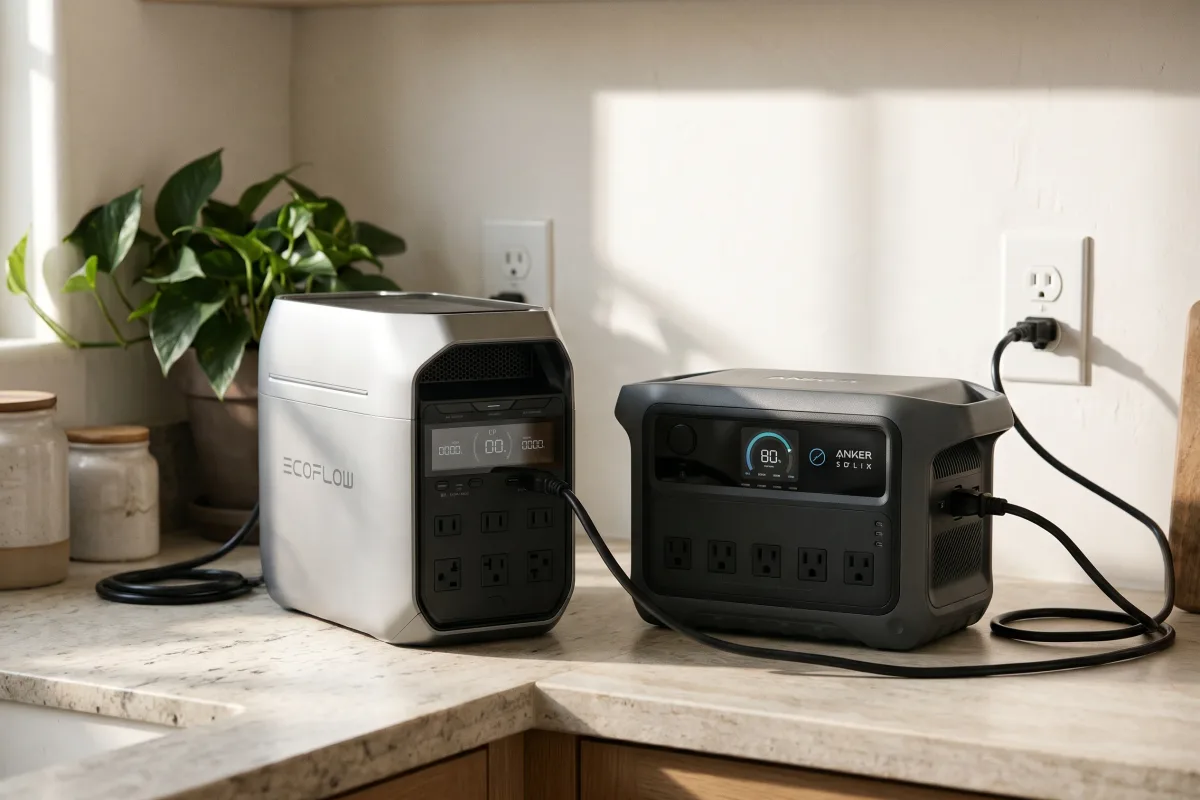
The Delta 3 Plus takes 1,500 W for a full charge in about 56 minutes, with no setting to change. It also accepts 800 W from EcoFlow's alternator charger and can pair with EcoFlow's Smart Generator.
In practice the gap is about 7 minutes. Either will refill during a short window of grid or generator power.
Solar input
The Delta 3 Plus takes much more
The Delta 3 Plus accepts 1,000 W of solar across two 500 W inputs (11–60 V each), for a full charge in about 70 minutes with enough panels. The C1000 Gen 2 takes 600 W (11–60 V) and fills in about 1.8 hours.
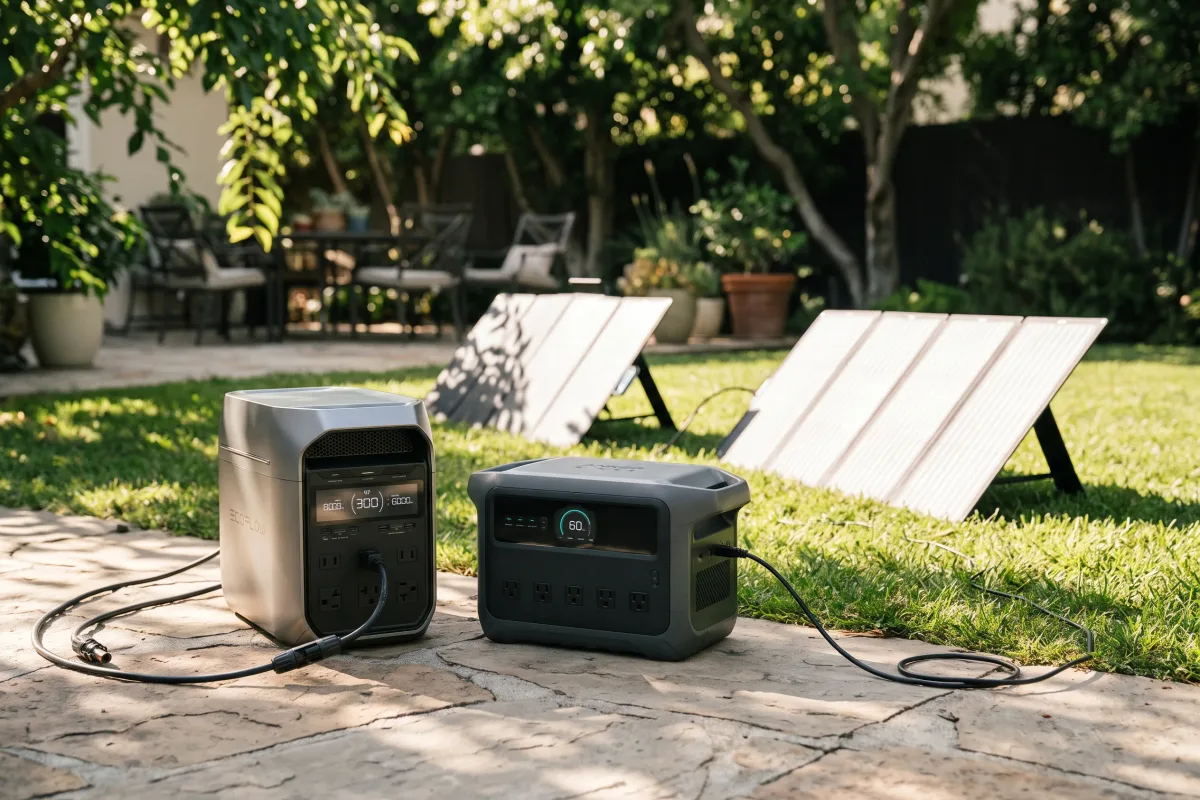
If you plan to run off-grid for days, the Delta 3 Plus gets more out of short sunny spells. See what size solar panel you need for either.
Output and outlets
More watts on the Anker, more outlets on the EcoFlow
The C1000 Gen 2 delivers 2,000 W continuous (3,000 W surge) across 5 AC outlets. That covers most single kitchen appliances with headroom.
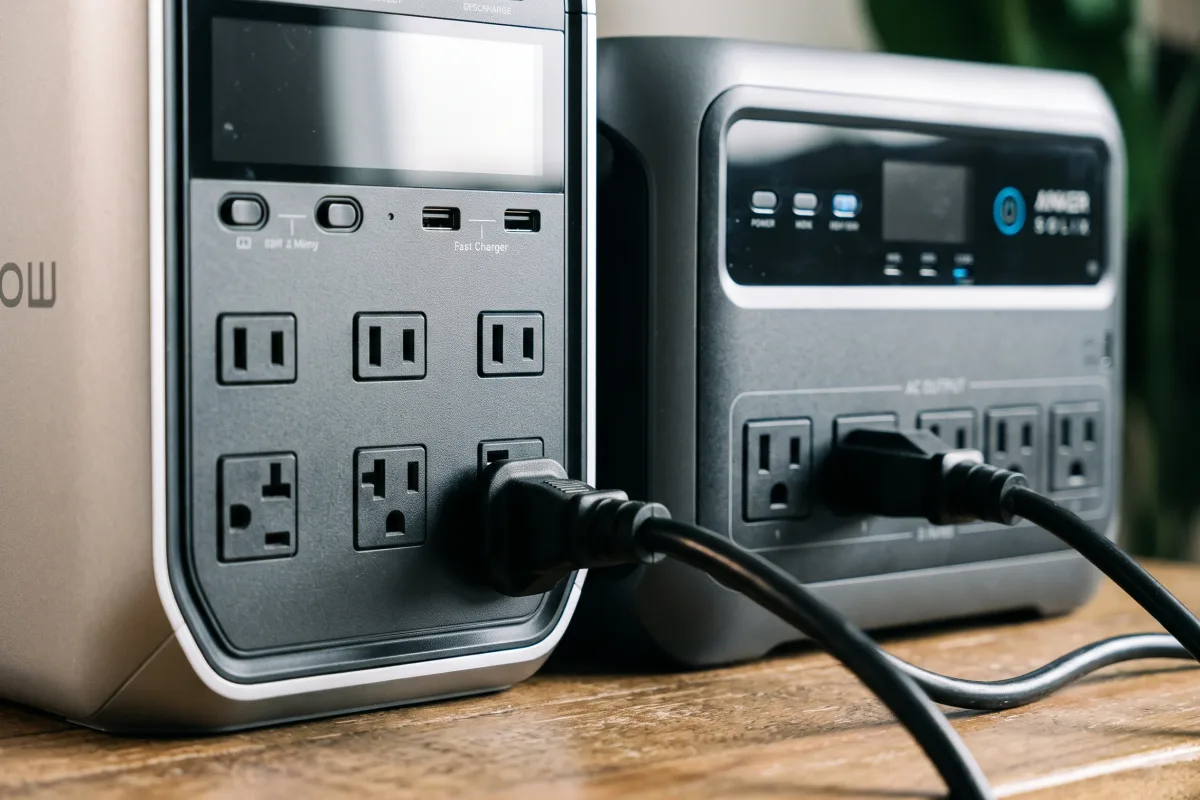
The Delta 3 Plus delivers 1,800 W continuous (3,600 W surge) across 6 AC outlets. Its X-Boost runs some simple heating appliances, like kettles, at up to 2,200 W by lowering their power. That isn't extra continuous output.
Neither runs a microwave and a coffee maker together, or a 240 V appliance.
Runtime
Identical batteries, identical runtimes
Estimated runtimes on either station
- CPAP, no humidifier, DC cord27 h
- CPAP with humidifier, AC11 h
- Fridge + Wi-Fi router11 h
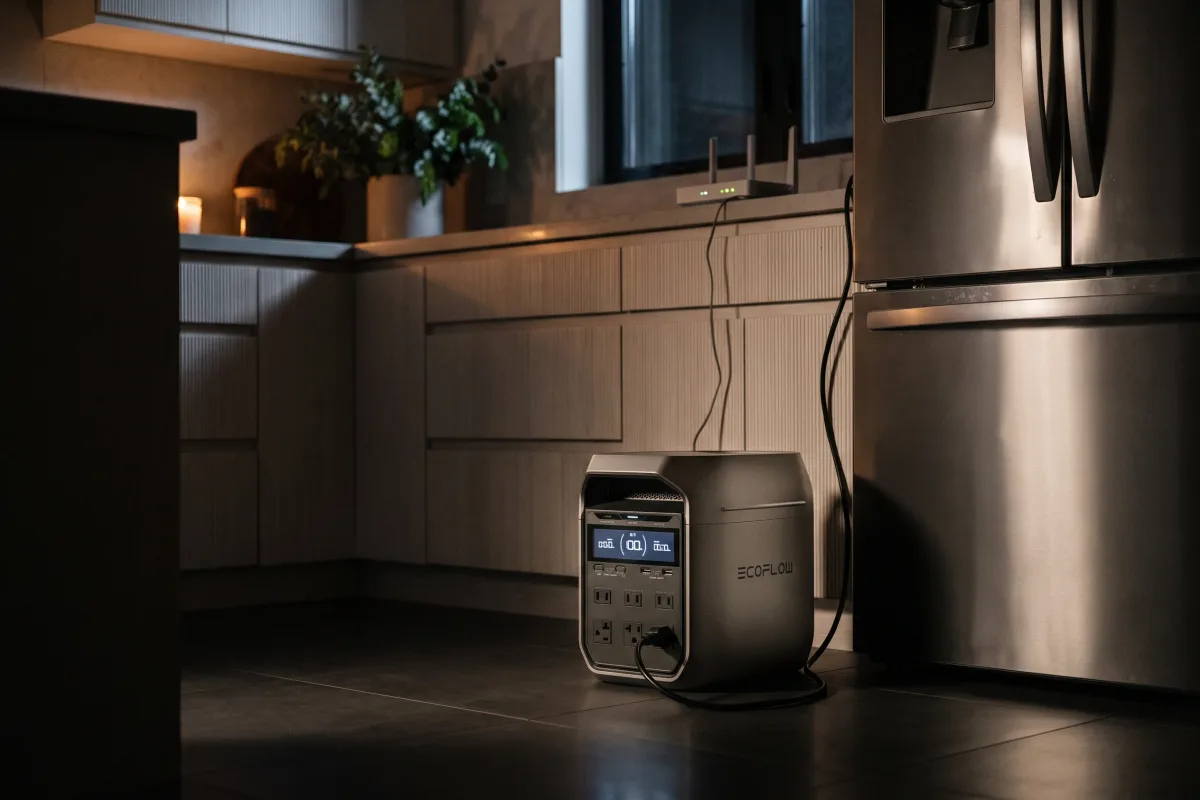
With the same 1,024 Wh, runtime won't decide this. A fridge and router through the night is realistic on either. Try your own devices in the runtime calculator.
Expandability
The biggest difference
The Delta 3 Plus grows from 1 kWh to 5 kWh with EcoFlow extra batteries. That turns it from a weekend station into real multi-day home backup.
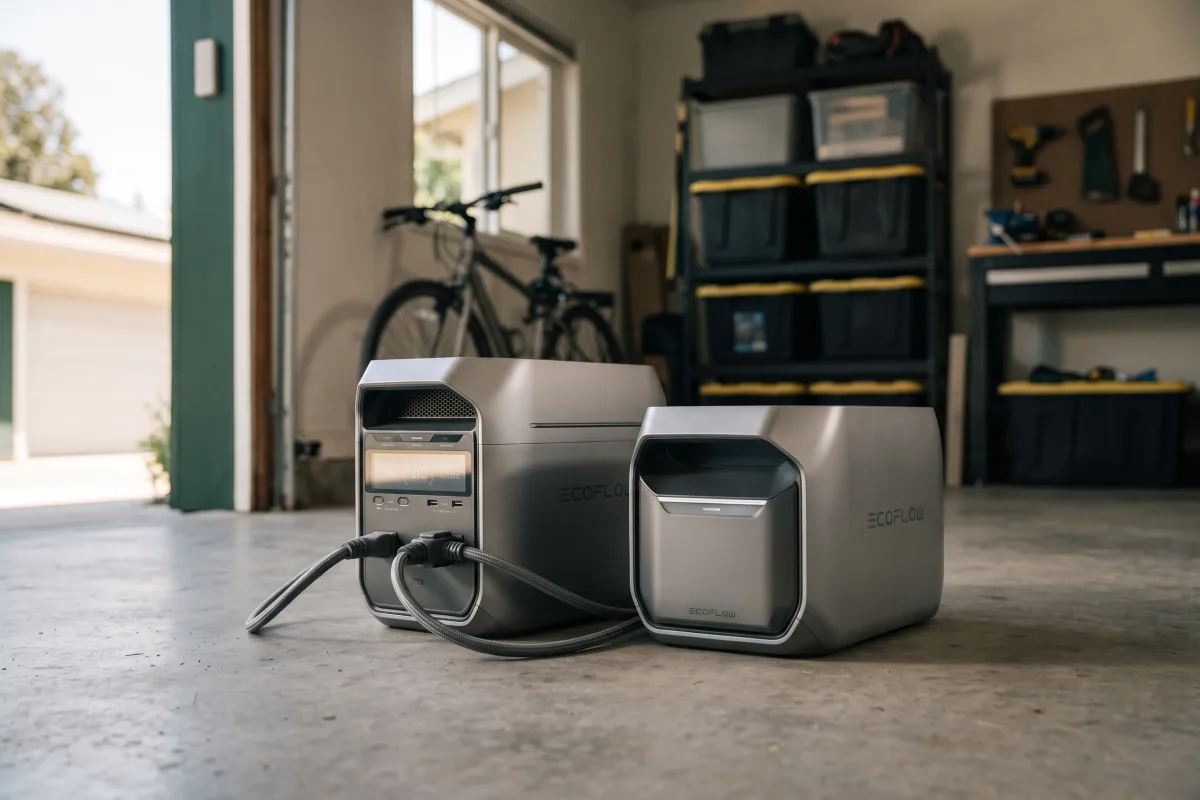
The C1000 Gen 2 can't add batteries. What you buy is what you get. For more capacity in the Anker range you'd need a bigger model.
Backup (UPS), noise and app
Close on all three
Both switch to battery in about 10 ms (EcoFlow: 10 ms; Anker: under 10 ms), fast enough for most computers, routers and CPAP machines.
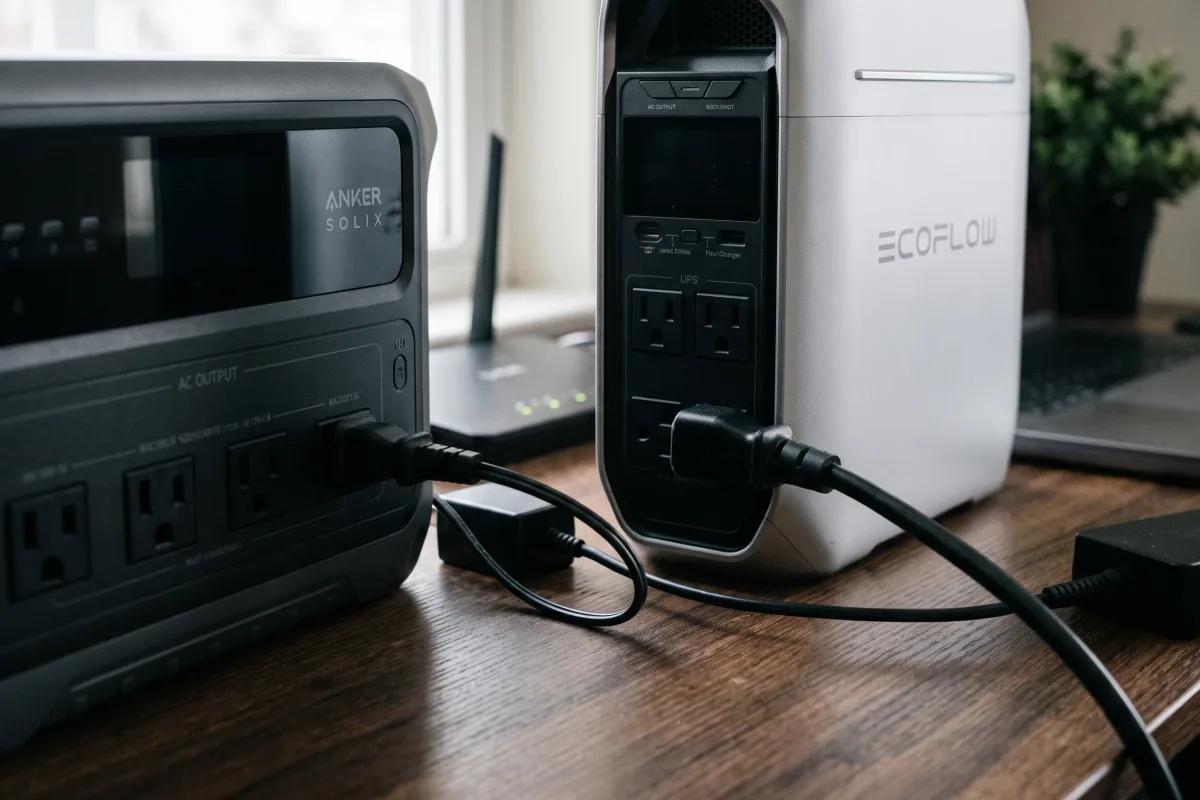
Anker rates the C1000 Gen 2 at 20 dB, without stating the conditions. EcoFlow rates the Delta 3 Plus at 30 dB below 600 W. Both get louder when charging fast or under heavy loads.
Both apps (Wi-Fi and Bluetooth) let you monitor output, change charge settings and use a Time-of-Use mode.
Battery life, weight and warranty
Tied, except on weight
- Battery life: both are rated for 4,000 cycles to 80% capacity. See LiFePO4 vs lithium-ion.
- Warranty: 5 years on both.
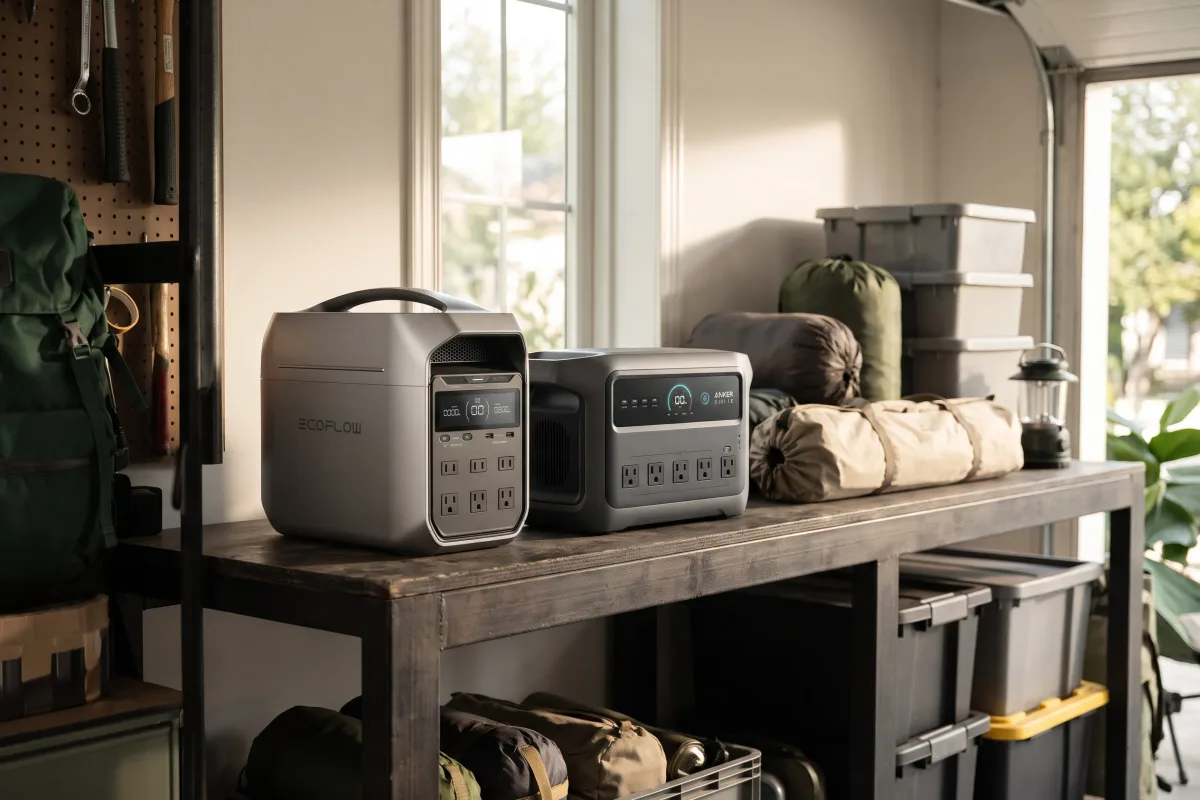
- Weight: the C1000 Gen 2 is 24.9 lb; the Delta 3 Plus is 27.6 lb, 2.7 lb heavier.
Who should buy which
Matched to how you'll use it
Best for home backup that may grow
EcoFlow Delta 3 Plus
Pick it for home backup, off-grid cabins or anyone likely to want more than 1 kWh later.
Pros
- Expands to 5 kWh
- 1,000 W solar input
- 6 AC outlets
Cons
- 1,800 W continuous
- 2.7 lb heavier
Best for more output in a lighter box
Anker SOLIX C1000 Gen 2
Pick it for camping, RV trips, apartments and CPAP use where 1 kWh is enough.
Pros
- 2,000 W continuous
- 24.9 lb
- Rated 20 dB
Cons
- Not expandable
- 600 W solar input
- Home backup: Delta 3 Plus, for the room to grow.
- Camping and RV: C1000 Gen 2, lighter with more output; the Delta 3 Plus if you rely on solar.
- CPAP: either; the C1000 Gen 2's lower noise rating suits a bedroom.
FAQ
Quick answers to common questions
Which is better, the Delta 3 Plus or the C1000 Gen 2?
Neither overall. The Delta 3 Plus wins on expansion and solar; the C1000 Gen 2 wins on output and weight.
Can either be expanded?
Only the Delta 3 Plus, up to 5 kWh with EcoFlow extra batteries. The C1000 Gen 2 can't add batteries.
Which charges faster?
The C1000 Gen 2, at about 49 minutes with UltraFast on, against 56 minutes for the Delta 3 Plus. From solar, the Delta 3 Plus is faster.
Which is quieter?
Anker rates the C1000 Gen 2 at 20 dB; EcoFlow rates the Delta 3 Plus at 30 dB below 600 W.
Is the C1000 Gen 2 different from the original C1000?
Yes. Gen 2 is a newer model with its own specs, so check that any comparison you read uses the Gen 2 figures on this page.