 By
We may earn a commission if you buy through links on this page, at no extra cost to you. This never affects which products we recommend. How we make money.
On this page 8 sections
Our verdict · GRECELL
Big output and near-2 kWh capacity, but heavy and basic
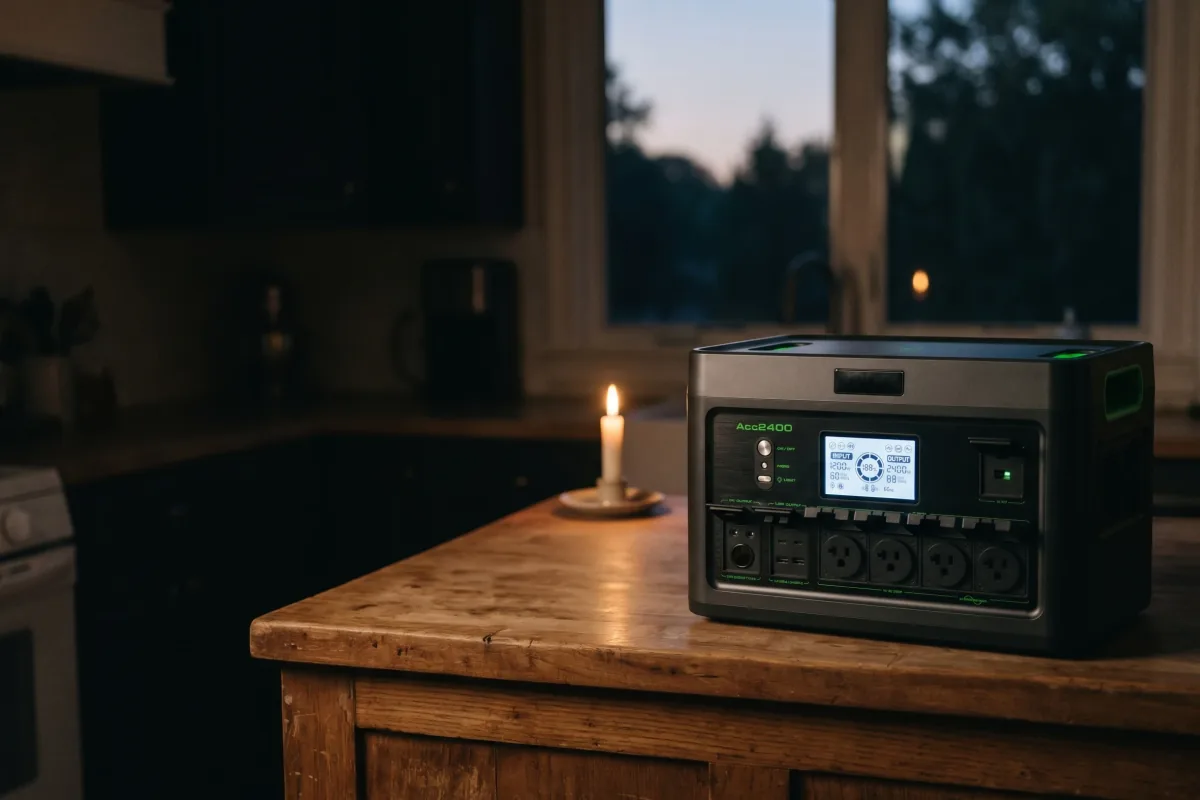
The GRECELL H2400 gives you 2,400 W of output and a 1,843 Wh LiFePO4 battery with a 10 ms UPS, enough to keep a fridge, router and lights going through a long evening outage. It is heavy, can't be expanded and has a shorter warranty than the Anker and Jackery stations it competes with.
- Capacity
- 1,843 Wh
- AC output
- 2,400 W
- Wall charge
- 1.6–2 h
- Weight
- 55 lb
Best for
Home backup on a budget where the station stays in one place
Skip it if
You need to carry it, expand it or control it from an app
- 2,400 W continuous, 4,800 W surge
- 1,843 Wh LiFePO4 battery
- 10 ms UPS switchover
- 800 W solar input at 12–75 V
- 55 lb, heavier than the 2 kWh rivals
- Not expandable, no app
- 2-year warranty
Rating breakdown (mid-size (1 to 1.5 kwh) class)
| Criterion | Weight | Score | Based on |
|---|---|---|---|
| Wall charging speed | 20% | 2.9 | 1,200 W input |
| AC output | 20% | 10.0 | 2,400 W |
| Solar input | 10% | 3.9 | 800 W |
| Backup switchover | 15% | 10.0 | 10 ms |
| Portability | 10% | 5.4 | 34 Wh/lb |
| Expandability | 10% | 0.0 | Not expandable |
| Battery life & warranty | 15% | 5.0 | 2-year warranty, 3,500+ cycles |
| Capacity (Wh) | 1843 |
|---|---|
| Battery chemistry | LiFePO4 |
| Rated cycle life | 3,500+ cycles |
| AC output, continuous (W) | 2400 |
| AC output, surge (W) | 4800 |
| AC charge time | 1.6–2 h |
| Max AC charging input (W) | 1200 |
| Max solar input (W) | 800 |
| Solar input voltage range | 12–75 V |
| UPS switchover (ms) | 10 |
| Weight (lb) | 55 |
| Expandable to (Wh) | Not expandable |
| Warranty (years) | 2 |
Key specs at a glance: 1,843 Wh, 2,400 W and 11 outputs in 55 lb
The H2400 pairs a 2,400 W inverter with a 1,843 Wh LiFePO4 battery, but it weighs 55 lb and cannot be expanded.
- 1,843 Wh capacity (1,843.2 Wh, 32130 LiFePO4 cells): about 18 hours for a fridge and router, or three nights of a typical CPAP with the humidifier on.
- 2,400 W output (4,800 W surge): runs a microwave, kettle, space heater or circular saw, and the surge covers a fridge or pump motor starting up.
- 11 outputs at once: four 120 V AC outlets, two 100 W USB-C, two 18 W USB-A, two 12 V/5 A DC5521 barrel ports and one 12 V/10 A car socket, plus a 5 W LED light.
- LiFePO4, 3,500+ cycles: years of regular use before the battery wears noticeably. See LiFePO4 vs lithium-ion.
- 55 lb, 16.93 × 11.81 × 11.02 in: a two-hand lift from room to room, not something to carry to a campsite.
- Not expandable: 1,843 Wh is all you get, so size it for your longest outage now.
- 2-year warranty: GRECELL covers it for 24 months.
Spec sheets are easy to misread; watts vs watt-hours explains which number answers which question.
Charging speed: 1,200 W wall input refills it in 1.6 to 2 hours
GRECELL quotes a full recharge in 1.6 to 2 hours from a wall outlet, and solar takes up to 800 W at 12 to 75 V.
From a wall outlet, the H2400 recharges in 1.6 to 2 hours at up to 1,200 W, GRECELL says. That is slower than the Jackery HomePower 2000 Plus v2, which draws 1,800 W, but fast enough to refill between rolling blackouts. Charging needs no app or special mode, and the AC input accepts 100 to 130 V at 50 or 60 Hz.
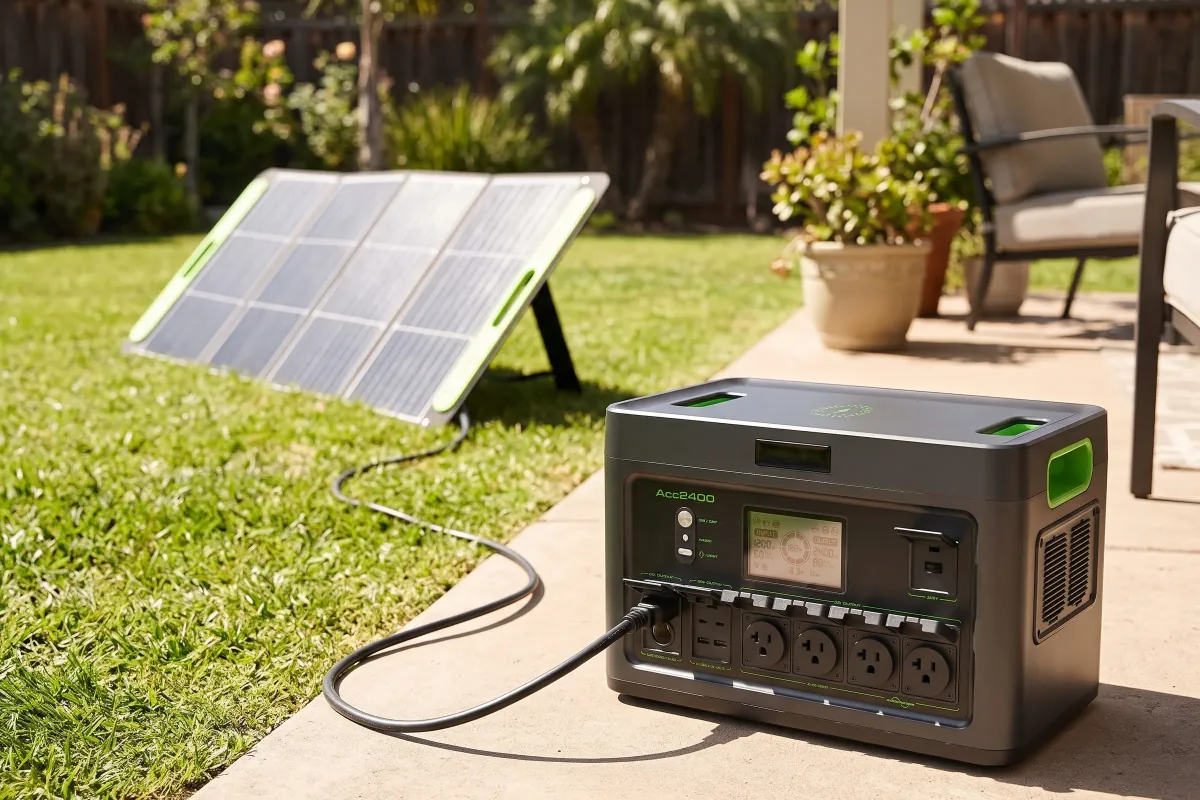
Solar input takes up to 800 W at 12 to 75 V. GRECELL includes an Anderson-to-MC4 cable in the box, so standard panels plug straight in. In practice that means two or three panels wired to stay under 75 V, which can refill the battery in about three hours of strong sun (our estimate at 75% of 800 W, or about 600 W). On a day with four peak sun hours, a full 800 W array returns roughly 2,400 Wh by the same estimate, more than one full charge. Our solar panel sizing guide shows how to match panels to that voltage range.
A car charger cable is also included for topping up from a 12 V socket on the road. GRECELL gives no car-charging wattage, so treat it as a slow trickle rather than a way to refill 1,843 Wh.
Charge it between 32 and 104°F. GRECELL lists that charging range, a wider 14 to 104°F range for use, and -4 to 113°F for storage, so a cold garage in winter can stop it charging even when it still runs.
Capacity and real runtime: about 18 hours for a fridge and router
Its 1,843 Wh runs a fridge and router for about 18 hours, or a typical humidified CPAP for three nights.
Estimated runtimes on the H2400
- CPAP, no humidifier, low-draw (11 W, DC)6.4 days
- Wi-Fi router alone (12 W, DC)5.9 days
- CPAP with humidifier, typical (56 W, AC)24 h
- Fridge alone (67 W, AC)21 h
- Fridge + Wi-Fi router18 h
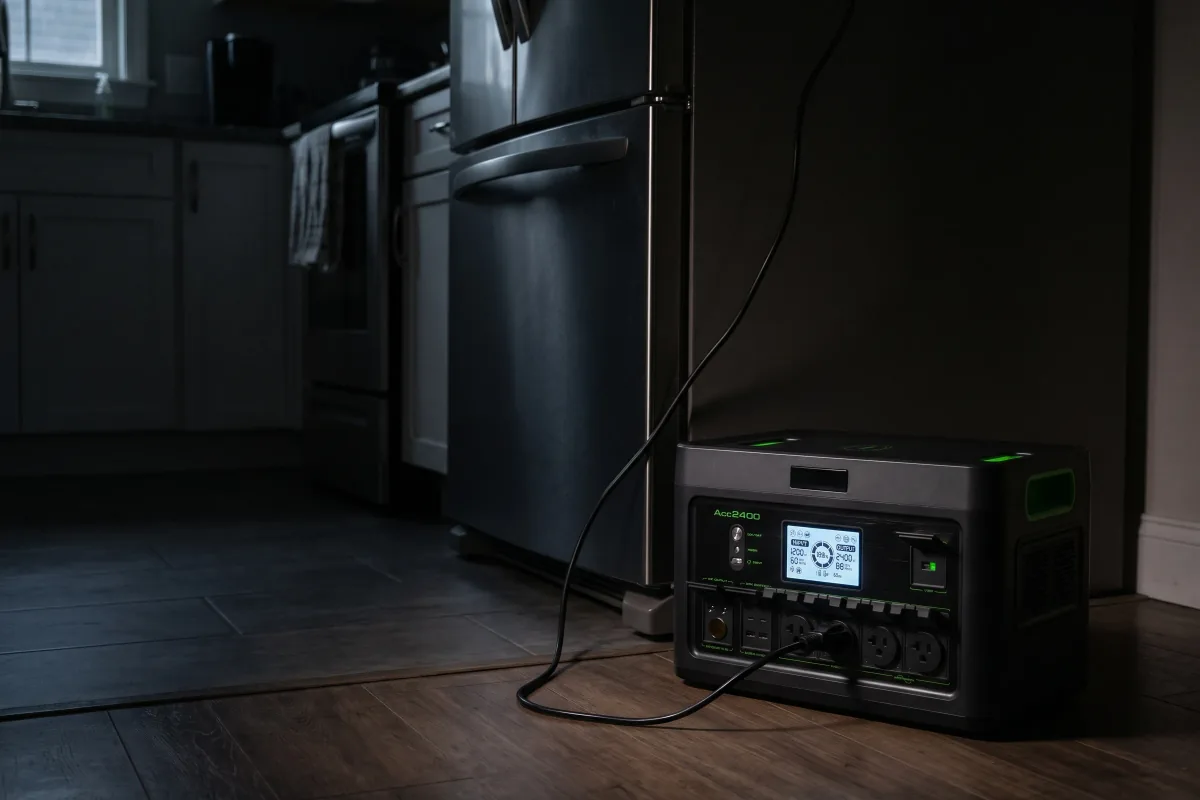
At 1,843 Wh, the H2400 covers a typical overnight outage with room to spare. A fridge and router run about 18 hours by our estimate, and a fridge alone about 20.7 hours. A CPAP without the humidifier, run from the 12 V DC output, lasts about 154 hours, or roughly 19 nights; with the humidifier on AC, about 24 hours, or three nights.
It sits just below the 2 kWh rivals, so expect roughly 10% less runtime than the 2,010 Wh Anker SOLIX S2000. For an outage longer than a day, plan to recharge from solar or the wall, since there is no add-on battery. Try your own devices in the runtime calculator, and see how long a power station runs a fridge for fridge sizes beyond the 67 W average.
Output: 2,400 W runs a microwave and fridge together, but no 240 V
Four 120 V pure sine wave outlets share 2,400 W, with a 4,800 W surge for motor start-up.
Four 120 V pure sine wave AC outlets share 2,400 W. A microwave and a fridge together, a 1,500 W space heater, or a circular saw all run without tripping it. GRECELL lists a fridge, window air conditioner, hair dryer, microwave, coffee maker, heater, electric grill and drill among its loads, each within the 2,400 W limit.
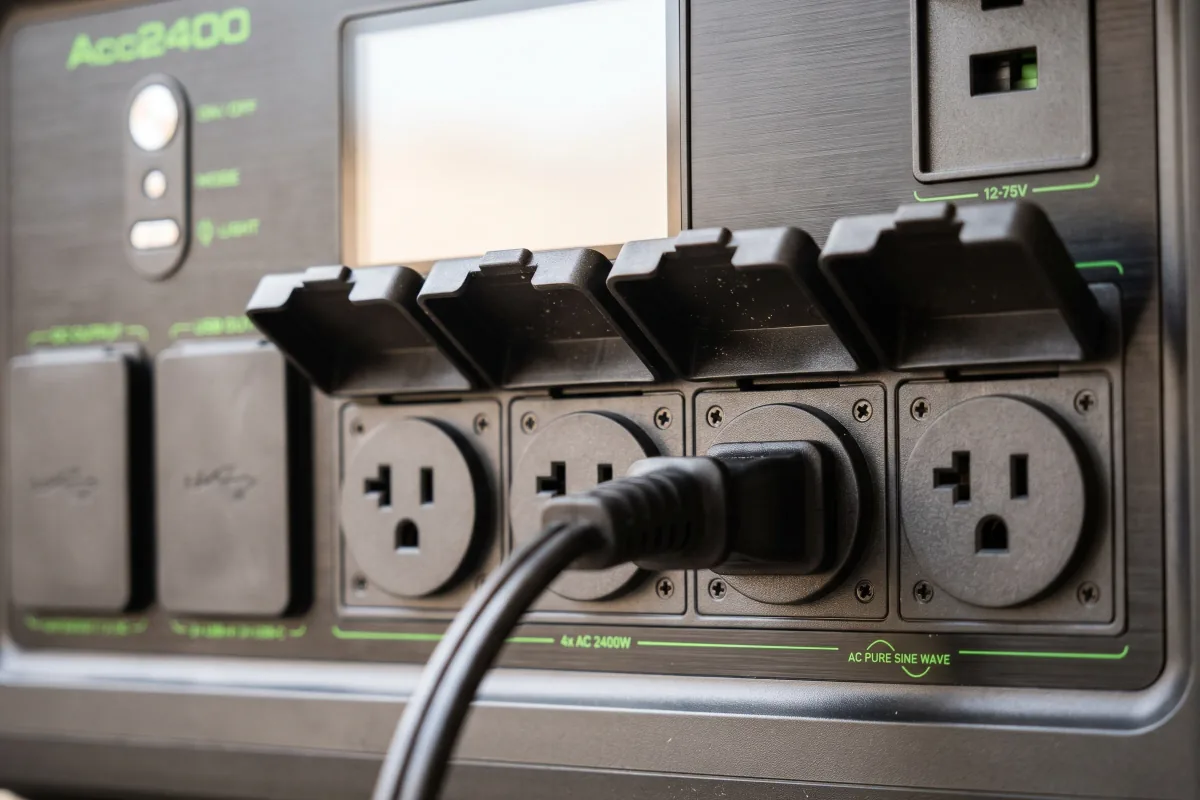
The DC side is unusually complete. Two 100 W USB-C ports charge laptops, two 18 W Quick Charge 3.0 USB-A ports cover phones, and a 12 V/10 A car socket runs a cooler. Two 12 V/5 A DC5521 barrel ports suit routers and small 12 V gear without the inverter running. A 5 W LED light has half, full, strobe and SOS modes.
High loads drain it fast. A 1,500 W heater empties it in about an hour, and a 1,000 W microwave would run about 93 minutes in total (both our estimates). It has no 240 V output or 30 A RV outlet, so it won't run a 240 V well pump, central air or an RV's main panel. Surge vs continuous watts explains why motor loads need the 4,800 W headroom.
Backup (UPS) and app: 10 ms switchover for loads under 1,800 W, no app
GRECELL rates its standby UPS at within 10 ms for equipment below 1,800 W, and there is no app.
Plug the H2400 into the wall and plug your devices into it, and it switches to battery within 10 ms when the grid fails. GRECELL describes it as a standby UPS that also covers voltage sags and surges. That is fast enough for Wi-Fi routers, modems, lamps, fridges and most desktop PCs.
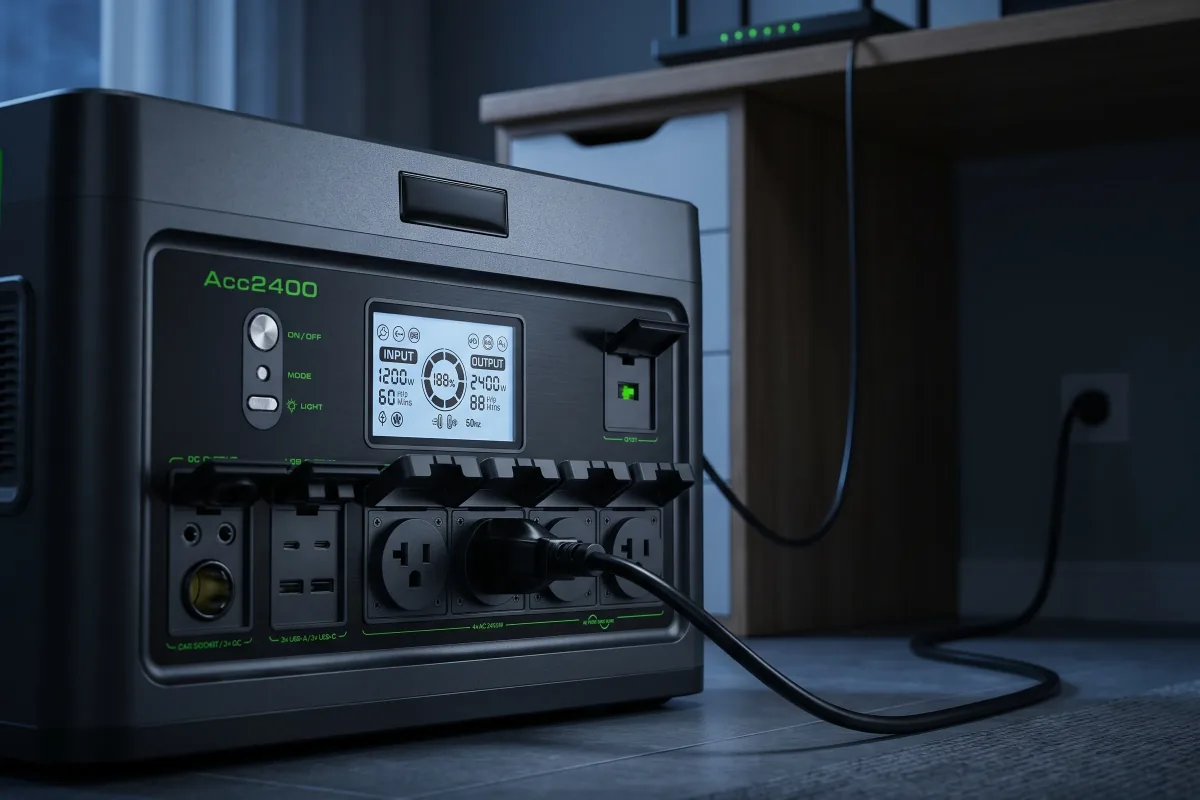
Keep backed-up loads below 1,800 W. GRECELL rates the UPS for equipment under 1,800 W, lower than the 2,400 W the inverter gives on battery alone, so a space heater plus a microwave should not sit on the UPS outlets together. Because the switch takes up to 10 ms rather than zero, a desktop PC with a weak power supply can still restart; our UPS guide explains which devices need faster switching.
There is no app or Wi-Fi. The front LCD shows battery level, input and output watts, voltage, temperature and charging status, so you check it at the unit. That keeps setup simple but means no remote alerts when the grid drops.
How it compares: more output than the S2000, less system than the Jackery
The H2400's 2,400 W matches the Jackery's, but it has less battery, a shorter warranty and no expansion.
| Spec | GRECELL H2400 | Anker SOLIX S2000 | Jackery HomePower 2000 Plus v2 |
|---|---|---|---|
| Capacity (Wh) | 1843 | 2010 | 2048 |
| AC output, continuous (W) | 2400 | 1500 | 2400 |
| AC charge time | 1.6–2 h | About 2.3 h at 1,150 W (1,600 W UltraFast via app) | About 1.5 hours (Emergency Charging mode) |
| Max solar input (W) | 800 | 400 | 800 |
| Weight (lb) | 55 | 35.7 | 41.5 |
| Warranty (years) | 2 | 5 | 3 + 2 with registration |
| Price | Check price | Check price | Check price |
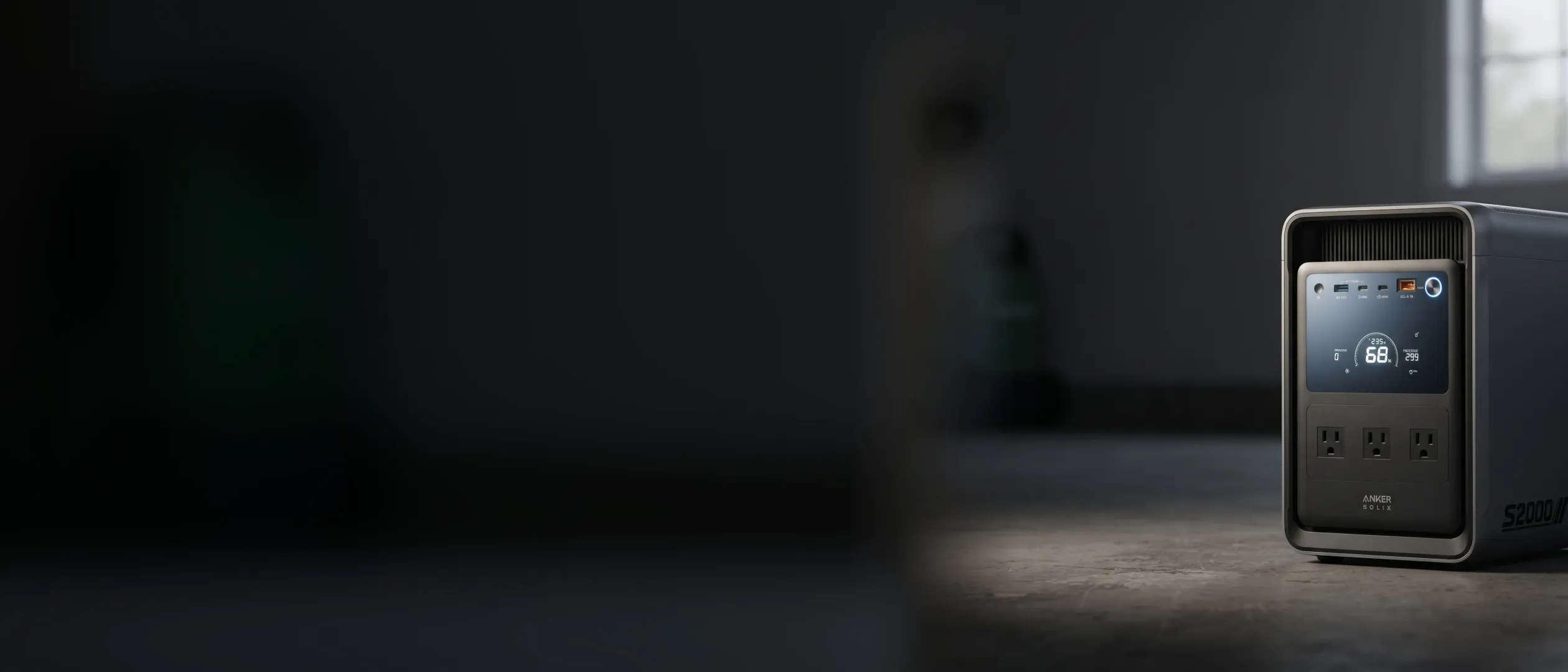
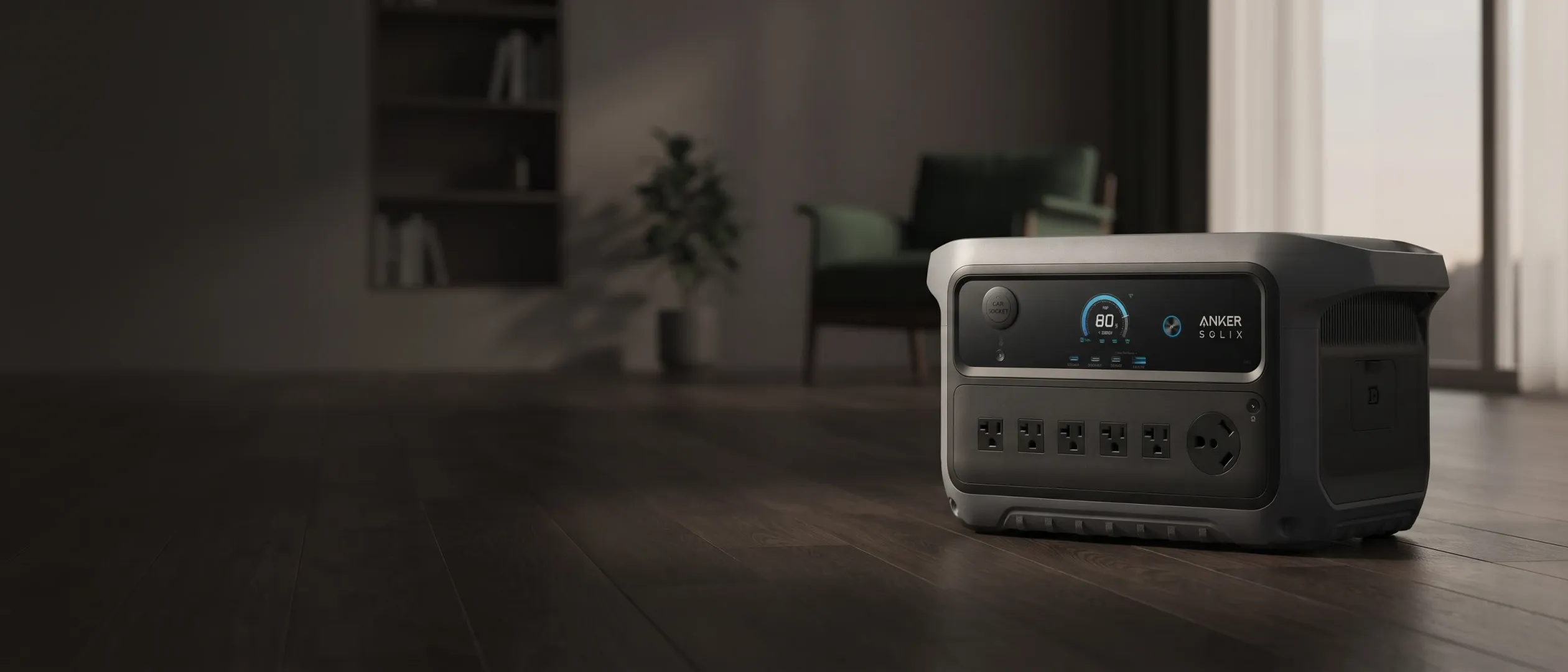
- Anker SOLIX S2000: 2,010 Wh at 35.7 lb with a 5-year warranty, but 1,500 W of output and 400 W of solar. Lighter and longer-lived; the GRECELL runs bigger loads. On our rating the H2400 scores 5.8 and the S2000 4.6, which loses most for its output, solar and lack of expansion.
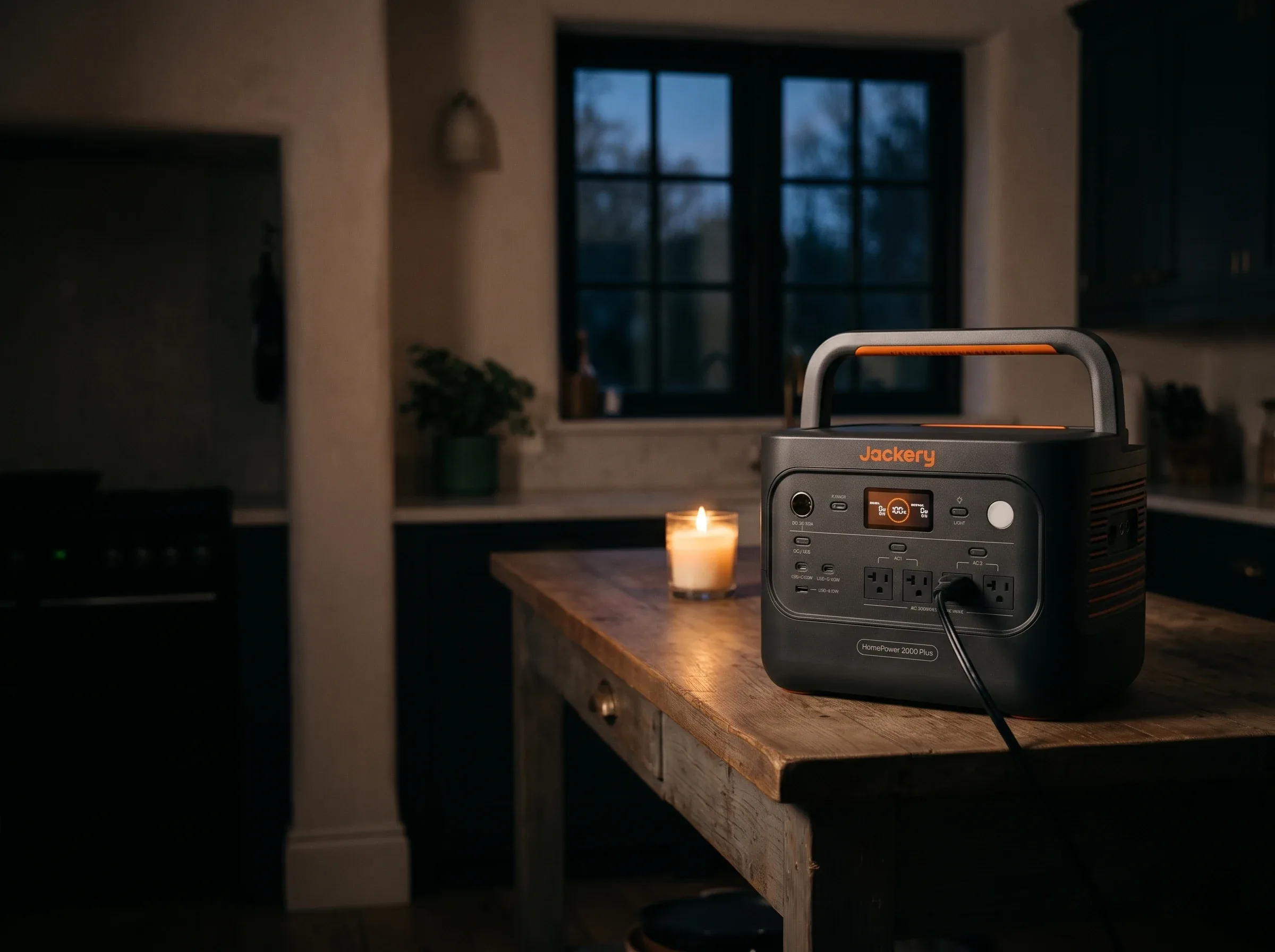
- Jackery HomePower 2000 Plus v2: the same 2,400 W output with 2,048 Wh, 1,800 W charging, an app and expansion to 12,288 Wh as a multi-battery system, all at 41.5 lb. It rates 7.8 and is the better home-backup system if you may grow it.
- Goal Zero Yeti 1500: less battery (1,505 Wh) and 2,000 W, but 52.75 lb, IPX4, 900 W of solar and a 5-year warranty; rated 6.4 against this station's 5.8.
Where the H2400 loses points: our rating gives it full marks for output and UPS switching, but its 1,200 W wall charging, 800 W solar (which scores low for its size), missing expansion and 2-year warranty pull it to 5.8. See how we rate for the method.
Who should buy the GRECELL H2400: budget home backup that stays put
It suits a fixed home-backup spot that needs 2,400 W and a 10 ms UPS, not carrying or expanding.
Good fit: homeowners who want 2,400 W of output and a 10 ms UPS for a fridge, router and lights, and will leave the station in one spot. The DC barrel ports and car socket also make it a good base for 12 V gear in a shed or workshop.
Look elsewhere if: you need to carry it often, want to add batteries later, or want app control and a longer warranty. The Jackery HomePower 2000 Plus v2 covers all three.
FAQ
Straight answers on the H2400's runtime, UPS, solar, expansion and build.
Is GRECELL a good power station brand?
The H2400's core specs are strong for home backup: a LiFePO4 battery rated for 3,500+ cycles, 2,400 W of pure sine wave output and a 10 ms UPS. Its weak points are a 2-year warranty, no app and no expansion, so it fits buyers who want raw output for a fixed spot.
How long will the GRECELL H2400 run a refrigerator?
About 18 hours for a typical fridge averaging 67 W plus a Wi-Fi router, or about 20.7 hours for the fridge alone, by our estimate from its 1,843 Wh battery.
Can the GRECELL H2400 work as a UPS?
Yes. With it plugged into the wall, it switches to battery within 10 ms for equipment below 1,800 W, which keeps routers, modems and most computers running.
How many solar panels does the H2400 need?
Up to 800 W at 12 to 75 V. Two or three panels of 200 to 400 W, wired to stay under 75 V, give the fastest solar charging. The included Anderson-to-MC4 cable connects them.
Can the GRECELL H2400 run a window air conditioner?
GRECELL lists window air conditioners among its loads, and most 120 V window units sit well inside 2,400 W. At 1,843 Wh, a unit drawing 500 W would run about three hours (our estimate), so it suits short heat waves rather than days.
Is the GRECELL H2400 expandable?
No. It has no expansion battery port, so its capacity stays at 1,843 Wh.
How heavy is the GRECELL H2400?
55 lb, at 16.93 × 11.81 × 11.02 in, so it is a two-hand lift.