 By
We may earn a commission if you buy through links on this page, at no extra cost to you. This never affects which products we recommend. How we make money.
On this page 9 sections
Our verdict · Anker SOLIX
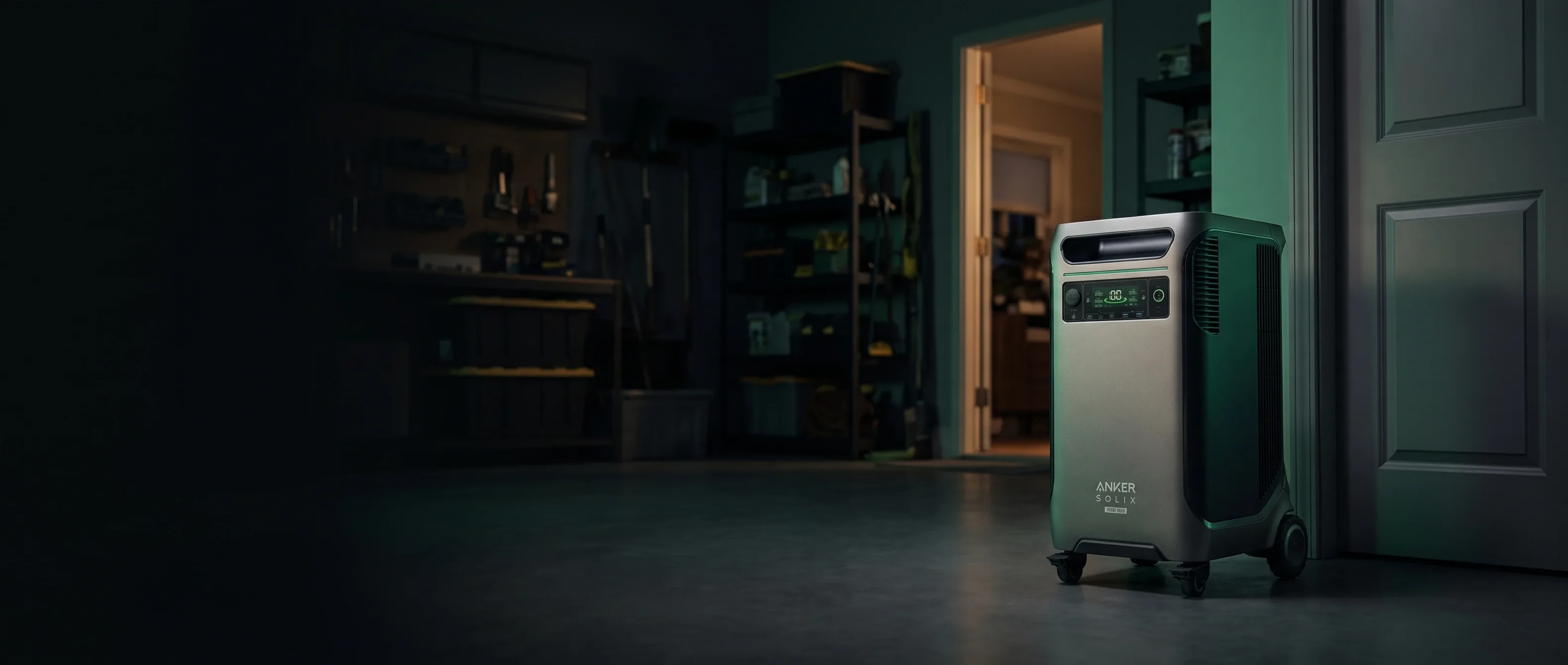
A home-backup system on wheels that runs 240 V circuits and charges fast from solar
3.84 kWh, 6,000 W of 120/240 V output, very fast solar charging and room to grow past 50 kWh. It does the home-backup job well; getting the most from it means buying more hardware.
- Capacity
- 3,840 Wh
- AC output
- 6,000 W
- Weight
- 136.7 lb
Best for
Homeowners who want a day or more of essentials backup (or whole circuits with an electrician-installed panel), and RV owners who want a 30-amp hookup without a generator.
Skip it if
You need something you can carry, you only need to run a few small devices, or you aren't ready to budget for installation and extra batteries.
- 6,000 W of 120/240 V output
- 3,200 W solar input for fast recharging
- TT-30 outlet plugs straight into a travel trailer
- Expands past 50 kWh
- 136.7 lb: you roll it, you don't carry it
- Regular outlets share a 2,400 W limit
- No 240 V output while charging from a 120 V outlet
- Whole-home use needs extra hardware and installation
Rating breakdown (whole-home (3.5 kwh and up) class)
| Criterion | Weight | Score | Based on |
|---|---|---|---|
| Wall charging speed | 20% | 4.5 | 1,800 W input |
| AC output | 20% | 10.0 | 6,000 W |
| Solar input | 10% | 10.0 | 3,200 W |
| Backup switchover | 15% | 6.0 | 20 ms |
| Portability | 10% | 6.5 | 28 Wh/lb |
| Expandability | 10% | 10.0 | to 53,800 Wh |
| Battery life & warranty | 15% | 9.0 | 5-year warranty, 3,000+ cycles |
| Capacity (Wh) | 3840 |
|---|---|
| Battery chemistry | LiFePO4 |
| Rated cycle life | 3,000+ cycles |
| AC output, continuous (W) | 6000 |
| AC output, surge (W) | — |
| AC charge time | — |
| Max AC charging input (W) | 1800 |
| Max solar input (W) | 3200 |
| Solar input voltage range | 11–165 V (17 A, 1,600 W per input) |
| UPS switchover (ms) | 20 |
| Weight (lb) | 136.7 |
| Expandable to (Wh) | 53800 |
| Warranty (years) | 5 |
Key specs at a glance
A home battery more than a portable power station
- 3,840 Wh capacity: almost four times a typical 1 kWh station.
- 6,000 W total output at 120 V and 240 V: enough for a well pump, an electric dryer circuit or an RV air conditioner, within the outlet limits below.
- LiFePO4, 3,000+ cycles and a 5-year warranty. See LiFePO4 vs lithium-ion.
- 136.7 lb on wheels: you roll it rather than carry it.
- Expandable to 53.8 kWh with up to six 3.84 kWh batteries.
Spec sheets are easy to misread; watts vs watt-hours explains which number answers which question.
Charging speed
Its fastest-charging trick is solar
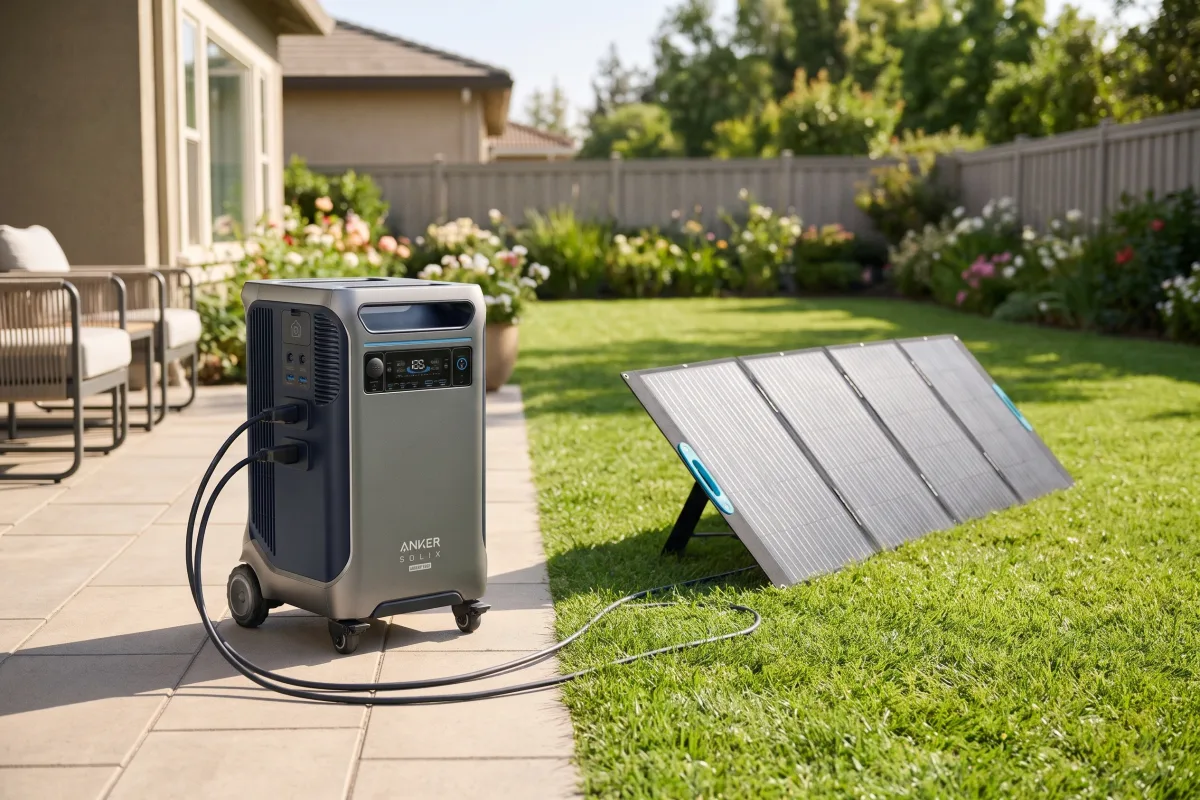
- Solar: two inputs of up to 1,600 W each (11–165 V), 3,200 W total, for a full recharge in about 1.5–2 hours in strong sun.
- Wall: up to 1,800 W from a standard outlet. At that rate, 3,840 Wh takes a little over 2 hours at best.
- Generator: with Anker's generator adapter, it can take up to 6,000 W and pass generator power through to your loads, a key difference from the original F3800. See power station vs generator for how the two work together.
Capacity and real runtime
What 3.84 kWh means during an outage
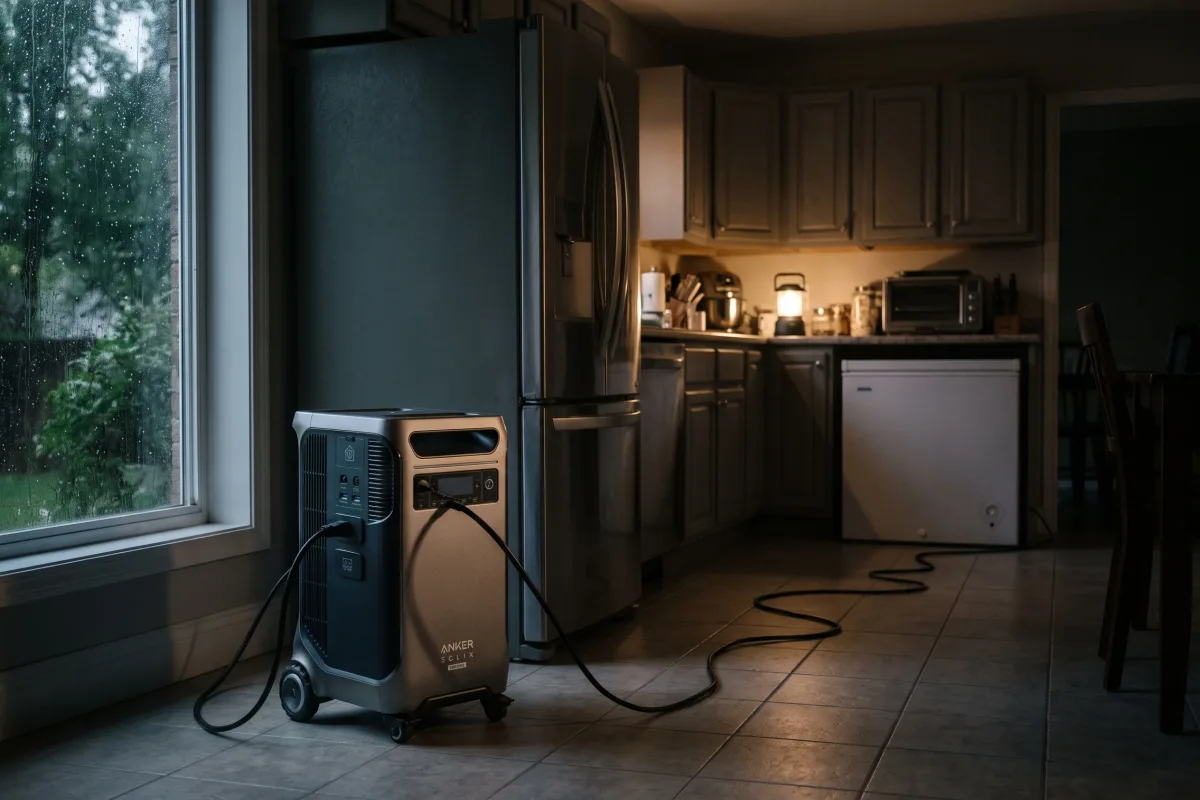
Estimated runtimes on the F3800 Plus
- CPAP with humidifier42 h
- Fridge + Wi-Fi router41 h
- Fridge + chest freezer + router27 h
On its own, it covers the kitchen essentials for well over a day. Add solar or an expansion battery and multi-day outages become realistic. For your own mix of devices, use our runtime calculator.
Output: what it can and can't run
6,000 W, split across its outlets
| Outlet | Rating | Good for |
|---|---|---|
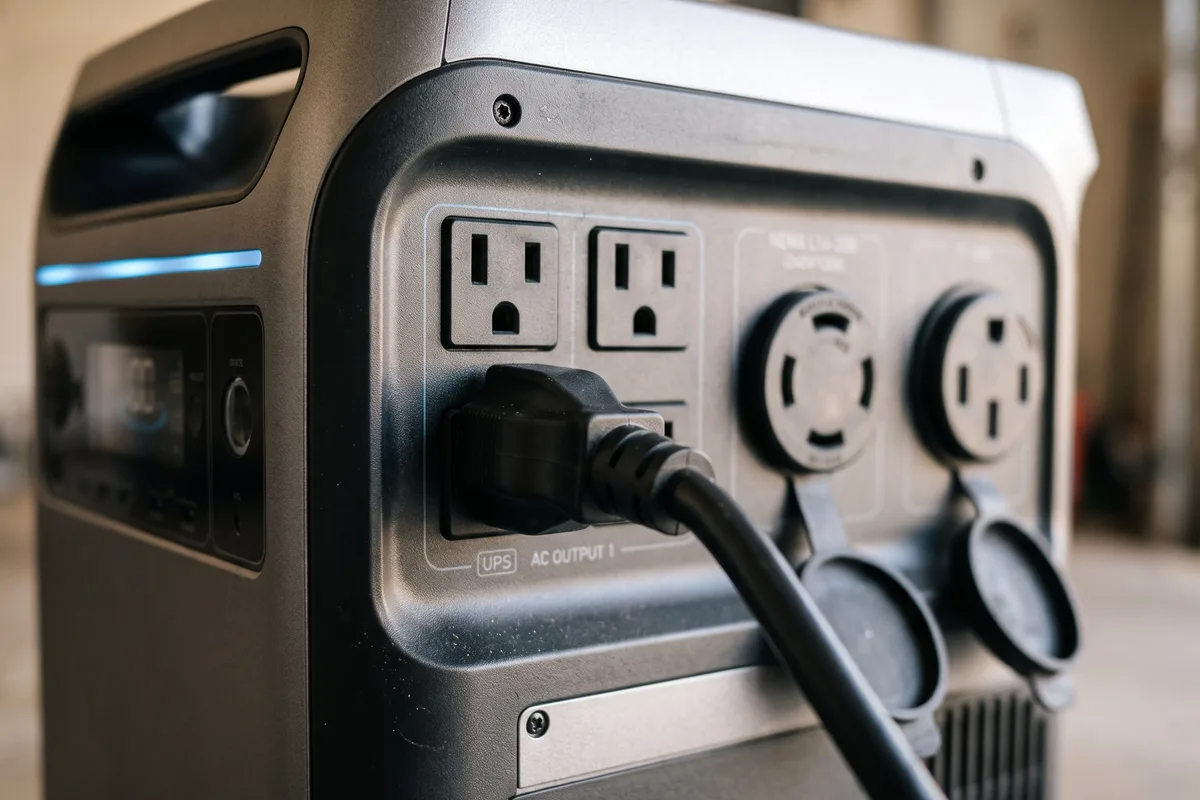
| 6 × 120 V (NEMA 5-20R) | 2,400 W max across them; 3 are UPS-capable | Everyday appliances, computers |
| NEMA TT-30 | 120 V, 3,000 W | Plugging a travel trailer's 30-amp cord straight in |
| NEMA L14-30 | 120/240 V, 6,000 W | Transfer switch or inlet box for home circuits |
| USB-C / USB-A / 12 V | 100 W per USB-C | Phones, laptops, 12 V coolers |
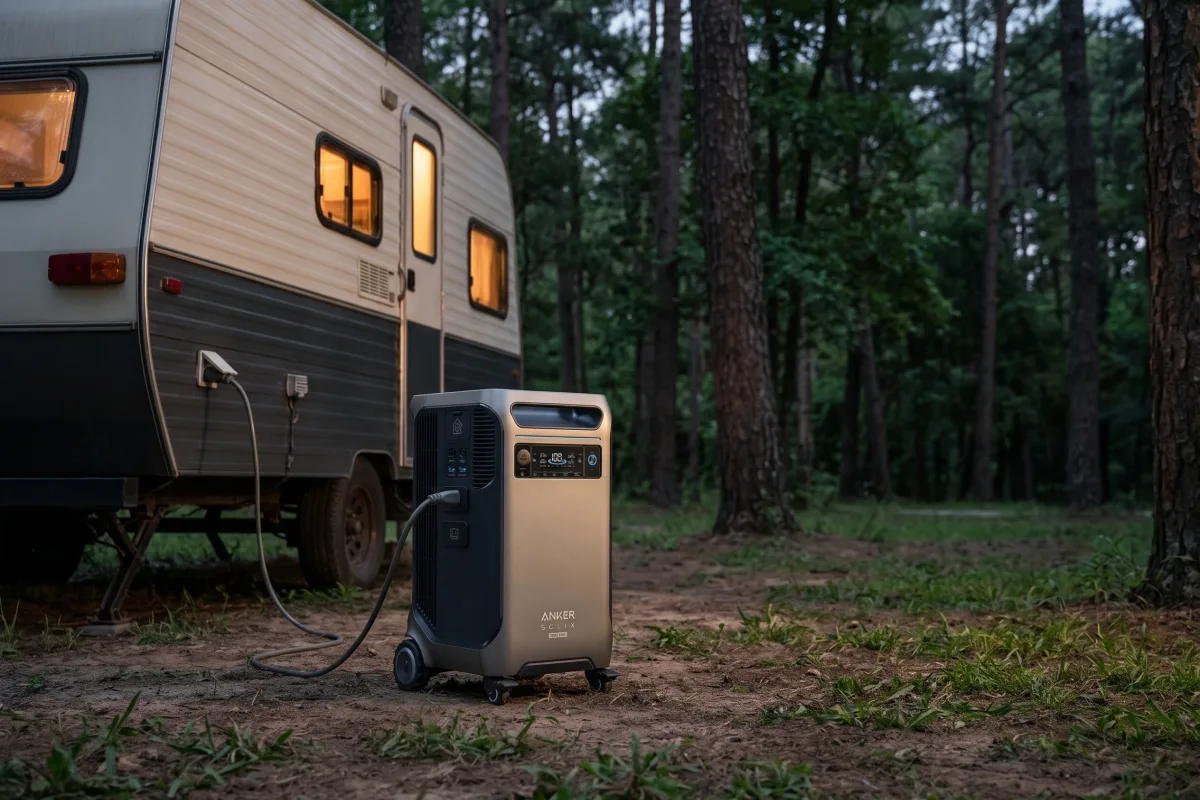
Two limits to know: the regular 120 V outlets top out at 2,400 W combined, so the full 6,000 W needs the TT-30 or L14-30 outlets; and 240 V output isn't available while it's charging from a 120 V wall outlet. No surge rating is published. See the best portable power station for RV for other RV picks.
Backup (UPS) and app
Fine for most electronics
The three UPS-capable outlets switch over in 20 ms when the unit is plugged into the wall. That keeps most routers and computers running, though it's slower than the ~10 ms of many smaller stations. Sensitive desktop PCs may still restart, so test yours before relying on it. The Anker app shows input and output and lets you change charging settings from your phone.
Expansion and whole-home setup
What you'll need to buy for more than plug-in backup
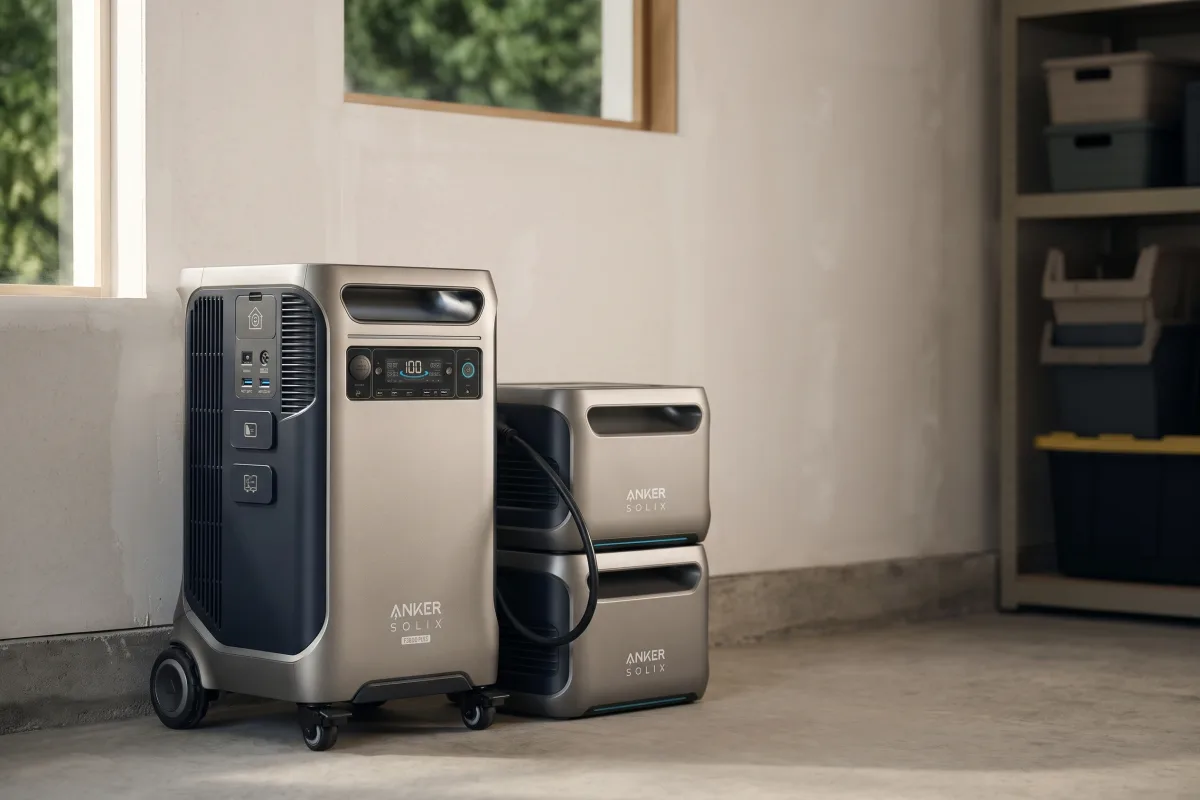
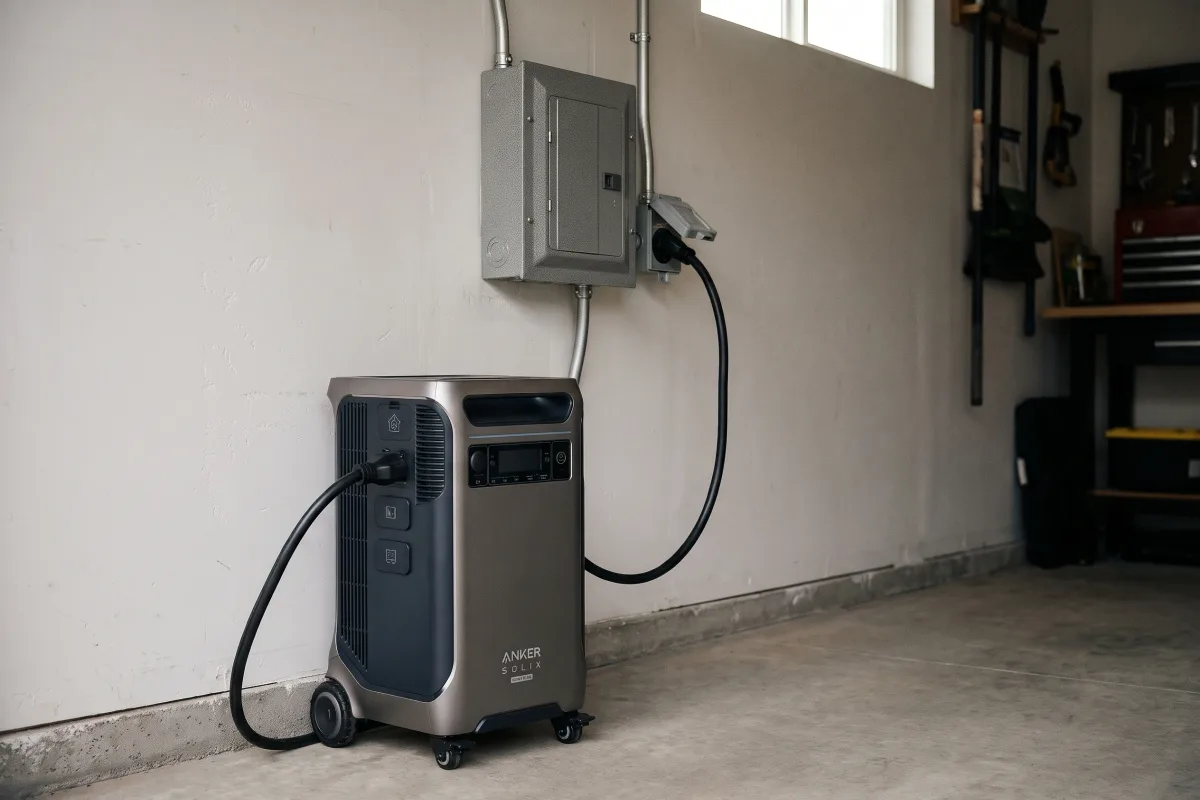
For essentials you can simply plug appliances in. To back up home circuits, use Anker's Home Power Panel or a transfer switch / inlet box connected to the L14-30 outlet. Expansion batteries add 3.84 kWh each (72.8 lb apiece), up to six.
How it compares
Against other expandable home backup stations
| Spec | Anker SOLIX F3800 Plus | EcoFlow Delta Pro 3 | Jackery HomePower 2000 Plus v2 |
|---|---|---|---|
| Capacity (Wh) | 3840 | 4096 | 2048 |
| AC output, continuous (W) | 6000 | 4000 | 2400 |
| Expandable to (Wh) | 53800 | 48000 | 12288 |
| Warranty (years) | 5 | 3 + 2 with app registration | 3 + 2 with registration |
| Price | Check price | Check price | Check price |
- EcoFlow Delta Pro 3: a little more capacity (4,096 Wh) but 4,000 W output, expandable to 48 kWh.
- Jackery HomePower 2000 Plus v2: half the capacity (2,048 Wh) and 2,400 W at 120 V only, but 41.5 lb and expandable to about 12 kWh.
- Jackery Explorer 5000 Plus: more capacity (5,040 Wh) and output (7,200 W) at 120/240 V, with 0 ms switchover.
- Jackery HomePower 3600 Pro Max: similar capacity (3,584 Wh) and 120/240 V output, but 4,000 W at 240 V (2,000 W at 120 V); about half the weight at 73.9 lb.
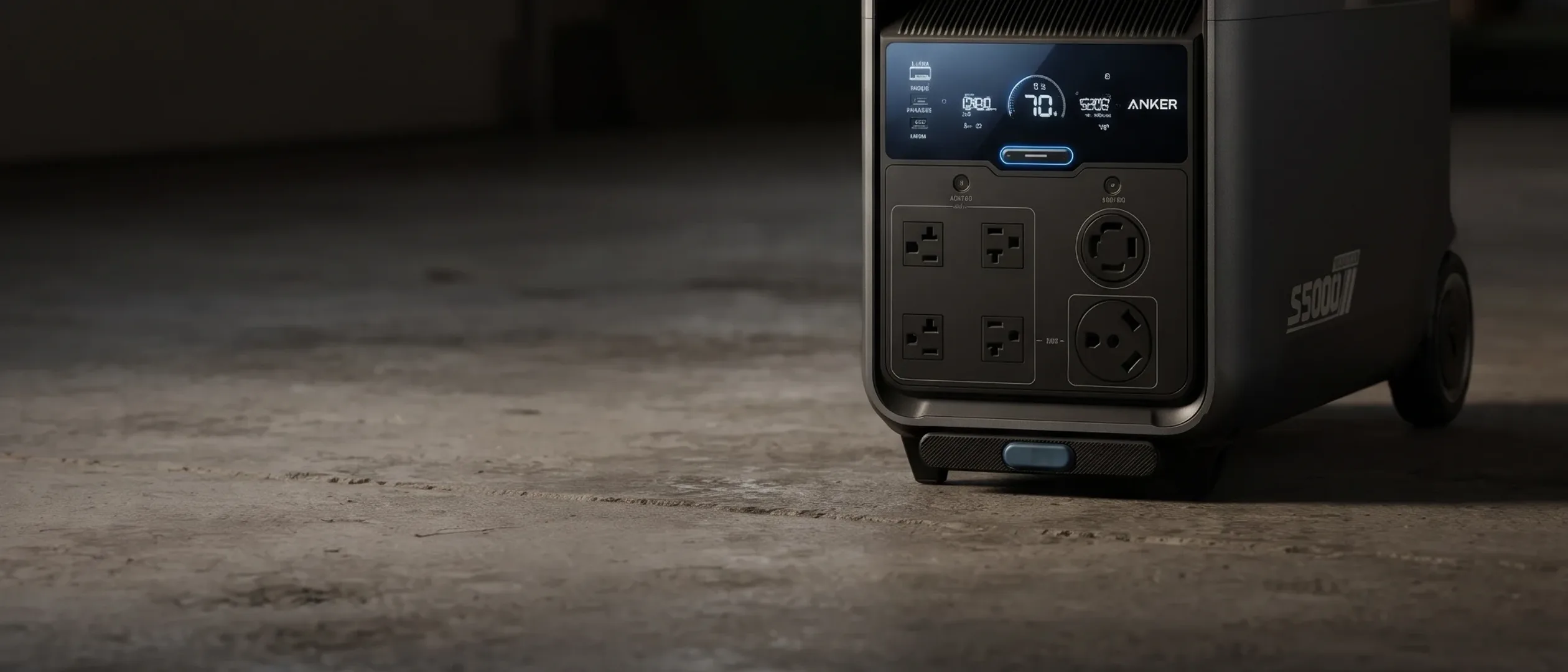
- Anker SOLIX S5000: 5,024 Wh and 4,500 W at 120/240 V in 97 lb, with a 10 ms switchover and expansion to about 30 kWh.
- Bluetti Apex 300: 2,764.8 Wh and 3,840 W at 120/240 V in 83.8 lb, with expansion batteries for more capacity.
Against the original F3800:
| Feature | F3800 Plus | F3800 |
|---|---|---|
| Solar input | 3,200 W (2 × 1,600 W, 11–165 V) | 2,400 W |
| Generator input/bypass | Up to 6,000 W with adapter | No |
| RV / high-power outlets | TT-30 + L14-30 | NEMA 14-50 + L14-30 |
| Capacity / output | 3,840 Wh / 6,000 W | 3,840 Wh / 6,000 W |
The Plus is the better buy for solar and generator users; the original's NEMA 14-50 outlet may suit some RVs with 50-amp hookups (with the right adapter).
Who should buy it
And who should look elsewhere
Good fit: homeowners in outage-prone areas who want essentials covered for a day or more; anyone planning a panel or transfer-switch setup; RV owners who want generator-free 30-amp power; solar users who want fast recharging.
Look elsewhere if: you want something to carry to a campsite (consider a 1–2 kWh station, such as the Bluetti Elite 200 V2), you only need to keep a router and phones running, or you'd rather not invest in installation. Smaller 1 kWh stations, such as the EcoFlow Delta 3 Plus, cover light backup for far less.
FAQ
Quick answers to common questions
Can the F3800 Plus power a whole house?
It can power selected circuits, including 240 V ones, up to 6,000 W through an electrician-installed panel or transfer switch. How long it lasts depends on what's running; whole-house use typically needs expansion batteries and solar.
How long does the F3800 Plus take to charge?
About 1.5–2 hours from 3,200 W of solar in strong sun. From a standard wall outlet at 1,800 W, a little over 2 hours at best.
Can it run an RV?
Yes. Its TT-30 outlet accepts a travel trailer's 30-amp cord directly, up to 3,000 W. Rooftop air conditioners draw a lot of power, so runtime will be limited without solar.
Is the F3800 Plus worth it over the F3800?
For most buyers, yes, mainly for faster solar charging and the generator input. Choose the original only if you specifically need its NEMA 14-50 outlet and find it at a lower price.