 By
We may earn a commission if you buy through links on this page, at no extra cost to you. This never affects which products we recommend. How we make money.
On this page 11 sections
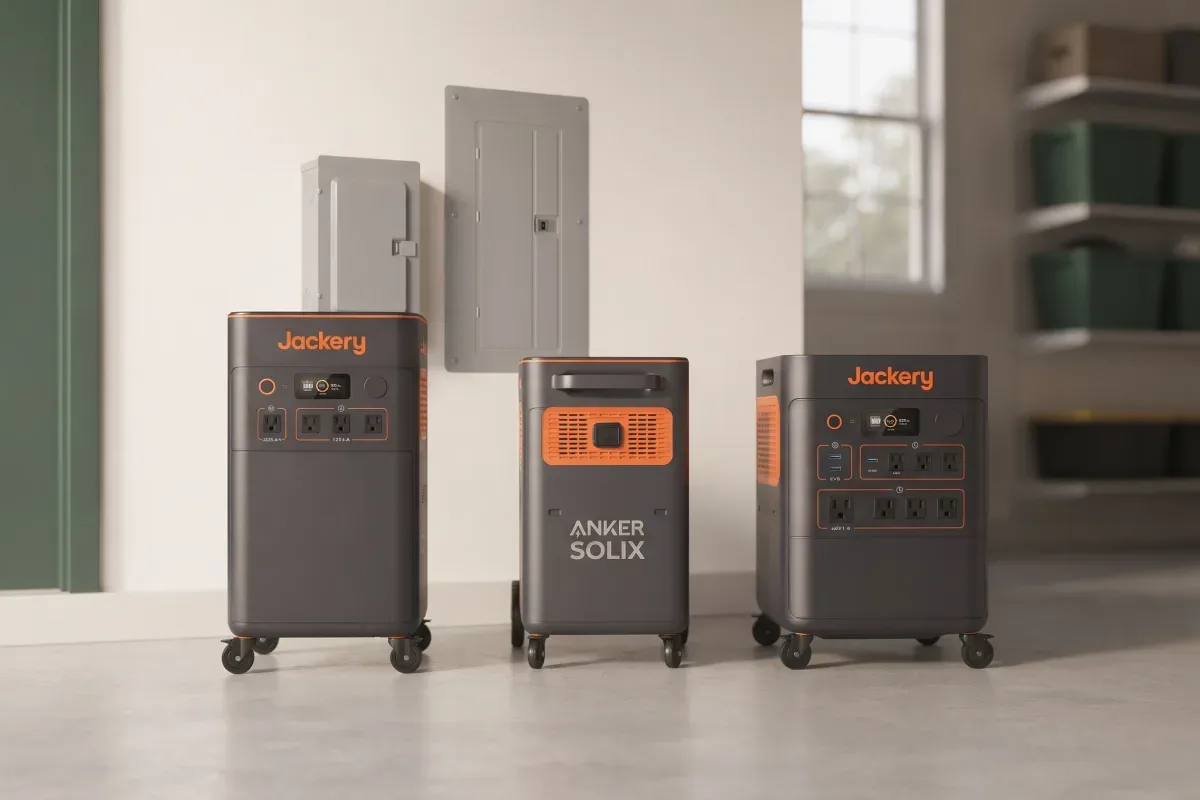
The Jackery Explorer 5000 Plus is the best portable whole-home battery backup for most homes. It stores 5,040 Wh, delivers 7,200 W at 120/240 V and switches over in 0 ms. If you want room to grow, the Anker SOLIX F3800 Plus expands to 53.8 kWh. For a 240 V outlet you can plug into directly, look at the Jackery HomePower 3600 Pro Max. The Anker SOLIX S5000 is the lightest 5 kWh unit here at 97 lb, and the EcoFlow DELTA Pro 3 pairs a 10 ms switchover with expansion to 48 kWh.
| Spec | Jackery Explorer 5000 Plus | Anker SOLIX F3800 Plus | Jackery HomePower 3600 Pro Max | Anker SOLIX S5000 | EcoFlow Delta Pro 3 |
|---|---|---|---|---|---|
| Capacity (Wh) | 5040 | 3840 | 3584 | 5024 | 4096 |
| AC output, continuous (W) | 7200 | 6000 | 4000 | 4500 | 4000 |
| AC charge time | 1.7 hr (fastest mode, per Jackery) | — | 1.3 h (240 V, optional 40 A cable) | Not stated (1,800 W at 120 V; up to 4,500 W at 240 V) | 0–80% in about 50 min (input not stated) |
| Max solar input (W) | 4000 | 3200 | 1200 | 3000 | 2600 |
| Weight (lb) | 134.5 | 136.7 | 73.9 | 97 | 113.5 |
| Warranty (years) | 5 + 2 optional | 5 | 1 | 5 | 3 + 2 with app registration |
| Price | Check price | Check price | Check price | Check price | Check price |
How whole-home backup works
A transfer switch connects the station to your home circuits
A whole-home station doesn't power every outlet on its own. A transfer switch or panel interlock, installed by a licensed electrician, lets it feed the circuits you choose, such as the fridge, furnace fan, lights, internet and a well pump. Never back-feed a home through an outlet. See our guide to choosing a transfer switch for a portable power station.
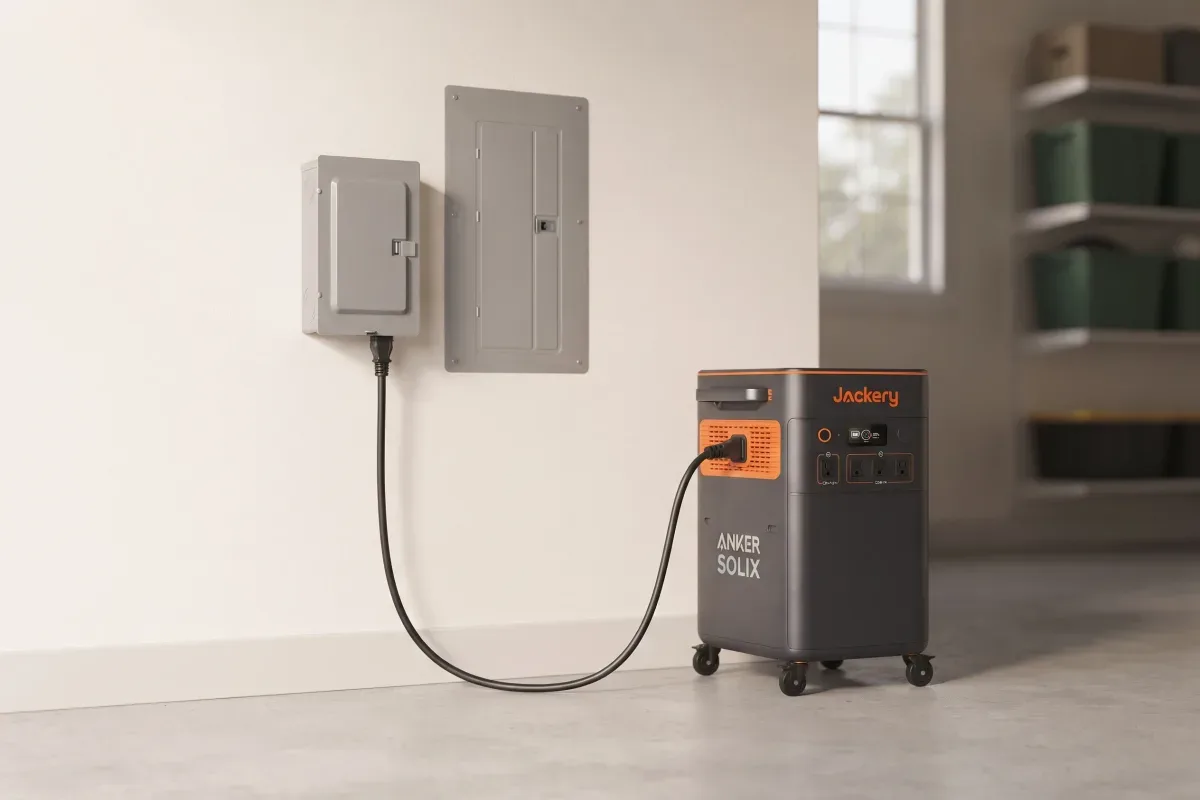
Stations with 240 V output can power 240 V circuits as well as ordinary 120 V ones. Keep the combined draw of your chosen circuits under the station's output.
How much capacity you need
Size by circuits and outage length
| Station | Capacity | Fridge + router (79 W) | Essentials (150 W) |
|---|---|---|---|
| Jackery Explorer 5000 Plus | 5,040 Wh | About 49 hours | About 27 hours |
| Anker SOLIX F3800 Plus | 3,840 Wh | About 37 hours | About 21 hours |
| Jackery HomePower 3600 Pro Max | 3,584 Wh | About 35 hours | About 19 hours |
| Anker SOLIX S5000 | 5,024 Wh | About 49 hours | About 27 hours |
| EcoFlow DELTA Pro 3 | 4,096 Wh | About 39 hours | About 22 hours |
Essentials means a fridge, router, LED lights and a TV. Loads are on AC at 85% efficiency plus 10 W idle draw. Big loads such as central air cut these times sharply; solar and extra batteries stretch them. Try the runtime calculator.
How we chose
Home-circuit criteria, scored from published specs
We picked from stations we've reviewed in full that offer 240 V. We weighted output, capacity, switchover time, expansion, solar input and warranty. Each has an OffGrid Current rating out of 10, computed from its specs; the weights are on how we test. We haven't tested these units hands-on, and we don't rank by price.
Best overall: Jackery Explorer 5000 Plus
The most output and the fastest switchover
Best overall
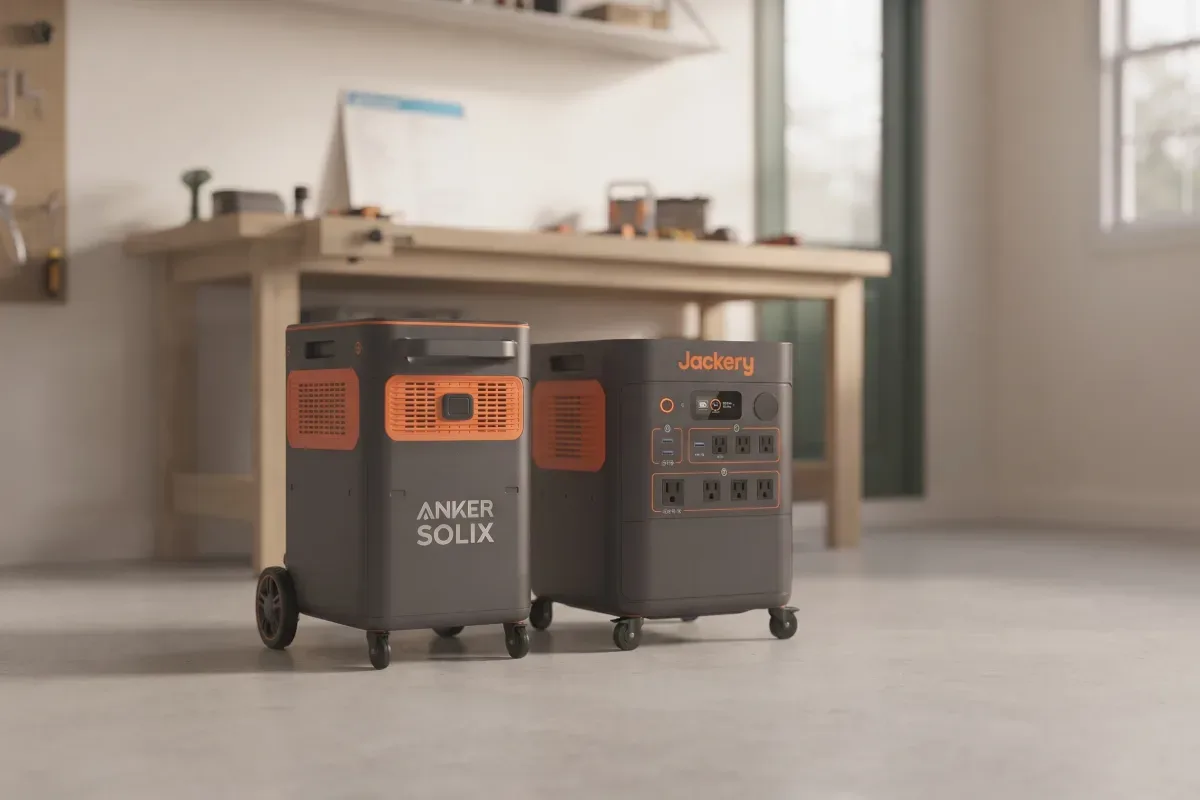
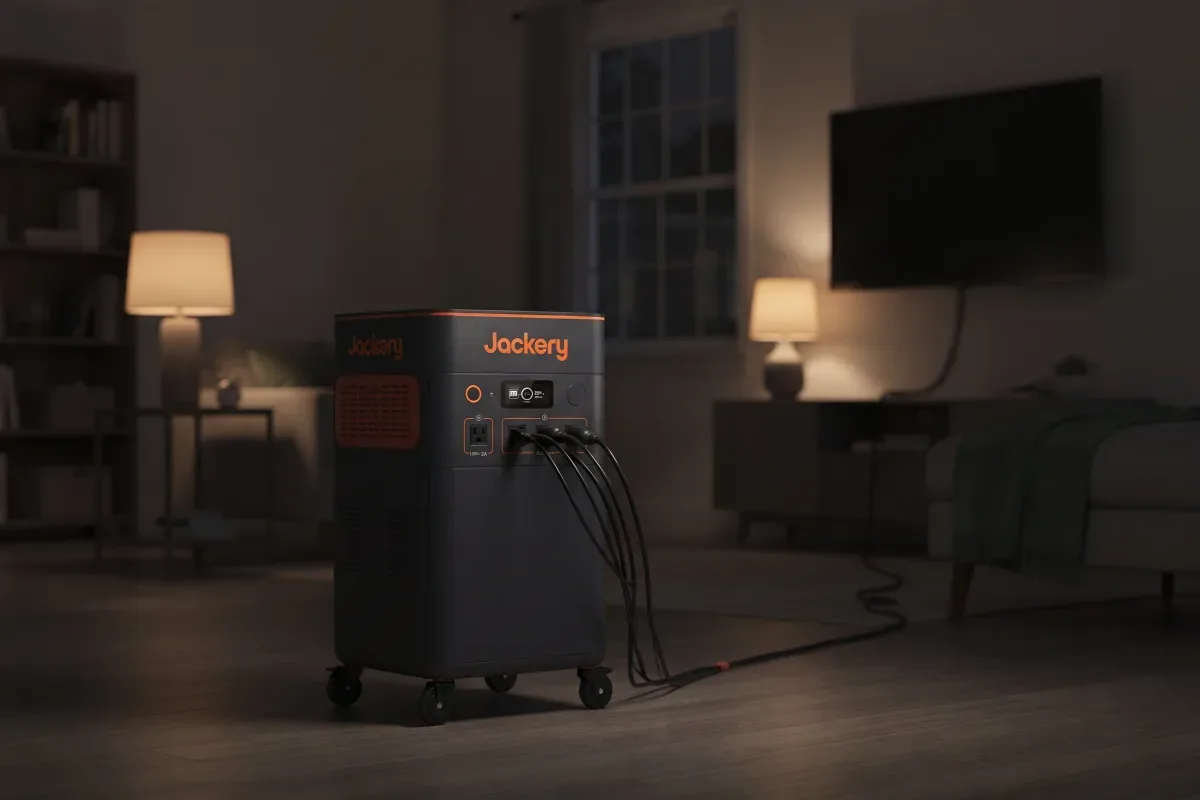
Jackery Explorer 5000 Plus
The 5000 Plus has the most capacity and output here, and Jackery sells a Smart Transfer Switch made for it. Its high-voltage solar input suits a large array.
Pros
- 5,040 Wh, 7,200 W at 120/240 V, 14,400 W surge
- 0 ms switchover
- Up to 4,000 W high-voltage solar
- 5-year warranty, plus 2 optional
Cons
- About 134.5 lb
- 1,800 W charging on a standard outlet
- Maximum expansion not stated
Most expandable: Anker SOLIX F3800 Plus
Grows to 53.8 kWh
Most expandable
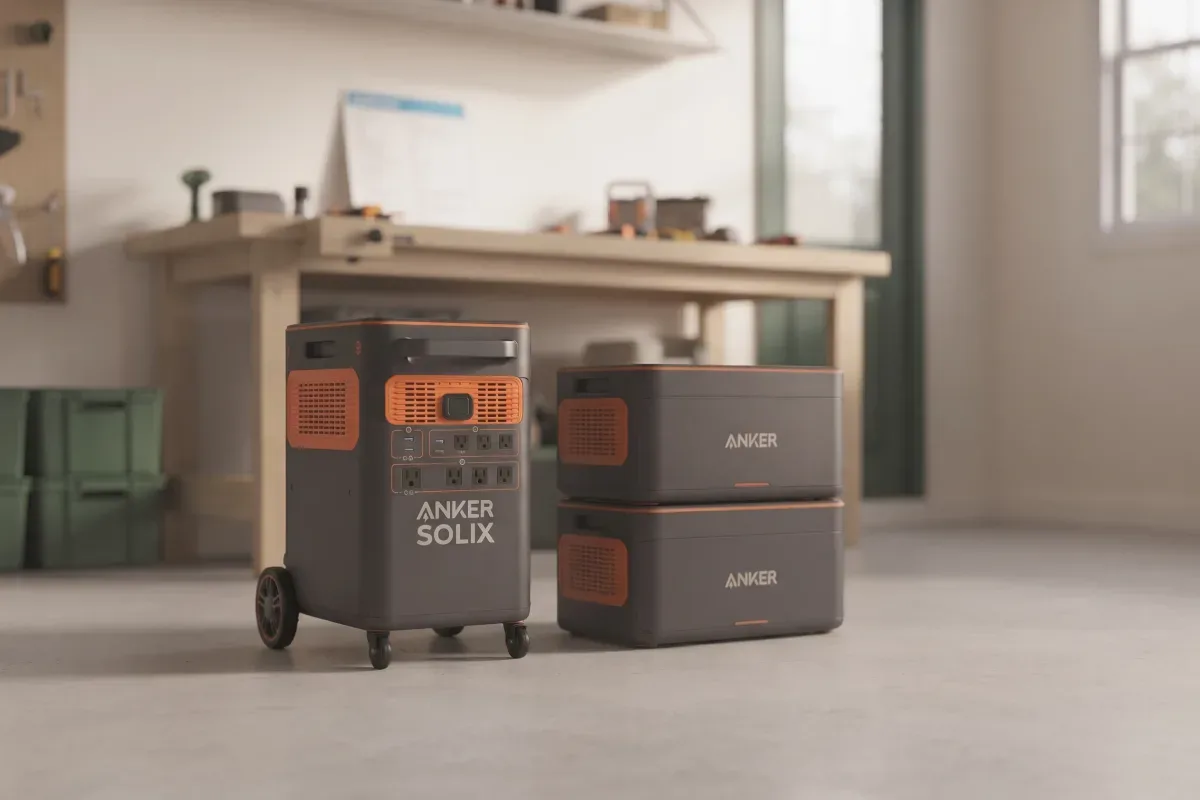
Anker SOLIX F3800 Plus
The F3800 Plus is the one to buy if you plan to add batteries over time. Its 20 ms switchover may be too slow for some computers, so put a small UPS on a desktop.
Pros
- Expands to 53.8 kWh
- 6,000 W at 120/240 V
- Up to 3,200 W solar input
- TT-30 RV outlet, 5-year warranty
Cons
- 20 ms switchover
- 136.7 lb
Best 240 V outlet: Jackery HomePower 3600 Pro Max
240 V you can plug into directly
Best 240 V outlet
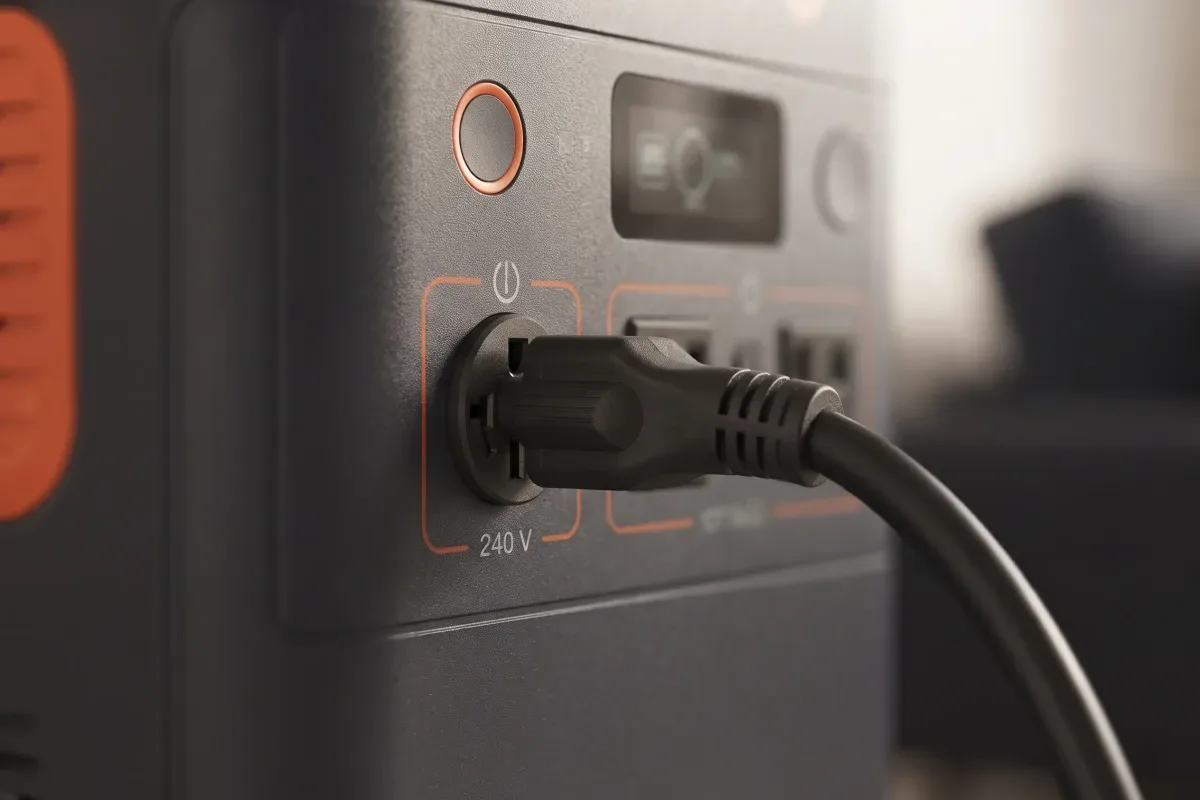
Jackery HomePower 3600 Pro Max
Its NEMA 14-50 outlet supplies 240 V directly, and it's much lighter than the others. The 1-year warranty is the main drawback.
Pros
- NEMA 14-50 outlet, 120/240 V at 4,000 W
- Under 10 ms switchover
- 73.9 lb, the lightest here
- Expands to about 21.5 kWh
Cons
- 1-year warranty
- 2,000 W across its 120 V outlets
- Rated 6.3/10
Lightest 5 kWh: Anker SOLIX S5000
5,024 Wh in a unit under 100 lb
Lightest 5 kWh
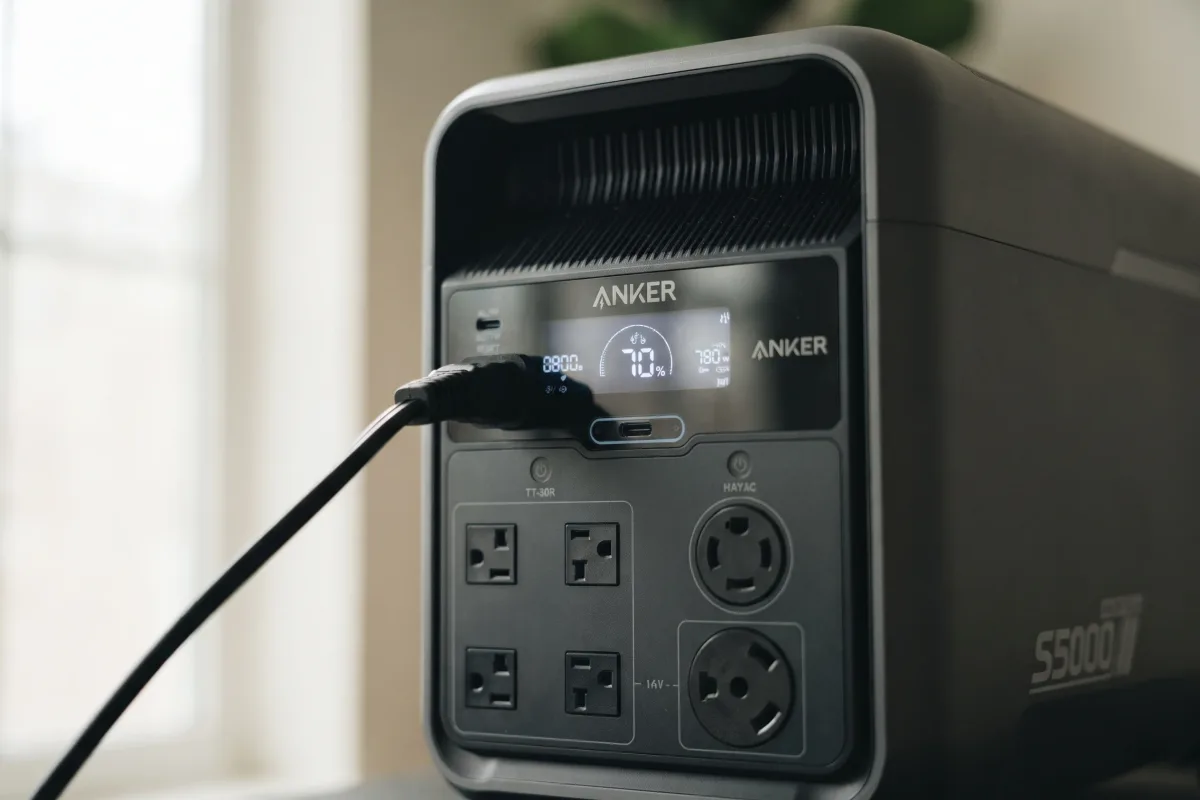
Anker SOLIX S5000
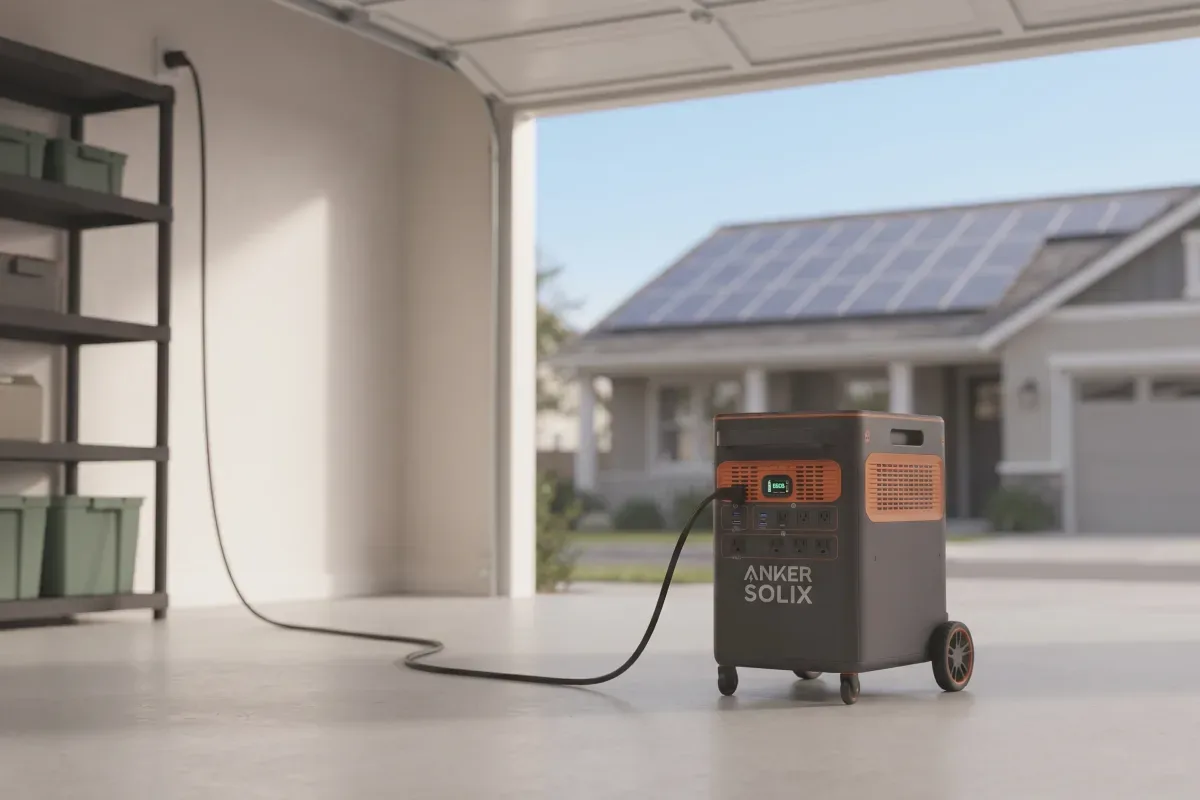
The S5000 stores about as much as the Explorer 5000 Plus but weighs 97 lb against 134.5 lb. It gives up output: 4,500 W, so size your backed-up circuits to that.
Pros
- 5,024 Wh in 97 lb
- 4,500 W at 120/240 V
- 10 ms switchover
- 6,000 cycles to 80%
- 5-year warranty
Cons
- Less output than the Explorer 5000 Plus (7,200 W)
- Expands to about 30 kWh, less than the F3800 Plus
- Rated 7.2/10
Best switchover with expansion: EcoFlow Delta Pro 3
10 ms switchover, up to 48 kWh
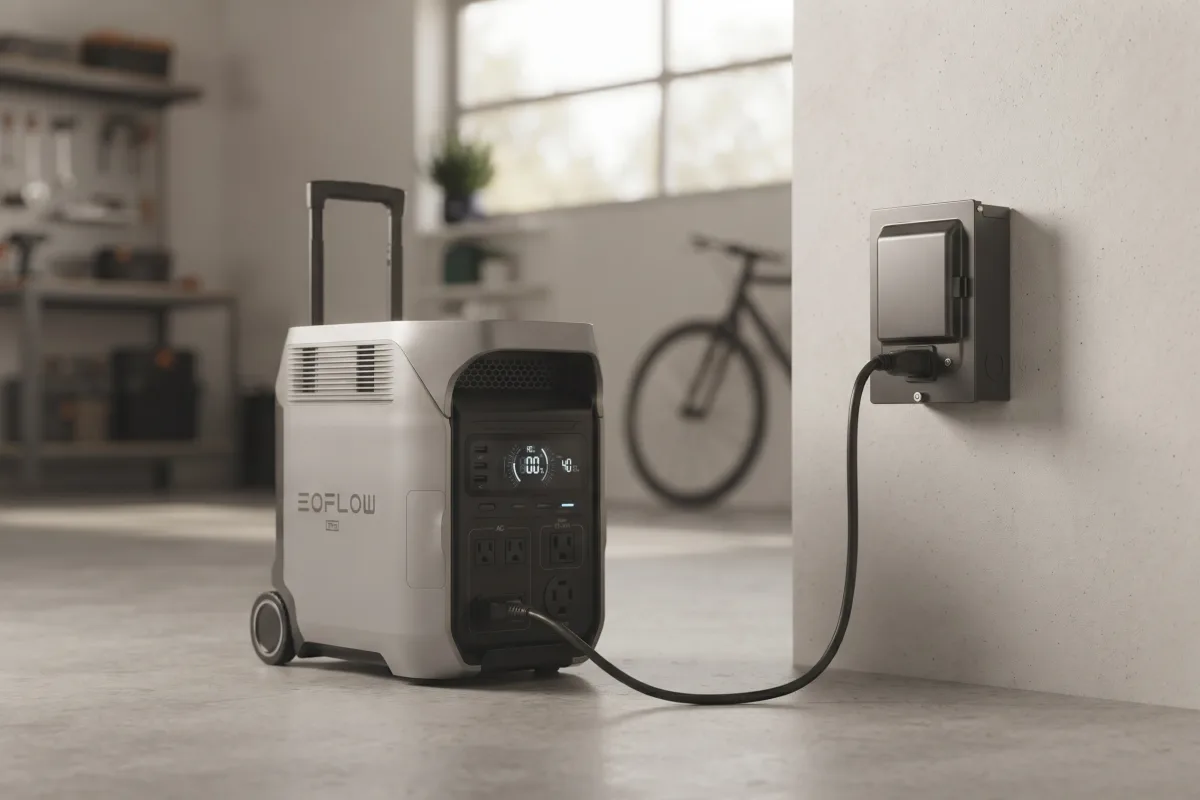
Best switchover with expansion
EcoFlow Delta Pro 3
The DELTA Pro 3 expands nearly as far as the F3800 Plus (48 kWh against 53.8 kWh) with a faster 10 ms switchover. It delivers 4,000 W, the same as the HomePower 3600 Pro Max.
Pros
- 4,096 Wh and 4,000 W at 120/240 V from one unit
- 10 ms switchover
- Expands to 48 kWh
- 2,600 W solar input
Cons
- 113.5 lb
- Less output than the Explorer 5000 Plus and F3800 Plus
- Rated 7.0/10
What to look for
The specs that matter for home circuits
- 240 V output: needed for well pumps, some air conditioners and other 240 V circuits.
- Output vs your circuits: add up what you'll run at once and stay under the station's continuous watts.
- Switchover time: 10 ms or less keeps computers on. See using a power station as a UPS.
- Expansion and solar: extra batteries and strong solar input are what make multi-day outages workable. See solar panel sizing.
- Warranty: 5 years is standard at this level; 1 year is short.
Also considered
Other 240 V stations, and 120 V options
- Bluetti Apex 300: 2,765 Wh and 3,840 W at 120/240 V, with RV outlets and B300K/B500K batteries.
- EcoFlow DELTA Pro: 3,600 Wh and 3,600 W, but 120 V only from one unit.
- Jackery HomePower 2000 Plus v2: 2,048 Wh at 120 V for essentials.
For plug-in backup of a fridge and router, see the best portable power stations for home backup.
FAQ
Can a portable power station run a whole house?
It can run selected circuits through a transfer switch, up to its output. It won't run every large appliance at once.
Do I need a transfer switch?
To power home circuits, yes, installed by a licensed electrician. Without one, plug appliances into the station directly.
Can I have whole-home battery backup without solar?
Yes. These stations charge from the wall between outages. Solar lets them recharge during a long outage.
How big a battery do I need?
Add up the watts of the circuits you'll run and multiply by the hours you want. A fridge and router need about 2 kWh a day.
Are portable whole-home batteries worth it?
They're quiet, make no fumes and can run indoors, unlike a gas generator, but they store far less energy than a full fuel tank. See power station vs generator.