 By
We may earn a commission if you buy through links on this page, at no extra cost to you. This never affects which products we recommend. How we make money.
On this page 7 sections
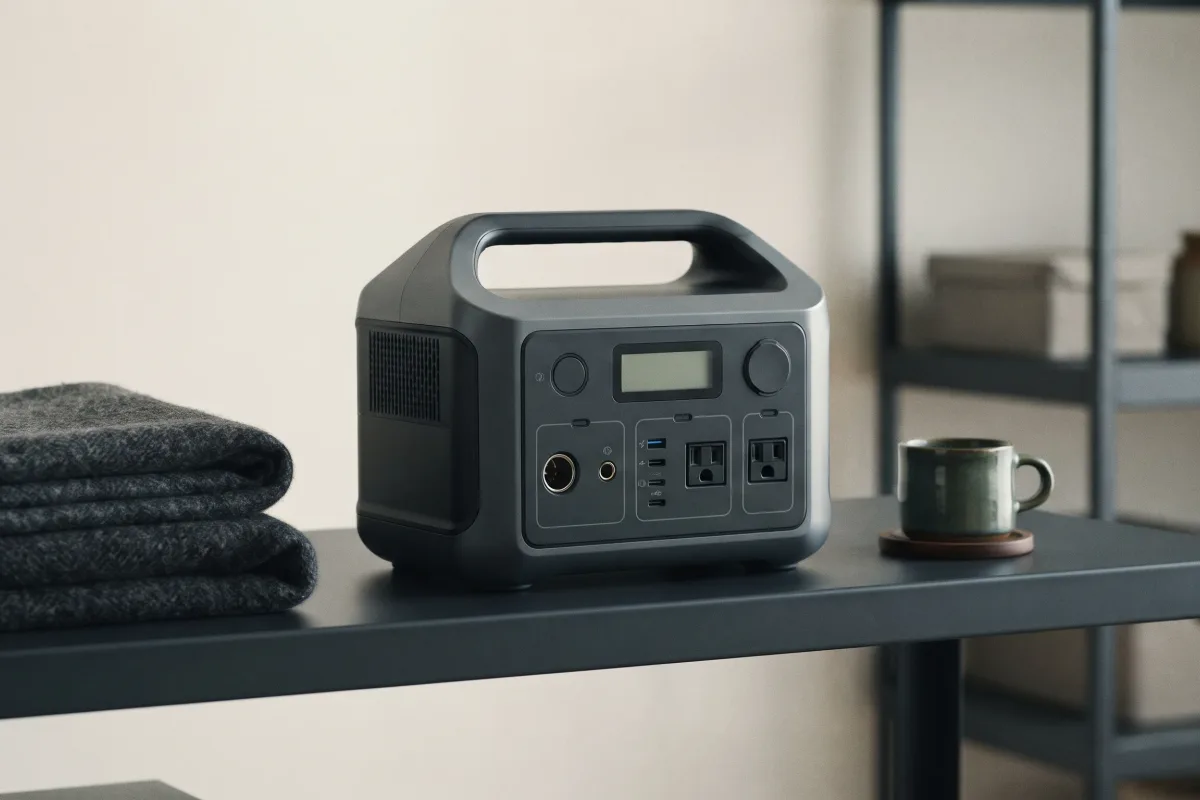
Most current portable power stations use LiFePO4 batteries rated for 3,000 to 6,000 charge cycles, which the makers put at about 10 years or more of daily use. Older lithium-ion models are rated far lower, such as 500 cycles.
Looking for how many hours one charge lasts? See how long a station runs a fridge or how long it runs a CPAP.
Cycles, not just years
How battery life is measured
A cycle is one full charge and discharge. Using half the battery twice counts as one cycle. Makers rate how many cycles the battery lasts before it falls to a set share of its original capacity.
That end point differs. EcoFlow and Anker rate their batteries to 80% capacity; Jackery rates its LiFePO4 models to 70%. A station that reaches its rating still works, just with less runtime.
From cycles to years
Why makers say "10 years"
The year figures assume daily use. At one cycle a day, 4,000 cycles is about 11 years, and 6,000 cycles about 16.
The makers say much the same:
- EcoFlow: 4,000 cycles to 80%, "up to 10 years" for the Delta 3 Plus.
- Anker: 80% capacity after 4,000 cycles, up to 10 years, for the C1000 Gen 2.
- Jackery: "10+ years (4,000 charge cycles)" for the Explorer 1000 v2, and 16+ years for the HomePower 3600 Pro Max, based on one charge and discharge a day.
- Bluetti: 6,000 cycles to 80% for the Apex 300.
- Anker: 10,000 cycles to 60% for the SOLIX S2000, a lower end point than the usual 80%.
If you only use yours for trips and outages, you'll run far fewer cycles than that.
LiFePO4 vs older lithium-ion
The chemistry decides most of it
Nearly every current station uses LiFePO4 (lithium iron phosphate) cells, rated for thousands of cycles. Older and smaller models often used NMC lithium-ion: the Jackery Explorer 300, for example, is rated for 500 cycles to 80%.
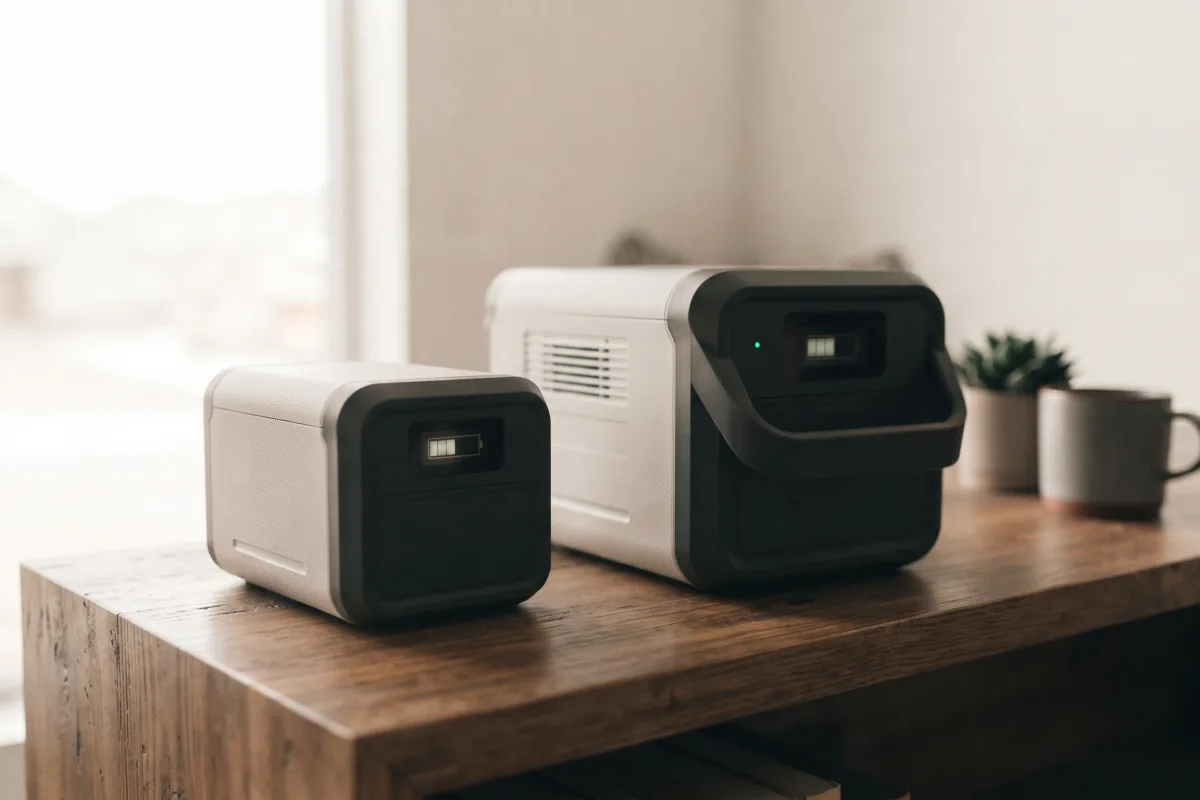
That's the biggest single difference in lifespan between models. See LiFePO4 vs lithium-ion for more.
Cycle ratings vs warranties of stations we've reviewed
From the makers' specifications
| Station | Chemistry | Cycle rating | Warranty |
|---|---|---|---|
| EcoFlow Delta 3 | LiFePO4 | 4,000 to 80% | 5 years |
| EcoFlow Delta 3 Plus | LiFePO4 | 4,000 to 80% | 5 years |
| Anker SOLIX C1000 Gen 2 | LiFePO4 | 4,000 to 80% | 5 years |
| Anker SOLIX F3800 Plus | LiFePO4 | 3,000+ | 5 years |
| Bluetti AC180 | LiFePO4 | 3,500+ | 5 years |
| Bluetti Elite 200 V2 | LiFePO4 | 3,000+ to 80% | 5 years |
| Jackery Explorer 1000 v2 | LiFePO4 | 4,000 to 70% | 3 + 2 years |
| Jackery Explorer 1000 Plus | LiFePO4 | 4,000 to 70% | 3 + 2 years |
| Jackery HomePower 2000 Plus v2 | LiFePO4 | not stated | 3 + 2 years |
| Jackery HomePower 3600 Pro Max | LiFePO4 | 6,000 to 70% | 1 year |
| Jackery Explorer 300 | NMC | 500 to 80% | 3 + 2 years |
"3 + 2 years" means three years, plus two more when you register with Jackery. The HomePower 3600 Pro Max's 1 year comes from its Amazon listing.
What wears a battery faster
Habits the makers warn about
- Heat. Keep it out of hot cars, attics and summer garages; the makers' storage ranges top out around 95°F.
- Sitting full or empty for months. Store it at about 50–80% and top it up every three months; see how to store a portable power station.
- Staying on the charger when you don't need it. Jackery and EcoFlow suggest unplugging once full unless you use it as backup; see can you leave a power station plugged in.
Warranty: the guarantee you actually get
Cycle ratings are estimates; warranties are promises
A cycle rating tells you what the battery is designed for, but the warranty is what the maker commits to. EcoFlow, Anker and Bluetti give 5 years on the models above. Jackery gives 3 years, plus 2 when you register, except the HomePower 3600 Pro Max, listed at 1 year.
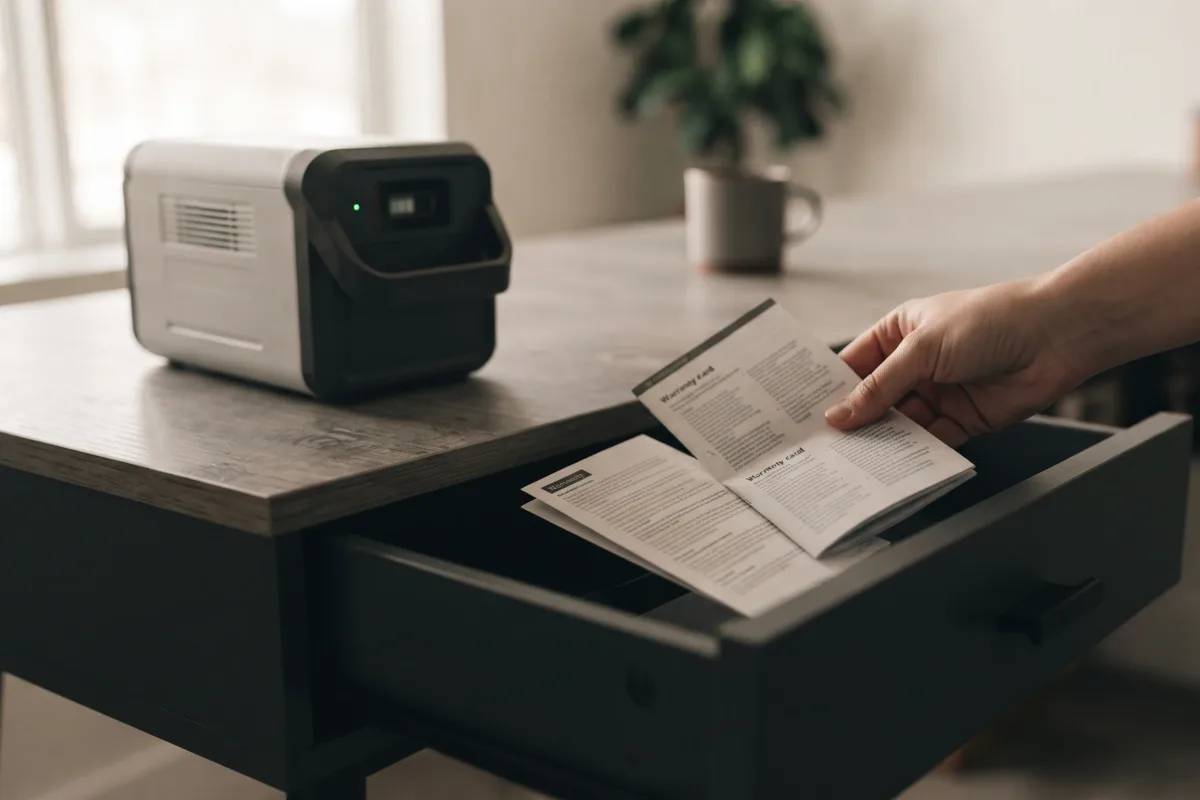
Register your station when you buy it: it can extend the warranty and lets the maker reach you about recalls.
Ready to choose a station? See The Best Portable Power Stations.
FAQ
Quick answers to common questions
How many years does a portable power station last?
About 10 years or more at one cycle a day for current LiFePO4 models, by the makers' ratings. Occasional use means far fewer cycles.
Which power station lasts the longest?
Among the models we've reviewed, the Jackery HomePower 3600 Pro Max has the highest rating: 6,000 cycles to 70%. Several others are rated for 4,000 cycles to 80%.
Does a power station lose capacity if I don't use it?
It slowly loses charge in storage, which is why makers say to top it up every three months. Store it partly charged and somewhere cool.
Is a portable power station worth it?
For outages, camping or backup for a CPAP or computer, a LiFePO4 station rated for thousands of cycles should serve for many years.
How many hours does it last on one charge?
That depends on what you plug in. Try the runtime calculator.