 By
We may earn a commission if you buy through links on this page, at no extra cost to you. This never affects which products we recommend. How we make money.
On this page 10 sections
The EcoFlow Delta 3 Plus is the best portable power station for CPAP for most people. It runs a typical CPAP for about 10 nights without the humidifier, and switches over in under 10 ms if the power drops. For camping, pick the lighter Anker SOLIX C1000 Gen 2. If you sleep with the humidifier on, the Jackery HomePower 2000 Plus v2 lasts about twice as long.
| Spec | EcoFlow Delta 3 Plus | Anker SOLIX C1000 Gen 2 | Jackery HomePower 2000 Plus v2 | EcoFlow River 3 Plus |
|---|---|---|---|---|
| Capacity (Wh) | 1024 | 1024 | 2048 | 286 |
| AC output, continuous (W) | 1800 | 2000 | 2400 | 600 |
| AC charge time | 56 min | 49 min (UltraFast) | Not stated | 1 hr (0–100%) |
| Max solar input (W) | 1000 | 600 | 800 | 220 |
| Weight (lb) | 27.6 | 24.9 | 41.5 | 10.4 |
| Warranty (years) | 5 | 5 | 3 + 2 with registration | 5 |
| Price | Check price | Check price | Check price | Check price |
How much power a CPAP uses
The humidifier matters more than the machine
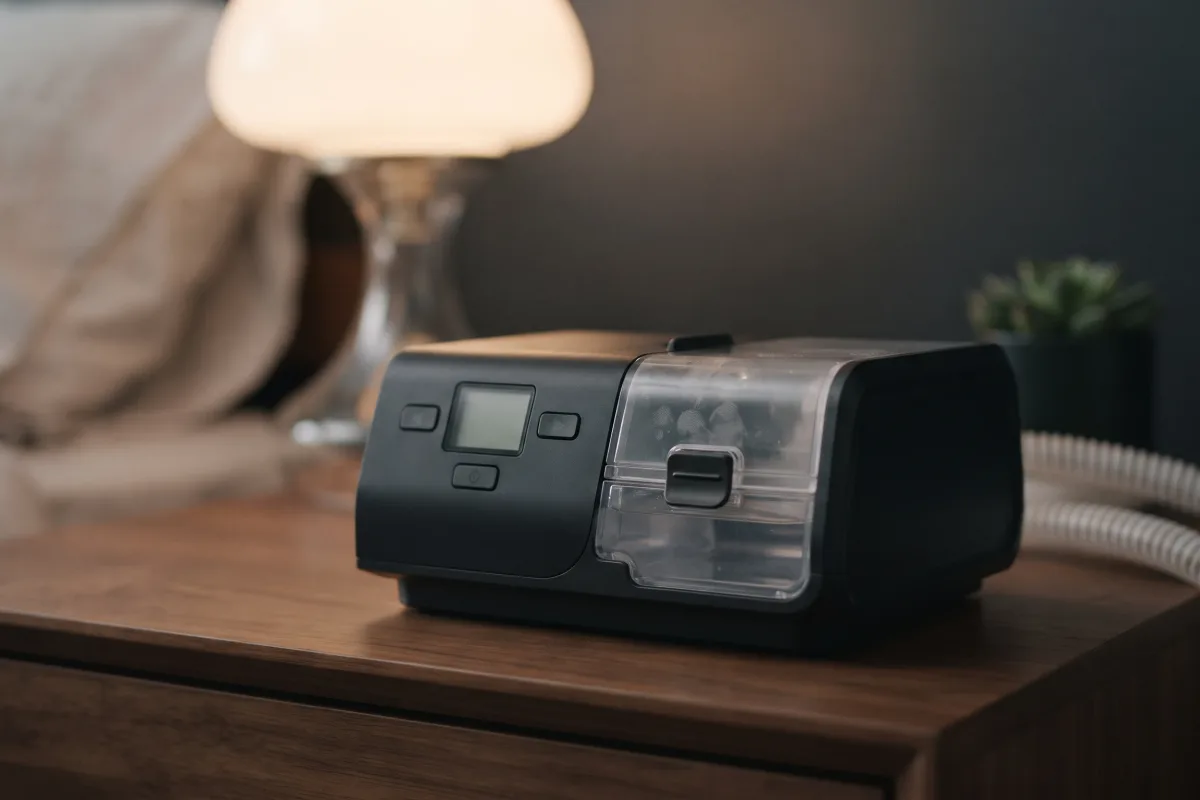
A CPAP blower draws very little. The heated humidifier is what drains a battery. ResMed lists these figures for the AirSense 10 at 10 cm H₂O on 12 V DC:
| Setting | Draw |
|---|---|
| No humidifier | About 11 W |
| Humidifier on 4 | About 28 W |
| Humidifier on 8 | About 44 W |
| Heated tube + humidifier on 8 | About 59 W |
Other machines are in a similar range; check your manual. For more settings, see how long a power station runs a CPAP. Never change prescribed settings without asking your provider.
How many nights you need
Nights per charge on DC, 8-hour nights
| Station | Capacity | No humidifier | Humidifier on 4 | Humidifier on 8 |
|---|---|---|---|---|
| EcoFlow Delta 3 Plus | 1,024 Wh | About 10.7 | About 4.2 | About 2.7 |
| Anker SOLIX C1000 Gen 2 | 1,024 Wh | About 10.7 | About 4.2 | About 2.7 |
| Jackery HomePower 2000 Plus v2 | 2,048 Wh | About 21 | About 8.4 | About 5.4 |
| EcoFlow River 3 Plus | 286 Wh | About 3.0 | About 1.2 | About 0.7 |
These figures use rated capacity at 92% DC efficiency and the ResMed draws above. On AC, expect fewer nights. Try your own machine in the runtime calculator.
How we chose
CPAP criteria, scored from published specs
We picked from stations we've reviewed in full. For CPAP use, we weighted capacity, a 12 V DC socket, pure sine wave AC, switchover time, weight and solar input. Each station has an OffGrid Current rating out of 10, computed from its specs. The weights are on how we test. We haven't tested these units hands-on, and we don't rank by price.
Best overall: EcoFlow Delta 3 Plus
Nights of CPAP power and fast switchover at home
Best overall
EcoFlow Delta 3 Plus
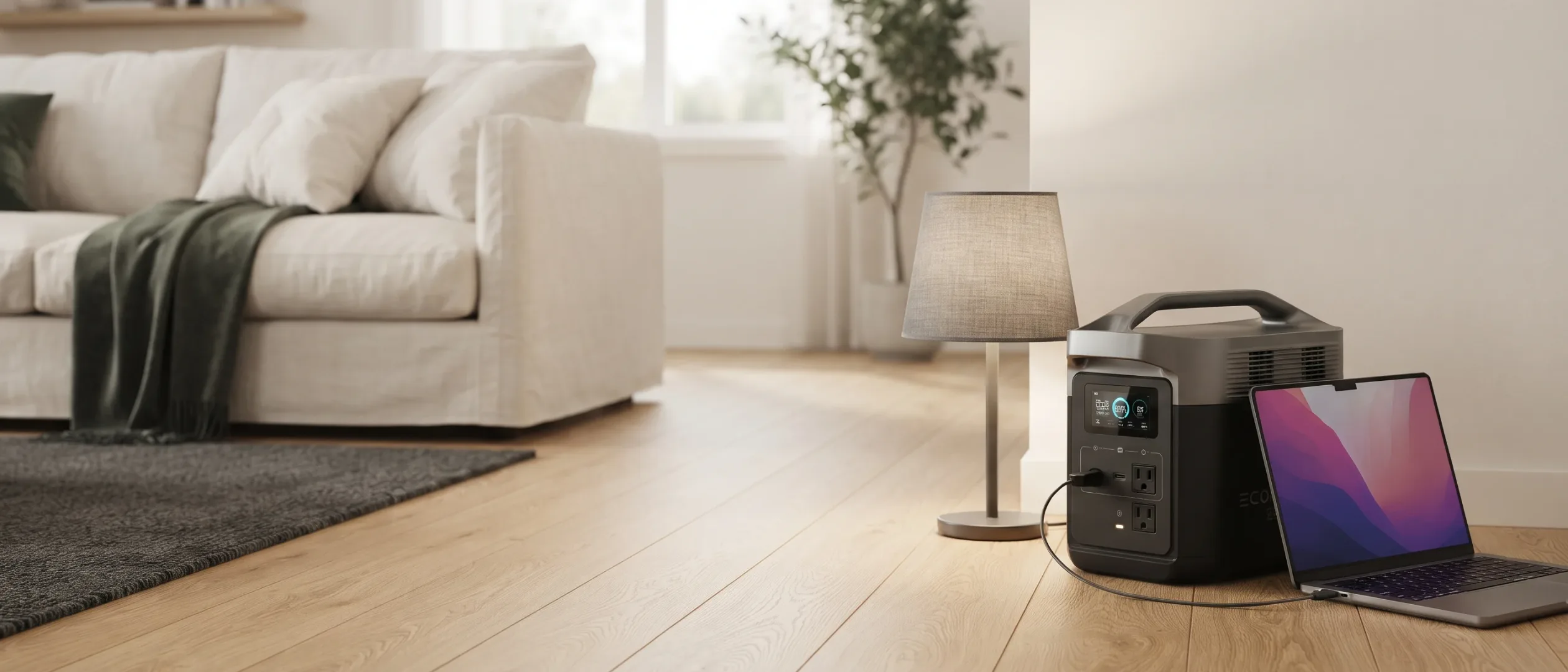
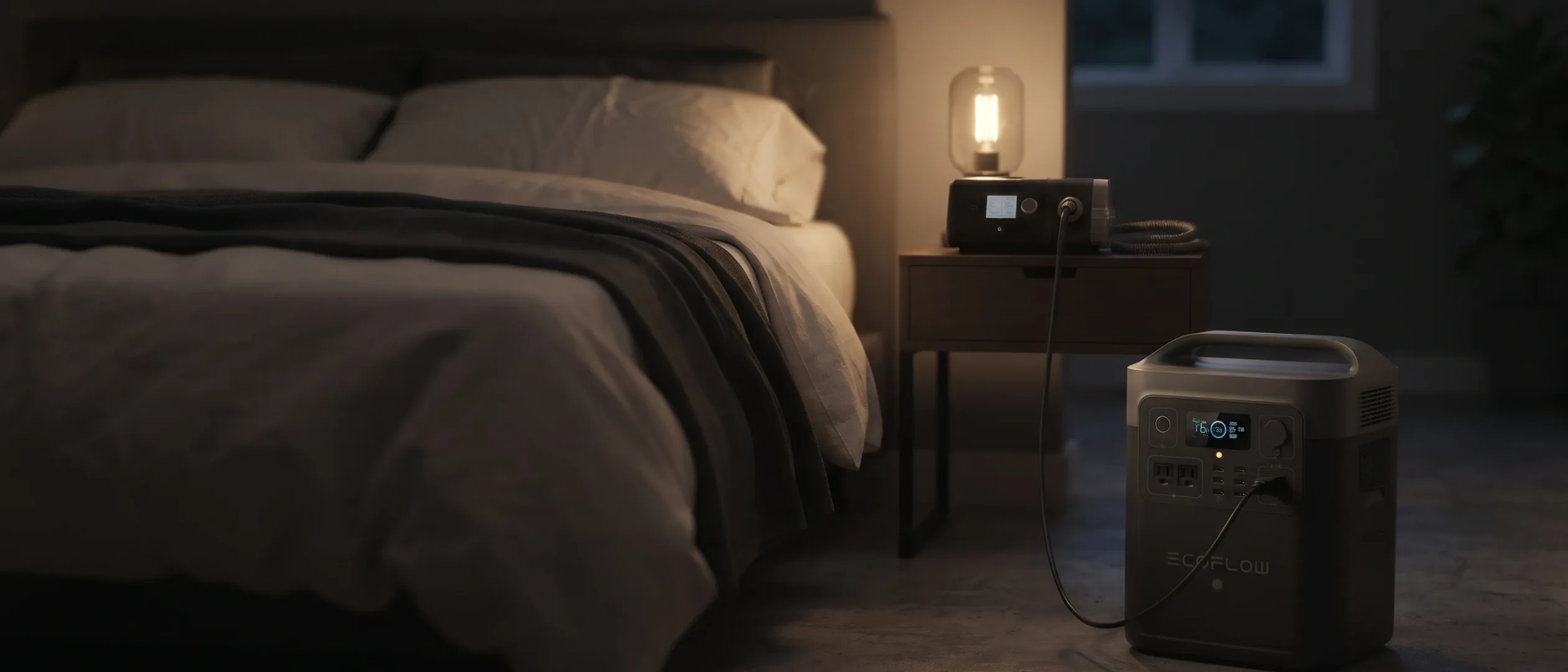
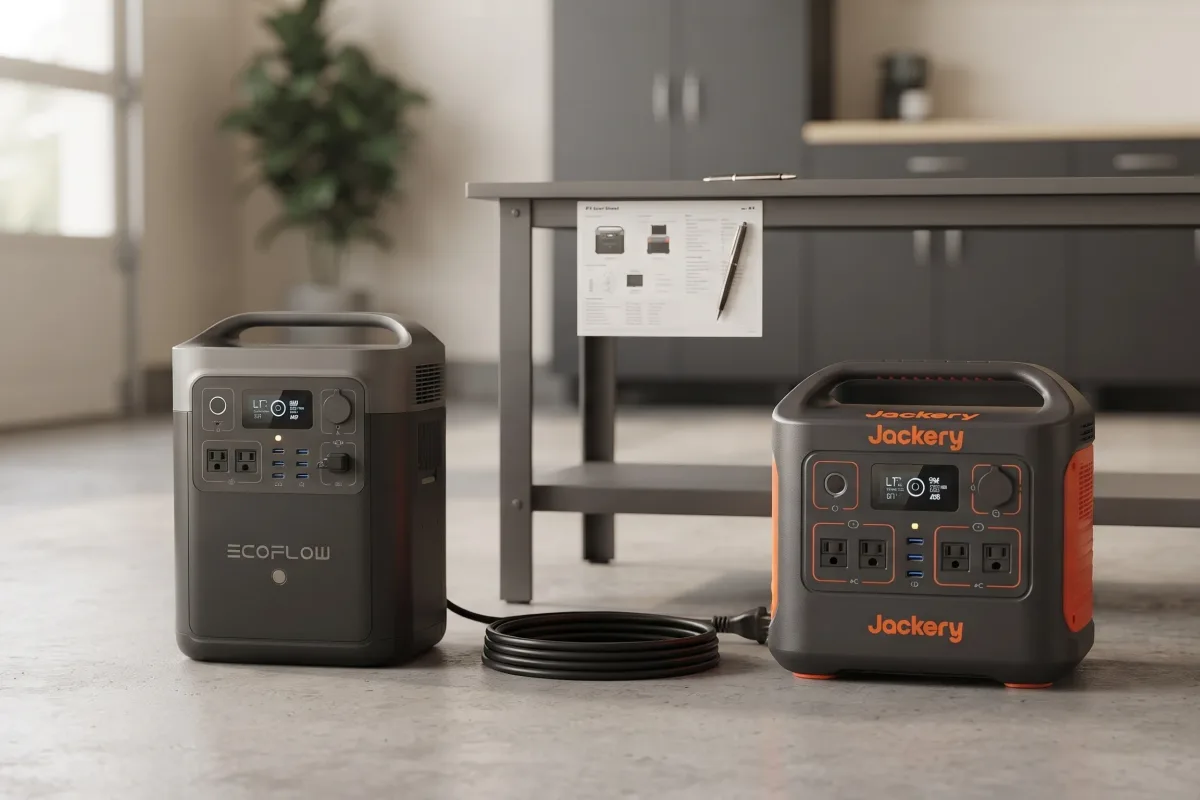
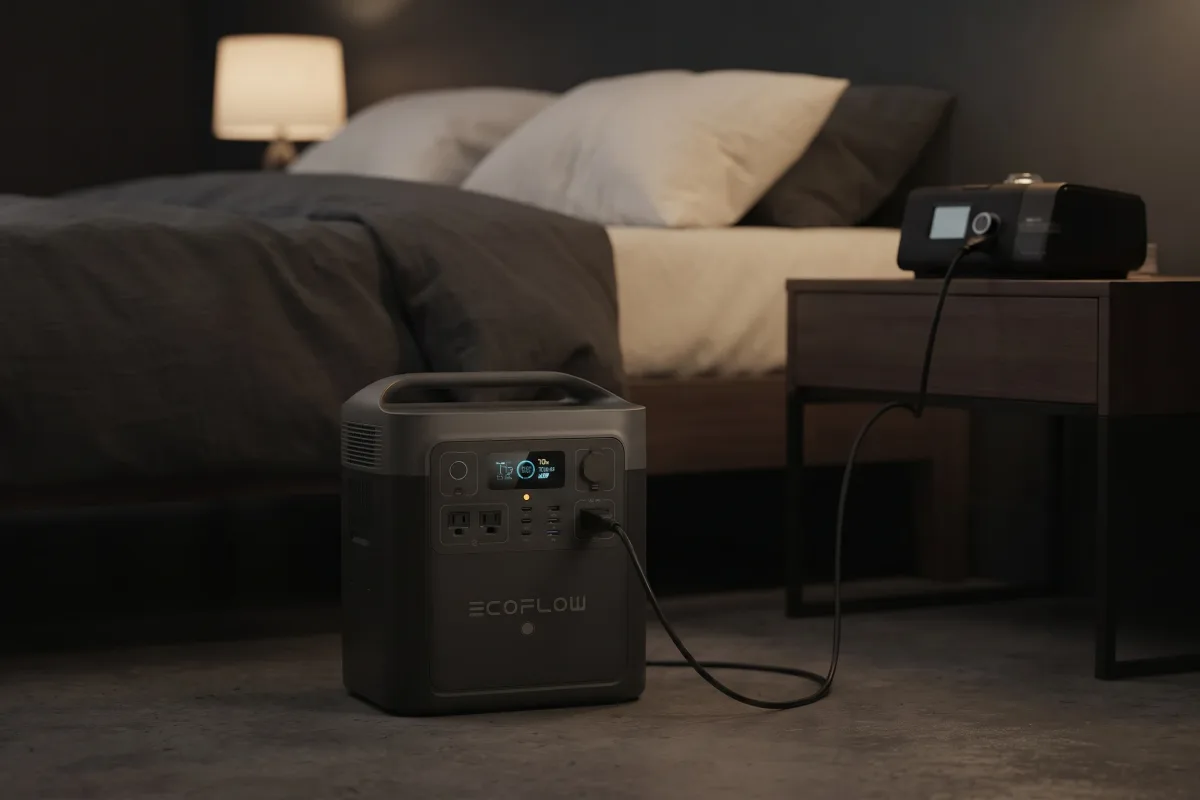
Leave the Delta 3 Plus plugged in beside the bed and it acts as a battery backup. If the power drops, it takes over in under 10 ms, so the CPAP keeps running.
Pros
- About 10 nights without the humidifier
- Under 10 ms switchover keeps the CPAP running in an outage
- Recharges from the wall in about 56 minutes
- Expands to 5 kWh
Cons
- 27.6 lb is heavy for travel
- About 2.7 nights with the humidifier on 8
Best for camping: Anker SOLIX C1000 Gen 2
Same capacity, lighter, with solar for longer trips
Best for camping
Anker SOLIX C1000 Gen 2
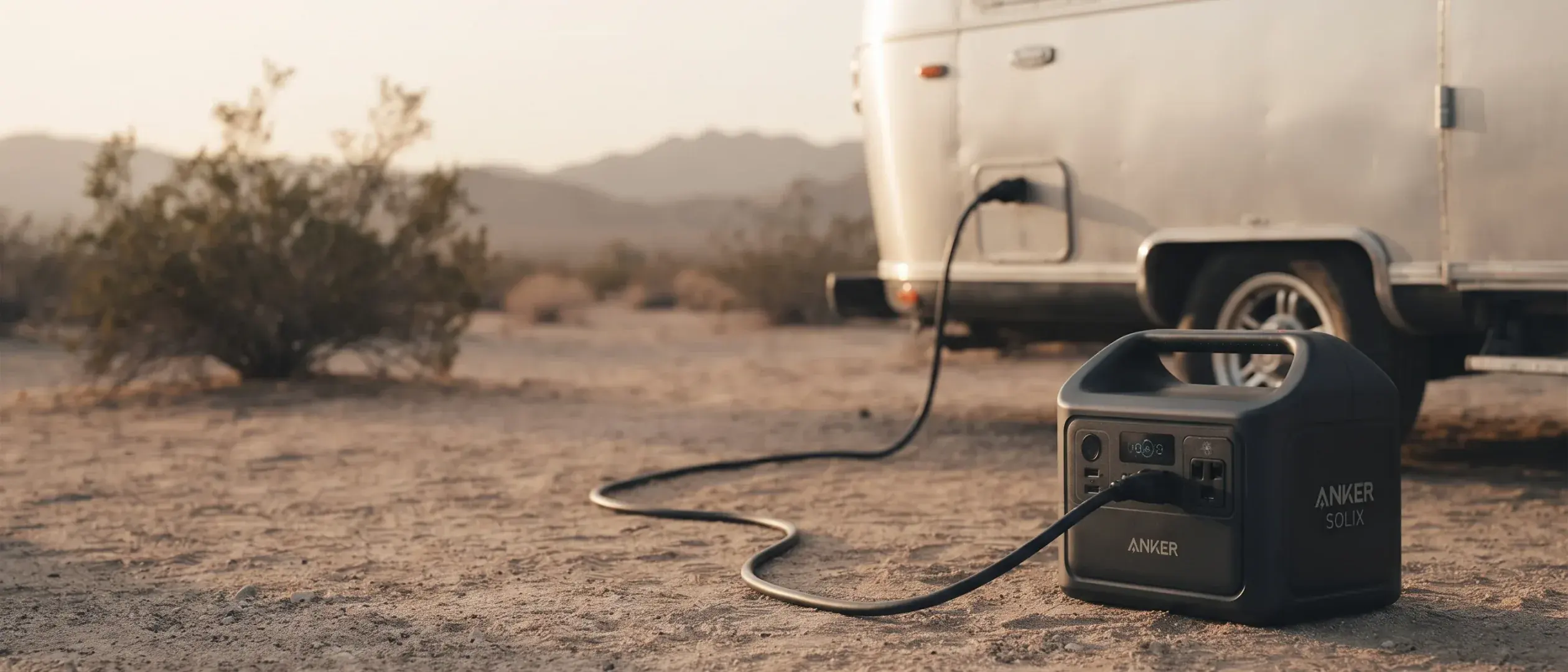
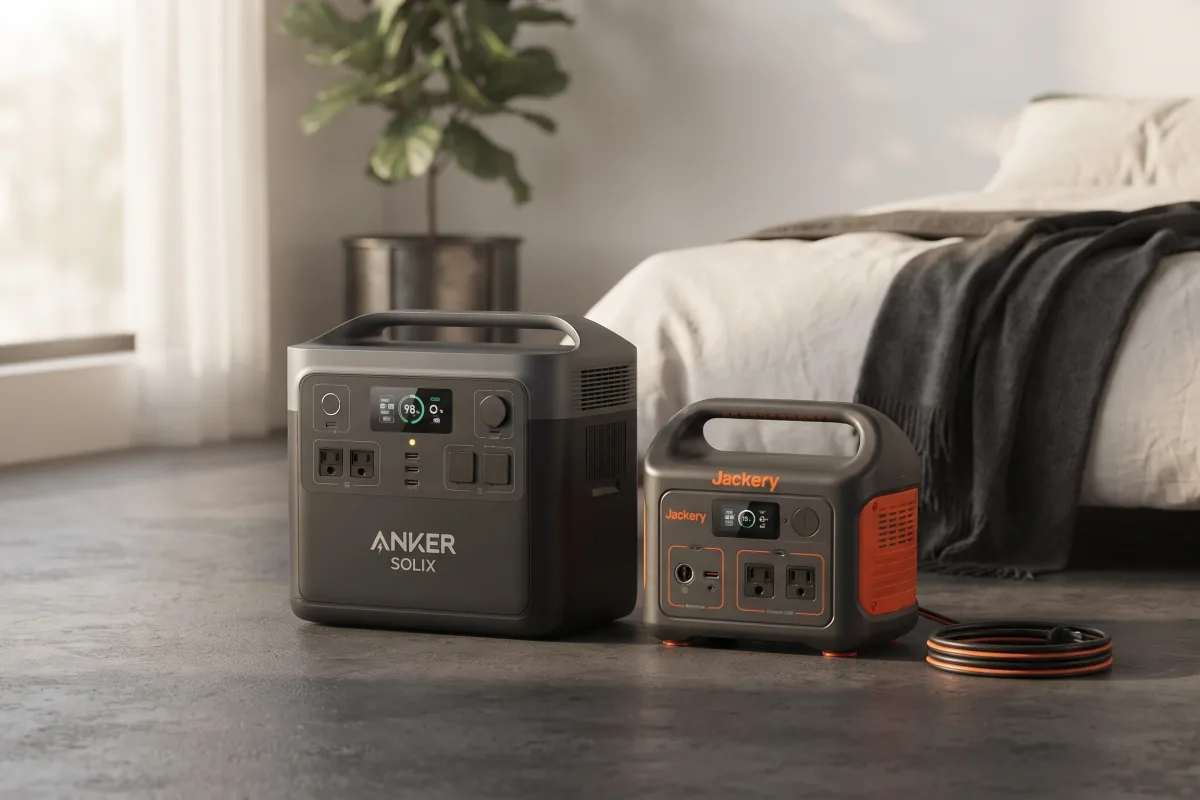
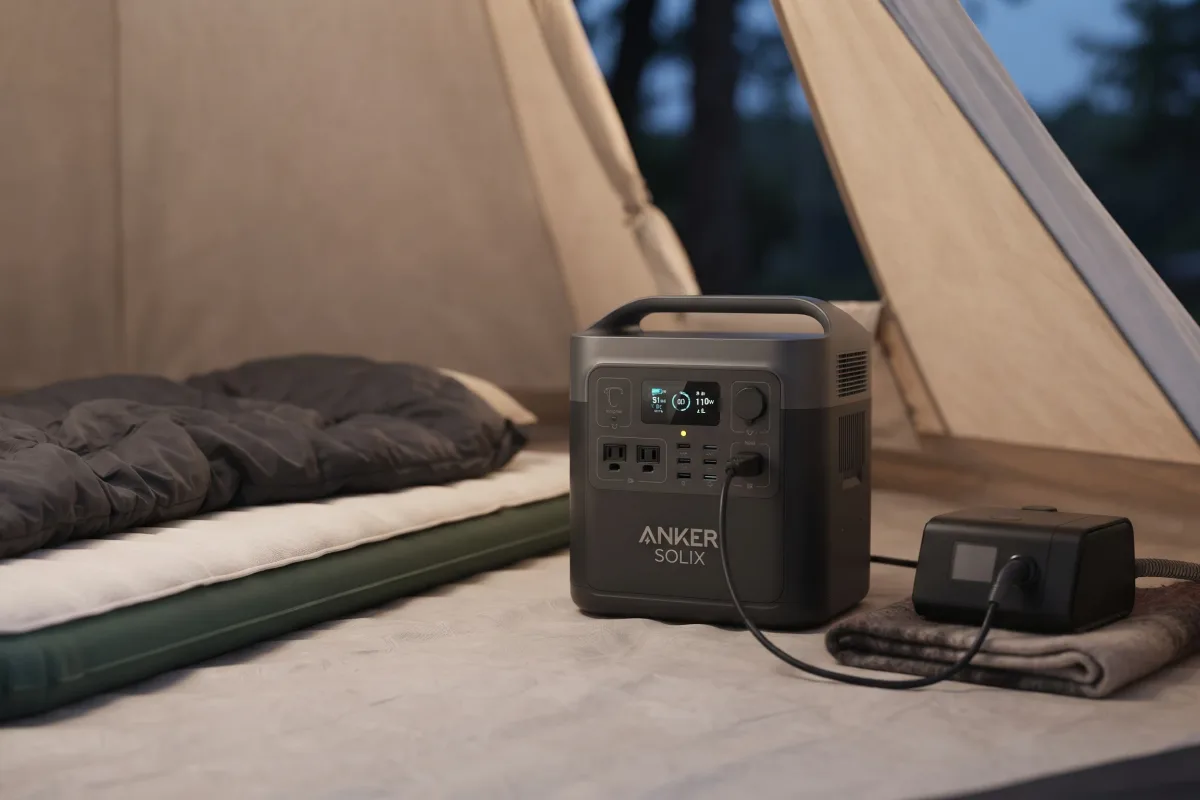
The C1000 Gen 2 matches the Delta 3 Plus on capacity and weighs less. A solar panel at camp tops it up during the day. For more camping picks, see the best portable power stations for camping.
Pros
- About 10 nights without the humidifier
- 24.9 lb
- 600 W solar input
- 10 ms switchover
Cons
- Not expandable
- Still too heavy for backpacking
Best for the humidifier: Jackery HomePower 2000 Plus v2
Twice the battery for heated humidifiers
Best for the humidifier
Jackery HomePower 2000 Plus v2
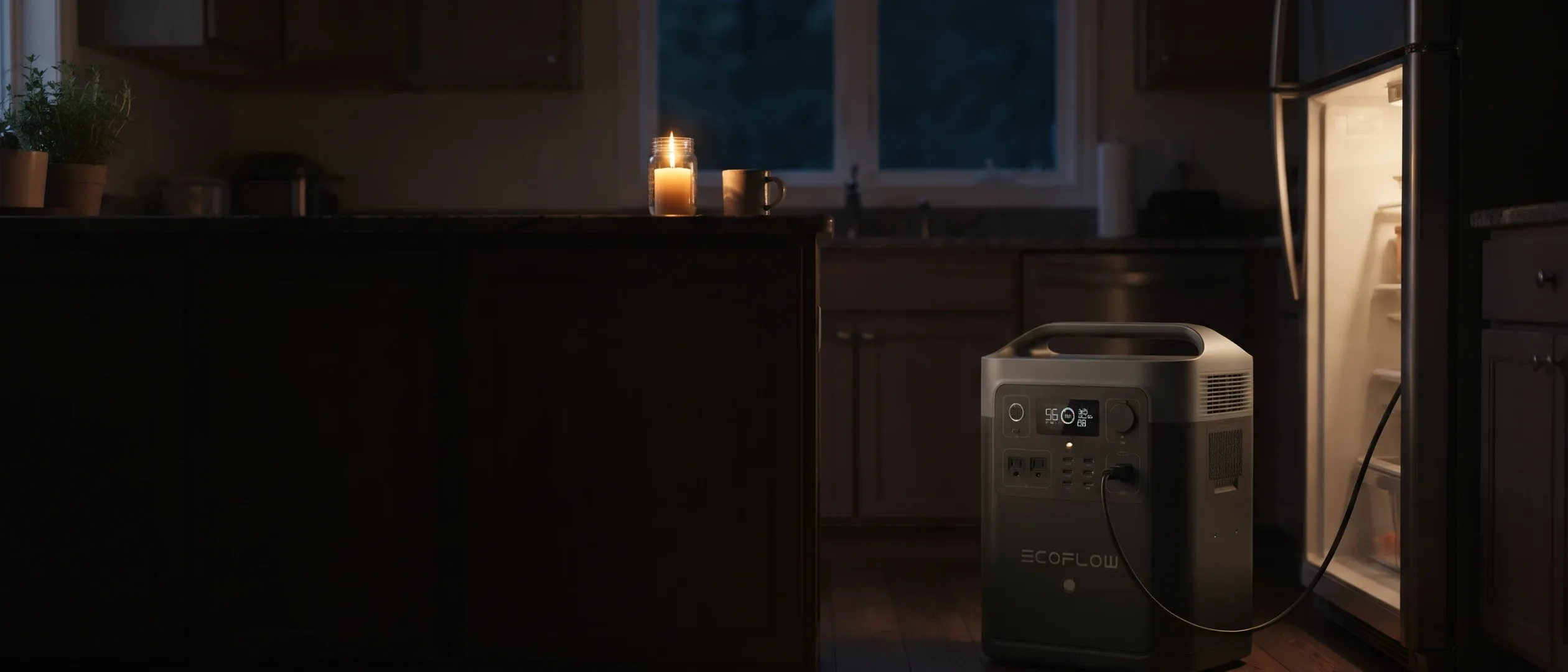
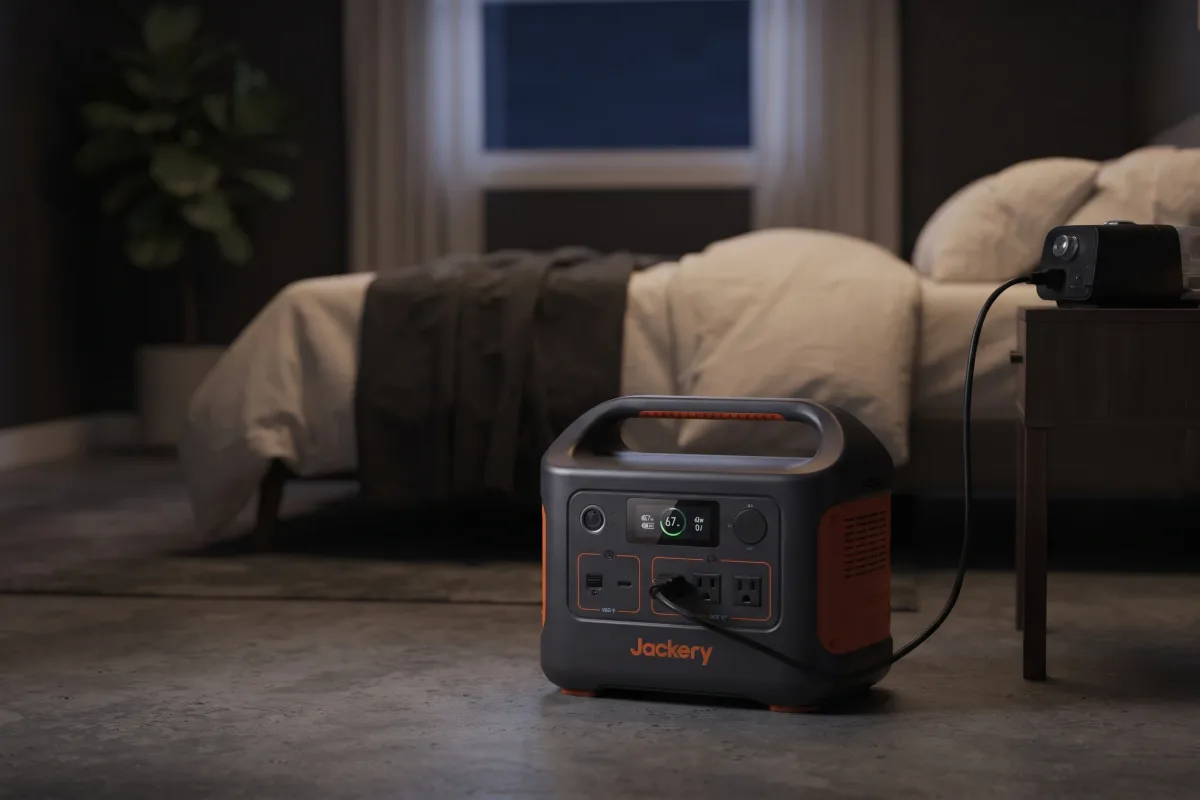
If you can't sleep without the humidifier, capacity is what counts. The HomePower 2000 Plus v2 doubles it, and also covers a fridge or router in an outage.
Pros
- About 5 to 8 nights with the humidifier on
- 10 ms switchover
- Expands to about 12 kWh
- 2,400 W runs other loads too
Cons
- 41.5 lb
- Warranty is 3 years, plus 2 with registration
Best small station: EcoFlow River 3 Plus
A night or two in a 10.4 lb station
Best small station
EcoFlow River 3 Plus
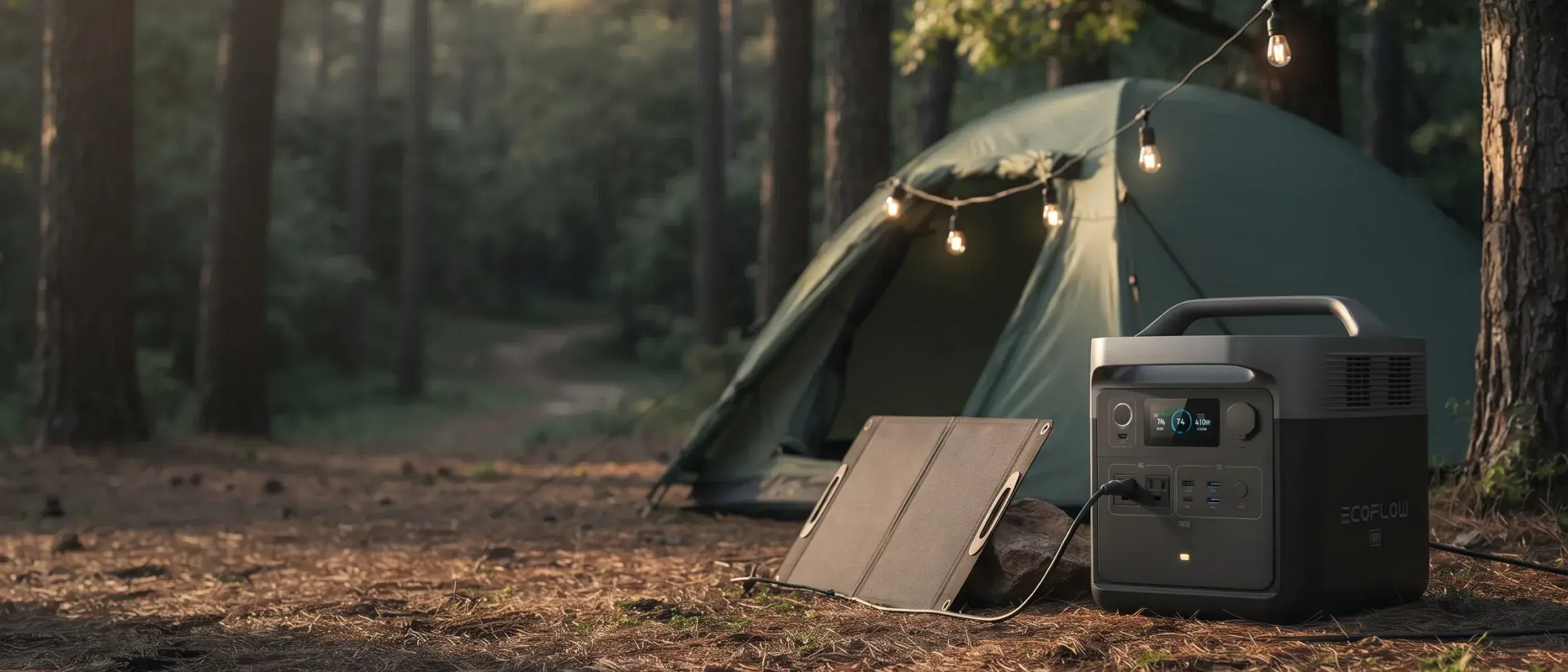
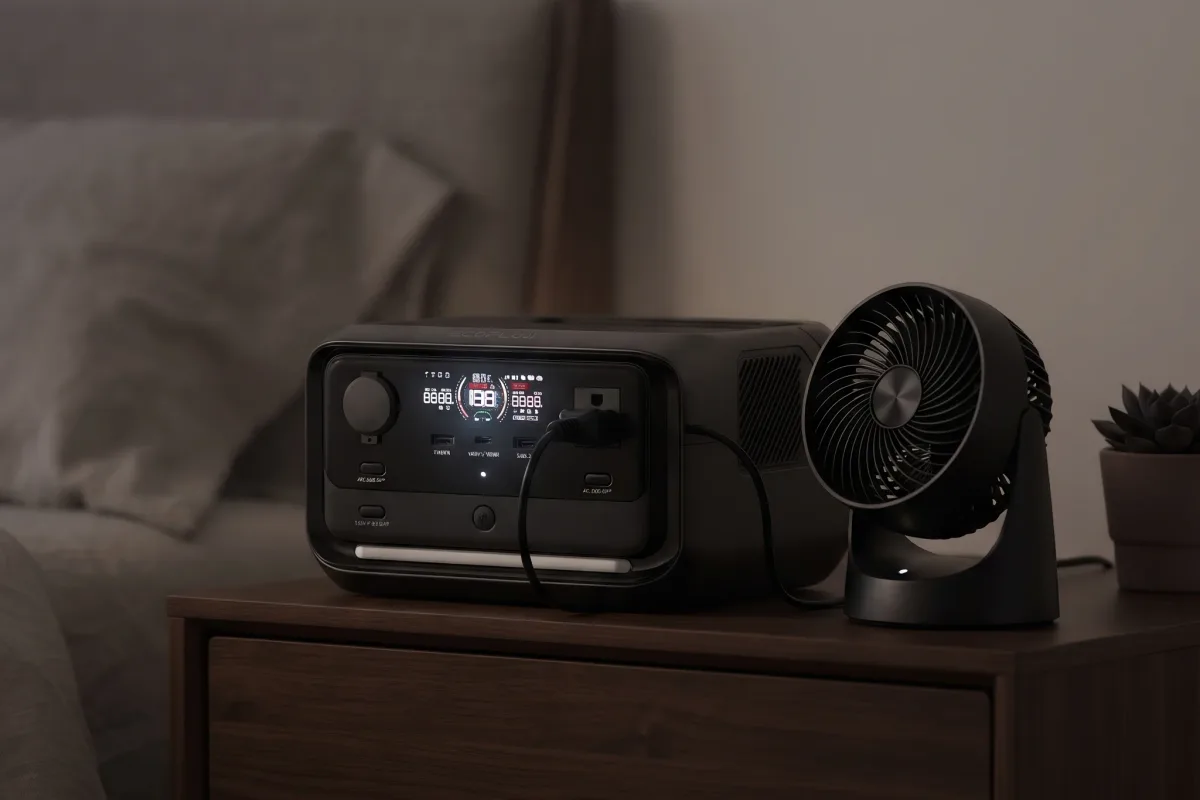
The River 3 Plus is the small station for a weekend away. It's only enough without the humidifier, but it also works as a quiet bedside backup at home, rated under 30 dB. We pick it over the higher-rated Bluetti Elite 30 V2 here because it takes an extra battery (up to 858 Wh), which means more nights. For more options this size, see the best small portable power stations.
Pros
- About 3 nights without the humidifier, on DC
- 12 V car socket for a CPAP DC cord
- Under 10 ms switchover at home
- LiFePO4, 5-year warranty
Cons
- About 1 night with the humidifier on 4
- 10.4 lb
What to look for
The specs that matter for CPAP
- A 12 V DC socket: use your machine maker's DC cord or converter. It skips the inverter and gives more nights.
- Pure sine wave AC: ResMed recommends it if you run on AC.
- Switchover time: 10 ms or less keeps the CPAP running when the grid drops. See using a power station as a UPS.
- Capacity for your humidifier: size for the setting you actually use.
- Weight and solar: for camping, see solar panel sizing.
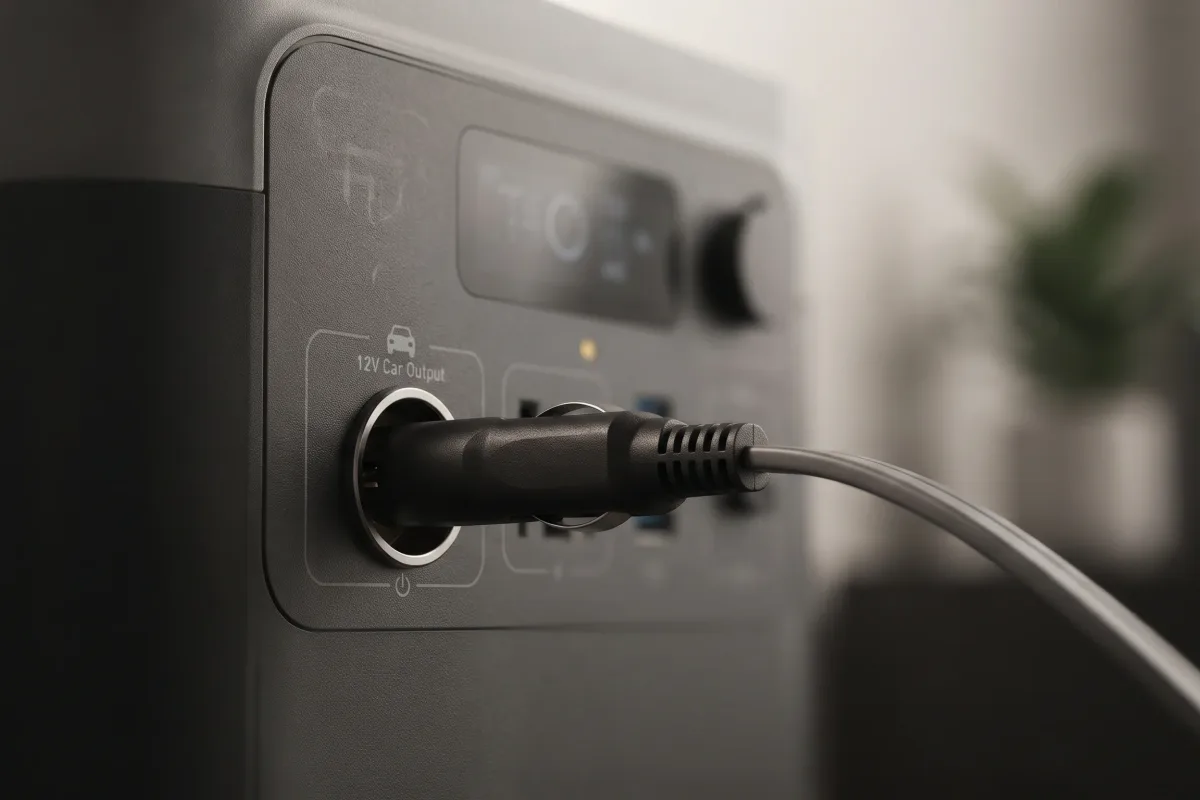
Power stations make no fumes, so they're fine in a bedroom. See are power stations safe indoors.
Also considered
Good stations that missed a top spot
- EcoFlow Delta 3: same 1,024 Wh as the Delta 3 Plus, with 500 W solar input.
- Jackery Explorer 1000 v2: 23.8 lb for 1,024 Wh, but rated 5.7.
- Jackery Explorer 1000 Plus: 1,264 Wh, but no stated switchover time.
- Bluetti AC180: 1,152 Wh, but a 20 ms switchover.
- Jackery Explorer 300: 7.1 lb, about 3 nights without the humidifier, but an older NMC battery.
- Anker SOLIX C300 DC: 288 Wh, runs a CPAP on its 12 V socket, but no AC outlets.
- Bluetti Elite 30 V2: 288 Wh in 9.5 lb with a 5-year warranty, but it can't take an extra battery.
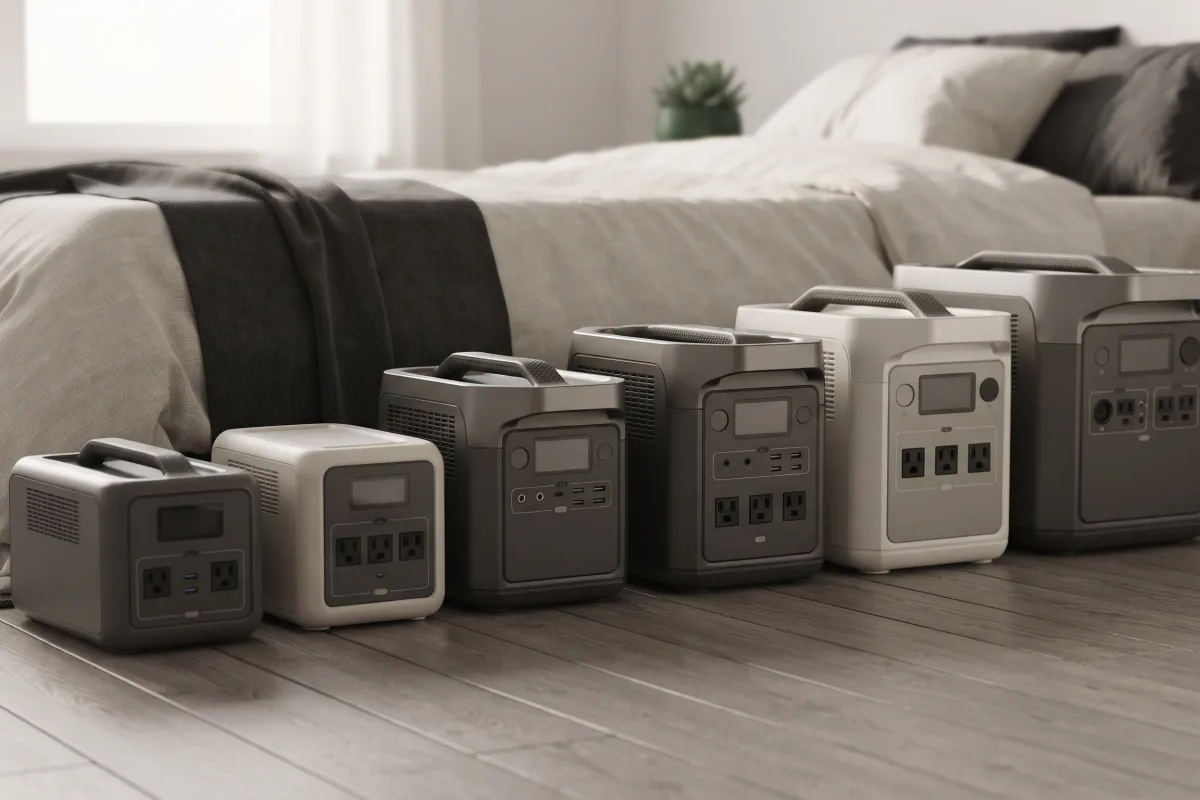
For home outages beyond the bedroom, see the best portable power stations for home backup.
For every use, see our best portable power stations overview.
FAQ
What size power station do I need for a CPAP?
About 300 Wh covers about three nights without the humidifier. About 1 kWh covers about 10 nights without it, or 2 to 4 with it.
Will a 300 Wh station run a CPAP all night?
Yes, without the humidifier. With the humidifier on, a 300 Wh station may not last a full night.
Should I run my CPAP on DC or AC?
DC, if your CPAP has a DC cord or converter. It skips the inverter and runs longer.
Can a power station be a CPAP battery backup during outages?
Yes. Keep it plugged in beside the bed. A station with 10 ms or less switchover, such as the Delta 3 Plus, takes over without the CPAP stopping.
Can solar keep a CPAP running?
Yes. A station with solar input can recharge during the day. For multi-day trips, pair it with a panel sized for your nightly use.