Learn
What Size Portable Power Station Do I Need?
Work out what size portable power station you need: capacity, real runtime for fridges and CPAP machines, and which appliances each size can run.
- 4
- guides
- Nov 2026
- last updated
The short answer
How to work out your size
Most people need one of four sizes. Under 1 kWh covers phones, laptops, a CPAP and day trips. 1 to 1.5 kWh runs a refrigerator through a short outage or powers a camping weekend. 2 to 3 kWh covers a full day or more of home essentials and RV trips. 3.5 kWh and up is for multi-day outages and 240 V home circuits.
- List what you'll run and its watts. Output (W) decides what a station can run at once; capacity (Wh) decides for how long. Watts vs watt-hours →
- Multiply each device's average watts by the hours you'll use it, add them up, then divide by 0.85 for devices on AC outlets (0.92 on a DC or USB cord) to allow for conversion losses. Add a margin of about 20%. The calculator does this for you →
- A 1 kWh station runs a typical refrigerator for about 11 to 18 hours, and a 2 kWh station for about a day. Fridge runtime in full →
- Without the humidifier, a 1 kWh station runs a typical CPAP for about 10 nights on its DC cord; with the humidifier on, about 2 to 4 nights. CPAP runtime in full →
Capacity, runtime and appliance compatibility.
Sizing & Runtime guides
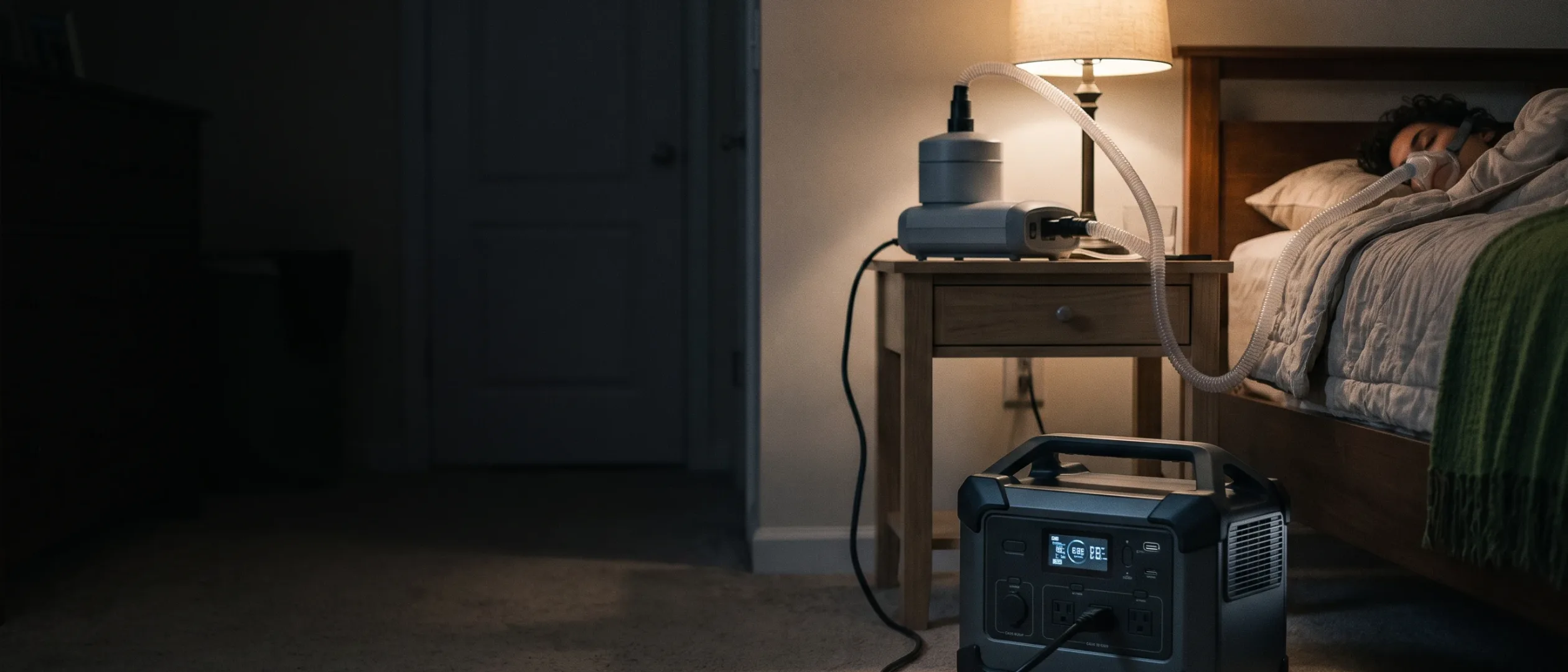
- How Long Will a Power Station Run a CPAP?Without the humidifier, a 1 kWh portable power station runs a typical CPAP for about 10 nights on its DC cord; with the humidifier on, about 2 to 4 nights.Read the guide →
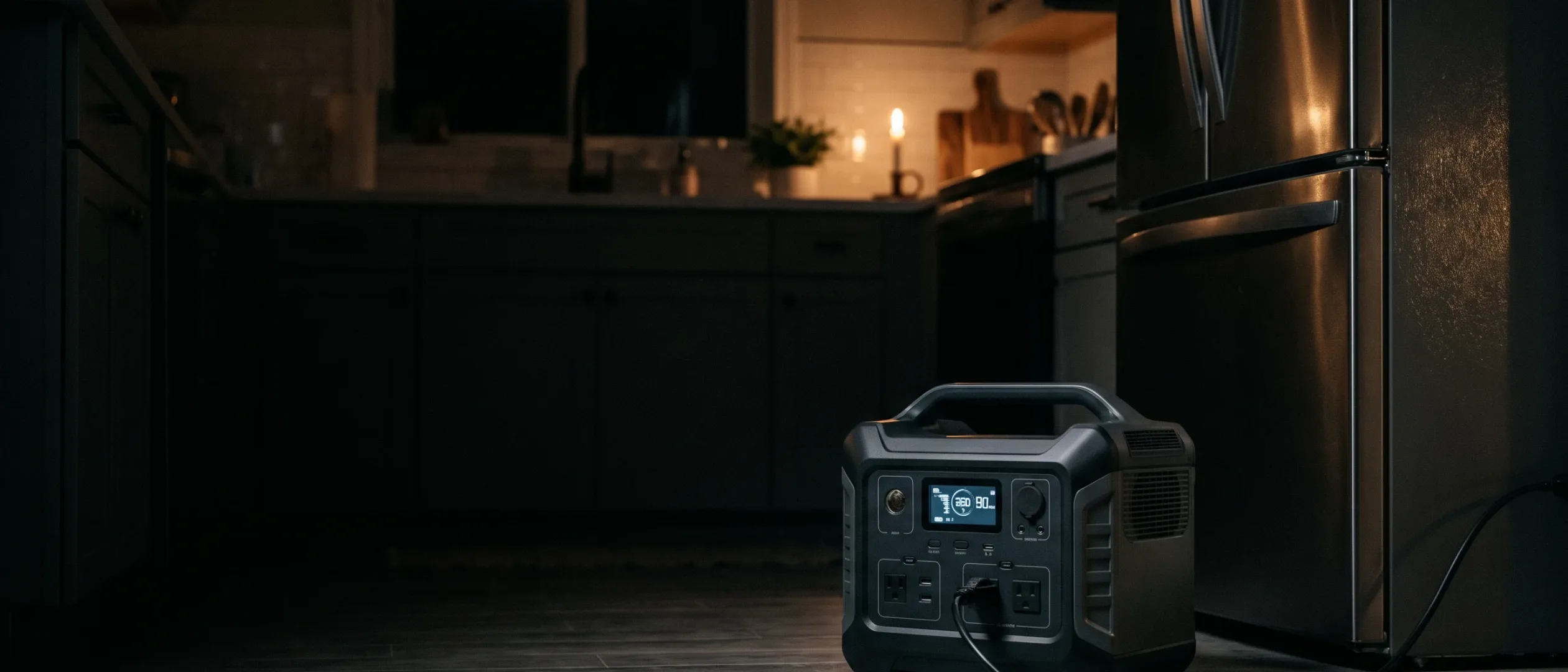 How Long Will a Power Station Run a Fridge?A 1 kWh portable power station runs a typical refrigerator for about 11 to 18 hours; a 2 kWh station for about a day; a 3.6 kWh station for about 1.5 to 2.5 days.Read the guide →
 Portable Power Station Runtime CalculatorAdd your devices below to see how many hours a portable power station will run them.Read the guide →
 Watts vs Watt-Hours: What the Specs Really MeanWatts (W) tell you what a power station can run. Watt-hours (Wh) tell you how long it can run it.Read the guide →
Quick answers
Common questions
Is a bigger power station always better?
No. More capacity means more weight, and a station you can't carry or won't keep charged doesn't help. Size it for the longest outage or trip you realistically expect, plus a margin.
What matters more, watts or watt-hours?
Both, for different reasons. Watts decide whether a station can run a device at all; watt-hours decide for how long. Check the watts first, then size the watt-hours.
Do I need to allow for start-up surge?
Yes for fridges, freezers, pumps and power tools: they need a short burst of extra power to start. Check the station's surge rating as well as its continuous output.