 By
We may earn a commission if you buy through links on this page, at no extra cost to you. This never affects which products we recommend. How we make money.
On this page 8 sections
Our verdict · Anker SOLIX
A 288 Wh USB-C power bank station for laptops, phones and 12 V gear, with no AC outlets
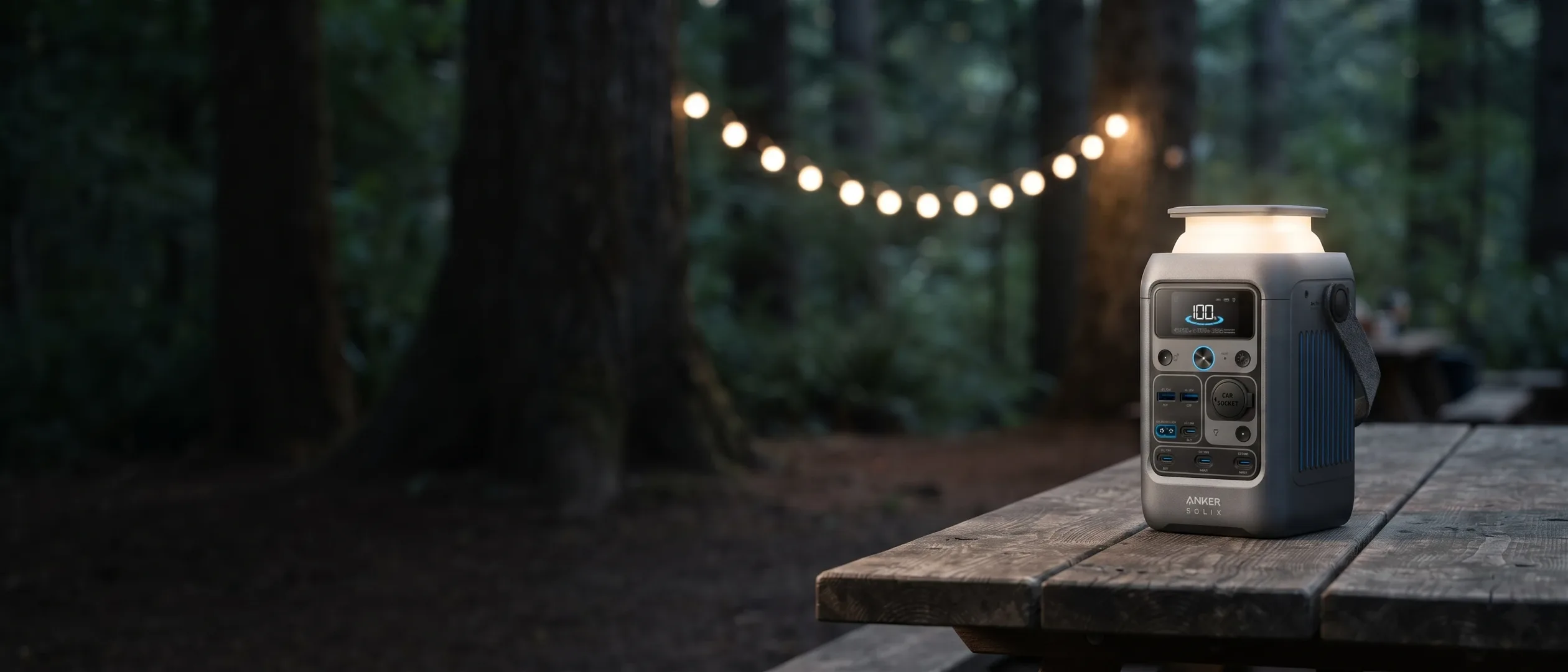
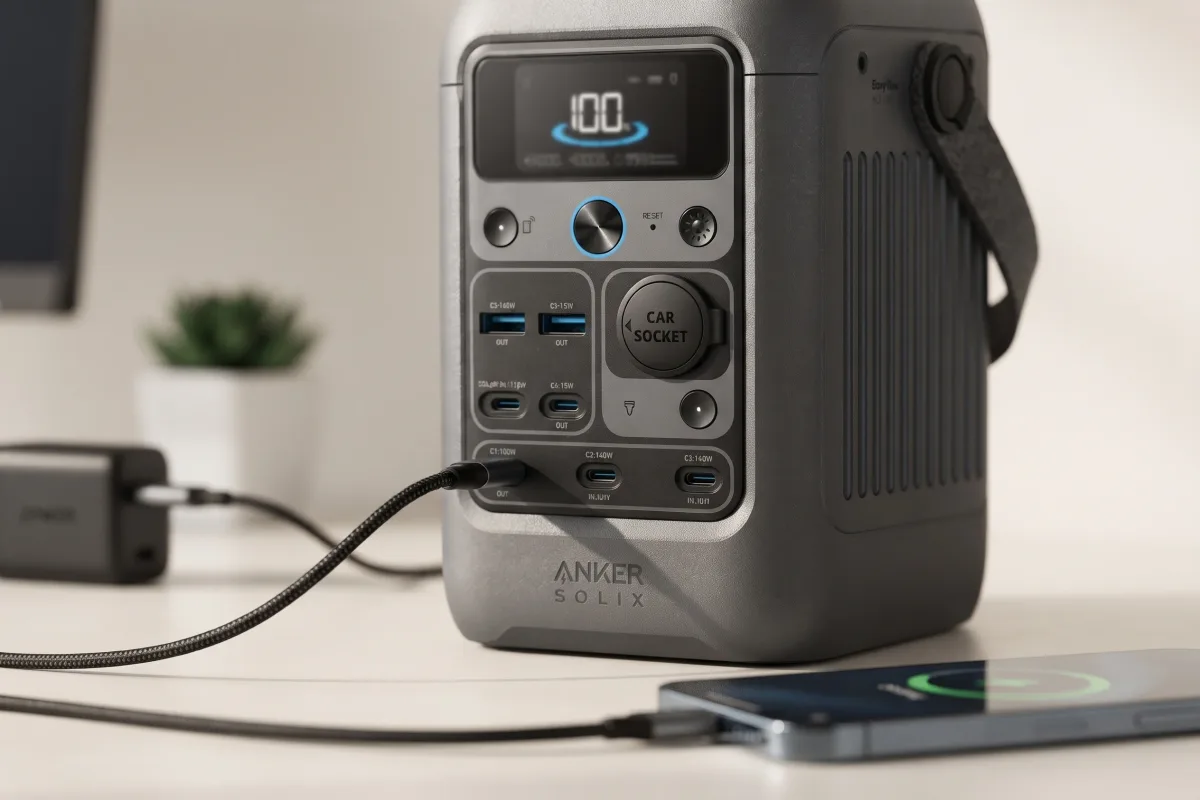
The C300 DC is a big USB-C battery with a car socket and solar input. It charges laptops fast and recharges from a USB-C charger, but it can't run anything with a household plug.
- Capacity
- 288 Wh
- AC output
- None
- Wall charge
- 80% in about 1 hr
Best for
Laptop work off-grid, phones and cameras on trips, and 12 V gear such as a CPAP with a DC cord.
Skip it if
You need to plug in anything with a household plug, or want battery backup for a router or computer.
- Two 140 W two-way USB-C ports
- Recharges to 80% in about an hour over USB-C
- 100 W solar input (11–28 V)
- 300 W total DC output
- No AC outlets and no UPS mode
- Not expandable
- Weight, battery cycles and warranty aren't stated on Anker's page
Rating breakdown (compact (under 1 kwh) class)
| Criterion | Weight | Score | Based on |
|---|---|---|---|
| Wall charging speed | 20% | 5.6 | 280 W input |
| AC output | 20% | 3.3 | 300 W |
| Solar input | 10% | 2.5 | 100 W |
| Portability | 25% | 3.0 | weight not stated |
| Battery life & warranty | 25% | 3.0 | warranty not stated, cycles not stated |
| Capacity (Wh) | 288 |
|---|---|
| Battery chemistry | Not stated |
| Rated cycle life | Not stated |
| AC output, continuous (W) | None (DC only; 300 W total DC output) |
| AC output, surge (W) | — |
| AC charge time | 80% in about 1 hr (2 × 140 W USB-C) |
| Max AC charging input (W) | 280 |
| Max solar input (W) | 100 |
| Solar input voltage range | 11–28 V (8.2 A, XT60) |
| UPS switchover (ms) | None (no AC outlets) |
| Weight (lb) | — |
| Expandable to (Wh) | Not expandable |
| Warranty (years) | Not stated |
Key specs at a glance
What the numbers mean in practice
- 288 Wh capacity: about 4 laptop charges' worth of running time, or a few nights of a CPAP without the humidifier on DC.
- 300 W total DC output: shared across USB-C, USB-A and the car socket. There are no AC outlets.
- Two 140 W USB-C ports: each charges a laptop at full speed, and both also charge the station.
- 100 W solar input: 11–28 V through an XT60 connector.
- Not expandable. Anker's page doesn't state the weight, battery cycles or warranty length.
Spec sheets are easy to misread; watts vs watt-hours explains which number answers which question.
Charging speed
About an hour to 80% over USB-C
There's no AC inlet. Instead, it charges through its two 140 W USB-C ports from any USB-C PD charger of 30 W or more. With two 140 W chargers, Anker quotes about an hour to 80%.
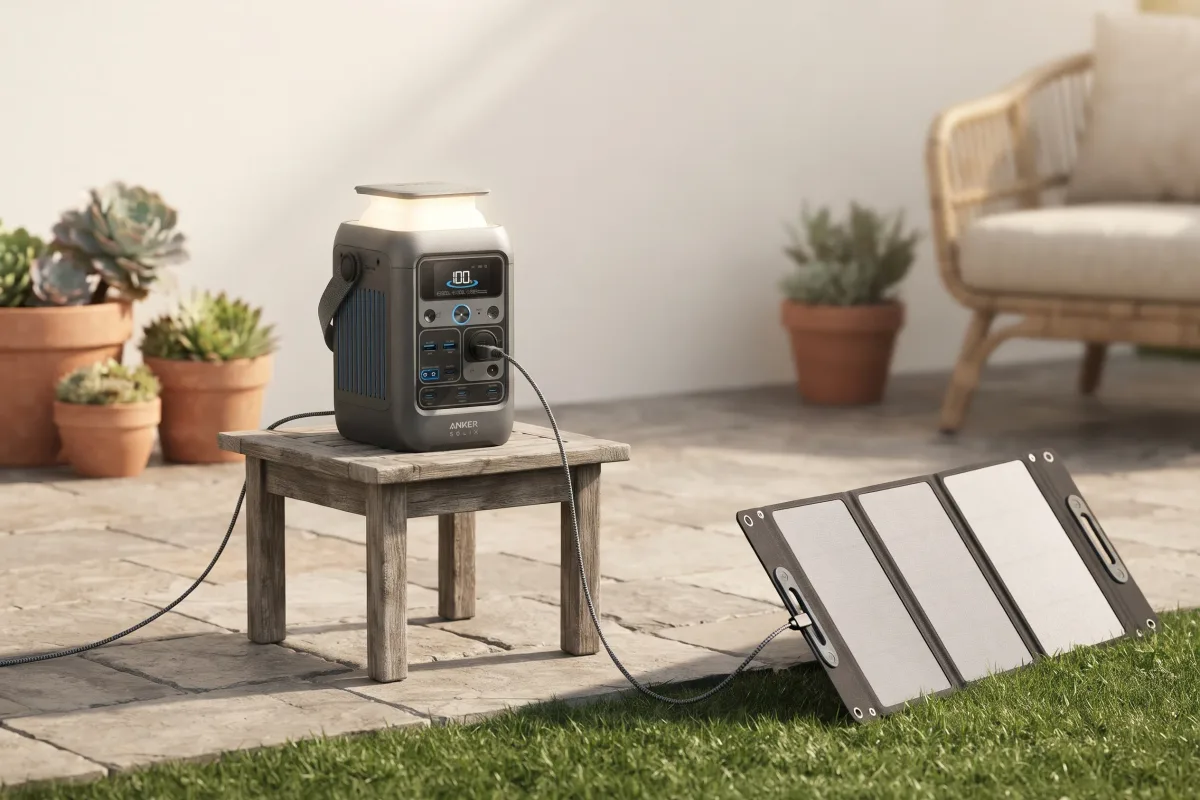
It also accepts up to 100 W of solar at 11–28 V, and charges from a car. See solar panel sizing.
Capacity and real runtime
Laptops, lights and DC gear
Estimated runtimes on the C300 DC (DC loads)
- CPAP, no humidifier (11 W)24 h
- LED lights (10 W)27 h
- Laptop over USB-C (60 W)4.4 h
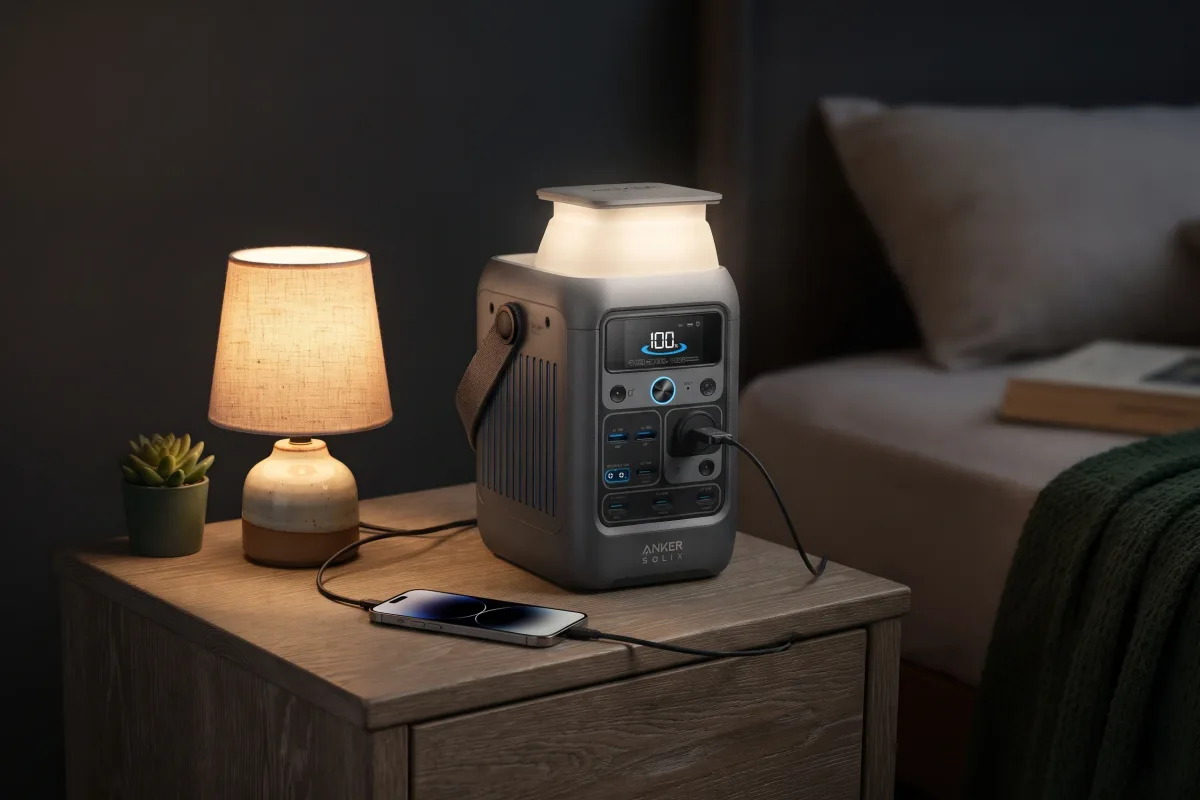
A CPAP with a 12 V DC cord runs about three 8-hour nights without the humidifier. See how long a power station runs a CPAP, or try your own devices in the runtime calculator.
Output: what it can and can't run
USB-C and 12 V only
It runs anything that charges over USB-C or USB-A, and 12 V gear through the car socket: laptops, tablets, phones, cameras, drones, LED lights and a CPAP with a DC cord.
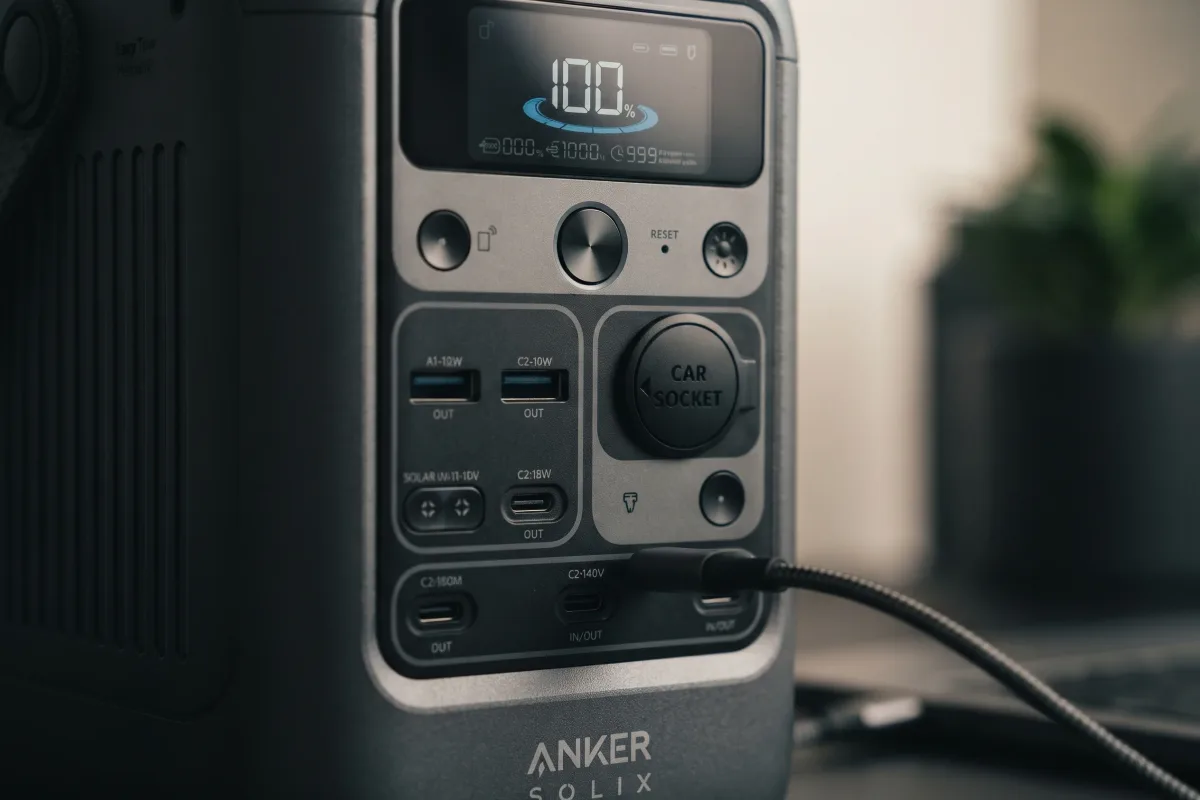
It can't run anything with a household plug, such as a fridge, TV, kettle or a CPAP without a DC cord. When the second USB-C or the USB-A port is used, Anker limits them to 15 W and 12 W, or 20 W combined.
Backup (UPS) and app
No UPS mode
The C300 DC has no AC outlets, so it can't act as a UPS for a router or computer. It can charge from a USB-C charger while charging your devices. For desk backup, look at a station with AC outlets and a fast switchover. See using a power station as a UPS.
How it compares
Against other small stations
| Spec | Anker SOLIX C300 DC | EcoFlow River 3 Plus | Jackery Explorer 300 |
|---|---|---|---|
| Capacity (Wh) | 288 | 286 | 293 |
| AC output, continuous (W) | None (DC only; 300 W total DC output) | 600 | 300 |
| AC charge time | 80% in about 1 hr (2 × 140 W USB-C) | 1 hr (0–100%) | 4 h |
| Max solar input (W) | 100 | 220 | 100 |
| Weight (lb) | — | 10.4 | 7.1 |
| Warranty (years) | Not stated | 5 | 3 + 2 with registration |
| Price | Check price | Check price | Check price |
- EcoFlow River 3 Plus: similar capacity (286 Wh) with three AC outlets, 600 W and under 10 ms UPS switchover.
- Jackery Explorer 300: 293 Wh with two AC outlets and 300 W.
- Bluetti EB3A: 268 Wh with 600 W AC output and a 2-year warranty.
Who should buy it
And who should look elsewhere
Good fit: laptop users who work off-grid, travellers charging phones and cameras, and campers with 12 V gear.
Look elsewhere if: you need AC outlets, battery backup for a router or desk, or a fridge. The River 3 Plus suits those better at a similar size.
In our buying guides, the C300 DC is best for laptops in Best Small Portable Power Stations.
FAQ
Does the C300 DC have AC outlets?
No. It has USB-C, USB-A and a car socket only.
Can the C300 DC run a CPAP?
Yes, with your CPAP maker's 12 V DC cord. Without the humidifier, it runs an 11 W CPAP for about three nights.
How do you charge the C300 DC?
Through its two 140 W USB-C ports, a car outlet or up to 100 W of solar. There's no AC inlet.
Can it charge a laptop?
Yes. Each of its two main USB-C ports delivers up to 140 W.
Does the C300 DC work as a UPS?
No. It has no AC outlets, so it can't keep a router or computer running through an outage.