Learn
How Portable Power Stations Work
How portable power stations work: LiFePO4 and lithium-ion battery chemistry, inverters, UPS switchover and connecting a station to home circuits.
- 3
- guides
- Nov 2026
- last updated
The short answer
The parts that matter when you buy
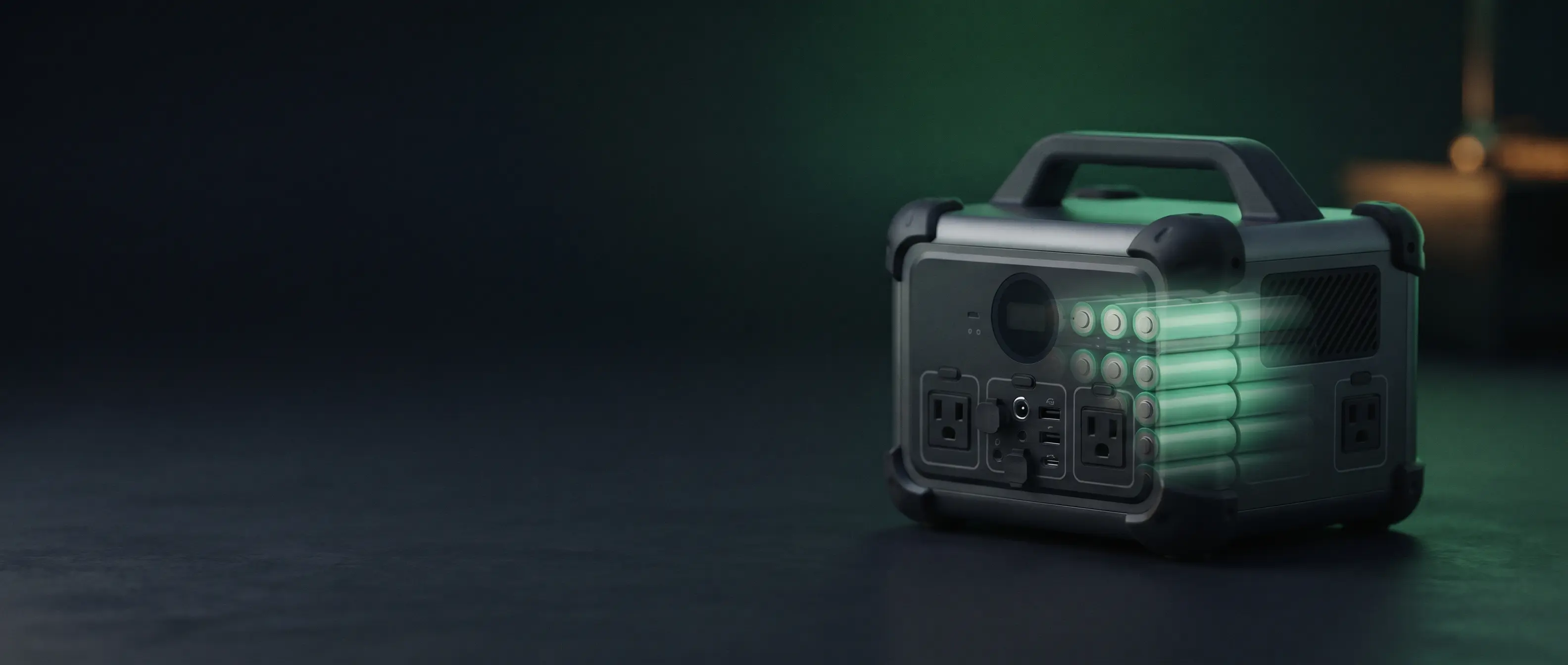
A portable power station is a rechargeable battery, an inverter and a charge controller in one box. The battery stores energy as DC, the inverter turns it into the AC that household appliances use, and the charge controller manages charging from the wall, a car or solar panels.
- Battery chemistry: LiFePO4 is the better choice for almost everyone. Most current stations use LiFePO4 cells rated for 3,000 to 6,000 charge cycles; NMC lithium-ion is lighter for the same capacity. LiFePO4 vs lithium-ion →
- Conversion losses: about 85% of the battery reaches devices on AC outlets and about 92% on a DC or USB cord, and the inverter itself uses around 10 W whenever AC is switched on. See it in the calculator →
- Backup: most current stations can work as a UPS for routers, lights and fridges. Left plugged into the wall, they switch to battery when the grid drops. Using a station as a UPS →
Battery chemistry, inverters, UPS and home integration.
Technology guides
- LiFePO4 vs Lithium-Ion: Which Battery Is Better?For a portable power station, LiFePO4 is the better choice for almost everyone.Read the guide →
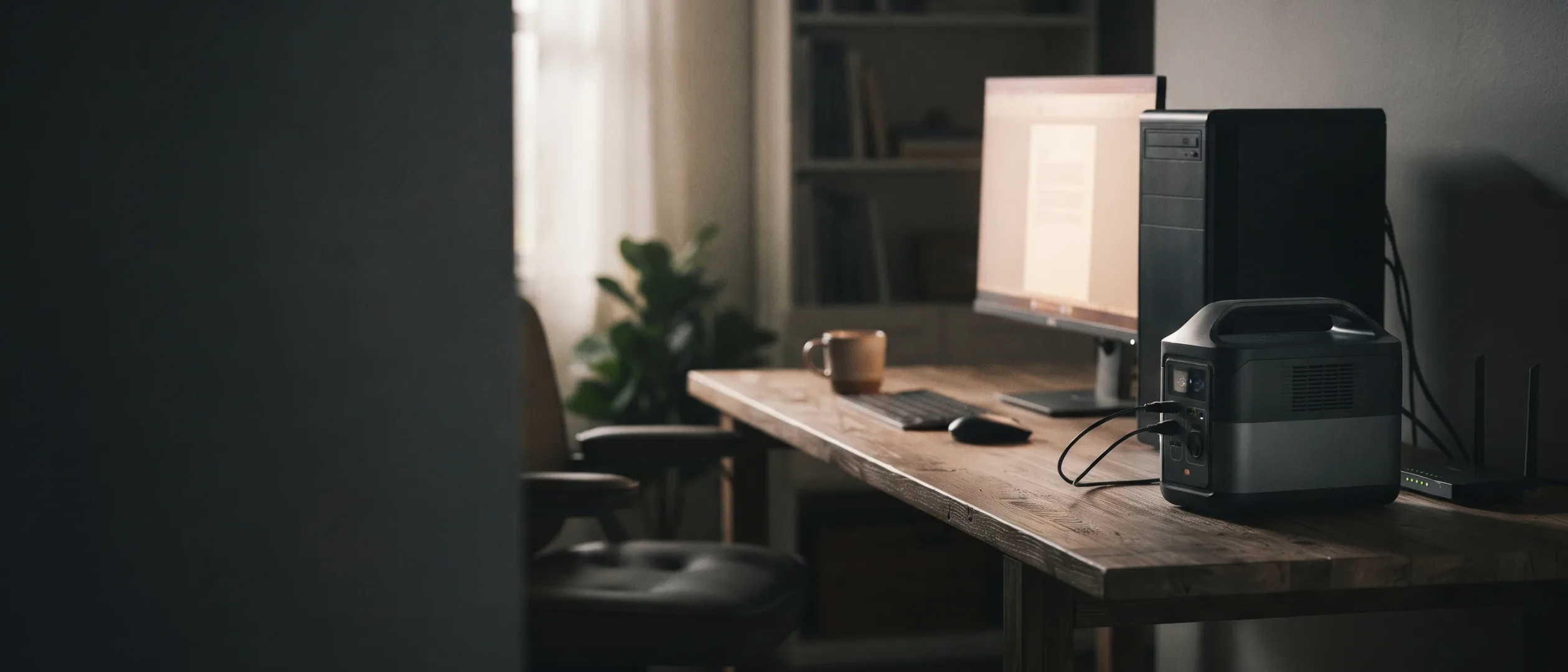 Can a Portable Power Station Work as a UPS?Yes: most current portable power stations can work as a UPS for routers, lights and fridges.Read the guide →
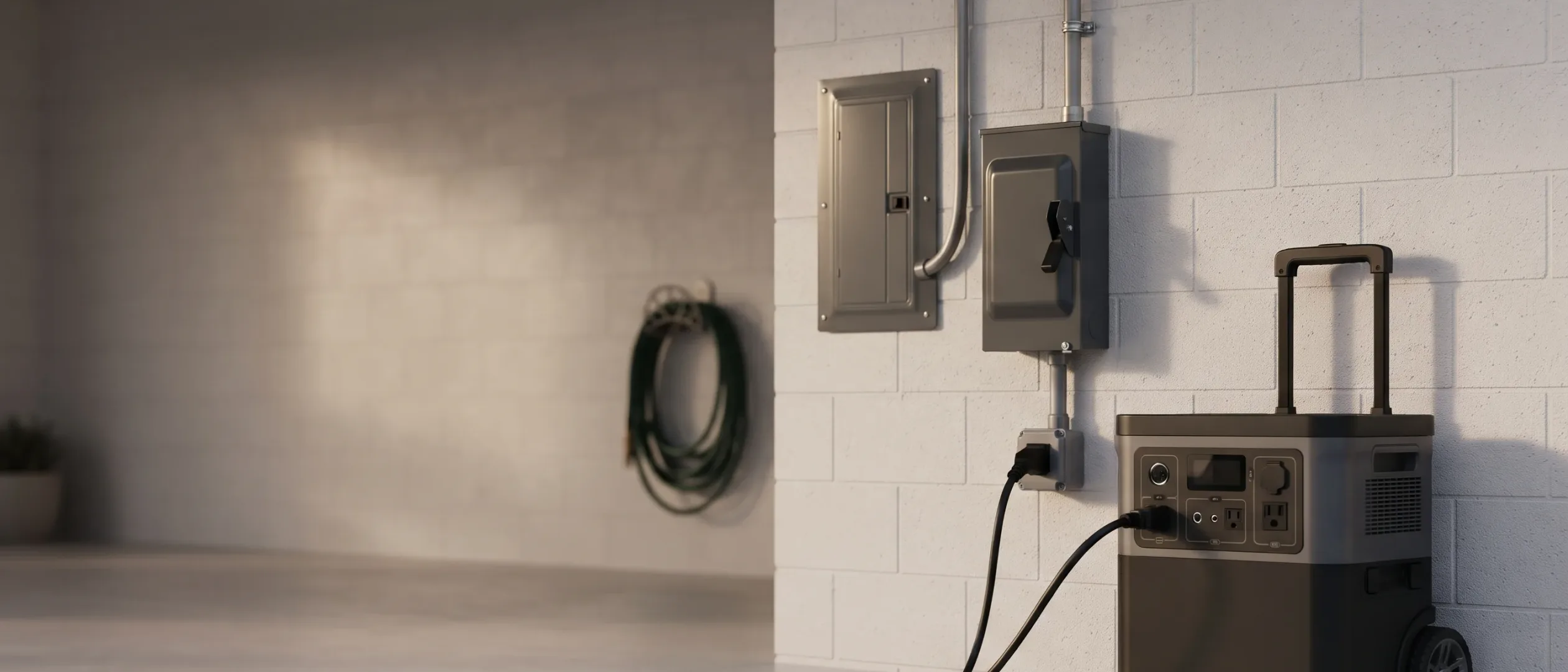 Transfer Switch for a Portable Power StationTo power home circuits from a portable power station, you need a transfer switch or a panel interlock with a power inlet, installed by a licensed electrician.Read the guide →
Quick answers
Common questions
Is LiFePO4 safer than other lithium-ion batteries?
LiFePO4 cells are more thermally stable than NMC cells and last longer, which is why most current stations use them. No lithium battery is risk-free, so follow the manual either way.
Can a power station replace a UPS?
For routers, lights and fridges, usually yes. For a computer, check the switchover time on the spec sheet: under 10 ms is fast enough for most computers and routers.
Why is real runtime shorter than the capacity suggests?
Some energy is lost converting DC to AC, the inverter draws power just by being on, and cold weather and battery age reduce what the battery delivers.