 By
We may earn a commission if you buy through links on this page, at no extra cost to you. This never affects which products we recommend. How we make money.
On this page 8 sections
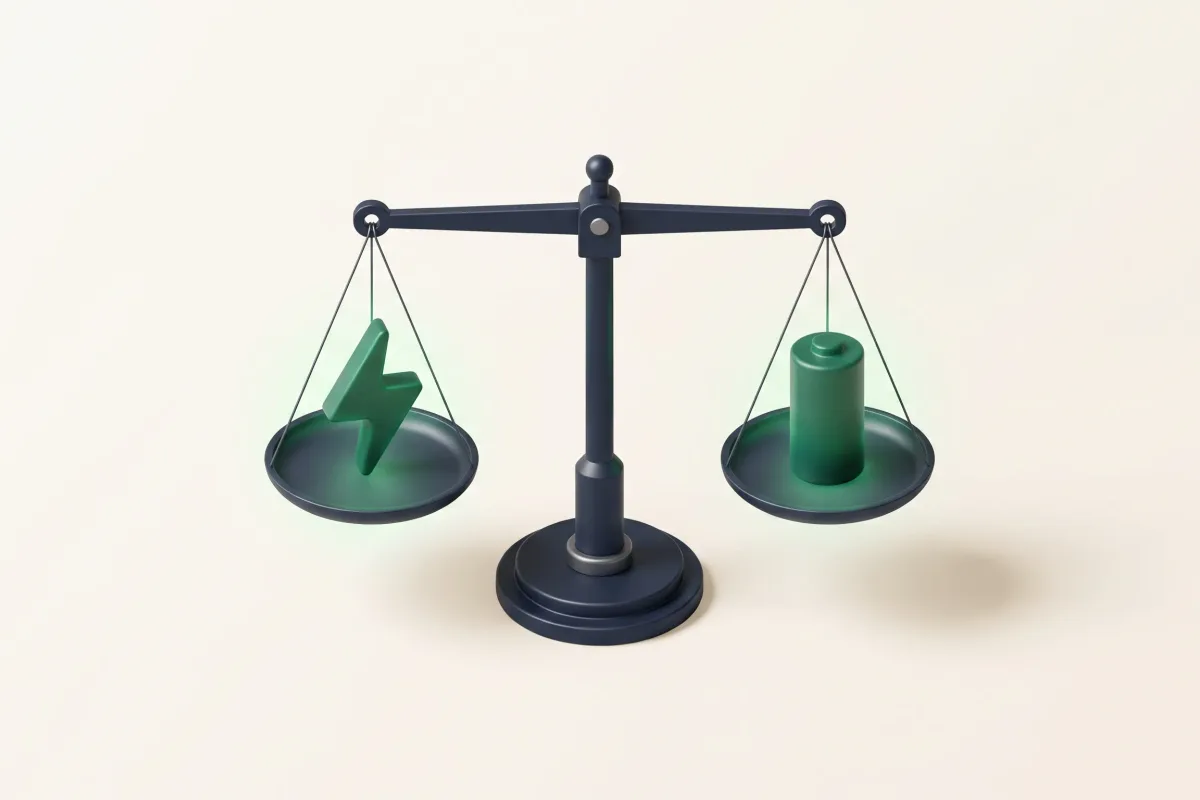
Watts (W) tell you what a power station can run. Watt-hours (Wh) tell you how long it can run it. A station needs enough watts to power your device at all, and enough watt-hours to keep it going as long as you need.
Watts: power right now
What a station can run at the same moment
A watt measures power, the rate at which electricity is used at a given moment. A 60 W laptop charger draws about 60 watts while it's working; a 1,000 W microwave draws about 1,000 W while it's running.
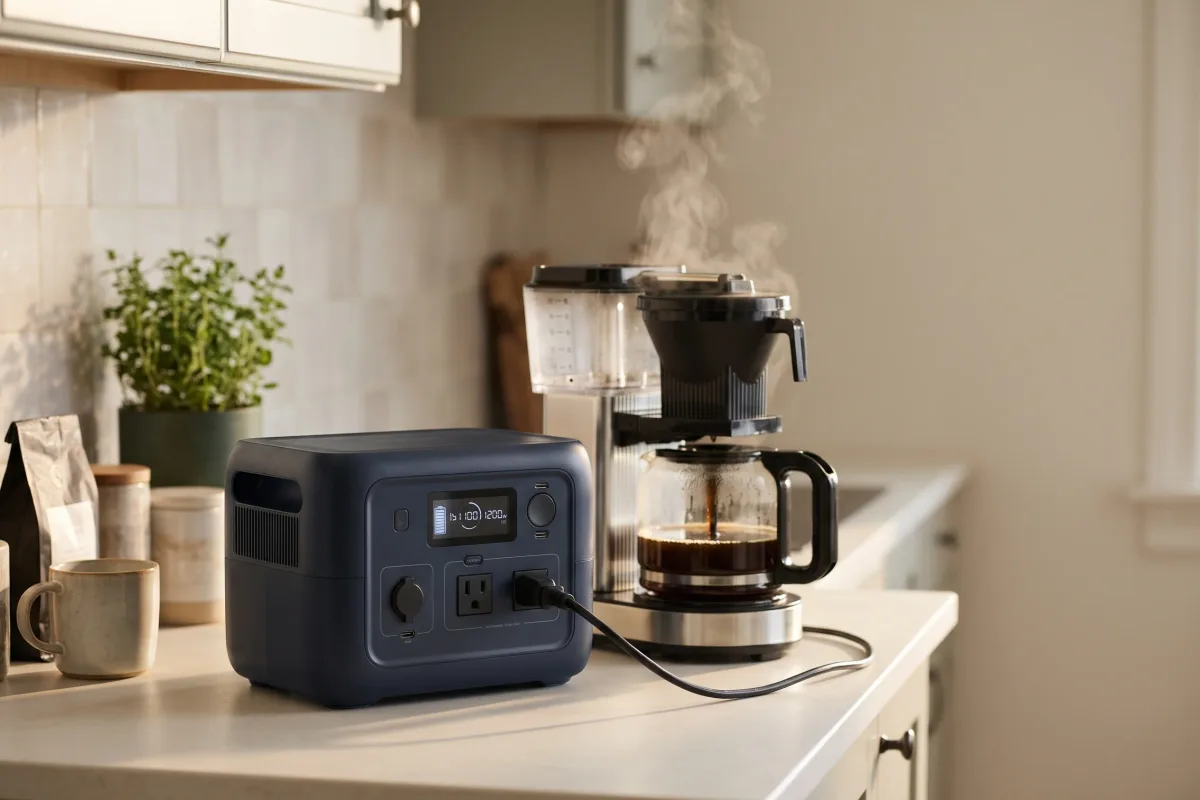
On a power station, the important watt figure is the continuous AC output: the most power its inverter can supply, all the time, to everything plugged in. If the devices you run at the same time add up to more than that, the station will shut off or refuse the load.
You'll also see a surge (or peak) figure. That's a short burst, usually seconds or less, that helps start motors and compressors in fridges, freezers, pumps and power tools. It is not extra continuous capacity.
Watt-hours: energy in the tank
How much energy the battery stores, and why you get a little less
A watt-hour measures energy: power used over time. One watt-hour is one watt for one hour. A 1,000 Wh battery could, in theory, supply:
- 100 W for 10 hours, or
- 10 W for 100 hours, or
- 1,000 W for 1 hour.
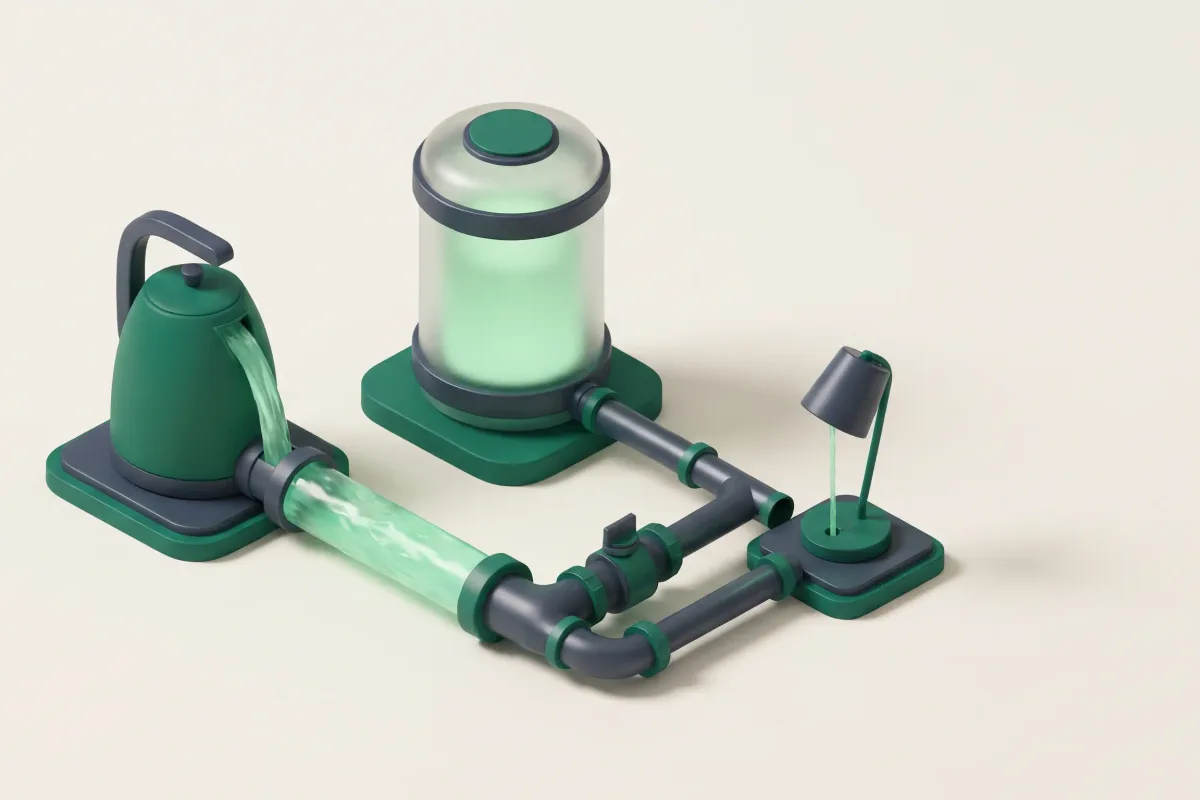
In practice you get less, because some energy is lost converting the battery's DC power to AC and the station uses a little power itself (more on that below). Larger amounts are written in kilowatt-hours: 1 kWh = 1,000 Wh. It's the same unit your electric bill uses.
What each number decides
Match your question to the spec that answers it
| Question you're asking | Number to check | Unit |
|---|---|---|
| Can it run my microwave or kettle? | Continuous AC output | W |
| Can it start my fridge or pump? | Surge (peak) output | W |
| How long will it run my fridge? | Capacity | Wh |
| Will it last a two-day outage? | Capacity (plus recharging) | Wh |
| How fast does it recharge? | AC and solar input | W |
For solar, the input watts decide what size solar panel you need.
Reading a real spec sheet
Three popular stations, side by side
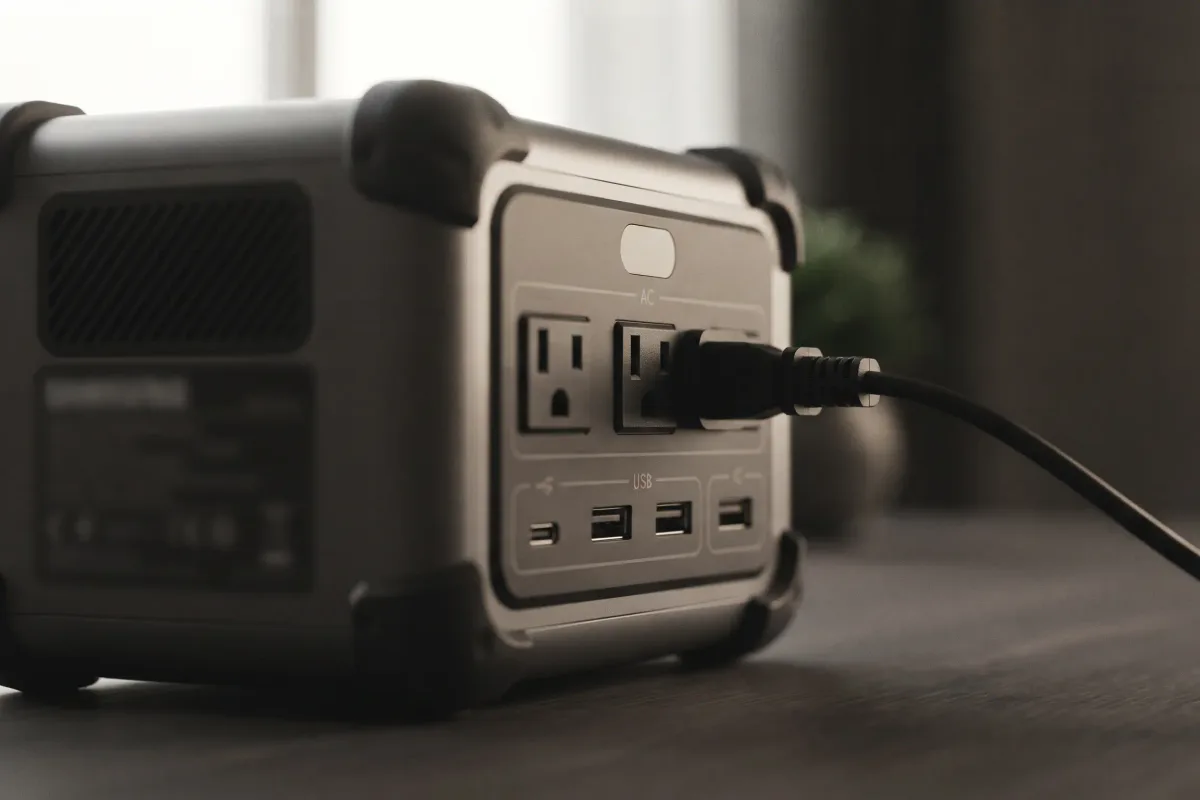
Here are the headline numbers for three popular stations. Notice that two have the same capacity but different output, and one has roughly double both.
| Model | Capacity (Wh) | Continuous AC output (W) | What that means |
|---|---|---|---|
| EcoFlow Delta 3 Plus | 1,024 | 1,800 | One kitchen appliance at a time |
| Anker SOLIX C1000 Gen 2 | 1,024 | 2,000 | Same runtime, more output |
| Bluetti Elite 200 V2 | 2,073.6 | 2,600 | About twice the runtime |
The Delta 3 Plus and C1000 Gen 2 will run the same fridge for about the same time because their watt-hours match. The difference in watts only matters if you need to run more, or bigger, devices at once.
From watt-hours to runtime
One formula, and the losses it accounts for
To estimate how long a station will last:
Runtime (hours) ≈ capacity (Wh) × 0.85 ÷ load (W)
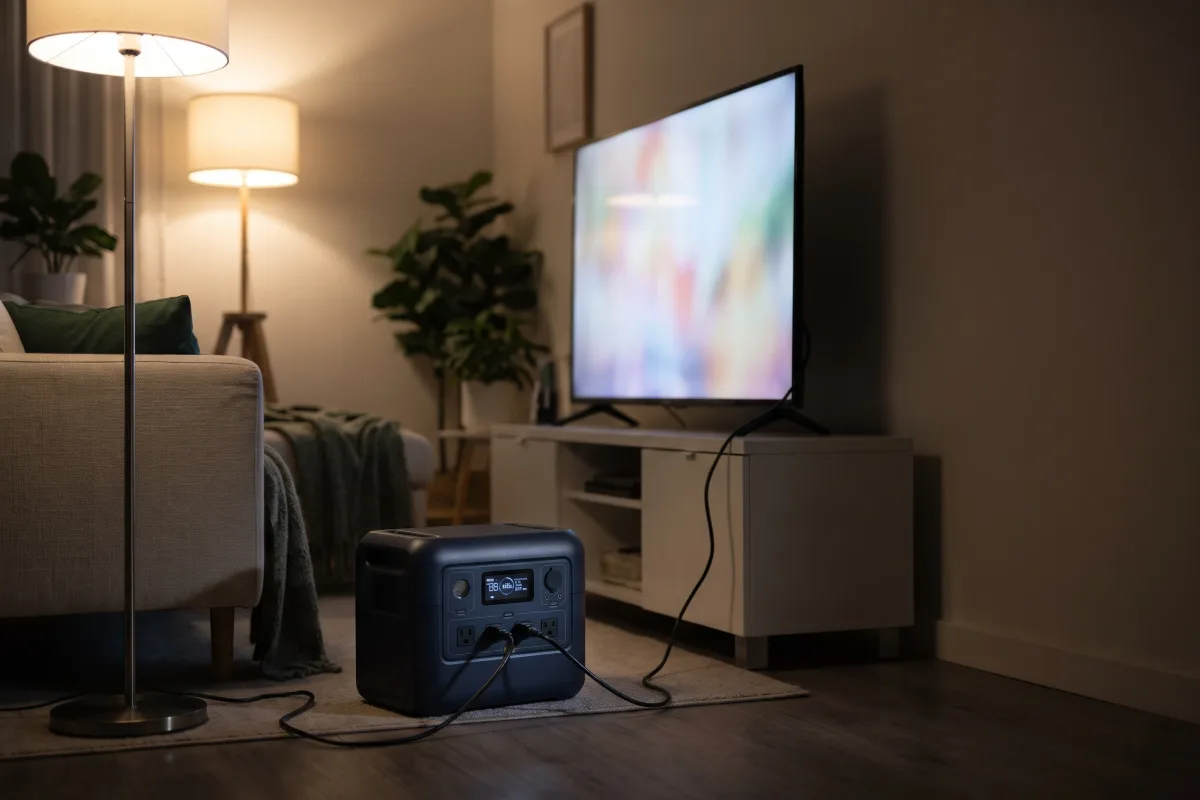
For example, a 1,024 Wh station running a 100 W load: 1,024 × 0.85 ÷ 100 ≈ 8.7 hours.
A 1,024 Wh station at different loads
- 50 W (router + laptop)17 h
- 100 W (TV)8.7 h
- 300 W (several devices)2.9 h
- 1,000 W (microwave)0.9 h
The 0.85 accounts for conversion losses on AC outlets (we use the same figure across the site; see how we test). Devices running from USB or 12 V outlets avoid most of that loss. Fridges and freezers cycle on and off, so use their average watts, not the running watts. For an estimate with your own devices, use our runtime calculator.
Converting amp-hours and mAh to watt-hours
When a battery is rated in Ah or mAh instead of Wh
Some batteries are rated in amp-hours (Ah) or milliamp-hours (mAh) instead of watt-hours. Amp-hours alone don't tell you the energy; you also need the voltage (V).
Watt-hours = amp-hours × volts
- A 12 V, 100 Ah battery: 12 × 100 = 1,200 Wh.
- Jackery lists the current Explorer 1000 v2 battery as 20 Ah at 51.2 V: 20 × 51.2 = 1,024 Wh.
For milliamp-hours, divide by 1,000 first: Wh = mAh ÷ 1,000 × V.
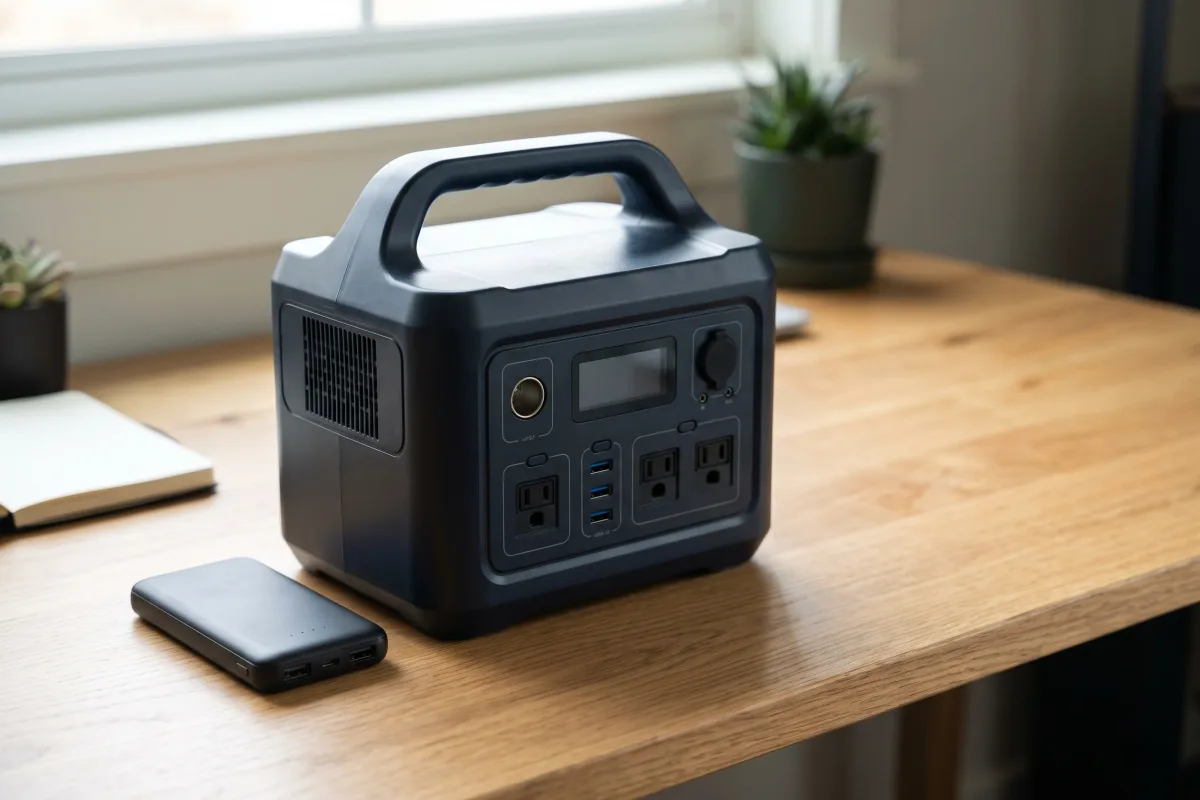
- A power bank rated 20,000 mAh at 3.7 V (a typical lithium cell voltage): 20,000 ÷ 1,000 × 3.7 = 74 Wh. That's why a "20,000 mAh" power bank holds far less energy than a 1,000 Wh power station.
Common spec-sheet traps
Five numbers that are easy to misread
- The number in the name. A "1000" model might be 1,000 W of output, about 1,000 Wh of capacity, or neither. Read the spec sheet.
- Boost modes. Features with names like X-Boost or Power Lifting let some simple heating loads run above the rated output by lowering voltage. They're useful for kettles and heaters, but they're not extra continuous output, and they don't work for every device.
- Surge ≠ continuous. A 3,000 W surge rating doesn't mean the station can run a 3,000 W appliance.
- Rated vs usable capacity. Capacity is the battery's rated energy; you'll get less out of the outlets after conversion losses and the station's own consumption, and a little less again as the battery ages (how fast depends on chemistry: see LiFePO4 vs lithium-ion).
- Input watts. "1,200 W AC input" is about recharging speed, not output.
Ready to choose a station? See The Best Portable Power Stations.
FAQ
Quick answers to common questions
Which matters more, watts or watt-hours?
Both, for different reasons. Watts decide whether a device can run; watt-hours decide how long. Check the watts first (is the station powerful enough?), then pick the watt-hours for the runtime you need.
Can a 1,000 W power station run a 1,500 W appliance?
Not for long. If an appliance draws more than the continuous output, the station will shut off or refuse it. A boost mode may run some simple heating appliances at reduced power.
How long will a 1,000 Wh power station last?
Roughly 1,000 × 0.85 ÷ your load in watts. That's about 8.5 hours at 100 W or 17 hours at 50 W, before allowing for idle draw, cold or battery age.
Is a kilowatt-hour the same as a kilowatt?
No. A kilowatt (kW) is power, 1,000 watts. A kilowatt-hour (kWh) is energy, 1,000 watts for one hour or 1,000 watt-hours.