 By
We may earn a commission if you buy through links on this page, at no extra cost to you. This never affects which products we recommend. How we make money.
On this page 12 sections
The Jackery HomePower 2000 Plus v2 is the best 2000Wh portable power station for most people: 2,048 Wh, 2,400 W, a 10 ms switchover and expansion to about 12 kWh per unit with Jackery's listed battery packs, for a 7.8/10 rating, the highest of the 2 kWh stations we've reviewed.
For an RV, the Anker SOLIX C2000 Gen 2 adds a TT-30 outlet. For the most output, the Bluetti Elite 200 V2 gives 2,600 W and takes 1,000 W of solar. The Anker SOLIX S2000 is the lightest at 35.7 lb.
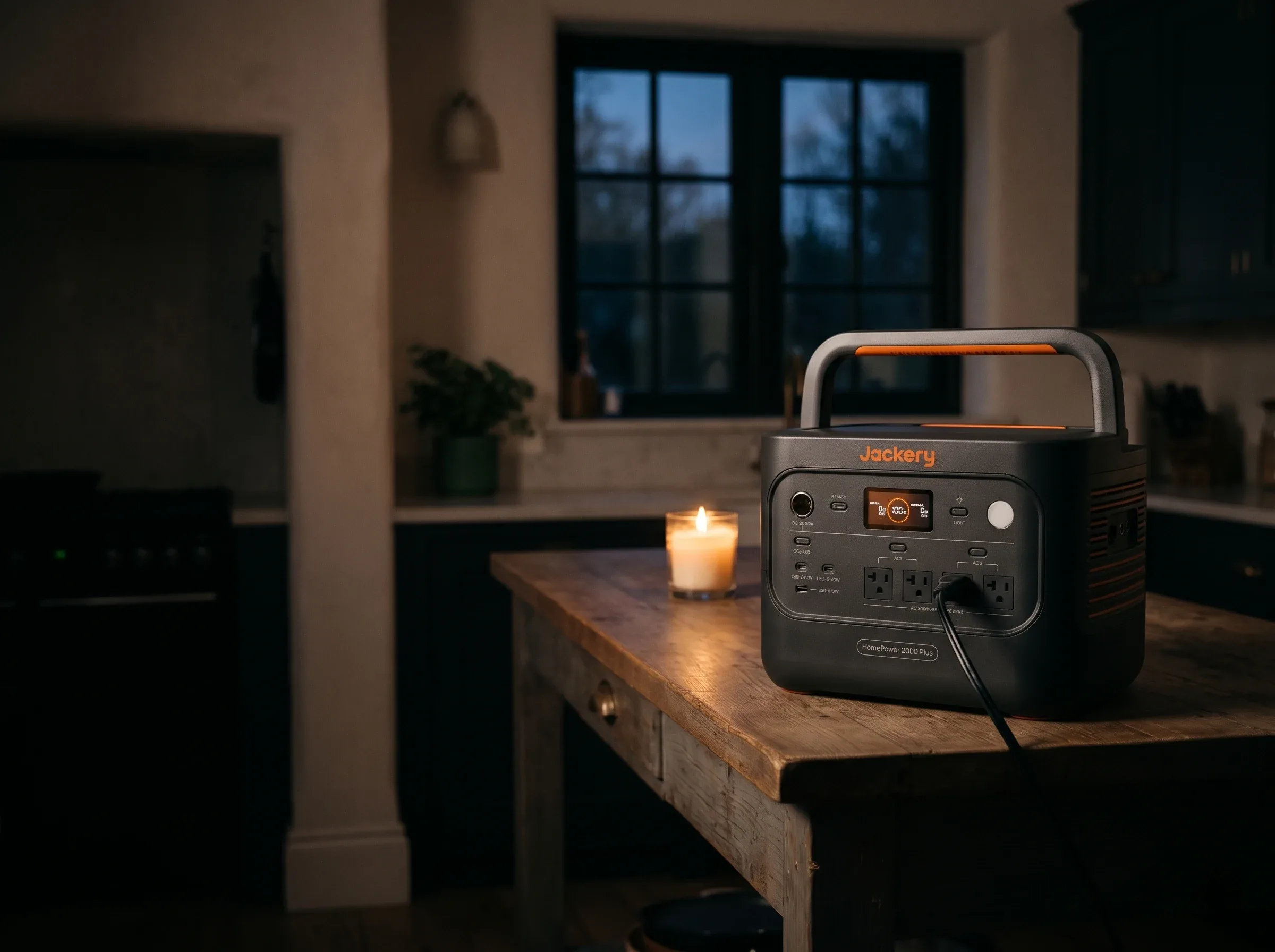
- Capacity
- 2,048 Wh
- AC output
- 2,400 W
- Wall charge
- About 1.5 hours
- Weight
- 41.5 lb
Best for RVs
TT-30 outlet, 2,400 W, 5-year warranty
2,048 Wh2,400 W41.7 lb
Most output
2,600 W continuous and 1,000 W solar input
2,074 Wh2,600 W53.4 lb
Lightest 2 kWh
2,010 Wh at 35.7 lb
2,010 Wh1,500 W35.7 lb
| Spec | Jackery HomePower 2000 Plus v2 | Anker SOLIX C2000 Gen 2 | Bluetti Elite 200 V2 | Anker SOLIX S2000 |
|---|---|---|---|---|
| Capacity (Wh) | 2048 | 2048 | 2073.6 | 2010 |
| AC output, continuous (W) | 2400 | 2400 | 2600 | 1500 |
| AC charge time | About 1.5 hours (Emergency Charging mode) | 100% in 88 min at 1,800 W | ~1.4 h (80% in ~1 h) | About 2.3 h at 1,150 W (1,600 W UltraFast via app) |
| Max solar input (W) | 800 | 800 | 1000 | 400 |
| Weight (lb) | 41.5 | 41.7 | 53.4 | 35.7 |
| Warranty (years) | 3 + 2 with registration | 5 | 5 | 5 |
| Price | Check price | Check price | Check price | Check price |
- Capacity
- 2,048 Wh
- AC output
- 2,400 W
- Wall charge
- About 1.5 hours
- Solar input
- 800 W
- Weight
- 41.5 lb
- Warranty
- 3 + 2 years
- Capacity
- 2,048 Wh
- AC output
- 2,400 W
- Wall charge
- 100% in 88 min at 1,800 W
- Solar input
- 800 W
- Weight
- 41.7 lb
- Warranty
- 5 years
- Capacity
- 2,074 Wh
- AC output
- 2,600 W
- Wall charge
- ~1.4 h
- Solar input
- 1,000 W
- Weight
- 53.4 lb
- Warranty
- 5 years
- Capacity
- 2,010 Wh
- AC output
- 1,500 W
- Wall charge
- About 2.3 h at 1,150 W
- Solar input
- 400 W
- Weight
- 35.7 lb
- Warranty
- 5 years
"2000Wh" is energy: about 2 kWh stored in the battery, which decides how long things run. A "2000W" station is something else. Watts are output, the most it can power at once, which decides what it can run.
The two often travel together but not always. The four stations here hold 2,010 to 2,074 Wh, yet their continuous output runs from 1,500 W (S2000) to 2,600 W (Elite 200 V2). Check both numbers against your appliances. If the units are new to you, read watts vs watt-hours first.
Best overall: Jackery HomePower 2000 Plus v2
It rates 7.8, the highest of the 2 kWh stations we've reviewed, and it's the only one of the four that expands past about 4 kWh.
Best overall: Jackery HomePower 2000 Plus v2
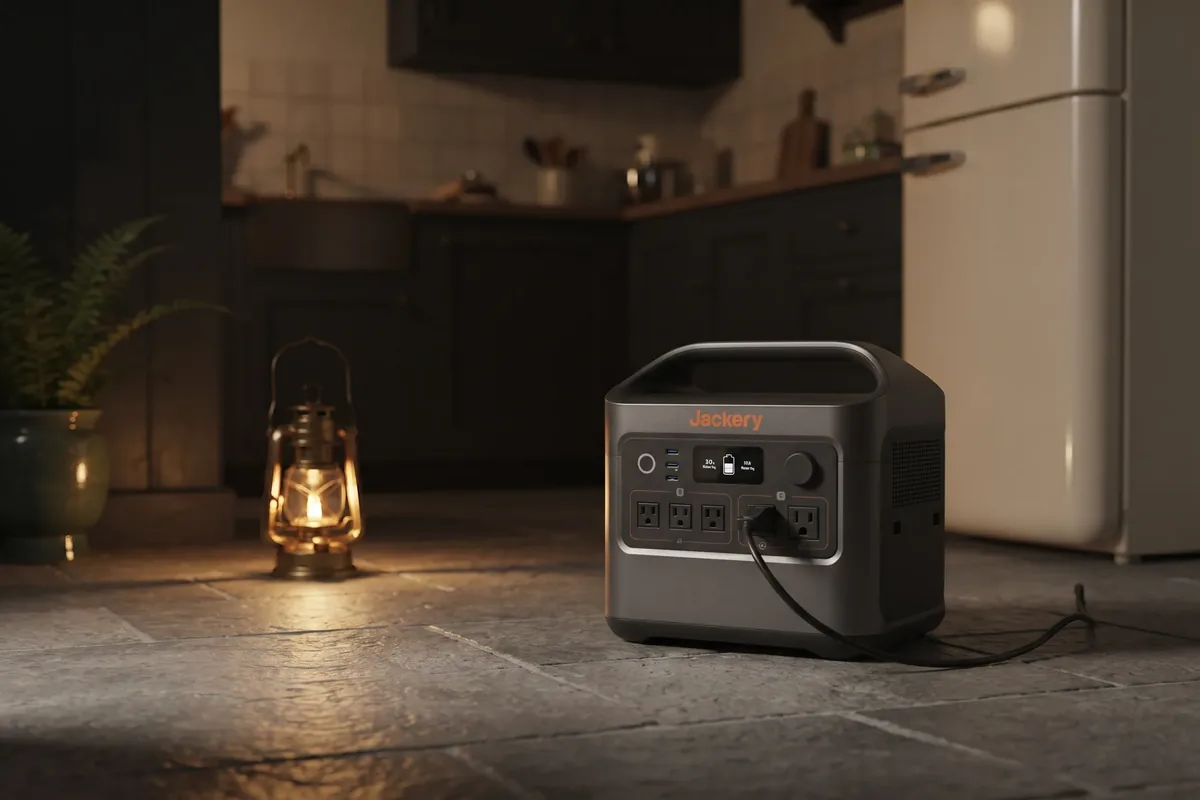
- Capacity
- 2,048 Wh
- AC output
- 2,400 W
- Wall charge
- About 1.5 hours
- Weight
- 41.5 lb
The HomePower 2000 Plus v2 scores full marks in our method for switchover, expansion and battery life, and near the top for weight per watt-hour (about 49 Wh per lb). Its weaker scores are solar input (800 W) and output (2,400 W), where the Elite 200 V2 leads. That balance makes it the 2 kWh station to buy for home backup that may grow.
- Output: its four 120 V outlets give 2,400 W, with 4,800 W of surge for a fridge or sump pump starting.
- Switchover: 10 ms in bypass mode. Jackery says it doesn't support 0 ms switching, so it isn't meant for servers or workstations. The bypass passes up to 1,800 W from the wall.
- Expansion: up to five Battery Pack 2000 Plus v2 (2,048 Wh each) take one unit to 12,288 Wh. The older Battery Pack 2000 Plus doesn't fit.
- Battery and noise: Jackery rates the battery to 6,000 cycles to 70% or more, and lists 30 dB.
The app adds a time-of-use mode and an Emergency Charging mode that Jackery doesn't recommend for regular use.
The Bluetti Apex 300 rates higher (8.7), but it holds 2,764.8 Wh and weighs 83.8 lb, twice the Jackery's weight; it's a step-up, covered below. For whole-day backup at home, see the best portable power stations for home backup, where it's the full-day pick.
Best for
Home backup you can expand later.
Skip if
You need 240 V or a TT-30 outlet.
Pros
- 2,400 W continuous, 4,800 W surge
- 10 ms UPS switchover
- Expands to about 12 kWh with five Battery Pack 2000 Plus v2
- Jackery quotes about 1.5 hours from the wall (Emergency Charging mode)
- 41.5 lb, 12 V car outlet and a 140 W USB-C port
Cons
- 800 W solar input
- Cycles rated to 70%, not 80%
- Warranty is 3 years, plus 2 with registration
- 120 V only
Check price on AmazonRead our Jackery HomePower 2000 Plus v2 full review
Best for RVs: Anker SOLIX C2000 Gen 2
It's the only one of the four with a TT-30 outlet, so a travel trailer's 30-amp cord plugs straight in, up to 2,400 W.
Best for RVs: Anker SOLIX C2000 Gen 2
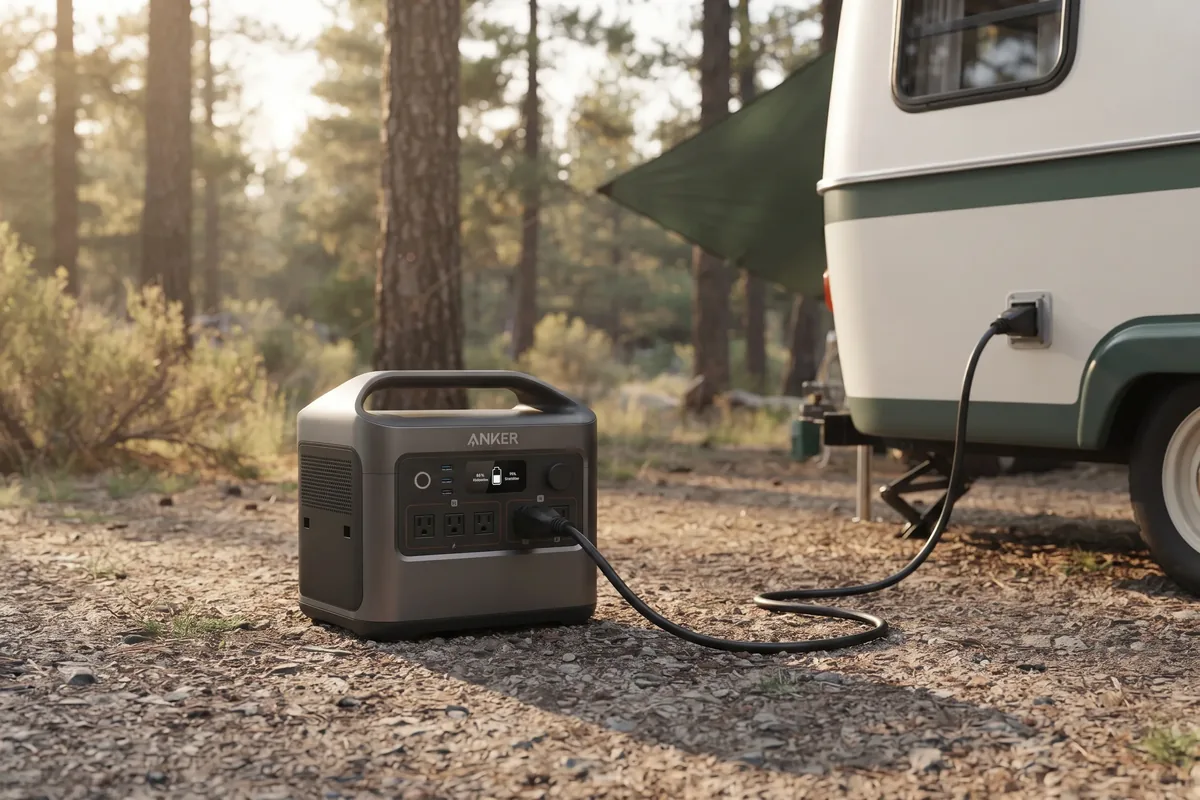
- Capacity
- 2,048 Wh
- AC output
- 2,400 W
- Wall charge
- 100% in 88 min
- Weight
- 41.7 lb
A TT-30 outlet is the RV plug: the 30-amp, 120 V socket on a campground pedestal. With it, the C2000 Gen 2 powers a trailer's whole panel through its own cord, with no adapter. Anker rates it at 120 V 20 A, 2,400 W, so the station's limit sets what you can run, not the plug's 30 A. It rates 7.5, second of the four, level with the Jackery on charging, output, solar and switchover but behind it on expansion.
For travel, three charging paths matter:
- Wall: Anker quotes 88 minutes at 1,800 W.
- Solar: 800 W on one XT60i input at 11 to 60 V. Anker quotes about 3 hours.
- Tow vehicle: 100 W from a car socket, or 800 W with Anker's alternator charger, which Anker quotes at about 3 hours.
Anker names one BP2000 (Gen 2) battery to reach about 4 kWh. It's rated to charge at 32 to 104°F and run at −4 to 104°F, and lists 30 dB under 1,000 W.
The Jackery HomePower 2000 Plus v2 rates higher (7.8), but it has no TT-30 outlet. For bigger rigs, the Bluetti Apex 300 (8.7) adds a NEMA 14-50 outlet for 50-amp motorhomes; see the best portable power stations for RVs.
Best for
Travel trailers and boondocking weekends.
Skip if
You want more than about 4 kWh in total.
Pros
- TT-30R outlet plus NEMA 5-20R outlets
- Anker quotes 88 minutes from the wall at 1,800 W, 58 minutes with AC + solar
- 10 ms UPS switchover
- 4,000 cycles to 80%, 5-year warranty
- Charges at up to 800 W from Anker's alternator charger
Cons
- Expands only to about 4 kWh
- 800 W solar on one input
- 41.7 lb
Check price on AmazonRead our Anker SOLIX C2000 Gen 2 full review
Most output: Bluetti Elite 200 V2
Its 2,600 W continuous and 1,000 W solar input are both the most of the four, but it weighs 53.4 lb and can't expand.
Most output: Bluetti Elite 200 V2
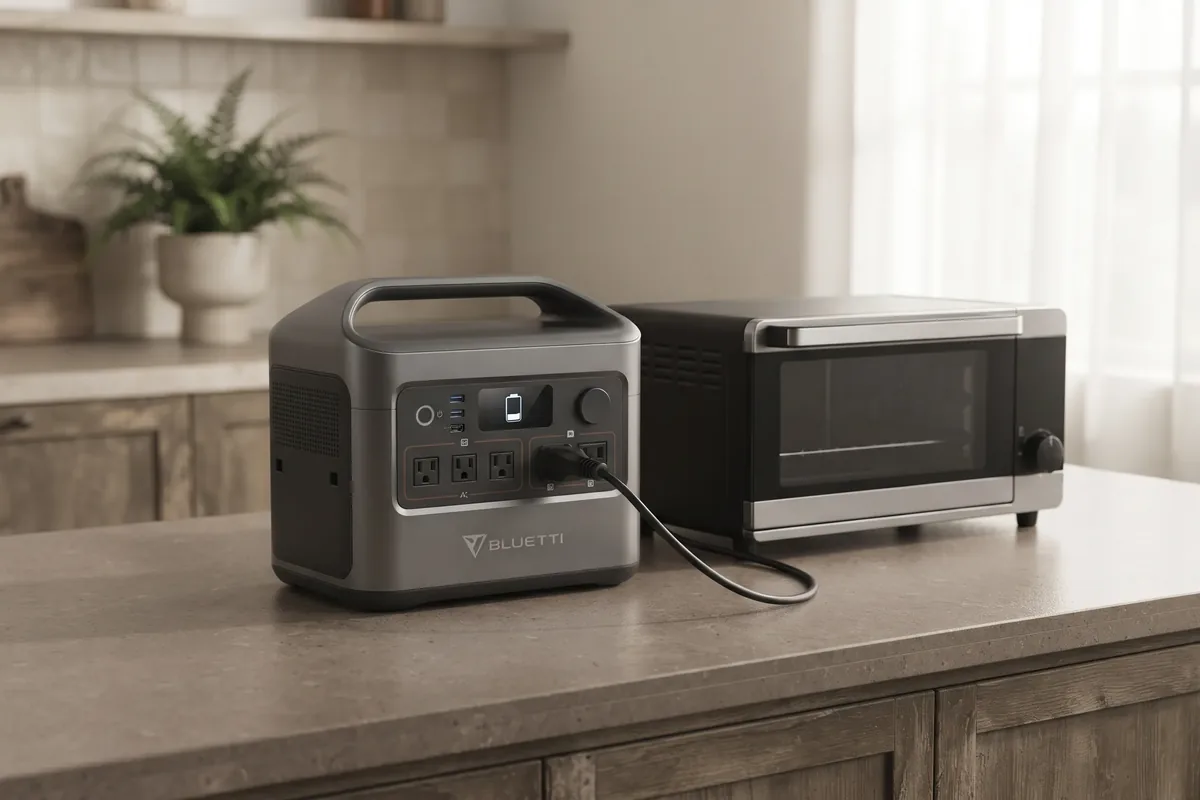
- Capacity
- 2,074 Wh
- AC output
- 2,600 W
- Wall charge
- ~1.4 h
- Weight
- 53.4 lb
The Elite 200 V2 gives 200 W more than the Jackery and C2000 and 1,100 W more than the S2000, and it takes 1,000 W of solar, 200 W more than either of those two. By our estimate that refills it in about 2.8 hours of strong sun at full input; Bluetti quotes about 2.4 hours at a steady 1,000 W.
It rates 6.4 because our method weighs it as a whole:
- Highest of the four: output (7.3) and solar (4.7).
- Lower scores: zero on expansion, 6.3 on weight per watt-hour (about 39 Wh per lb) and 8 on switchover, since Bluetti lists up to 15 ms rather than 10.
Turbo charging at 1,800 W has to be switched on by Bluetti support. The default is 1,440 W, about 1.6 hours. Bluetti doesn't publish a surge figure. Its Power Lifting mode, up to 3,900 W, runs resistive loads such as kettles at reduced power and isn't a surge rating.
Bluetti lists 16 dB at low loads and about 10 W of self-consumption, and its ECO mode should be off for fridges and lights.
Of the 2 to 3 kWh stations we've reviewed, four rate higher: the Jackery and C2000 give less output, and the Apex 300 (3,840 W) and F3000 (3,600 W) are step-ups of over 83 lb. For tool loads, see using a power station for power tools.
Best for
High-draw kitchen and tool loads, and big solar arrays.
Skip if
You carry it far or want to add batteries later.
Pros
- 2,600 W continuous
- 1,000 W solar input (12 to 60 V)
- Bluetti quotes 80% in about 1 hour, full in about 1.4 hours (Turbo)
- 12 V/10 A car outlet
- 5-year warranty
Cons
- 53.4 lb, the heaviest of the four
- Not expandable
- Up to 15 ms switchover
- 3,000+ cycles to 80%
- No published surge figure
Check price on AmazonRead our Bluetti Elite 200 V2 full review
Lightest 2 kWh: Anker SOLIX S2000
At 35.7 lb it's the lightest station of about 2 kWh or more we've reviewed, but it rates 4.6, held back by 1,500 W output, 400 W solar and no expansion.
Lightest 2 kWh: Anker SOLIX S2000
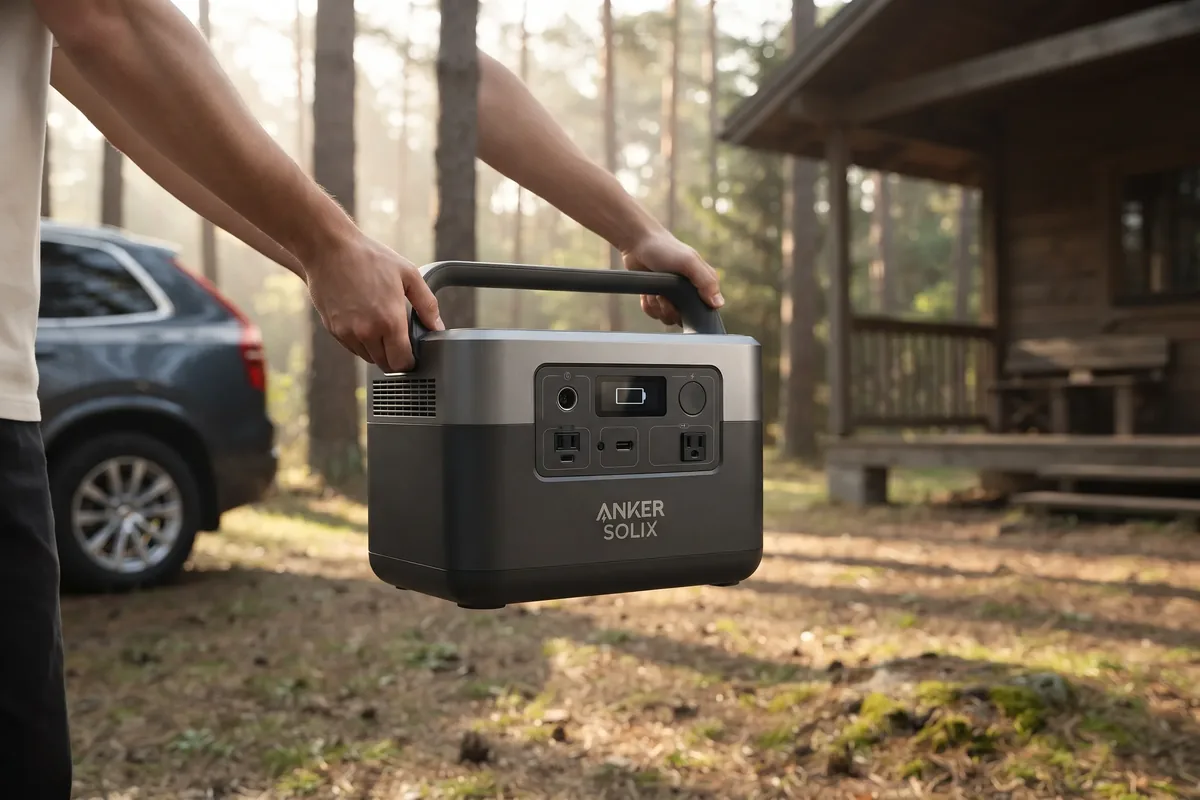
- Capacity
- 2,010 Wh
- AC output
- 1,500 W
- Wall charge
- About 2.3 h
- Weight
- 35.7 lb
The S2000 is 5.8 lb lighter than the Jackery and 17.7 lb lighter than the Elite 200 V2 for nearly the same energy. It's also the smallest of the four at 8.2 × 11.1 × 12.7 in. Anker rates it to 6,000 cycles to 80%, the most of the four to that end point.
Its rating comes from three zero scores in our method: AC output (1,500 W is low for its class), solar input (400 W) and expansion (none).
Its wall charging scores 3, because the default input is 1,150 W. Anker quotes about 2.3 hours, and its UltraFast mode in the app raises the input to 1,600 W. It scores full marks on switchover, weight and battery life.
In use, 1,500 W rules out many kettles and microwaves, and with no 12 V port a CPAP or 12 V cooler has to run on AC with inverter losses.
No station of about 2 kWh or more that we've reviewed weighs less; the next lightest, the Jackery, rates higher (7.8) but weighs 41.5 lb. If weight matters but you don't need 2 kWh, the best 1000Wh portable power stations weigh 23.8 to 35.3 lb.
Best for
Moving a full day of fridge backup between rooms or into a car.
Skip if
You run anything over 1,500 W or a 12 V CPAP.
Pros
- 35.7 lb for 2,010 Wh
- 6,000 cycles to 80%
- 10 ms UPS switchover
- 6 W idle draw
- Five AC outlets, 5-year warranty
Cons
- Rated 4.6/10
- 1,500 W continuous
- 400 W solar input
- No 12 V DC port
- Not expandable
2000Wh runtimes by appliance: a fridge for about 23 hours
On AC, a 2,048 Wh station keeps a 67 W fridge cold for about a full day, and a 12 V CPAP runs for about a week of nights on DC.
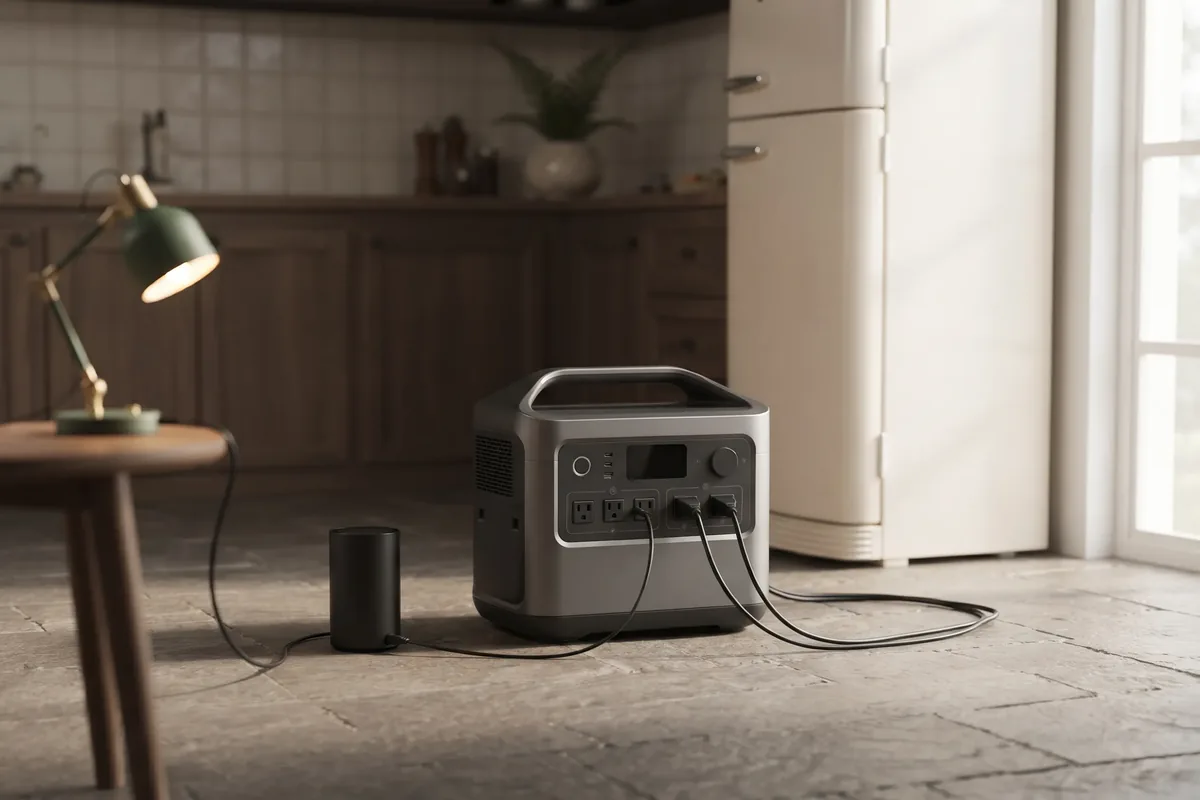
Our estimates use the runtime calculator method:
- On AC: the inverter loses about 15%, and the station draws about 10 W for itself while AC is on.
- On DC (a 12 V car outlet): about 8% is lost.
Anker publishes 6 W for the S2000, so we use that for it. The "day of essentials" row is a fridge and router all day, four LED lights (40 W) for 5 hours and phone charging (15 W) for 3 hours: about 2,140 Wh at the plug over 24 hours.
| Load | 2,048 Wh (Jackery, Anker C2000) | 2,073.6 Wh (Elite 200 V2) | 2,010 Wh (S2000) |
|---|---|---|---|
| Fridge, 67 W average | About 23 hours | About 23 hours | About 24 hours |
| Fridge + chest freezer, 107 W | About 15 hours | About 15 hours | About 15 hours |
| CPAP, 11 W (12 V DC) | About 171 hours | About 173 hours | No 12 V port |
| CPAP, 56 W with humidifier | About 27 hours | About 27 hours | About 28 hours |
| Wi-Fi router, 12 W | About 85 hours | About 86 hours | About 100 hours |
| Day of essentials | About 18 hours | About 18 hours | About 18 hours |
| 1,500 W space heater | About 69 minutes | About 70 minutes | About 68 minutes |
Three things follow from the table:
- About one day for a fridge. A 2 kWh station gets a fridge through about one day, or a fridge and freezer through a night and most of the next morning. For longer outages you need solar, expansion or a bigger station.
- Small loads show the station's own draw. The S2000 holds the least energy but runs a router longest, because Anker lists 6 W of idle draw.
- High-draw loads empty any 2 kWh battery in about an hour.
On the S2000 a CPAP runs on AC instead (about 106 hours at 11 W), since it has no 12 V outlet. Fridges cycle, so real runtimes vary. See how long a power station runs a refrigerator and how long it runs a CPAP.
What a 2000 W station can run is set by its output, not its capacity: anything whose label says 2,000 W or less, including most microwaves, kettles, coffee makers, space heaters on high and a window air conditioner. Motors and compressors also need surge headroom; see surge vs continuous watts and what a power station can run in an outage.
How we chose the 2 kWh picks: four stations from 2,010 to 2,074 Wh
All four sit in our Large band (2 to 3 kWh) and are rated out of 10 from published specs against every station in that band.
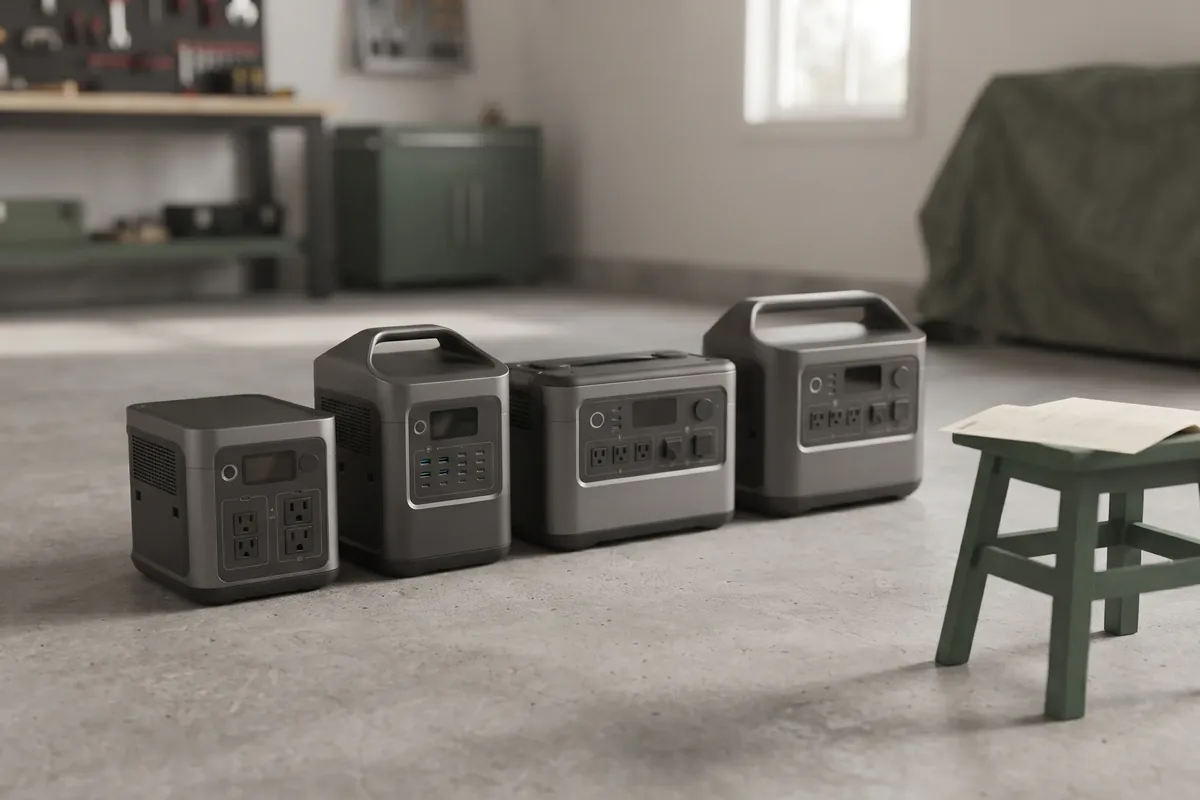
We picked from the four stations of 2,010 to 2,074 Wh we've reviewed in full. Each has an OffGrid Current rating computed from its specs in seven areas: wall charging speed, AC output, solar input, UPS switchover, weight per watt-hour, expansion and battery life. The weights are on how we test.
The Large band runs from 2 to 3 kWh, so these four are scored against bigger stations too, like the Bluetti Apex 300 and Anker SOLIX F3000. We haven't tested these units hands-on, and we don't rank by price.
Each pick wins one role on a fact we checked against every 2 kWh station we've reviewed: the best rating, the only TT-30 outlet, the most output or the lowest weight (the S2000 is also lighter than any bigger station we've reviewed). That's why two picks rate well below the others.
The Elite 200 V2 (6.4) and S2000 (4.6) each do something the higher-rated pair doesn't.
For a general guide to sizing and features, see how to choose a portable power station.
Every 2 kWh station we've reviewed, side by side
Four stations from 2,010 to 2,074 Wh, rated from 4.6 to 7.8, all LiFePO4.
| Station | Output | Weight | Expands to | Rating |
|---|---|---|---|---|
| Jackery HomePower 2000 Plus v2 | 2,400 W | 41.5 lb | 12,288 Wh | 7.8 |
| Anker SOLIX C2000 Gen 2 | 2,400 W | 41.7 lb | About 4 kWh | 7.5 |
| Bluetti Elite 200 V2 | 2,600 W | 53.4 lb | No | 6.4 |
| Anker SOLIX S2000 | 1,500 W | 35.7 lb | No | 4.6 |
Switchover: 10 ms on the Jackery and both Ankers, up to 15 ms on the Bluetti. Battery life: 6,000 cycles to 80% on the S2000, 6,000 to 70% on the Jackery, 4,000 to 80% on the C2000 and 3,000+ to 80% on the Elite 200 V2. Warranty: 5 years on all but the Jackery (3 years, plus 2 with registration).
Charging a 2000Wh station: wall times and solar refills
From the wall the makers quote about 1.4 to 2.3 hours to full; from solar, the Elite 200 V2 refills fastest, in about 2.8 hours at full input by our estimate.
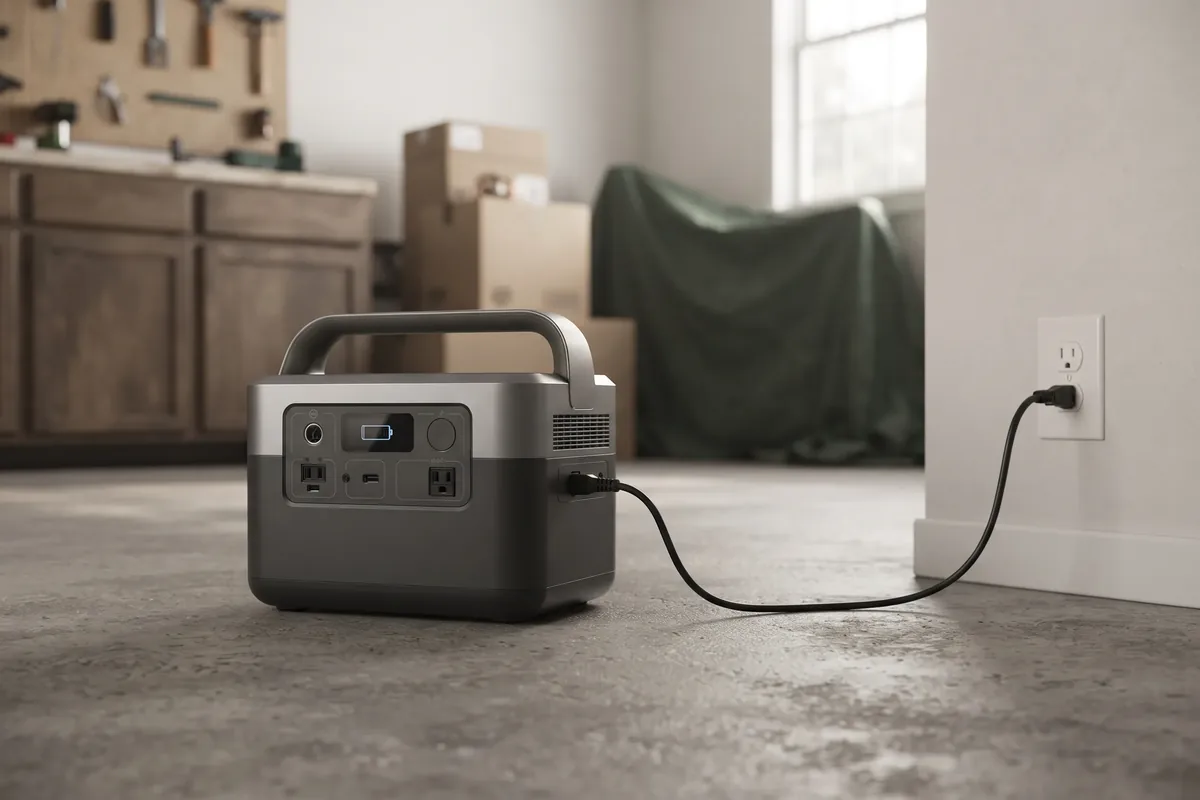
From the wall, by each maker's figure:
- Jackery quotes about 1.5 hours for the HomePower 2000 Plus v2 in Emergency Charging mode (1,800 W input).
- Anker quotes 88 minutes for the C2000 Gen 2 at 1,800 W, and 58 minutes with wall and solar together.
- Bluetti quotes about 1 hour to 80% and 1.4 hours to full for the Elite 200 V2 in Turbo mode, and about 1.6 hours at the default 1,440 W.
- Anker quotes about 2.3 hours for the S2000 at its default 1,150 W; UltraFast mode raises the input to 1,600 W.
From solar, our estimates assume panels give about 75% of their rating in strong sun:
| Station | Max solar input | Full refill at max input |
|---|---|---|
| Jackery HomePower 2000 Plus v2 | 800 W | About 3.4 hours |
| Anker SOLIX C2000 Gen 2 | 800 W | About 3.4 hours |
| Bluetti Elite 200 V2 | 1,000 W | About 2.8 hours |
| Anker SOLIX S2000 | 400 W | About 6.7 hours |
The makers' own solar figures are a little faster, since they assume full panel output:
- Jackery quotes about 3.2 hours at 800 W.
- Anker quotes about 3 hours for the C2000 Gen 2, and 3 to 4 hours for the S2000 to go from 20% to 80% with a 400 W panel.
- Bluetti quotes about 2.4 hours at 1,000 W.
With a single 200 W panel, a 2,048 Wh station needs about 13.7 hours of strong sun by our estimate, more than one day.
Check each station's voltage window before wiring panels in series:
- Jackery: 16 to 60 V.
- Anker C2000: 11 to 60 V.
- Bluetti: 12 to 60 V.
- Anker S2000: Anker says its panels should be wired in parallel to stay under 60 V.
What to look for in a 2000Wh station: output, switchover and expansion
At 2 kWh the capacity is nearly the same across the class, so output, voltage, switchover, expansion and weight decide the fit.
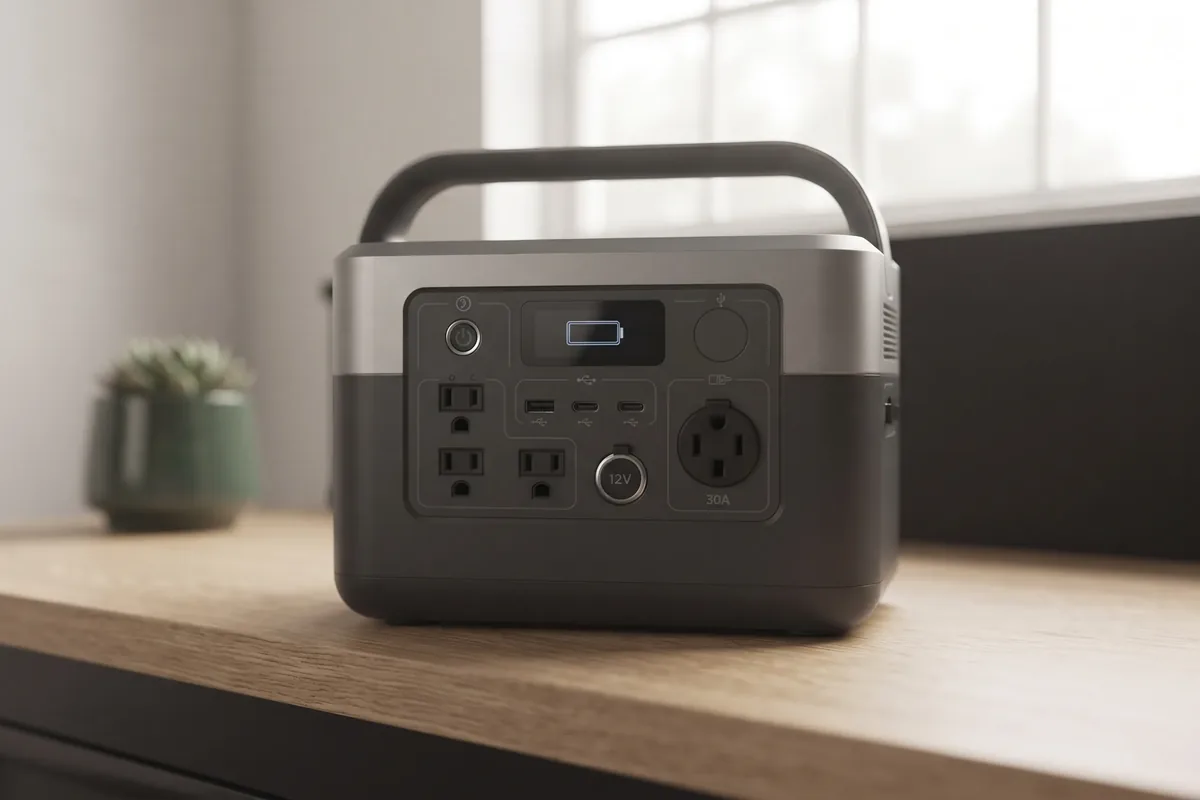
- Output, and no 240 V: continuous output here runs from 1,500 W to 2,600 W, all at 120 V. None of the four powers a 240 V well pump, dryer or central air. For home circuits, a transfer switch and a station with 240 V output (like the Apex 300) is the route.
- Surge: the Jackery lists 4,800 W, the C2000 4,000 W and the S2000 3,000 W; Bluetti publishes none. See surge vs continuous watts.
- Switchover: 10 ms on three of the four, up to 15 ms on the Elite 200 V2. None is a 0 ms UPS, and the Jackery and Bluetti manuals say not to run servers or workstations on them. See using a power station as a UPS.
- Cycles and end point: all four use LiFePO4. Compare the end point as well as the count: 6,000 cycles to 80% (S2000) leaves more capacity than 6,000 to 70% (Jackery). See LiFePO4 vs lithium-ion.
- Expansion, per unit: the Jackery takes up to five 2,048 Wh packs, to 12,288 Wh. The C2000 Gen 2 takes one BP2000 (Gen 2), to about 4 kWh. The Elite 200 V2 and S2000 don't expand.
- Weight: 35.7 lb to 53.4 lb. The S2000 carries about 56 Wh per pound, the Jackery and C2000 about 49 and the Elite 200 V2 about 39.
- 12 V DC for a CPAP or cooler: the Jackery, C2000 and Elite 200 V2 each have a 12 V car outlet rated at 10 A. The S2000 has none.
- RV outlets: only the C2000 Gen 2 has a TT-30 outlet. For a 30 A 12 V DC output, step up to the Bluetti Elite 300 (12 V/30 A port) or the Anker SOLIX F3000 (Anderson 30 A).
- USB-C: the C2000 Gen 2 has two 140 W ports and a 15 W, the HomePower 2000 Plus v2 a 140 W and a 30 W, the Elite 200 V2 two 100 W and the S2000 a 100 W and a 15 W.
- Noise: Jackery and Anker list 30 dB for their 2 kWh stations; Bluetti gives 16 dB at low loads, rising to about 50 dB when the Elite 200 V2 works hardest.
2000Wh vs 1000Wh vs 3000Wh: choosing a size
A 1 kWh station covers a fridge for about half a day, 2 kWh for about a day, and 3 kWh or more for a day and a half or longer.
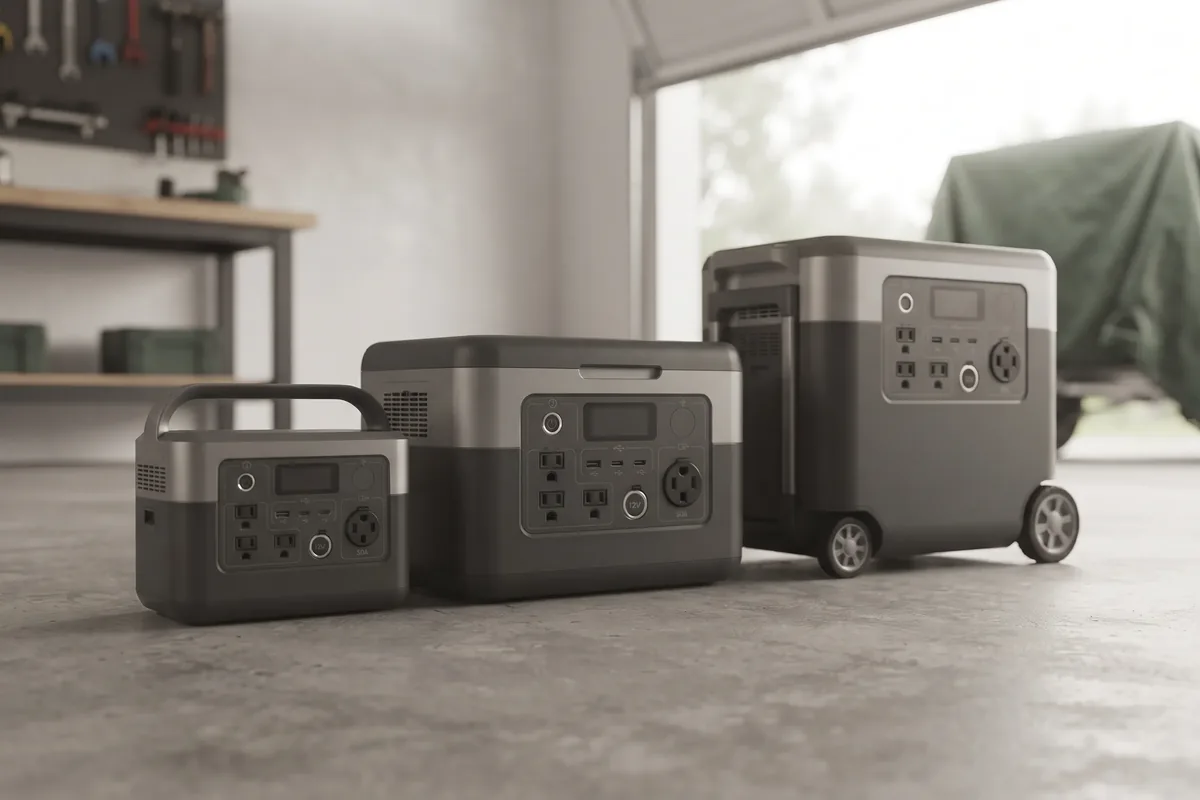
Work from the load and the hours. A fridge and router together draw about 79 W; by our method a 1,024 Wh station covers them for about 10 hours, a 2,048 Wh station about 20 hours and a 3,072 Wh station about 30 hours.
- 1 kWh (about 24 to 35 lb): a short outage, a weekend of camping or a CPAP for several nights. See the best 1000Wh portable power stations.
- 2 kWh (about 36 to 53 lb): a full day of fridge and essentials, an RV weekend, or 2,400 W kitchen loads. This is the guide above.
- About 3 kWh (58 to 92 lb among those we've reviewed): the Bluetti Elite 300 (3,014.4 Wh), the Bluetti Apex 300 (2,764.8 Wh, 120/240 V) and the Anker SOLIX F3000 (3,072 Wh, 3,600 W). Each weighs more than any 2 kWh station here.
- 3.5 kWh and up: multi-day outages and 240 V home circuits through a transfer switch. See the best whole-home battery backup.
An expandable 2 kWh station sits between these: the Jackery reaches 12,288 Wh with packs you can add one at a time and move separately. For picks across every size and use, see the best portable power stations, and for trips, the best portable power stations for camping.
Also considered: three step-ups and one near-2 kWh station
The Bluetti Apex 300 rates 8.7, higher than any 2 kWh pick, but it weighs 83.8 lb; the GRECELL H2400 holds 1,843 Wh and rates 5.8.
| Model | Capacity | Why it missed a pick |
|---|---|---|
| Bluetti Apex 3002,765 Wh | 2,765 Wh | 2,764.8 Wh, 3,840 W at 120 and 240 V, up to 2,400 W of solar, TT-30 and NEMA 14-50 outlets, rated 8.7. It expands to 19,353.6 Wh per unit with six B300K batteries. At 83.8 lb, with no built-in USB or 12 V outlets (they need Bluetti's Hub D1), it's a home and RV system rather than a 2 kWh station you carry. |
| Anker SOLIX F30003,072 Wh | 3,072 Wh | 3,072 Wh and 3,600 W with a TT-30 outlet, 2,400 W of solar input and expansion to 12,288 Wh per unit with three BP3000 batteries, rated 7.4. It weighs 91.5 lb on wheels, switches over in 20 ms and is 120 V only. |
| Bluetti Elite 3003,014 Wh | 3,014 Wh | 3,014.4 Wh and 2,400 W with a TT-30 outlet, a 12 V/30 A DC port and 1,200 W solar, rated 6.2. It weighs 57.98 lb and doesn't expand. Pick it if you need 30 A of 12 V DC, which none of the four 2 kWh stations offers. |
| GRECELL H24001,843 Wh | 1,843 Wh | 1,843 Wh, 2,400 W and 4,800 W surge, rated 5.8. It weighs 55 lb, has a 2-year warranty and doesn't expand; it sits in our Mid-size band, just under 2 kWh. |
FAQ
Runtimes, budget picks, brands, flights and solar for 2 kWh stations, answered from our data.
How long will a 2000 watt power station run?
It depends on the load and the capacity, not the watts. By our method a 2,048 Wh station runs a 67 W fridge for about 23 hours, a fridge and chest freezer for about 15 hours, a 56 W CPAP with humidifier for about 27 hours and a 1,500 W heater for about 69 minutes.
Divide the capacity by your load in watts, after adding about 15% for inverter loss on AC and about 10 W for the station's own draw. Try your own loads in the runtime calculator.
What can a 2000W power station run?
Anything whose label says 2,000 W or less, one at a time or added together: a fridge, microwave, coffee maker, kettle, space heater, window air conditioner or most power tools. Motors and compressors start at two to four times their running watts, so check the surge rating too. Three of the four stations here give 2,400 W or more; the S2000 gives 1,500 W.
What is the best budget 2000W power station?
We don't compare prices, so we can't name the cheapest.
If you want our top pick's core specs without paying for expansion you may not use, the Anker SOLIX C2000 Gen 2 (7.5) gives the same 2,048 Wh, 2,400 W, 1,800 W wall input and 10 ms switchover as our top pick, with a 5-year warranty. Its main trade-off is expansion, to about 4 kWh instead of about 12 kWh.
See the best budget portable power stations for smaller options.
What is the most reliable portable power station brand?
We rate specs, not failure rates, so we can't rank brands on reliability. What we can compare is battery life and warranty. All four 2 kWh stations use LiFePO4. Anker rates the S2000 to 6,000 cycles to 80% and gives 5 years on both its models. Bluetti also gives 5 years. Jackery gives 3 years plus 2 with registration.
Check recalls before you buy any model.
Is 2000Wh enough for home backup?
For a fridge, router, lights and phones, yes, for about 18 hours by our estimate. For a multi-day outage, add solar or batteries: the Jackery expands to 12,288 Wh. For 240 V circuits, step up to a station with 240 V output.
How many years will a 2000Wh power station last?
All four use LiFePO4, rated to 3,000 to 6,000 cycles. At one full cycle a day, 3,000 cycles is about 8 years and 6,000 about 16; most backup stations cycle far less. Storage matters too; see how long portable power stations last.
What size solar panel do I need for a 2000Wh power station?
About 800 W of panels refills 2,048 Wh in about 3.4 hours of strong sun by our estimate, 400 W in about 6.8 hours, and 200 W in about 13.7 hours. Stay within the station's maximum input and voltage window; see solar panel sizing.
Is a 2000Wh power station safer than a gas generator?
For indoor use, yes. A battery station makes no exhaust or carbon monoxide, so it can sit in the room it powers, where a gas generator must run outside. See are portable power stations safe indoors.
Can you take a 2000Wh power station on a plane?
No. The FAA forbids spare lithium batteries over 160 Wh in both carry-on and checked bags, and a 2 kWh station is more than twelve times that.