 By
We may earn a commission if you buy through links on this page, at no extra cost to you. This never affects which products we recommend. How we make money.
On this page 13 sections
The EcoFlow Delta 3 Plus is the best 1000Wh portable power station for most people: 1,024 Wh, up to 1,000 W of solar input, under 10 ms switchover and an 8.9/10 rating, the highest of the 1 kWh stations we've reviewed.
For the most output, the DJI Power 1000 V2 gives 2,600 W. For 2,000 W in the lightest box, pick the Anker SOLIX C1000 Gen 2. The Jackery Explorer 1000 v2 is the lightest at 23.8 lb, and the Jackery Explorer 1000 Plus holds the most energy, 1,264 Wh.
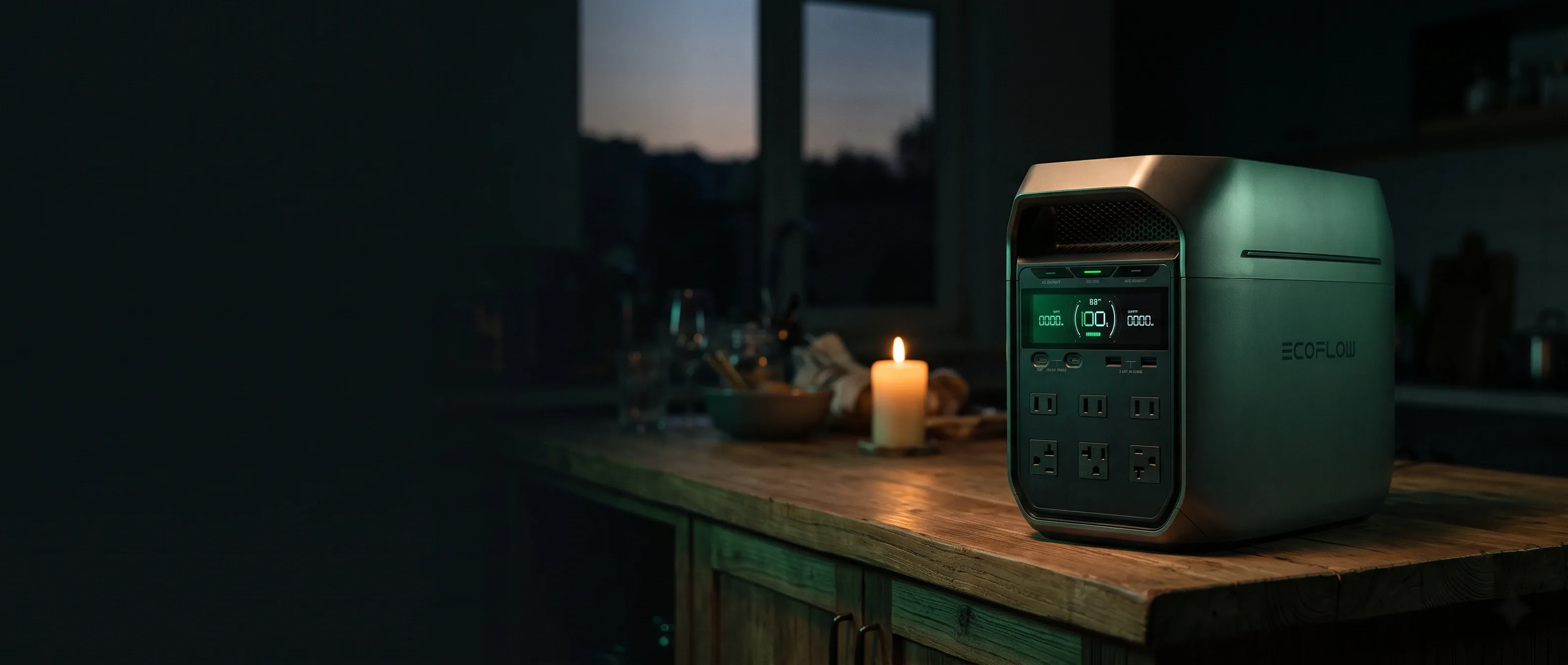
Best overall
1,024 Wh, 1,000 W solar input, expands to 5 kWh
- Capacity
- 1,024 Wh
- AC output
- 1,800 W
- Wall charge
- 56 min
- Weight
- 27.6 lb
Most output
2,600 W continuous and two 140 W USB-C ports
1,024 Wh2,600 W31.3 lb
Lightest 2,000 W station
2,000 W continuous at 24.9 lb
1,024 Wh2,000 W24.9 lb
Lightest 1 kWh
1,024 Wh at 23.8 lb
1,024 Wh1,500 W23.8 lb
Most capacity
1,264 Wh and 2,000 W, expands to about 5 kWh
1,264 Wh2,000 W32 lb
| Spec | EcoFlow Delta 3 Plus | DJI Power 1000 V2 | Anker SOLIX C1000 Gen 2 | Jackery Explorer 1000 v2 | Jackery Explorer 1000 Plus |
|---|---|---|---|---|---|
| Capacity (Wh) | 1024 | 1024 | 1024 | 1024 | 1264 |
| AC output, continuous (W) | 1800 | 2600 | 2000 | 1500 | 2000 |
| AC charge time | 56 min | 56 min (0–100%, Super Recharge) | 49 min (UltraFast) | 50 min (Emergency, app) | 1.7 h |
| Max solar input (W) | 1000 | 1200 | 600 | 400 | 800 |
| Weight (lb) | 27.6 | 31.3 | 24.9 | 23.8 | 32 |
| Warranty (years) | 5 | 5 | 5 | 3 + 2 with registration | 3 + 2 with registration |
| Price | Check price | Check price | Check price | Check price | Check price |
- Capacity
- 1,024 Wh
- AC output
- 1,800 W
- Wall charge
- 56 min
- Solar input
- 1,000 W
- Weight
- 27.6 lb
- Warranty
- 5 years
- Capacity
- 1,024 Wh
- AC output
- 2,600 W
- Wall charge
- 56 min
- Solar input
- 1,200 W
- Weight
- 31.3 lb
- Warranty
- 5 years
- Capacity
- 1,024 Wh
- AC output
- 2,000 W
- Wall charge
- 49 min
- Solar input
- 600 W
- Weight
- 24.9 lb
- Warranty
- 5 years
- Capacity
- 1,024 Wh
- AC output
- 1,500 W
- Wall charge
- 50 min
- Solar input
- 400 W
- Weight
- 23.8 lb
- Warranty
- 3 + 2 years
- Capacity
- 1,264 Wh
- AC output
- 2,000 W
- Wall charge
- 1.7 h
- Solar input
- 800 W
- Weight
- 32 lb
- Warranty
- 3 + 2 years
"1000Wh" means about 1 kWh of stored energy. Searches for a "1000 watt power station" usually mean this capacity; watts are output instead. Every station here gives 1,500 to 2,600 W continuous.
Most stations sold as 1000Wh hold 1,024 Wh, because their LiFePO4 packs are built from cells that add up to that figure. A few hold more, like the 1,152 Wh Bluetti AC180 and the 1,264 Wh Explorer 1000 Plus. If watt-hours and watts are new to you, start with watts vs watt-hours.
Best overall: EcoFlow Delta 3 Plus
It rates 8.9, the highest in the 1 kWh class, with 1,000 W of solar input and switchover in under 10 ms.
Best overall: EcoFlow Delta 3 Plus
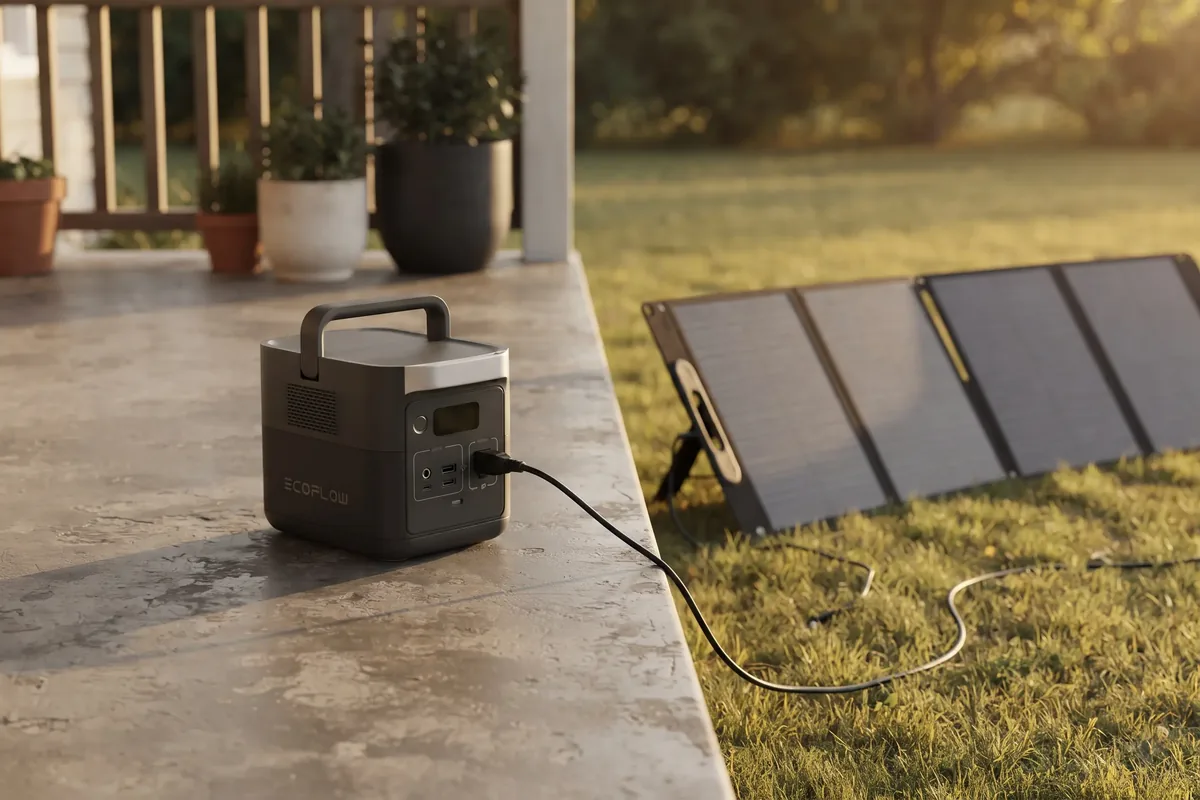
- Capacity
- 1,024 Wh
- AC output
- 1,800 W
- Wall charge
- 56 min
- Weight
- 27.6 lb
The Delta 3 Plus scores at or near the top of the class in every area except output and weight. That balance is why it's our pick for most buyers, whether the station's job is a power cut, a campsite or both.
- Charging: up to 1,500 W from the wall. EcoFlow quotes a full solar charge in 70 minutes with two 500 W panels.
- Switchover: under 10 ms, so a router or desktop PC stays on through a power cut.
- Outlets: six AC outlets, a 12 V car outlet and two DC5521 ports cover a CPAP or 12 V cooler without inverter losses.
- Expansion: one extra battery takes it to 5 kWh with EcoFlow's 4,096 Wh pack. Only one can connect.
- X-Boost: EcoFlow's X-Boost runs some heating appliances up to 2,200 W, at reduced power.
Against the rivals, see Delta 3 Plus vs Anker SOLIX C1000 Gen 2 and Delta 3 Plus vs Jackery Explorer 1000 v2.
Best for
One station for home backup, camping and solar.
Skip if
You need more than 1,800 W at once.
Pros
- EcoFlow quotes 56 minutes for a full wall recharge
- Up to 1,000 W solar input across two ports
- Under 10 ms UPS switchover
- Expands to 5 kWh with one extra battery
- LiFePO4, 4,000 cycles to 80%, 5-year warranty
Cons
- 1,800 W continuous, less than the DJI and Anker picks
- 27.6 lb, heavier than the two lightest picks
Check price on AmazonRead our EcoFlow Delta 3 Plus full review
Most output: DJI Power 1000 V2
Its 2,600 W continuous is the most of any 1 kWh station we've reviewed, but it has no 12 V car outlet and no built-in solar port.
Most output: DJI Power 1000 V2
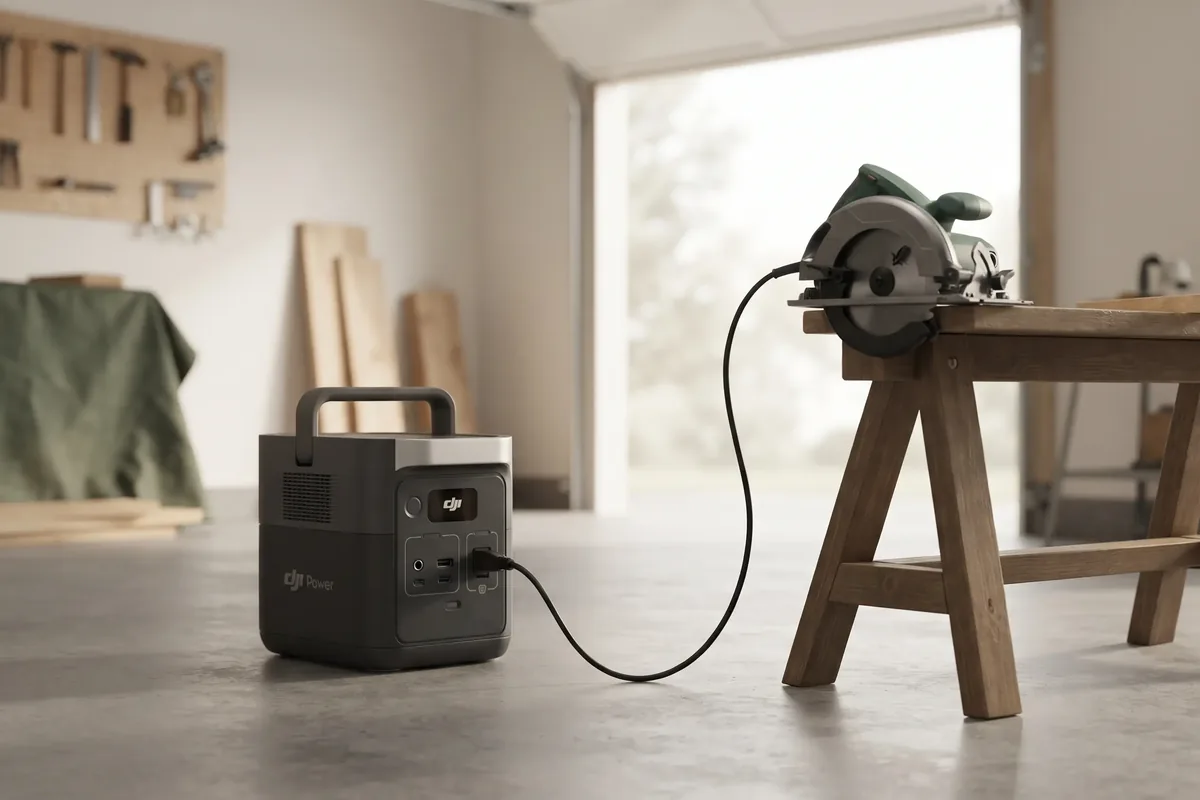
- Capacity
- 1,024 Wh
- AC output
- 2,600 W
- Wall charge
- 56 min
- Weight
- 31.3 lb
If your loads are big, this is the 1 kWh station that runs them: 2,600 W is 600 W more than the Anker and Jackery 1000 Plus and 800 W more than the Delta 3 Plus. It rates 8.5, second in the class.
Know its gaps before you buy:
- No 12 V car outlet: a 12 V CPAP or cooler needs an adapter cable or runs on AC with inverter losses.
- Solar by adapter: solar enters through DJI's Solar Panel Adapter Module (400 W) or its 1.8 kW charger (1,200 W of solar).
- Basic UPS: DJI calls its backup a basic UPS feature and says it doesn't switch in 0 ms. It doesn't publish the switchover time, and its manual says the UPS mode isn't for medical devices.
- No surge figure: DJI doesn't publish one either.
Its 4 AC outlets and drone fast charging suit creators and tool users more than a medical backup.
Best for
Power tools, kitchen appliances and drone batteries.
Skip if
You need a dependable UPS for a CPAP or a 12 V outlet.
Pros
- 2,600 W continuous
- DJI quotes 56 minutes for a full recharge (Super Recharge), 37 minutes to 80%
- Two 140 W USB-C ports
- Expands to 11,264 Wh with five DJI batteries
- 5-year warranty
Cons
- No 12 V car outlet
- Solar only through DJI's adapter
- No published switchover time or surge figure
- 31.3 lb
Lightest 2,000 W station: Anker SOLIX C1000 Gen 2
At 24.9 lb it gives 2,000 W, 6.4 lb lighter than the DJI, and Anker quotes a 49-minute wall recharge.
Lightest 2,000 W station: Anker SOLIX C1000 Gen 2
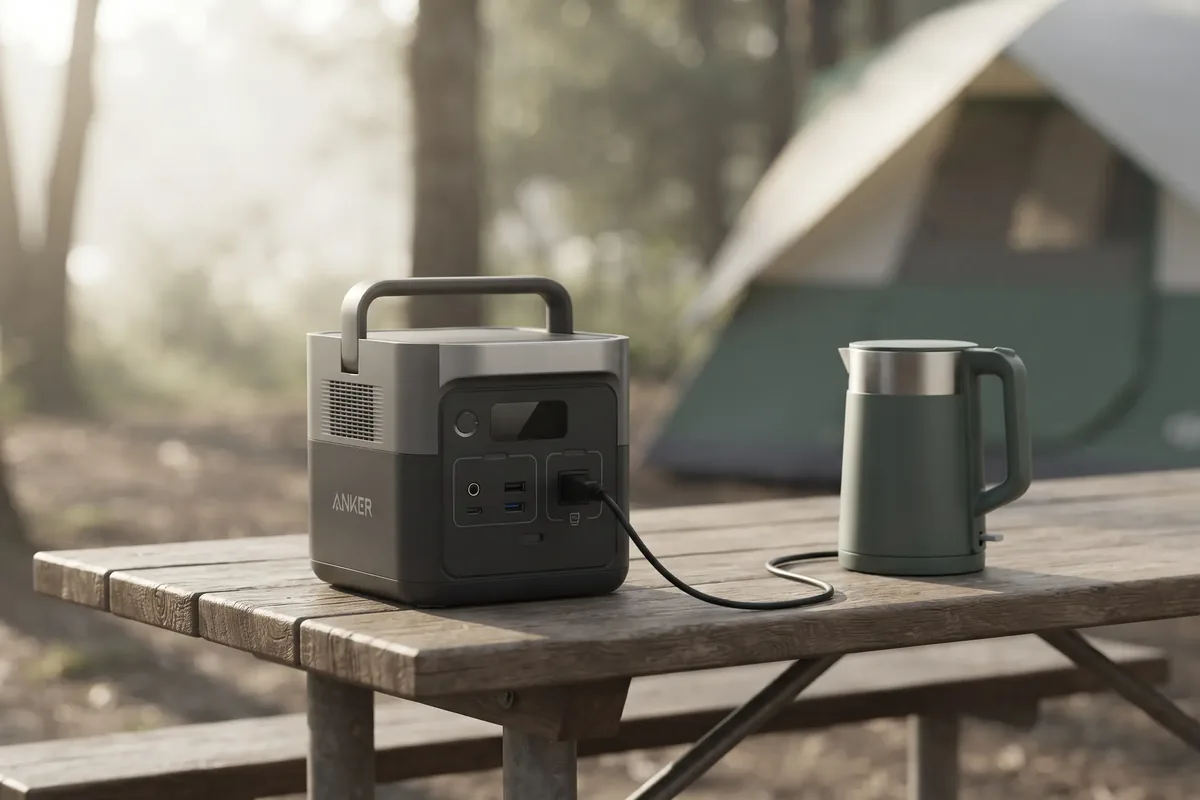
- Capacity
- 1,024 Wh
- AC output
- 2,000 W
- Wall charge
- 49 min
- Weight
- 24.9 lb
The C1000 Gen 2 is the lightest station with 2,000 W or more we've reviewed. It rates 8.0. The DJI Power 1000 V2 rates higher (8.5) and gives 600 W more, but weighs 31.3 lb. The Delta 3 (8.4) weighs 27.6 lb and gives 1,800 W.
The 49-minute recharge uses UltraFast mode at 1,600 W, switched on in the app; standard wall charging is 1,200 W.
It has five AC outlets, a 120 W car outlet and two 140 W USB-C ports, and Anker rates it to run from −4 to 104°F. Solar takes 600 W at 11 to 60 V, about 2.3 hours of strong sun at full input by our estimate. It can't take an extra battery, so 1,024 Wh is its ceiling.
Best for
Kitchen and tool loads in a box you can carry.
Skip if
You want to add capacity later.
Pros
- 2,000 W continuous, 3,000 W surge
- 24.9 lb
- Anker quotes 49 minutes from the wall (UltraFast)
- Switchover within 10 ms
- LiFePO4, 5-year warranty
Cons
- 600 W solar input
- Not expandable
Check price on AmazonRead our Anker SOLIX C1000 Gen 2 full review
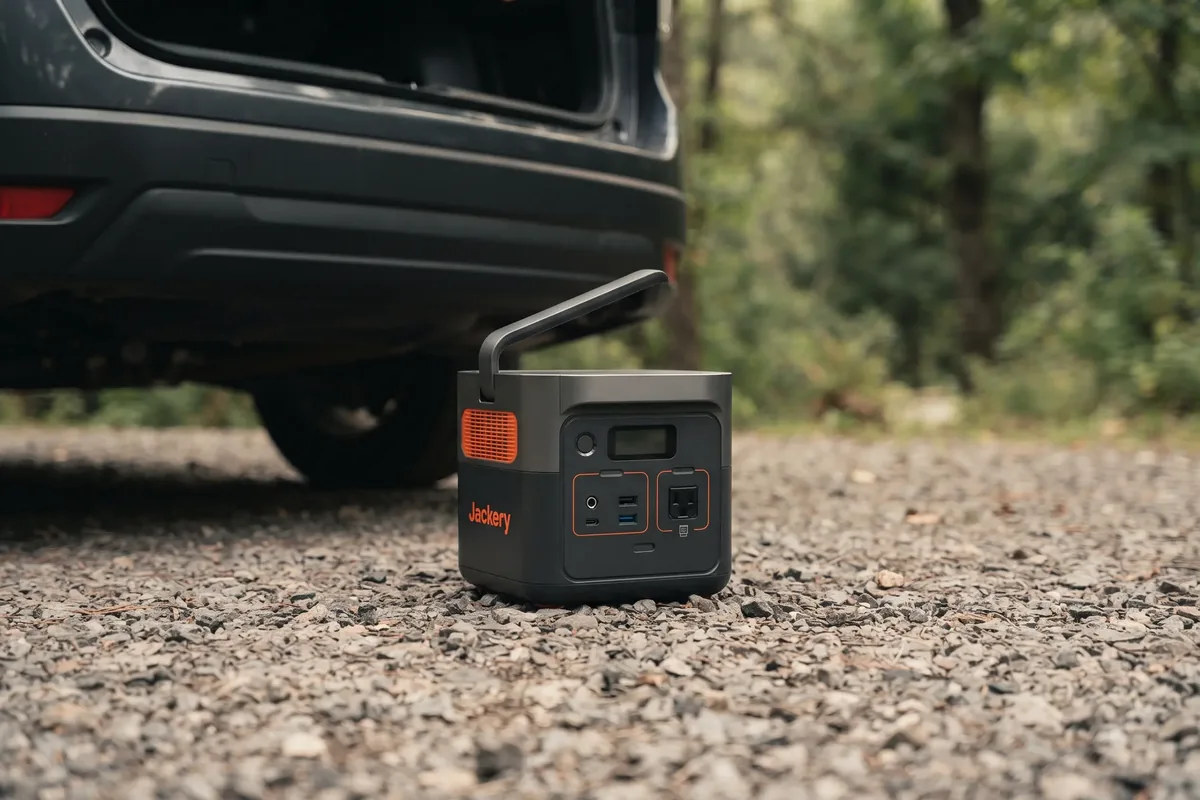
Lightest 1 kWh: Jackery Explorer 1000 v2
At 23.8 lb it's the lightest 1 kWh station we've reviewed, but it rates 5.1, held back by unpublished AC input watts, a 20 ms switchover and 400 W solar.
Lightest 1 kWh: Jackery Explorer 1000 v2
- Capacity
- 1,024 Wh
- AC output
- 1,500 W
- Wall charge
- 50 min
- Weight
- 23.8 lb
Pick it when weight matters most. It's 1.1 lb lighter than the C1000 Gen 2 and 3.8 lb lighter than the Delta 3 Plus.
Its low rating has three causes in our method:
- Charging: Jackery doesn't publish the AC input in watts, so we score its charging speed as unknown (3 of 10), even though Jackery quotes 50 minutes in Emergency mode and 1.58 hours in standard mode.
- Switchover: its 20 ms scores lower than the 10 ms of most rivals, and Jackery's manual says not to run servers or workstations on it.
- Solar: its 400 W input is the lowest of the picks, and it can't take an extra battery.
Its 4,000 cycles are rated to 70% of capacity, where most rivals quote 80%. For how it compares with its bigger sibling, see Explorer 1000 v2 vs 1000 Plus.
Best for
Carrying to a campsite or between rooms.
Skip if
You rely on solar or need a UPS for a PC.
Pros
- 23.8 lb for 1,024 Wh
- 1,500 W continuous, 3,000 W surge
- Jackery quotes 50 minutes from the wall (Emergency mode, app)
- 12 V car outlet
Cons
- Rated 5.1/10
- 400 W solar input
- 20 ms switchover
- Cycles rated to 70%, not 80%
- Not expandable
Check price on AmazonRead our Jackery Explorer 1000 v2 full review
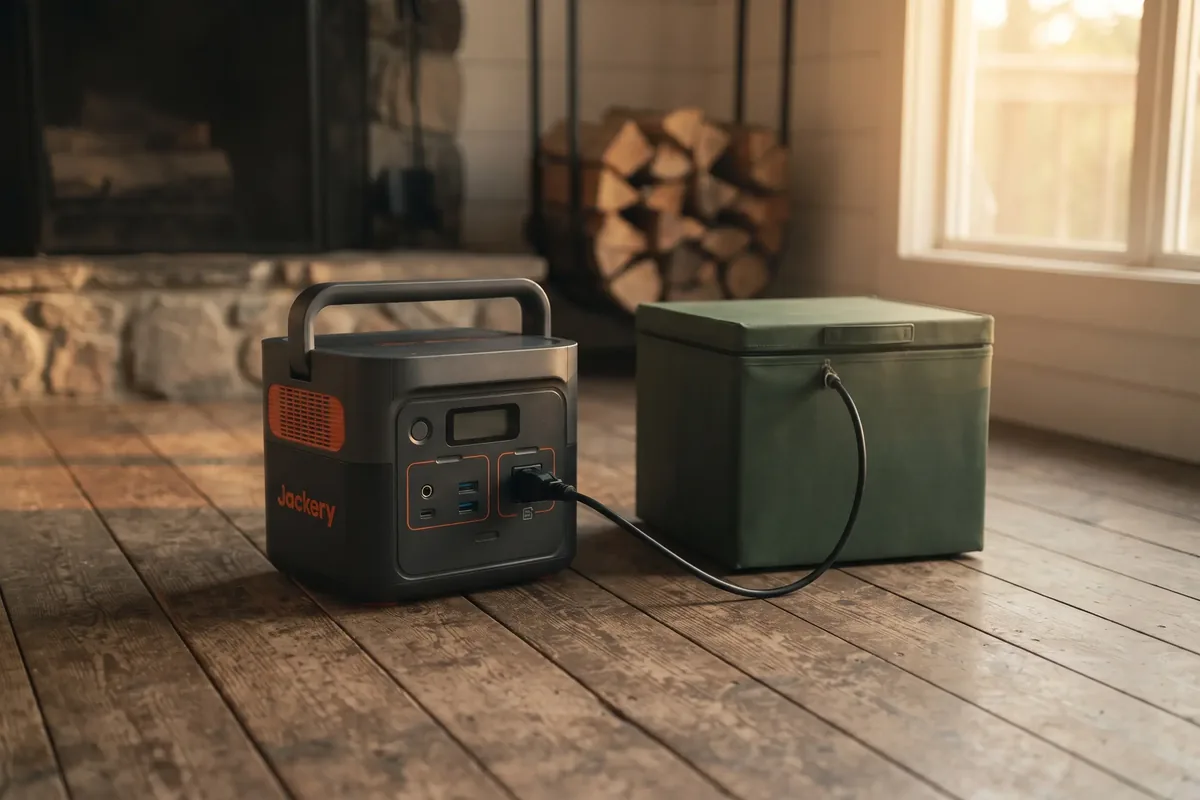
Most capacity: Jackery Explorer 1000 Plus
At 1,264 Wh it holds the most energy of the seven 1,024 to 1,264 Wh stations we've reviewed, 240 Wh more than a 1,024 Wh station.
Most capacity: Jackery Explorer 1000 Plus
- Capacity
- 1,264 Wh
- AC output
- 2,000 W
- Wall charge
- 1.7 h
- Weight
- 32 lb
The 1000 Plus holds about 23% more than a 1,024 Wh station and matches the C1000 Gen 2's 2,000 W. It rates 6.8. Jackery quotes 1.7 hours for a wall recharge (1,200 W input), and switchover is 20 ms. Its expansion uses Battery Pack 1000 Plus, an older Jackery pack. Up to three packs take it to about 5 kWh.
Every 1 kWh station rated above it, the Delta 3 Plus, DJI, Delta 3 and C1000 Gen 2, holds 1,024 Wh. If you'll run long, steady loads overnight on AC, its extra capacity helps.
For small loads, its 22 W standby draw eats into the lead, as the router row in the runtime table shows. Jackery quotes about 2 hours to refill with four SolarSaga 200 panels.
Best for
Long fridge or CPAP-with-humidifier nights.
Skip if
You carry it far, or run mostly small loads.
Pros
- 1,264 Wh
- 2,000 W continuous, 4,000 W surge
- 800 W solar input across two ports
- Expands to about 5 kWh with Jackery's battery packs
Cons
- 32 lb
- 22 W standby draw
- 20 ms switchover
- Cycles rated to 70%
- Warranty is 3 years, plus 2 with registration
Check price on AmazonRead our Jackery Explorer 1000 Plus full review
1000Wh runtimes by appliance: a fridge for about 11.5 hours
On AC, a 1,024 Wh station keeps a 67 W fridge cold for about 11.5 hours and a 12 V CPAP going for more than 80 hours on DC.
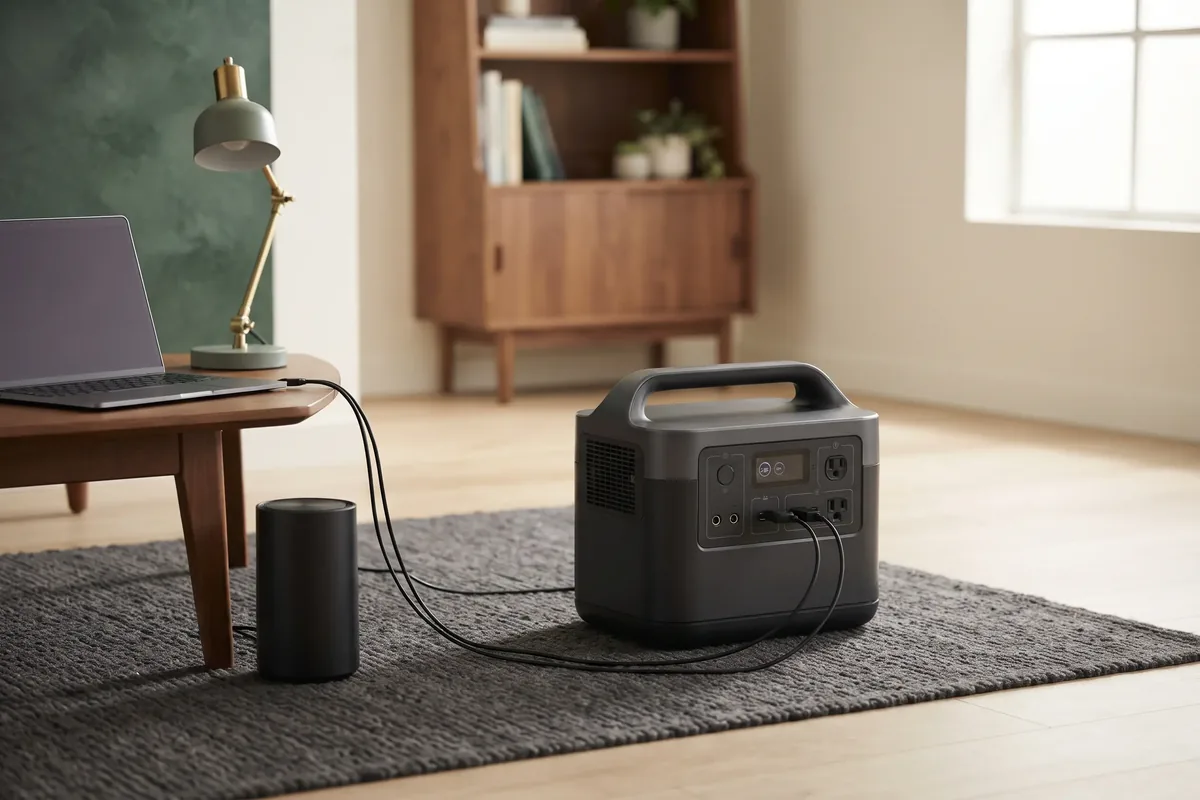
Runtime depends on the load, not only the capacity. Our estimates use the runtime calculator method:
- On AC: the inverter loses about 15%, and the station draws about 10 W for itself while AC is on.
- On DC (a 12 V car outlet or USB-C): about 8% is lost.
Where the maker publishes a standby draw we use it: 15 W for the AC180 and 22 W for the Explorer 1000 Plus.
| Load | 1,024 Wh station | 1,152 Wh (AC180) | 1,264 Wh (1000 Plus) |
|---|---|---|---|
| Fridge, 67 W average (AC) | About 11.5 hours | About 12.3 hours | About 12.5 hours |
| CPAP, 11 W (12 V DC) | About 86 hours | About 96 hours | About 106 hours |
| CPAP, 56 W with humidifier (AC) | About 13.5 hours | About 14.2 hours | About 14.4 hours |
| Wi-Fi router, 12 W (AC) | About 42 hours | About 40 hours | About 35 hours |
| Laptop, 60 W (AC) | About 12.7 hours | About 13.5 hours | About 13.7 hours |
Two things stand out:
- Small loads on AC lose a lot to the station's own draw. The Explorer 1000 Plus holds 240 Wh more than a 1,024 Wh station but runs a router for less time, because Jackery lists 22 W of standby power.
- DC wins for small 12 V loads. A CPAP without its humidifier runs for days from a 12 V outlet.
Fridges cycle, so real runtimes vary; see how long a power station runs a refrigerator and how long it runs a CPAP.
High-draw appliances are a different question: a 1 kWh station can run a 1,500 W space heater only if its continuous output is 1,500 W or more, and then for about 35 minutes by our method. For the full list of what each output level runs, see how to choose a portable power station.
How we chose the 1 kWh picks: seven stations from 1,024 to 1,264 Wh
All seven sit in our Mid-size band and are rated out of 10 against every station in that band, from published specs.
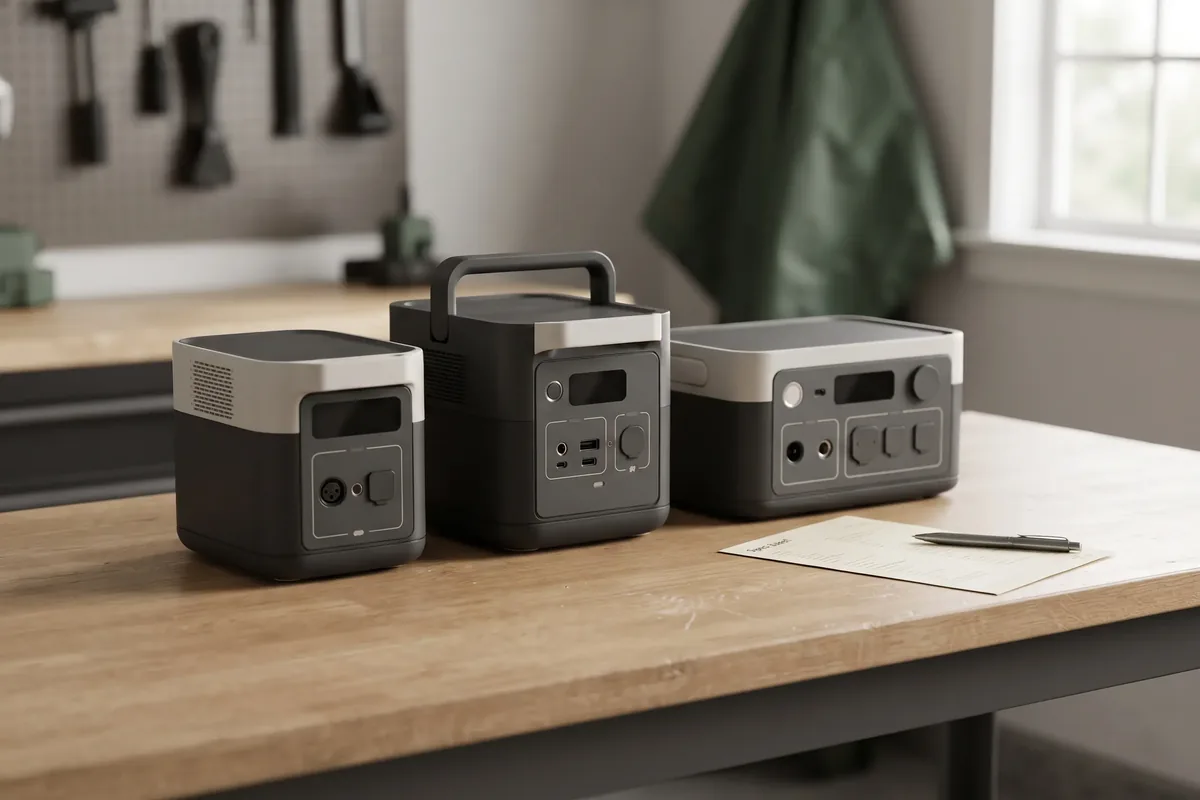
We picked from the seven stations of 1,024 to 1,264 Wh we've reviewed in full. Each has an OffGrid Current rating computed from its specs in seven areas: charging speed, AC output, solar input, UPS switchover, weight per watt-hour, expansion and battery life. The weights are on how we test.
We rate stations against others of the same size, so a 1 kWh station isn't marked down for holding less than a 2 kWh one. We haven't tested these units hands-on, and we don't rank by price.
If you want the most for the least extra, the EcoFlow Delta 3 (8.4) has the same battery, output and wall recharge as the Delta 3 Plus with half the solar input.
Each pick wins one role on a fact we can check against every station we've reviewed: output, weight or capacity. That's why two picks rate lower than stations in "also considered".
The Explorer 1000 v2 rates 5.1 and the Explorer 1000 Plus 6.8, below the EcoFlow Delta 3's 8.4, but each does one thing no other 1 kWh station we've reviewed does: weigh as little, or hold as much.
Every 1 kWh station we've reviewed, side by side
Seven stations from 1,024 to 1,264 Wh, rated from 5.1 to 8.9.
| Station | Capacity | Output | Weight | Rating |
|---|---|---|---|---|
| EcoFlow Delta 3 Plus | 1,024 Wh | 1,800 W | 27.6 lb | 8.9 |
| DJI Power 1000 V2 | 1,024 Wh | 2,600 W | 31.3 lb | 8.5 |
| EcoFlow Delta 3 | 1,024 Wh | 1,800 W | 27.6 lb | 8.4 |
| Anker SOLIX C1000 Gen 2 | 1,024 Wh | 2,000 W | 24.9 lb | 8.0 |
| Jackery Explorer 1000 Plus | 1,264 Wh | 2,000 W | 32 lb | 6.8 |
| Bluetti AC180 | 1,152 Wh | 1,800 W | 35.3 lb | 6.4 |
| Jackery Explorer 1000 v2 | 1,024 Wh | 1,500 W | 23.8 lb | 5.1 |
Switchover times: under 10 ms on both EcoFlows, within 10 ms on the Anker, 20 ms on both Jackery models and the AC180, and not published for the DJI. All seven use LiFePO4 batteries.
Charging a 1000Wh station: wall times and solar refills
From the wall, five of the seven refill in under an hour by their makers' figures; from solar, the Delta 3 Plus needs about 1.4 hours at its 1,000 W maximum by our estimate.
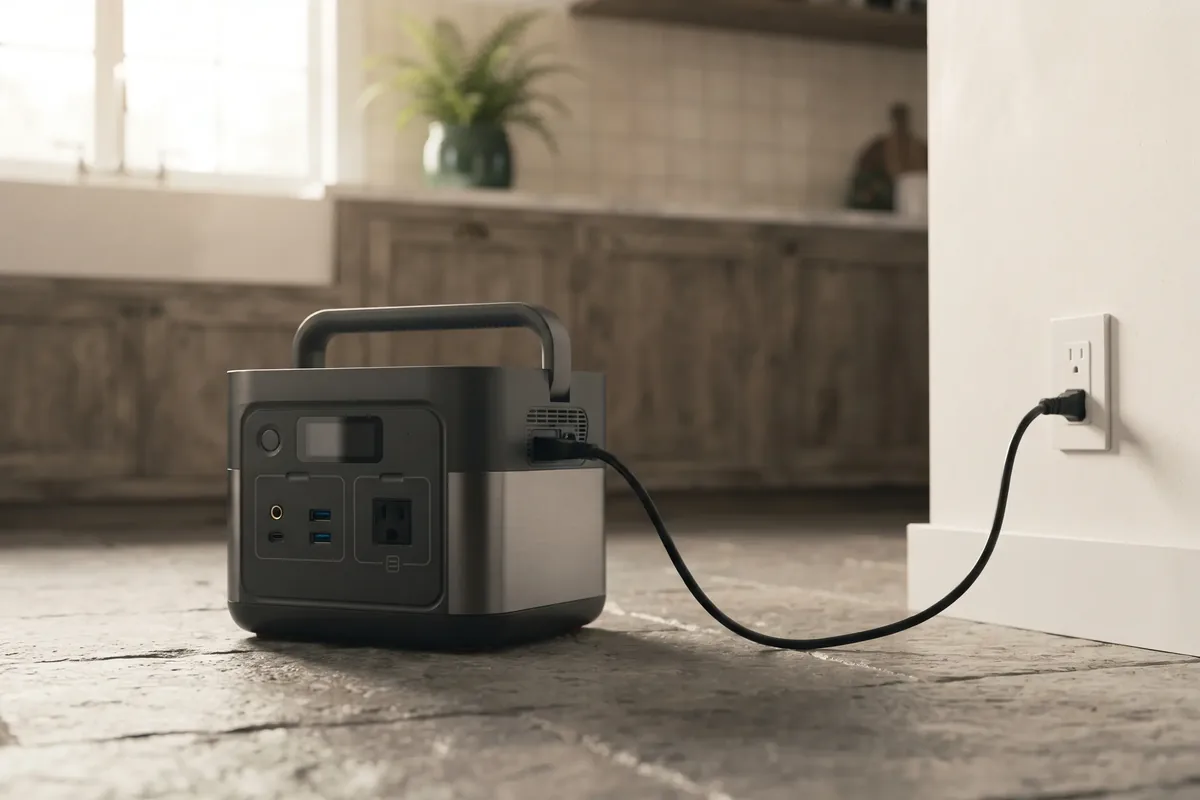
From the wall, by each maker's figure:
- EcoFlow quotes 56 minutes for the Delta 3 Plus and the Delta 3.
- Anker quotes 49 minutes for the C1000 Gen 2 in UltraFast mode.
- DJI quotes 56 minutes for the Power 1000 V2 with Super Recharge, 37 minutes to 80%.
- Jackery quotes 50 minutes for the Explorer 1000 v2 in Emergency mode (1.58 hours standard) and 1.7 hours for the 1000 Plus.
- Bluetti quotes 45 minutes to 80% for the AC180, and about 1.3 hours to full in Turbo mode.
From solar, our estimates assume panels give about 75% of their rating in strong sun:
| Station | Max solar input | Full refill at max input |
|---|---|---|
| EcoFlow Delta 3 Plus | 1,000 W | About 1.4 hours |
| DJI Power 1000 V2 | 1,200 W (via charger) | About 1.1 hours |
| Anker SOLIX C1000 Gen 2 | 600 W | About 2.3 hours |
| Jackery Explorer 1000 v2 | 400 W | About 3.4 hours |
| Jackery Explorer 1000 Plus | 800 W | About 2.1 hours |
Few people carry 1,000 W of panels. With one 200 W panel, a 1,024 Wh station needs about 6.8 hours of strong sun by our estimate, close to Jackery's own 7.5 hours for the Explorer 1000 v2 with one SolarSaga 200W. Makers' own solar figures:
- EcoFlow quotes 70 minutes for the Delta 3 Plus with two 500 W panels and 2 hours for the Delta 3 at 500 W.
- Bluetti quotes 2.8 to 3.3 hours for the AC180 at 500 W.
See how to charge a power station with solar and solar panel sizing.
What to look for in a 1000Wh station: output, switchover and a 12 V outlet
Capacity is nearly the same across the class, so output, switchover, solar input and weight decide which one fits.
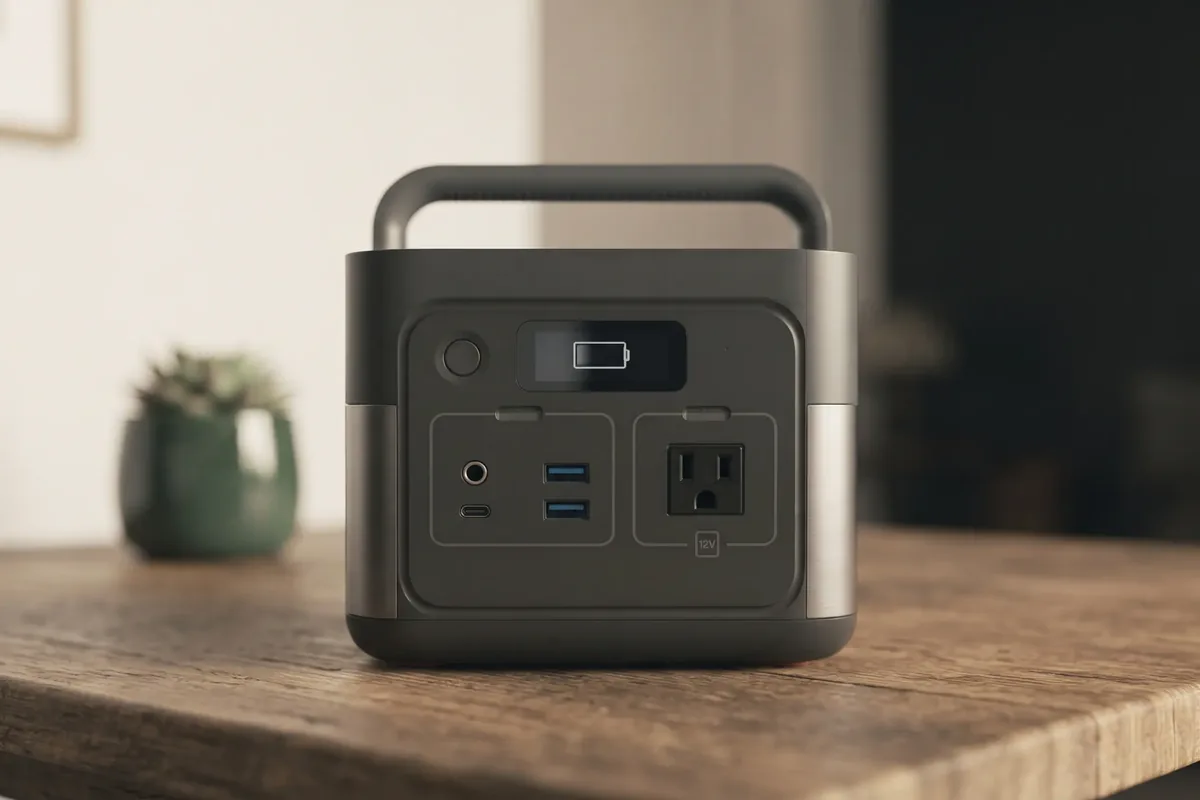
- Output and surge: continuous output in this class runs from 1,500 W to 2,600 W. Your largest appliance's rated watts must sit below it, and motors need surge headroom on top. See surge vs continuous watts.
- Switchover: for a router, PC or CPAP during power cuts, under 10 ms is safest. Jackery's and Bluetti's 20 ms and DJI's unpublished figure may let a desktop PC restart. See using a power station as a UPS.
- Battery and cycles: all seven use LiFePO4. Check the end point: 4,000 cycles to 80% (EcoFlow, Anker, DJI) leaves more capacity than 4,000 cycles to 70% (both Jackerys). Bluetti quotes 3,500+ cycles for the AC180. See LiFePO4 vs lithium-ion.
- Solar input: from 400 W (Explorer 1000 v2) to 1,000 W (Delta 3 Plus) built in; check the voltage range against your panels.
- Expansion: the Delta 3 Plus and Delta 3 take one extra battery, to 5 kWh with EcoFlow's 4,096 Wh pack. The DJI takes up to five 2,048 Wh batteries, to 11,264 Wh. The 1000 Plus takes up to three packs, to about 5 kWh. The AC180 reaches 1,958 Wh with Bluetti's B80. The C1000 Gen 2 and Explorer 1000 v2 don't expand.
- Weight: 23.8 lb to 35.3 lb. Per pound, the Explorer 1000 v2 carries about 43 Wh, the C1000 Gen 2 about 41, the Delta 3 Plus about 37 and the DJI about 33.
- 12 V outlet: a CPAP or 12 V cooler runs longest from a car outlet. Every 1 kWh station here has one except the DJI.
1000Wh vs 2000Wh: when to step up
A 1 kWh station covers a fridge for about half a day; if you need a full day or more, a 2 kWh station is the better buy.
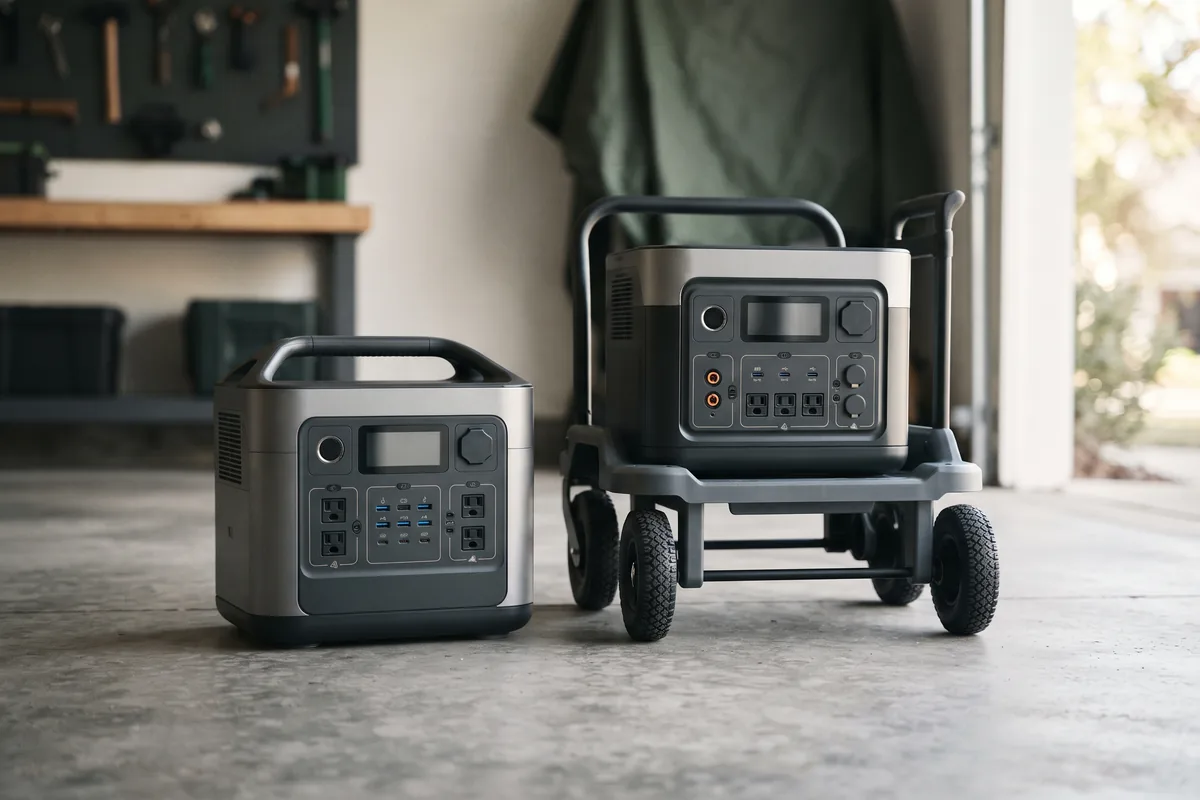
A 1 kWh station weighs 23.8 to 35.3 lb among the seven we have reviewed. It covers a fridge for about 11.5 hours, a CPAP for several nights on DC, or a day of camp loads. Step up when one of these is true:
- Outages last a day or more: a fridge and router together use about 79 W; a 1,024 Wh station covers them for about 10 hours by our method. See the best portable power stations for home backup.
- You need more than 2,000 W: only the DJI goes past 2,000 W in this class.
- You want a bigger battery but one box: the Goal Zero Yeti 1500 (1,505 Wh) and GRECELL H2400 (1,843 Wh) are the largest Mid-size stations we've reviewed, at 52.75 lb and 55 lb.
Or keep a 1 kWh station that expands: the Delta 3 Plus reaches 5 kWh with one extra battery. For picks across every size, see the best portable power stations. For trips, see the best portable power stations for camping, where the 1 kWh class holds three of the four picks.
Also considered: two more 1 kWh stations and two step-ups
The Delta 3 rates 8.4 but has half the Plus's solar input; the AC180 is the heaviest 1 kWh station we've reviewed.
| Model | Capacity | Why it missed a pick |
|---|---|---|
| EcoFlow Delta 31,024 Wh | 1,024 Wh | The same 1,024 Wh, 1,800 W, 56-minute recharge, under 10 ms switchover and 27.6 lb as the Delta 3 Plus, with 500 W of solar input instead of 1,000 W. It rates 8.4, above three of our picks, but it wins no role. The Plus beats it overall, the DJI and C1000 Gen 2 give more output, the Explorer 1000 v2 is lighter, and the 1000 Plus holds more. Pick it if you won't use more than 500 W of panels. |
| Bluetti AC1801,152 Wh | 1,152 Wh | 1,152 Wh and 1,800 W with a 5-year warranty, rated 6.4. At 35.3 lb it's the heaviest of the seven, solar input is 500 W, switchover is 20 ms, and Bluetti's 2,700 W Power Lifting mode is for resistive loads only, not a surge rating. |
| Goal Zero Yeti 15001,505 Wh | 1,505 Wh | A step-up at 1,505 Wh, with 2,000 W, 900 W of solar input and an IPX4 rating, rated 6.4. It weighs 52.75 lb and doesn't expand. |
| GRECELL H24001,843 Wh | 1,843 Wh | A step-up at 1,843 Wh and 2,400 W, rated 5.8. It weighs 55 lb, has a 2-year warranty and doesn't expand. |
FAQ
Runtimes, microwaves, solar, flights and brands for 1 kWh stations, answered from our data.
How long will a 1000Wh power station last?
It depends on the load. By our method, a 1,024 Wh station runs a 67 W fridge for about 11.5 hours, a 60 W laptop for about 12.7 hours and an 11 W CPAP on DC for about 86 hours. Divide the capacity by your load's watts, then allow for about 15% inverter loss on AC. Try your own loads in the runtime calculator.
Can a 1000Wh power station run a microwave or a space heater?
Only if its continuous output is at or above the appliance's input watts on the label. Every station here gives at least 1,500 W, so a 1,500 W heater is at the Explorer 1000 v2's limit and within the others'. It drains fast: about 35 minutes for a 1,500 W heater from 1,024 Wh by our method.
A microwave's input watts are higher than its cooking watts, so check the label.
Is 1000Wh enough for home backup?
For a fridge, router, lights and phones through a short outage, yes: about 10 hours for a fridge and router together. For a day or more, pick an expandable station like the Delta 3 Plus or step up to 2 kWh.
Is 1000Wh enough for camping?
For a weekend, yes. A 12 V cooler averaging 25 W uses about 650 Wh a day on DC, so a 1,024 Wh station covers it for about a day and a half by our estimate; plan on solar for longer trips.
How long does a 1000Wh power station take to charge?
From the wall, about 49 minutes to 1.7 hours by the makers' figures, in their fastest modes. From solar, about 1.4 hours at 1,000 W of panels to about 6.8 hours with one 200 W panel, by our estimate.
What size solar panel do I need for a 1000Wh power station?
About 400 W of panels refills 1,024 Wh in about 3.4 hours of strong sun by our estimate; 200 W takes about 6.8 hours. Check the station's maximum solar input and voltage range first.
How many years will a 1000Wh power station last?
All seven use LiFePO4. EcoFlow, Anker and DJI rate theirs to 4,000 cycles to 80% capacity. Jackery rates 4,000 cycles to 70%, and Bluetti quotes 3,500+ cycles for the AC180.
At one full cycle a day that's about 11 years. Most people cycle far less. See how long portable power stations last.
Can you take a 1000Wh power station on a plane?
No. The FAA forbids spare lithium batteries over 160 Wh in both carry-on and checked bags, and a 1 kWh station is more than six times that.
What is the best brand for a 1000Wh power station?
By our ratings, EcoFlow: the Delta 3 Plus (8.9) and Delta 3 (8.4) are two of the top three, with DJI's Power 1000 V2 (8.5) between them. Anker's C1000 Gen 2 (8.0) is the lightest with 2,000 W, and Jackery makes the lightest and the largest 1 kWh stations.