 By
We may earn a commission if you buy through links on this page, at no extra cost to you. This never affects which products we recommend. How we make money.
On this page 9 sections
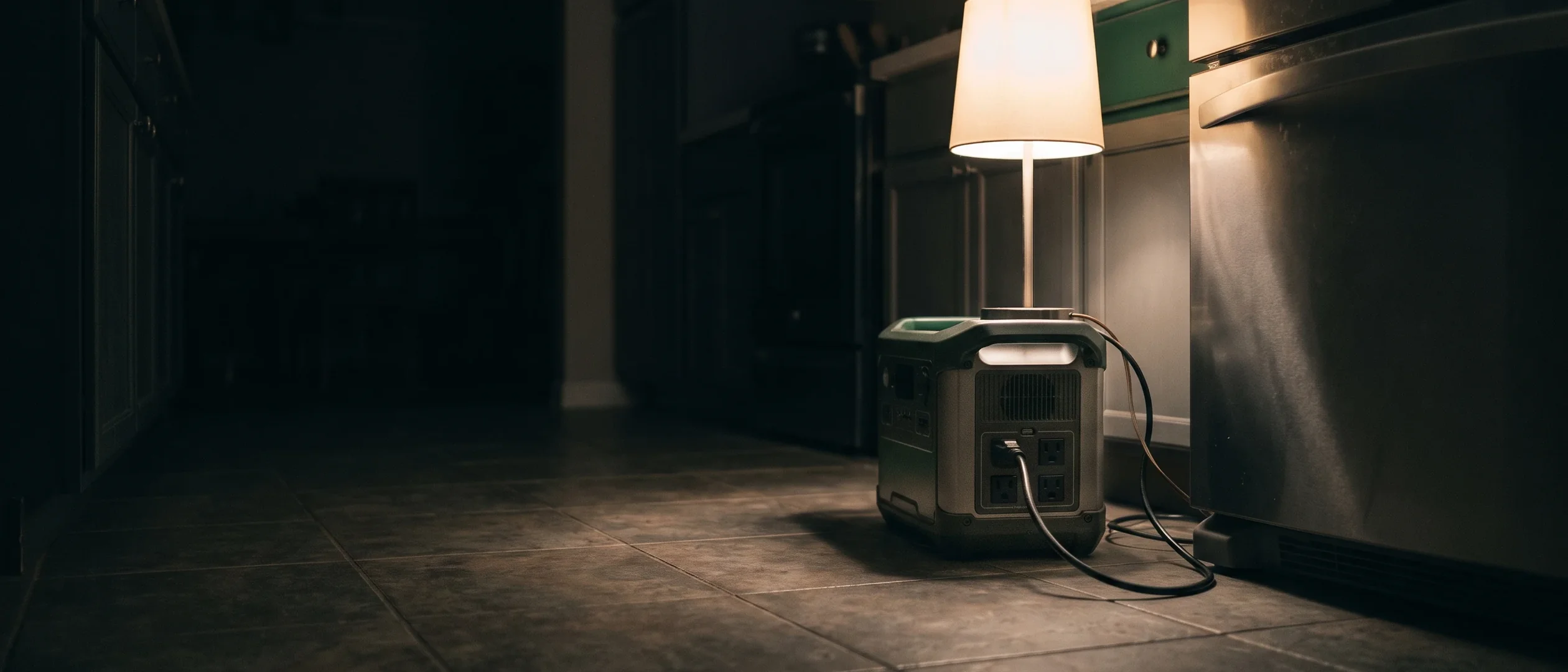
A portable power station can run a fridge, Wi-Fi router, lights, phones, a laptop, a CPAP, a fan and a TV in an outage, as long as their combined watts stay under its output rating. A 1 kWh station keeps an average fridge cold for about 11.5 hours or a router on AC for about 42; it can't run central air, an electric water heater or a clothes dryer, and heaters drain it in minutes.
Output watts and watt-hours: the two numbers that decide what runs
Output in watts sets what can run at the same time; capacity in watt-hours sets how long it lasts.
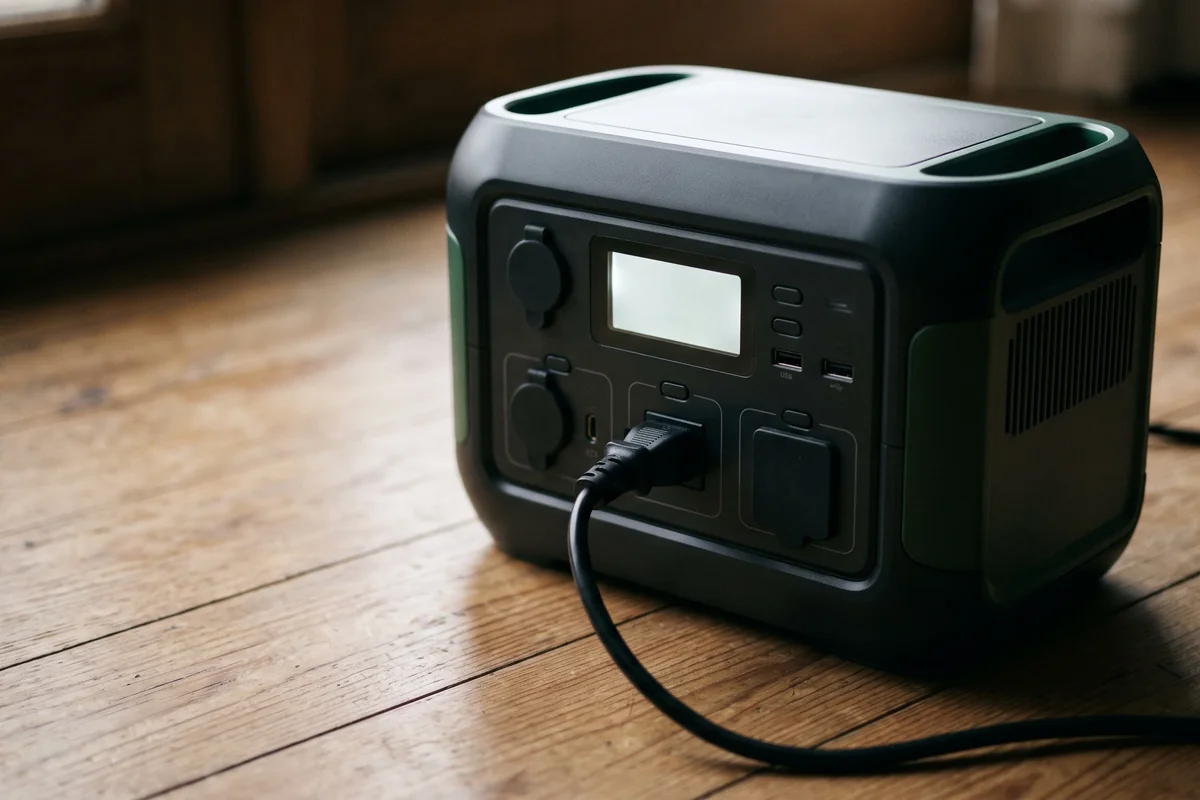
Every appliance has two numbers that matter here. Its running watts must fit under the station's continuous output, and its startup surge (fridges, freezers, pumps and anything with a motor) must fit under the station's surge rating. Then the station's capacity in watt-hours decides how long it keeps going. If the units are new to you, start with watts vs watt-hours.
Current stations fall into rough output steps:
| Station size | Continuous output | Examples we've reviewed |
|---|---|---|
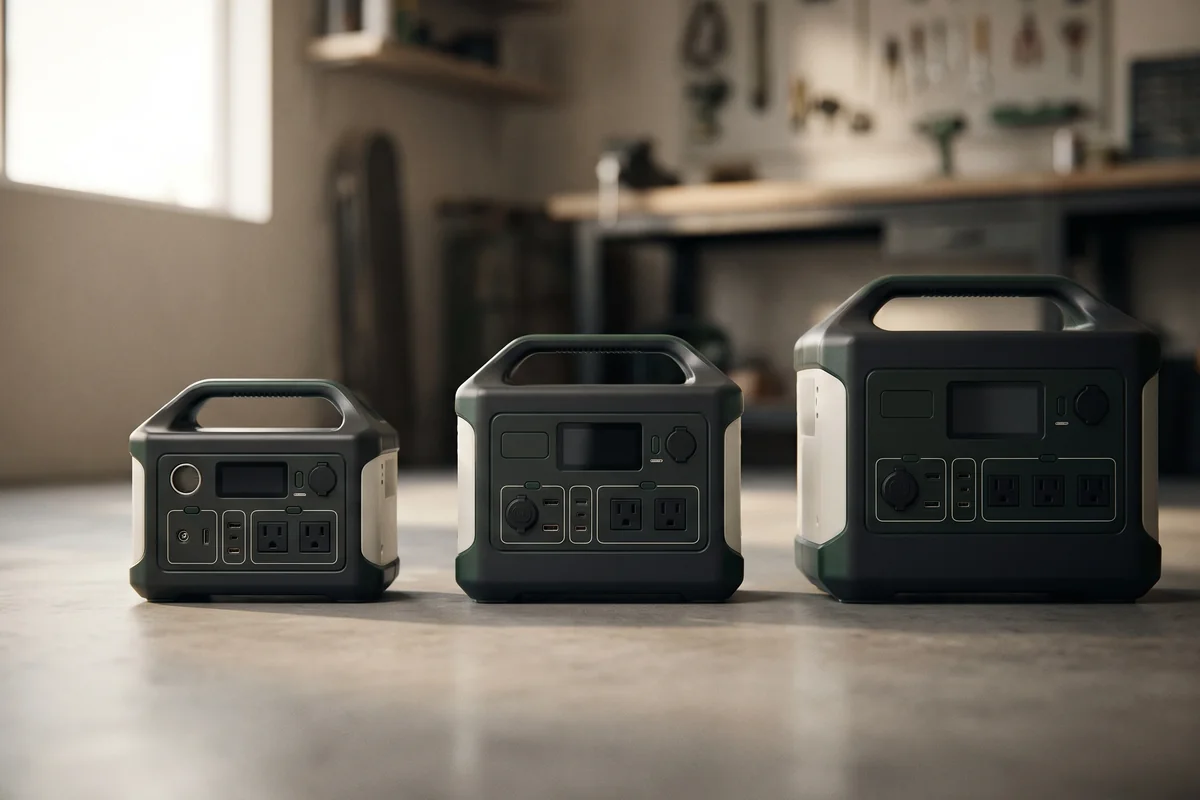
| About 300 Wh | 300 to 600 W | Bluetti Elite 30 V2, Jackery Explorer 300 |
| About 1 kWh | 1,500 to 2,600 W | EcoFlow Delta 3 Plus, DJI Power 1000 V2 |
| About 2 to 3 kWh | 1,500 to 3,840 W | Jackery HomePower 2000 Plus v2, Bluetti Elite 200 V2 |
| 3.5 kWh and up | 3,600 to 12,000 W, often 240 V | Jackery Explorer 5000 Plus, Anker SOLIX F3800 Plus |
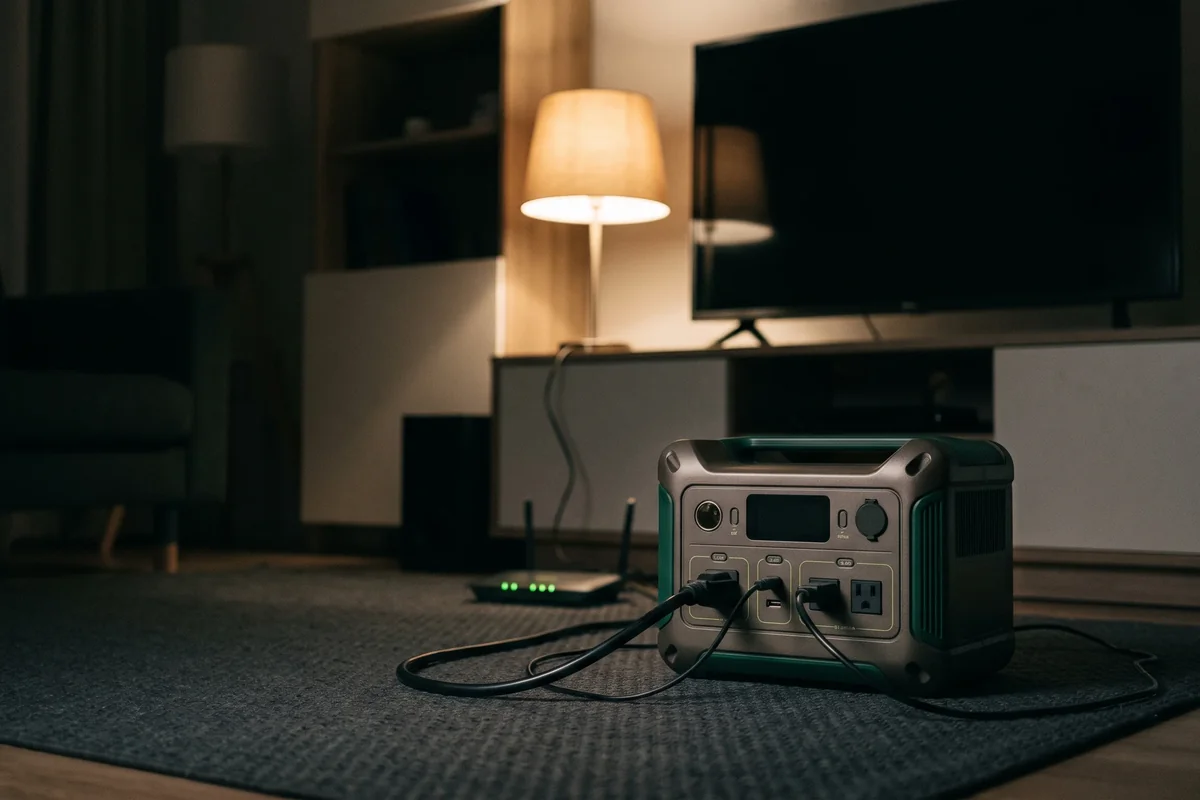
A worked check: a fridge running at about 150 W, a router at 12 W and a 55-inch TV at 90 W add up to about 250 W, comfortably under a 600 W small station's output. But a 288 Wh battery would run that mix for only about an hour, so output tells you it can run, and capacity tells you whether it's worth running.
Appliance runtimes on a 1 kWh and 2 kWh power station
An average fridge runs about 11.5 hours on 1 kWh and 23 hours on 2 kWh; a router runs for days.
| Appliance | Average draw | 1 kWh station | 2 kWh station |
|---|---|---|---|
| Wi-Fi router and modem (on AC) | 12 W | About 42 hours | About 85 hours |
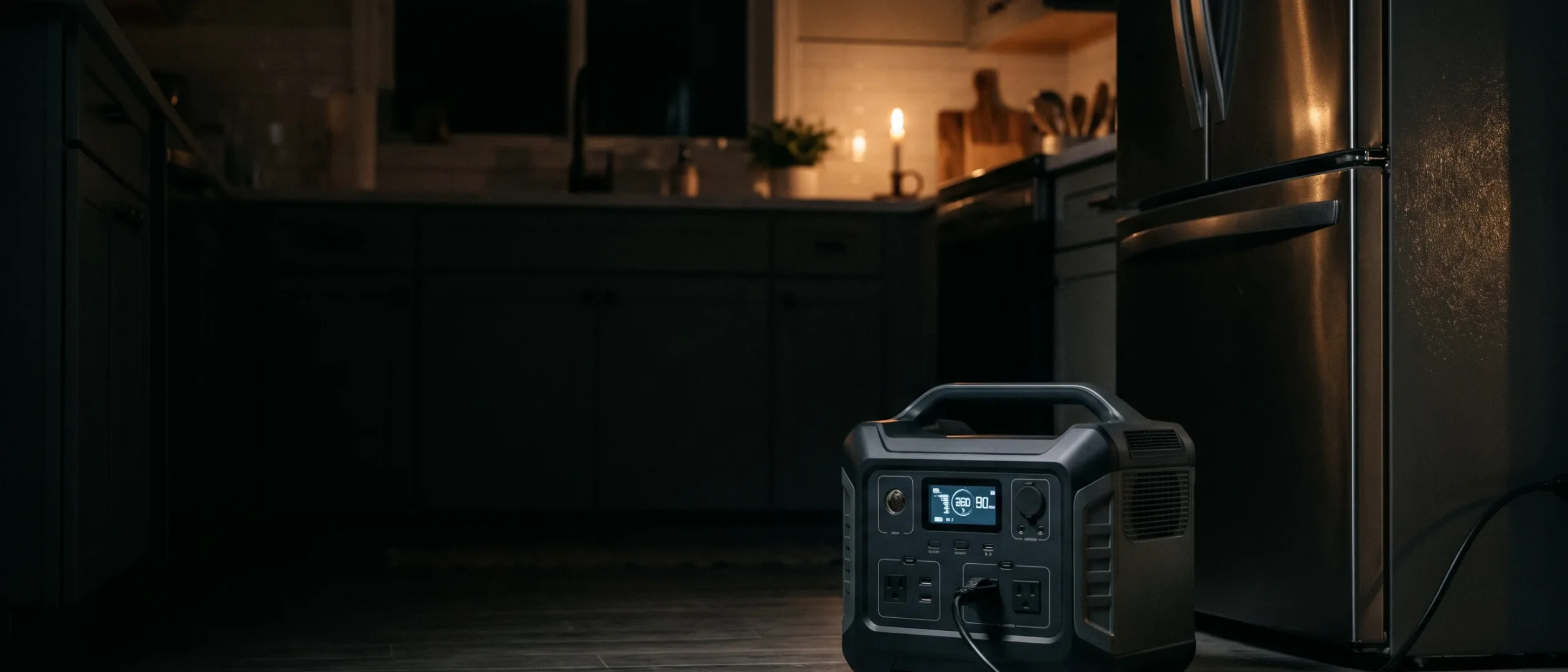
| Refrigerator (average) | 67 W | About 11.5 hours | About 23 hours |
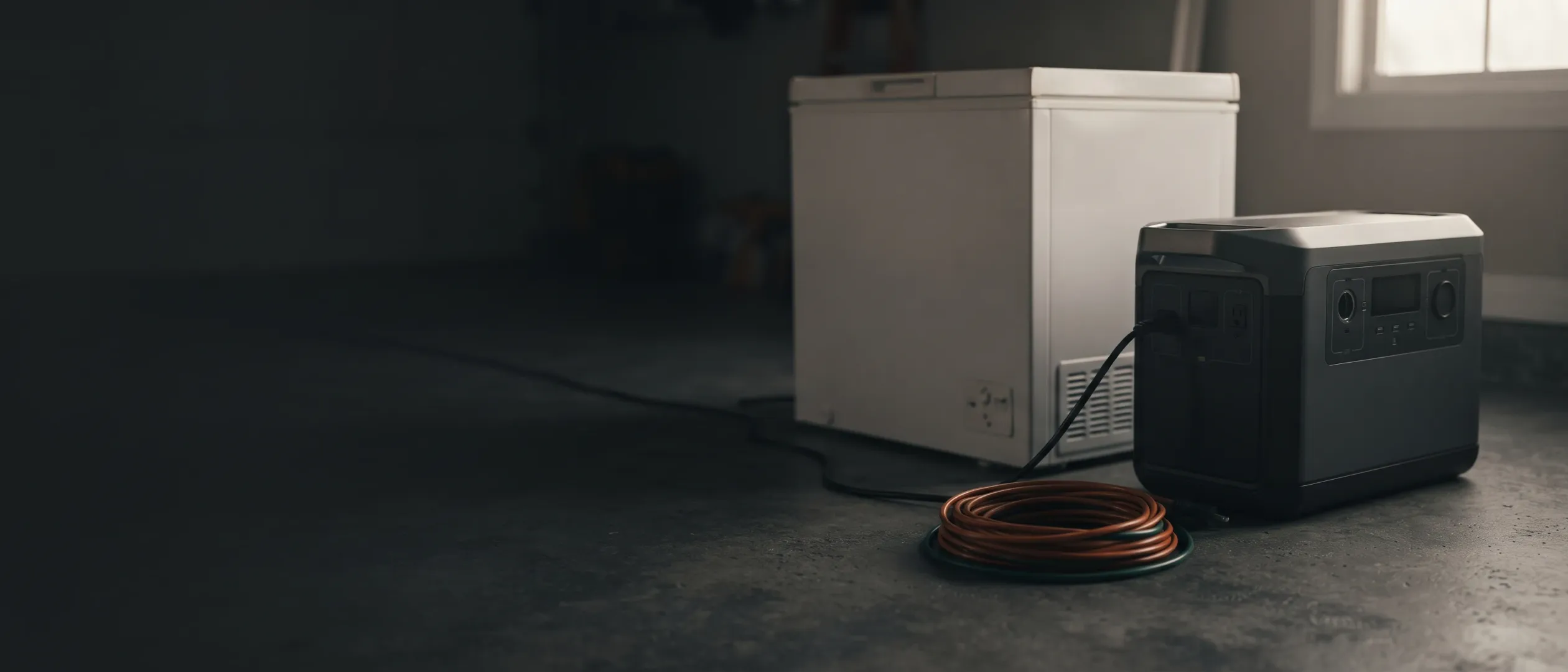
| Chest freezer | 40 W | About 18 hours | About 36 hours |
| LED lights (4 bulbs) | 40 W | About 18 hours | About 36 hours |
| Box fan | 50 W | About 15 hours | About 30 hours |
| 55-inch TV | 90 W | About 9 hours | About 18 hours |
| Laptop | 60 W | About 12.7 hours | About 25 hours |
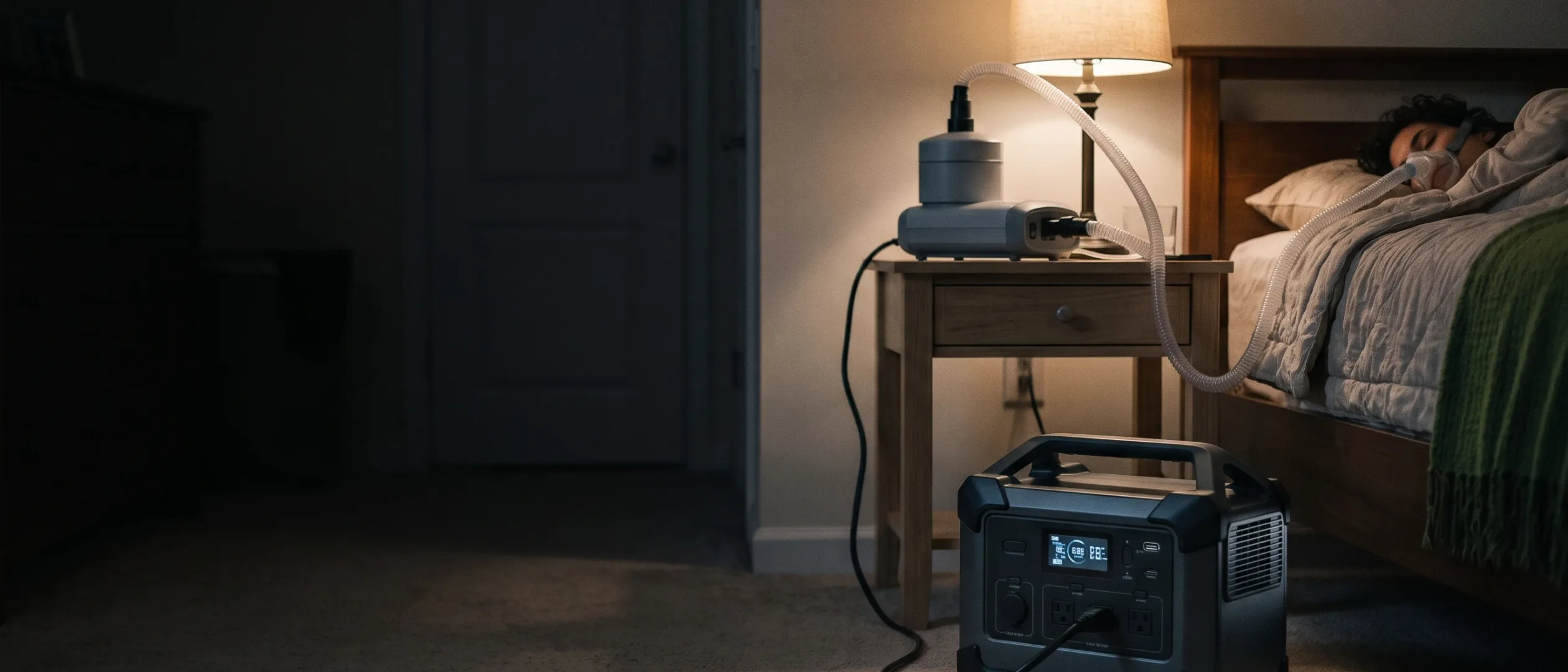
| CPAP, no humidifier (on DC) | 11 W | About 10 nights | About 21 nights |
| 12 V cooler (on DC) | 25 W | About 38 hours | About 75 hours |
| Microwave | 1,100 W | About 47 minutes | About 1.6 hours |
These are estimates for one appliance at a time, at 1,024 Wh and 2,048 Wh. AC loads include about 15% inverter loss and 10 W the station uses to keep its inverter on; DC loads lose about 8%. Cold, a reserve setting and appliances that cycle or surge all change the numbers. The fridge figure is the average US fridge-freezer (about 588 kWh a year); see how long a power station runs a fridge for efficient models, and how long it runs a CPAP for humidifier settings. Add your own devices in the runtime calculator; its presets use rounder typical draws, so its hours can differ slightly from this table.
Running several things at once shortens every figure: they share the same battery. A fridge, router and four LED lights together draw about 150 W from the battery, about 7 hours on 1 kWh and about 14 on 2 kWh.
What a small 300 Wh station can run in an outage
About 300 Wh keeps a router online on AC for about 12 hours or a CPAP going for about three nights, but runs a fridge for only about three hours.
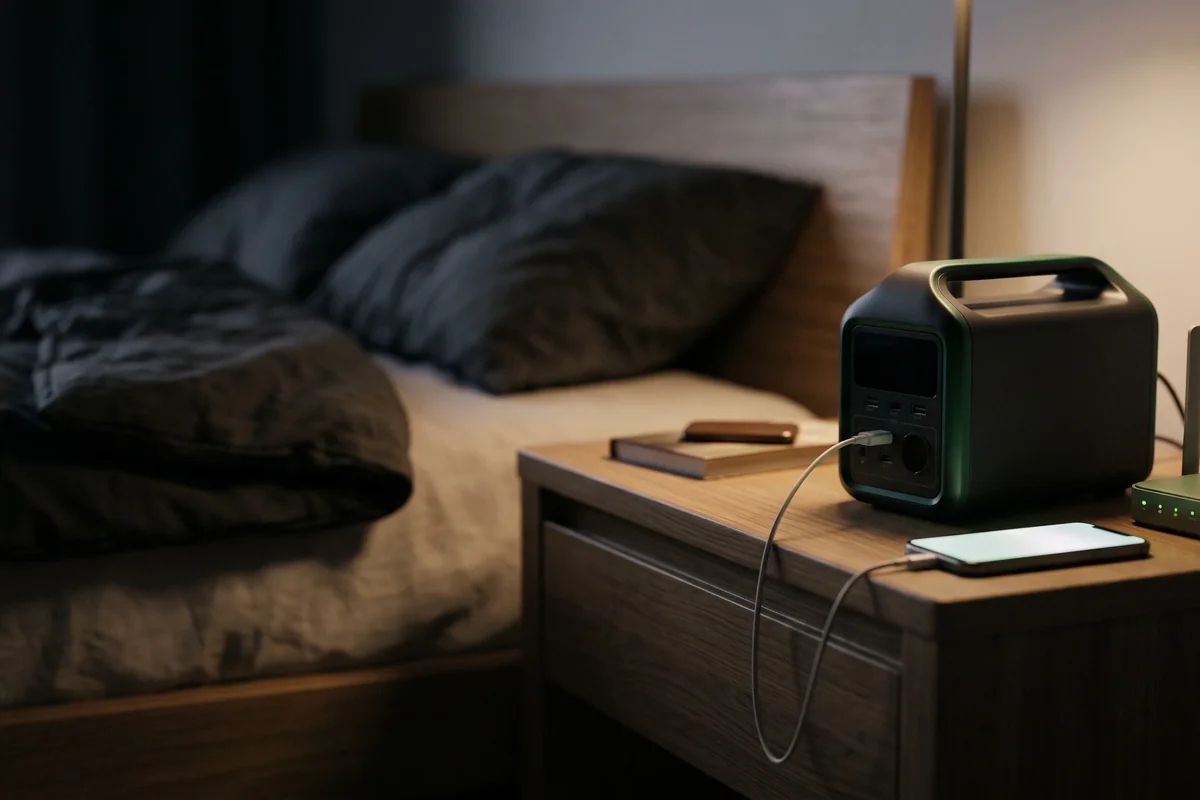
A small station is the right size for the things that keep you connected and comfortable for a night:
- Wi-Fi router: about 12 hours on AC, and about twice that from a USB-C or 12 V port if your router can take one.
- Phones: three phones charging at once (about 15 W) for about 17 hours on DC.
- CPAP without the humidifier: about three 8-hour nights on a 12 V DC cord.
- LED lights and a laptop: a few evenings of light, or about 3.6 hours of laptop work on AC.
- A fridge: only about 3 hours, enough to bridge a short outage, not a night.
Small stations top out at 300 to 600 W, so a microwave, kettle or coffee maker won't start. Our guide to the best small portable power stations compares the models in this range.
Outage plans by station size: one night, one day or several days
About 1 kWh covers essentials overnight, 2 kWh about a day, and longer outages need solar or a whole-home station.
Put loads in order before the power goes: the fridge and freezer first, then the internet, light and any medical device, then comfort. Three worked plans, using the runtime method above:
- One night (about 1 kWh): a fridge, router and four LED lights for about 7 hours, enough to get through an evening and night with the fridge closed. Recharge from the wall when power returns, or from a car or solar the next day.
- About a day (about 2 kWh): the same loads for about 14 hours, or the fridge and router alone for about 20. Run the lights only after dark and the day stretches further.
- Several days: a fridge, freezer, router, lights and some TV use about 4.3 kWh a day. (Fridge 67 W, freezer 40 W and router 12 W all day, four LED lights for 5 hours, a TV for 4, idle draw included.) A 5 kWh station such as the Anker SOLIX S5000 covers about 28 hours of that (the Explorer 5000 Plus about 23, as its 50 W standby draw adds about 1.2 kWh a day), so it needs solar to refill it: plan on about 75% of your panels' rated watts for 3 to 6 peak sun hours. See how to charge a power station with solar.
The cheapest energy is the energy you don't use: a fridge kept shut, lights off in empty rooms and devices charged in one batch all add hours.
What a power station can't run: heaters, central air and 240 V loads
Anything that heats draws 1,000 W or more and empties a 1 kWh battery in under an hour; 240 V loads need a whole-home station and a transfer switch.
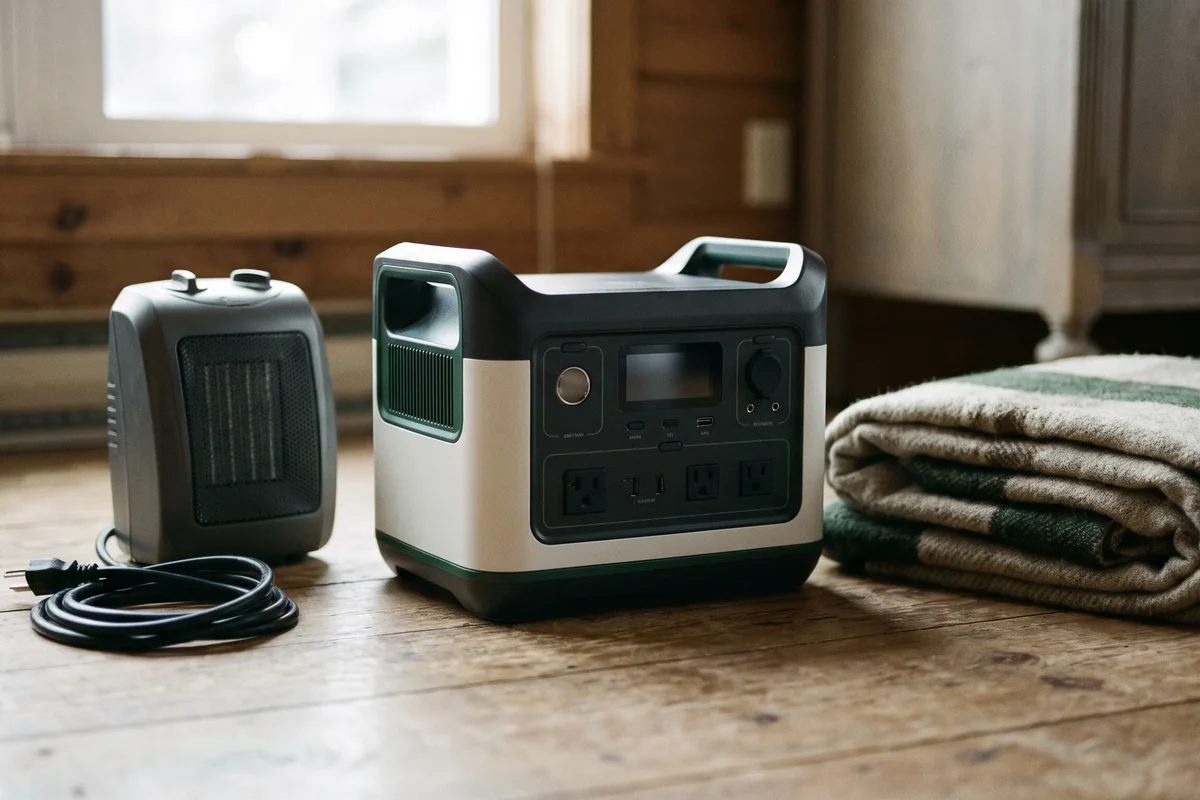
- Space heaters, kettles, hair dryers, toasters and electric skillets: most draw 1,000 W or more; check the label. A 1 kWh station with enough output can run one for well under an hour, which rarely makes sense in an outage. Some small stations stretch a little further for resistive loads such as heaters: EcoFlow's X-Boost on the River 3 Plus runs them up to 1,200 W, and Bluetti's power lifting lets the Elite 30 V2 reach 1,500 W momentarily.
- Central air, electric ranges and ovens, electric water heaters and clothes dryers: most run on 240 V circuits and draw far more than a station's battery can supply for long; check the nameplate for watts and voltage before planning around one.
- Well pumps and sump pumps: check the pump's label for voltage, running watts and starting watts. A 120 V pump within a station's output and surge can run; a 240 V well pump needs a 240 V station wired in through a transfer switch.
- Furnace blower: a gas furnace needs power for its blower and controls. It runs from a station only if wired in through a transfer switch or inlet; never plug a station into a wall outlet to feed a circuit.
Check each appliance's label for its watts and compare with the station's continuous and surge ratings before an outage, not during one. Our guide to starting watts vs running watts has a chart for common appliances.
Making a power station last longer in an outage
Running small devices from DC ports and switching the AC inverter off between uses can add hours to every charge.
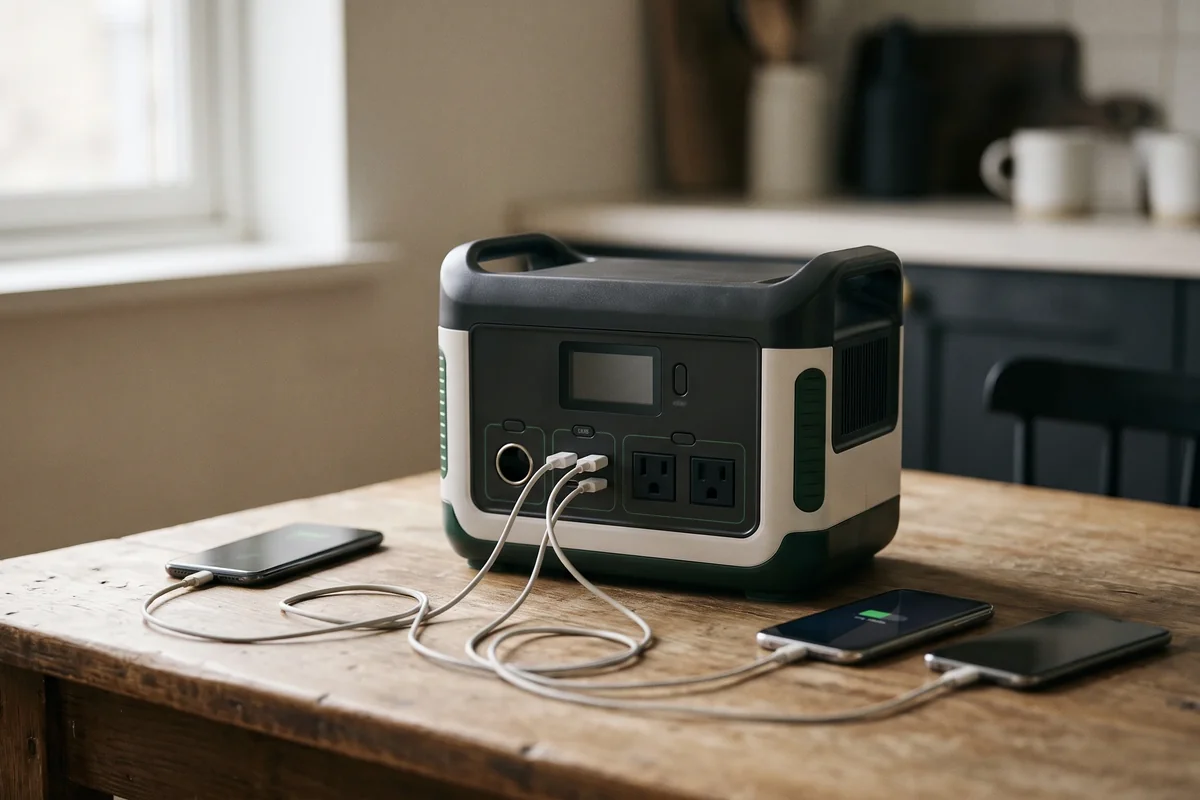
- Use DC and USB-C ports where you can. A router, phone, CPAP or 12 V cooler on DC skips the inverter's loss and its idle draw.
- Switch AC off when nothing needs it. An inverter left on uses about 10 W by itself, about 240 Wh a day: a quarter of a 1 kWh station.
- Keep the fridge and freezer shut. Every opening lets cold out and makes the compressor run longer.
- Charge in batches. Charge every phone and laptop at once, then switch the outlet off.
- Refill whenever you can. A car's 12 V outlet, solar panels or a few hours at a friend's outlet all count. If it won't take a charge, check why a portable power station isn't charging.
Using a power station safely during an outage
A power station makes no exhaust, so it can run indoors, but it must never feed the house through a wall outlet.
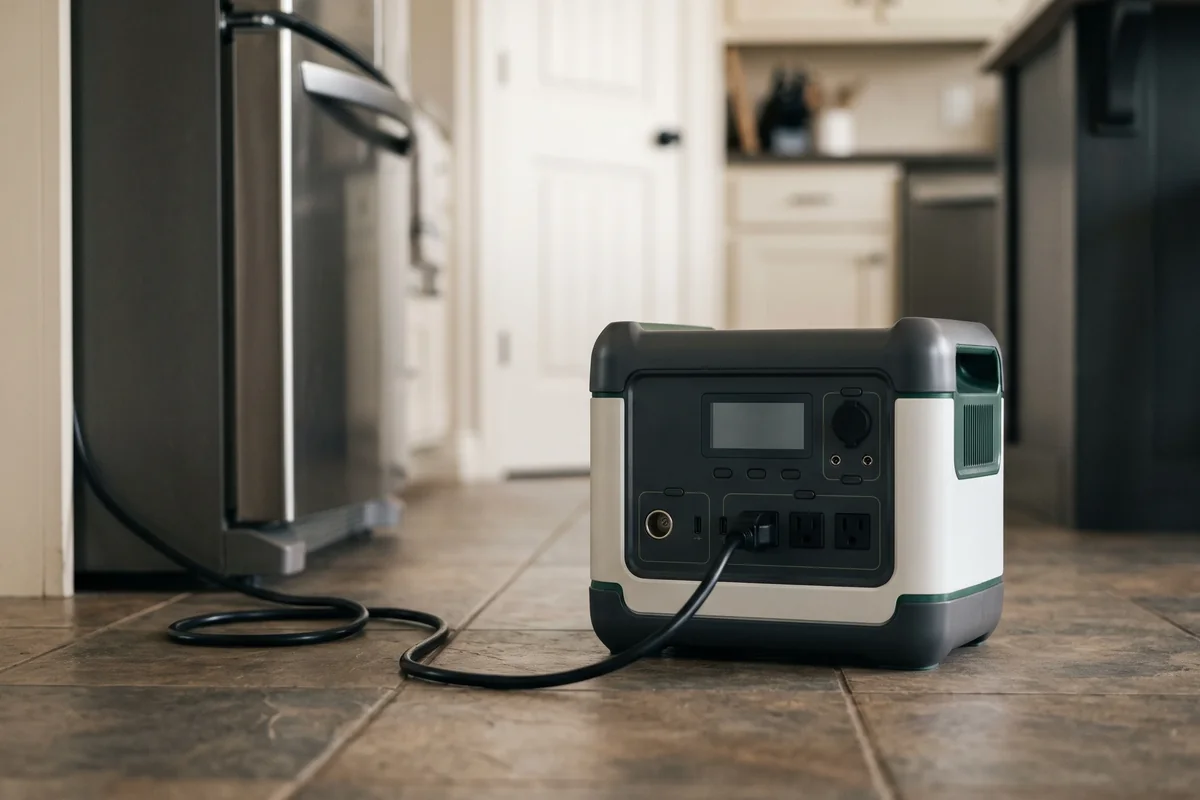
- Indoors is fine. Unlike a gas generator, a power station makes no carbon monoxide. Keep it on a hard, dry floor with its vents clear. See are portable power stations safe indoors.
- Never back-feed. Plugging a station into a wall outlet to power the house can energize the utility lines and endanger line workers. Home circuits need a transfer switch or inlet fitted by a licensed electrician; see transfer switches for portable power stations.
- Keep cords tidy and dry. Use the appliance's own cord or one rated for its load, out of walkways and away from water.
- Keep it charged before storm season. A station you top up every few months is ready when the forecast turns.
Which power station to get for outages
Most homes start with about 1 kWh; a day or more of essentials needs about 2 kWh.
For one-night outages, a 1 kWh station with a fast switchover covers the fridge, router and lights. For a day or more, look at about 2 kWh with room to add batteries. Our picks for each size are in the best portable power stations for home backup. For the full list of specs to compare, see our step-by-step buying guide.
FAQ
Fridges, heaters, sump pumps, 3,000 W stations and whole-house backup in an outage, answered from our runtime method.
What can you run off a portable power station?
Anything whose running watts fit under its continuous output and whose startup surge fits under its surge rating. In practice that means a fridge, freezer, router, lights, phones, laptops, a CPAP, fans and a TV; heating appliances only briefly.
Can a portable power station run a refrigerator during a power outage?
Yes. An average fridge (67 W over a day) runs about 11.5 hours on a 1 kWh station and about 23 hours on a 2 kWh station. The station's surge rating must cover the compressor's start.
Can a portable power station run a space heater?
Only briefly. A space heater typically draws 1,000 W or more, so even a station that can start it empties 1 kWh in under an hour. Warm clothing and blankets go further.
Can a portable power station run a sump pump?
A 120 V sump pump can run if its running and starting watts fit under the station's continuous and surge ratings. Check the pump's label; pumps cycle, so runtime depends on how often it switches on.
What are the downsides of using a power station in an outage?
It holds far less energy than a tank of fuel, it can't run heating or 240 V loads for long, and it needs recharging from the wall, a car or solar. In return it's silent and makes no fumes. See power station vs generator.
What can a Jackery power during a blackout?
It depends on the model's size, as with any brand. The Jackery HomePower 2000 Plus v2 (2,048 Wh, 2,400 W) runs an average fridge for about 23 hours; the Explorer 5000 Plus (5,040 Wh, 7,200 W at 120/240 V) can run home circuits through a transfer switch.
What will a 3,000 W power station run in an outage?
At the same time, anything that adds up to under 3,000 W running, with surges inside its surge rating: a fridge, freezer, router, lights and TV together use only a few hundred watts, leaving room for a 1,100 W microwave or a kettle in short bursts. Output isn't the limit at this size; capacity is. Stations with 3,000 W or more usually hold 2 kWh or more, such as the Bluetti Apex 300 (2,765 Wh, 3,840 W) or the EcoFlow DELTA Pro 3 (4,096 Wh, 4,000 W), so a 1,100 W microwave run nonstop would still empty the Apex 300 in about 2.1 hours by our estimate.
Can a portable power station run a whole house?
Not on its own, and not through a wall outlet. The largest whole-home stations, such as the EcoFlow DELTA Pro Ultra X (12,288 Wh, 12,000 W) or the Jackery Explorer 5000 Plus (5,040 Wh, 7,200 W), can power chosen home circuits, including some 240 V loads, once an electrician fits a transfer switch. Even then they run the essentials for a day or more, not central air and an electric range around the clock. Our picks are in the best whole-home battery backup guide.
How long will a power station last in a power outage?
It depends on what you run. On 1 kWh, about 11.5 hours for a fridge alone, about 7 for a fridge, router and lights, and about 42 for a router alone on AC.