 By
We may earn a commission if you buy through links on this page, at no extra cost to you. This never affects which products we recommend. How we make money.
On this page 8 sections
Our verdict · Goal Zero
A rugged 1.5 kWh station with a strong inverter, but heavy and not expandable
The 6th-generation Yeti 1500 gives about 47% more capacity than the usual 1 kWh station, a 2,000 W inverter and a water-resistant IPX4 case. It costs you weight (52.75 lb) and flexibility: no extra batteries, and solar tops out at 900 W. On our rating it scores 6.4, below the Delta 3 Plus and Anker C1000 Gen 2, the picks in its size class.
- Capacity
- 1,505 Wh
- AC output
- 2,000 W
- Wall charge
- 1.1 h
- Weight
- 52.75 lb
Best for
Overland, truck and cabin setups that want more than 1 kWh in one weather-resistant box, with a 2,000 W inverter, plenty of 12 V power and a 5-year warranty.
Skip it if
You'll carry it often, want to add batteries later, or need more than 900 W of solar.
- 1,505 Wh LiFePO4, 4,000 cycles to 80%
- 2,000 W continuous, 3,600 W surge
- Full wall charge in about 1.1 hours (Goal Zero)
- IPX4, 17 ports incl. a 405 W 12 V port
- 5-year warranty
- 52.75 lb, heavy for 1.5 kWh
- Not expandable
- 900 W solar across two inputs
- 120 V only; under 15 ms switchover
Rating breakdown (mid-size (1 to 1.5 kwh) class)
| Criterion | Weight | Score | Based on |
|---|---|---|---|
| Wall charging speed | 20% | 5.8 | 1,500 W input |
| AC output | 20% | 7.5 | 2,000 W |
| Solar input | 10% | 6.6 | 900 W |
| Backup switchover | 15% | 8.0 | <15 ms |
| Portability | 10% | 3.4 | 29 Wh/lb |
| Expandability | 10% | 0.0 | Not expandable |
| Battery life & warranty | 15% | 10.0 | 5-year warranty, 4,000+ cycles |
| Capacity (Wh) | 1505 |
|---|---|
| Battery chemistry | LiFePO4 |
| Rated cycle life | 4,000 cycles to 80% |
| AC output, continuous (W) | 2000 |
| AC output, surge (W) | 3600 |
| AC charge time | 1.1 h (0.8 h to 80%) |
| Max AC charging input (W) | 1500 |
| Max solar input (W) | 900 |
| Solar input voltage range | HPP 12.3–60 V, 20 A (600 W) + 8mm 13.2–30 V, 10 A (300 W) |
| UPS switchover (ms) | <15 |
| Weight (lb) | 52.75 |
| Expandable to (Wh) | Not expandable |
| Warranty (years) | 5 |
Goal Zero Yeti 1500 key specs
1,505 Wh and 2,000 W in a 52.75 lb, IPX4 unit
- 1,505 Wh capacity (LiFePO4): at the top of our Mid-size band (1 to 1.5 kWh). Rated 4,000 cycles to 80%. See LiFePO4 vs lithium-ion.
- 2,000 W continuous, 3,600 W surge across 4 AC outlets (120 V, pure sine wave). In bypass, when it's plugged in, the outlets can pass up to 1,752 W.
- 17 ports: four USB-C (140 W, 60 W, 30 W, 30 W; 260 W combined), two 18 W USB-A, a 405 W 12 V High Power Port, a 162 W auxiliary 12 V port and two 6mm 12 V ports.
- 52.75 lb and 15.7 × 11.4 × 12.02 in: heavier than most stations its size; it's built to sit in a truck, van or cabin rather than be carried far.
- IPX4 splash resistance and UL 2743 listing, by Goal Zero's figures.
- Not expandable: Goal Zero says it doesn't work with the Yeti Link expansion module or Yeti Tank batteries.
- 5-year warranty from Goal Zero, which says it backs all its power stations for five years; that matches the longest warranties in its size class (the Delta 3 Plus, C1000 Gen 2 and AC180 are also 5 years).
Not sure which number answers your question? Watts vs watt-hours explains it.
Charging speed: a full wall charge in about 1.1 hours
Goal Zero quotes 1.1 hours to full at 1,500 W, and 0.8 hours to 80%.
From the wall, the Yeti 1500 charges at up to 1,500 W. Goal Zero quotes about 1.1 hours to full and 0.8 hours to 80% at that rate. There's also a gentler 750 W mode, which Goal Zero puts at about 2.4 hours to full. That's quick for 1.5 kWh, though 1 kWh stations like the Delta 3 Plus fill faster.
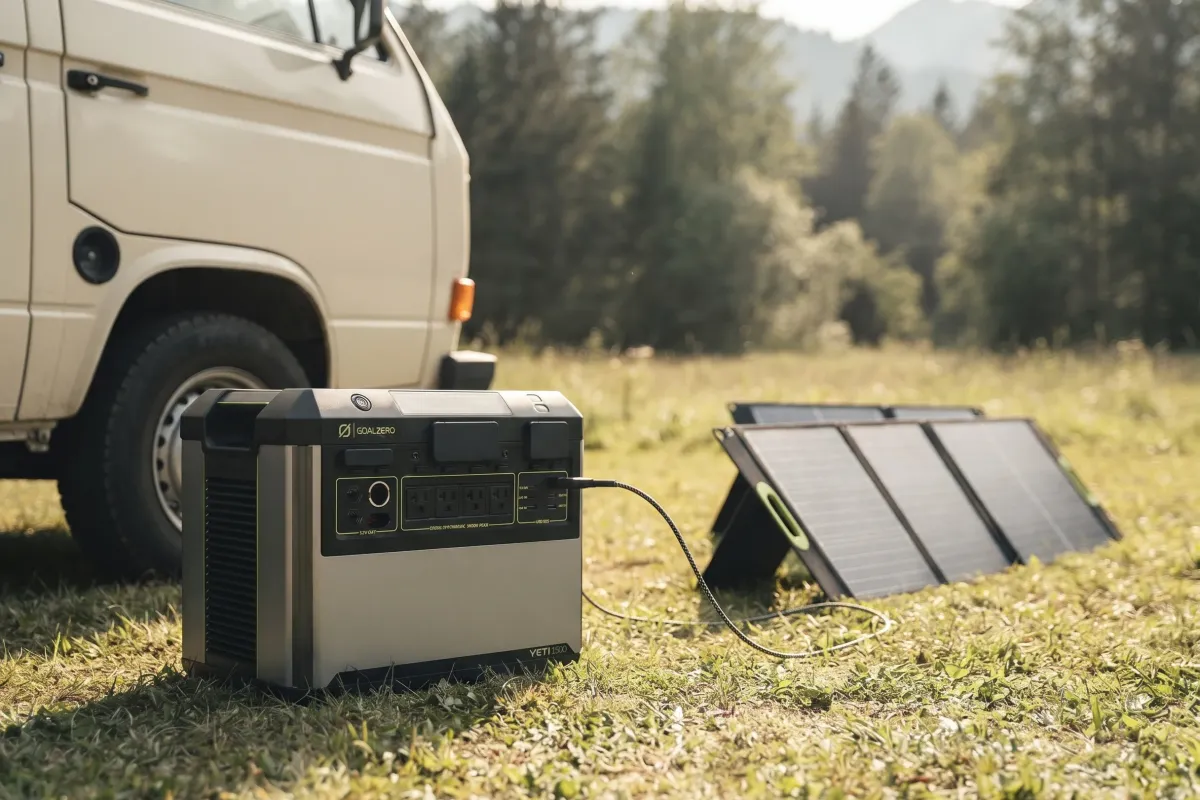
Solar comes in through two ports, which work at the same time:
| Input | Voltage | Current | Max |
|---|---|---|---|
| High Power Port (HPP) | 12.3–60 V | 20 A | 600 W |
| 8mm port | 13.2–30 V | 10 A | 300 W |
With the full 900 W of panels, Goal Zero quotes about 3 hours to full; by our estimate at 75% of the panels' rating it's about 2.2 hours in strong sun. The HPP's 60 V limit fits two typical portable panels in series; see series vs parallel solar panels, and how many panel watts you need.
From a vehicle's 12 V socket (10 A), Goal Zero puts a full charge at about 13.6 hours, so treat car charging as a top-up while you drive.
Charging has a temperature limit too: Goal Zero's product page gives 32–104°F for charging and −4–104°F for use. (Its FAQ blog lists a wider charging range; we use the product page.) Below freezing it won't take a charge, from the wall or the sun, until the battery warms up; see using a power station in cold weather.
Capacity and real runtime: a fridge for most of a day
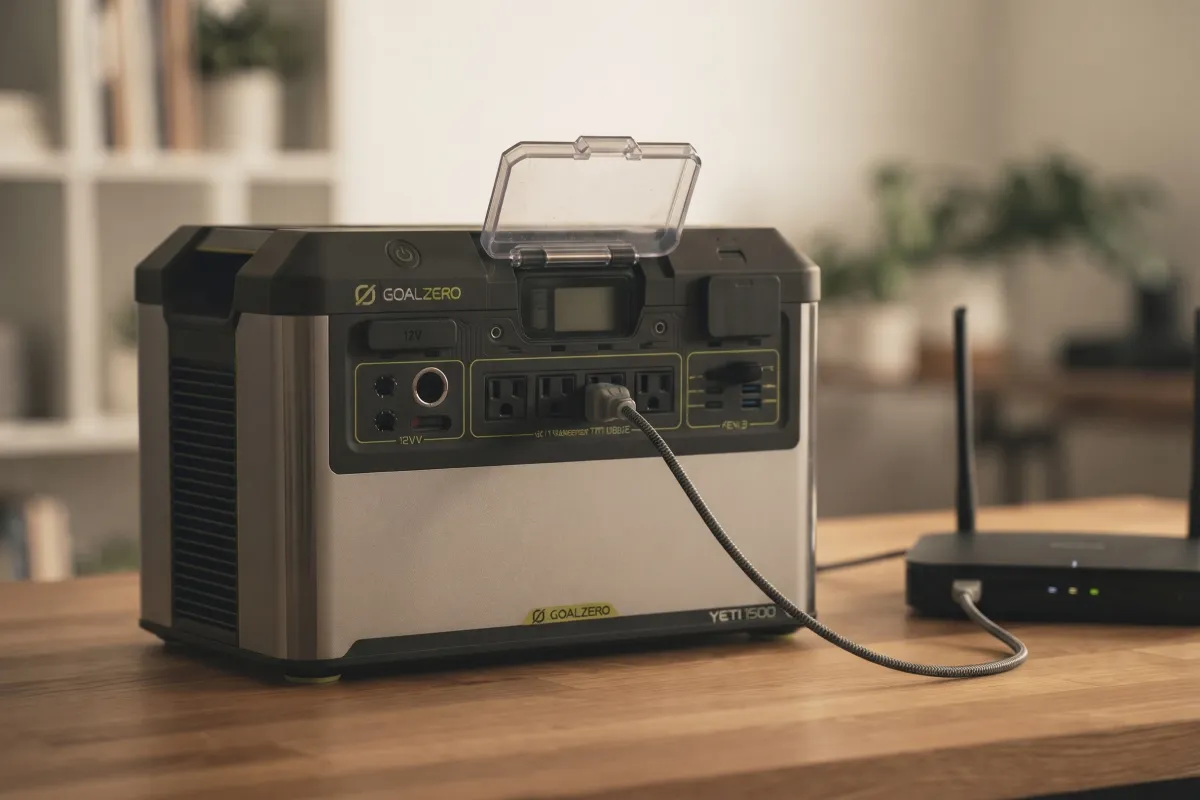
Its 1,505 Wh runs a fridge and router for about 15 hours by our estimate.
Estimated runtimes on the Yeti 1500
- CPAP, no humidifier, low-draw (11 W, DC)5.2 days
- CPAP with humidifier, typical (56 W, AC)20 h
- Fridge alone (67 W average)17 h
- Fridge + Wi-Fi router15 h
That's about 5 hours more than a 1,024 Wh station gives on the same loads by the same estimate, enough to carry a fridge from evening to the next afternoon. Because it can't take extra batteries, longer outages depend on solar or a wall top-up; the home backup guide covers stations that expand. Try your own devices in the runtime calculator.
Output: 2,000 W and a 405 W 12 V port
It runs one big kitchen appliance at a time, with 3,600 W of surge for motor starts.
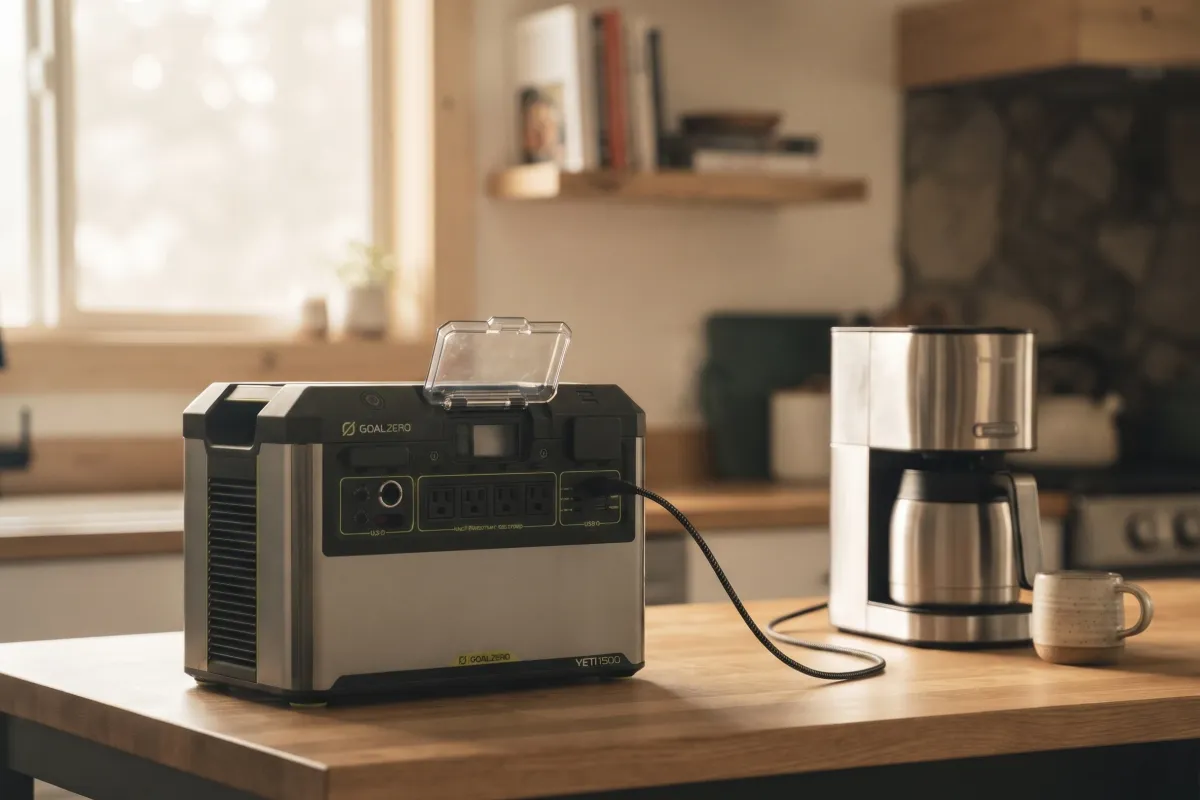
The 2,000 W inverter covers a microwave, a kettle, a coffee maker or a hair dryer, one at a time, across four AC outlets. The 3,600 W surge gives headroom to start a fridge or a small pump; the method is in surge watts vs running watts. It's 120 V only, so it can't run 240 V appliances or feed a 240 V transfer switch.
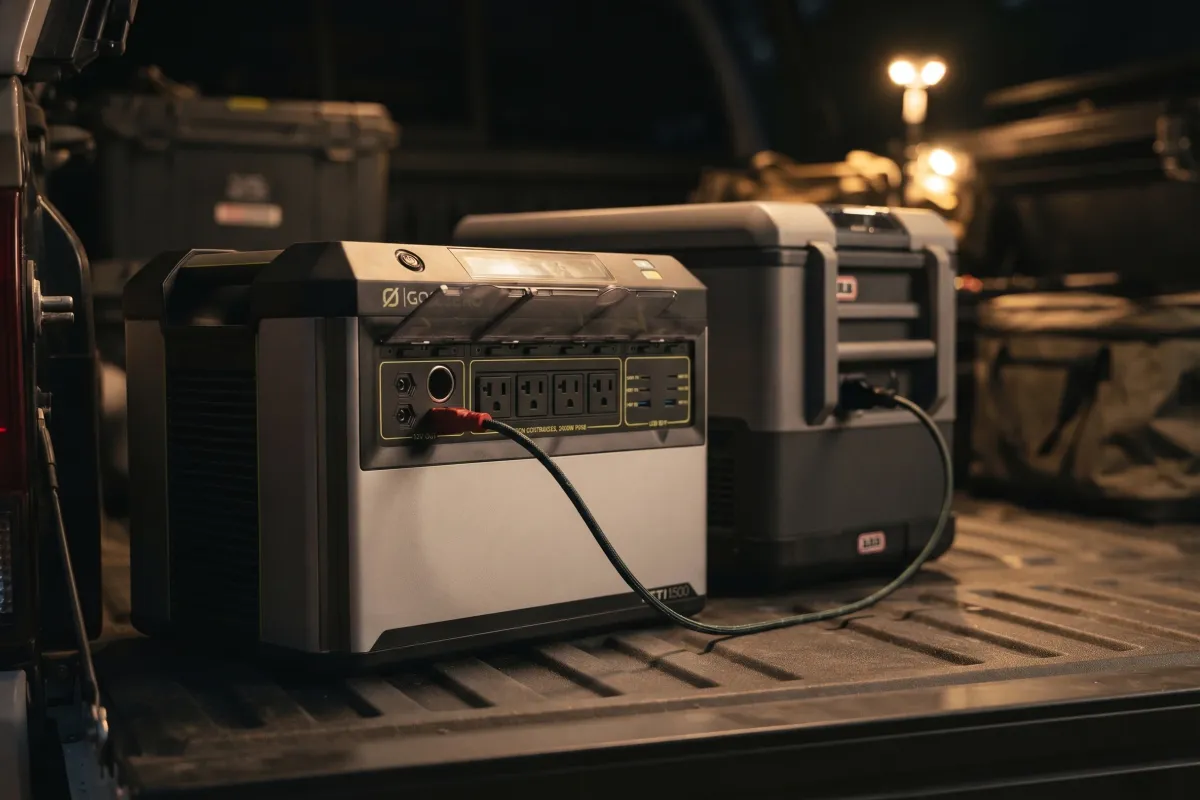
Where it stands out is 12 V power: the 405 W High Power Port (13.5 V, 30 A) can run a 12 V fridge, compressor or inflator directly, skipping the inverter's losses, plus a 162 W auxiliary port and two 6mm ports. And four USB-C ports, one of them 140 W, charge laptops without the AC adapter.
That 12 V route matters on a long trip. A 12 V electric cooler averaging about 25 W runs for roughly 55 hours on the Yeti 1500 from DC, by our estimate at 92% efficiency with the inverter off, compared with about 38 hours through the AC outlets once the inverter's 10 W idle draw is added. For overlanders running a fridge all weekend, the 12 V port is the reason to pick this station over one with only a 10 A car socket.
What it won't do: run two big appliances together, or anything over 2,000 W for long.
IPX4 means splash resistance: rain or spray from any direction for a short time. It isn't waterproof, so keep it out of standing water and under cover in a downpour, and keep the port covers closed when it's wet out. It's a battery station with no fumes, so it can run indoors where a generator can't; see are power stations safe indoors.
Backup (UPS) and app: switchover in under 15 ms
Fine for routers, modems and laptops; test a desktop PC before relying on it.
Goal Zero calls its backup mode Automatic Power Switching, with the switch from grid to battery in under 15 ms. That keeps routers, modems, lights and laptops running through a power cut; some desktop PCs need 10 ms or less, so test yours first. Our guide to using a power station as a UPS explains why the number matters.
The Goal Zero Power App connects over Bluetooth or Wi-Fi to show input and output, switch ports on and off and change charging settings from your phone.
How the Yeti 1500 compares
More battery than the 1 kWh class, but heavier and not expandable; only the Delta 3 Plus beats its 900 W solar.
| Spec | Goal Zero Yeti 1500 | EcoFlow Delta 3 Plus | Anker SOLIX C1000 Gen 2 | Jackery Explorer 1000 Plus |
|---|---|---|---|---|
| Capacity (Wh) | 1505 | 1024 | 1024 | 1264 |
| AC output, continuous (W) | 2000 | 1800 | 2000 | 2000 |
| AC charge time | 1.1 h (0.8 h to 80%) | 56 min | 49 min (UltraFast) | 1.7 h |
| Max solar input (W) | 900 | 1000 | 600 | 800 |
| Weight (lb) | 52.75 | 27.6 | 24.9 | 32 |
| Warranty (years) | 5 | 5 | 5 | 3 + 2 with registration |
| Price | Check price | Check price | Check price | Check price |
- EcoFlow Delta 3 Plus: less capacity (1,024 Wh) and 1,800 W output, but half the weight (27.6 lb), 1,000 W solar, a sub-10 ms switchover and expandable to 5 kWh. Our pick for most people.
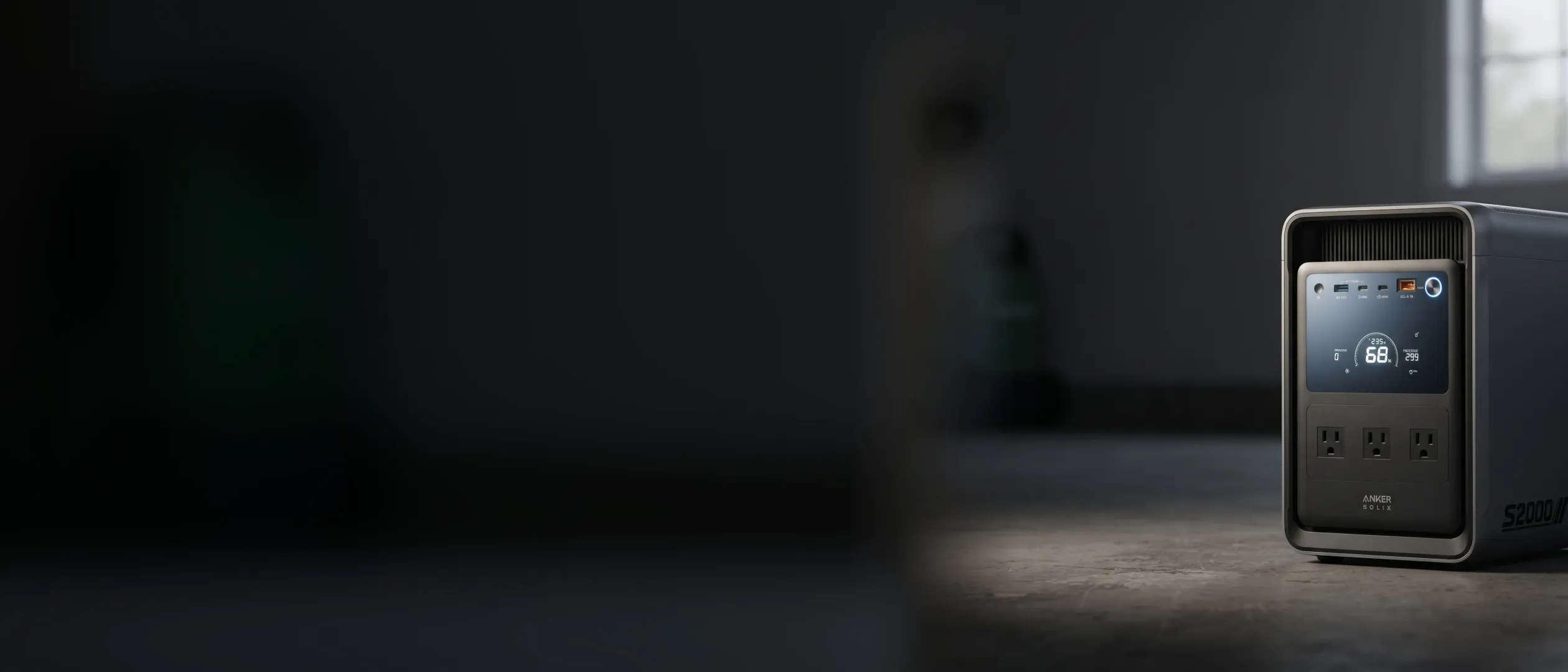
- Anker SOLIX C1000 Gen 2: the same 2,000 W output and a 10 ms switchover at 24.9 lb, with 1,024 Wh; also not expandable.
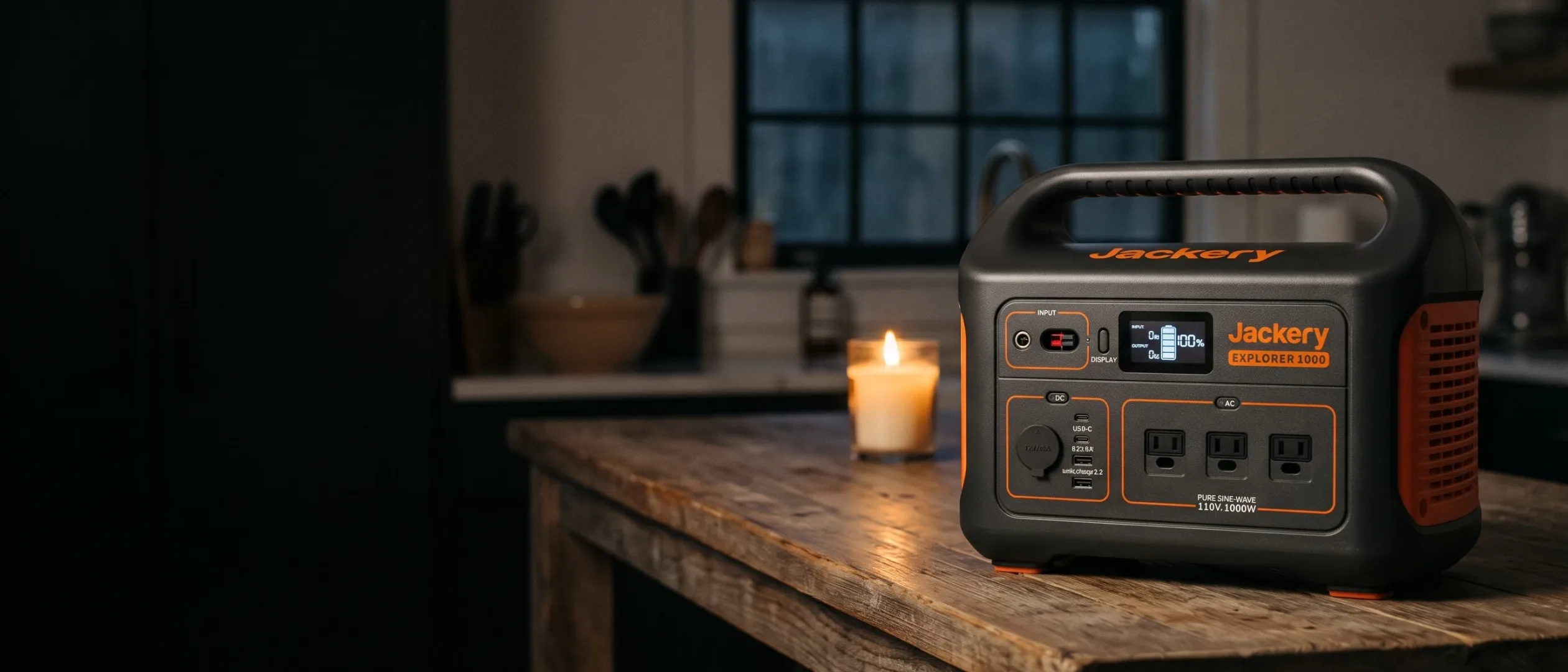
- Jackery Explorer 1000 Plus: 1,264 Wh, 2,000 W and 4,000 W surge at 32 lb, and expandable to 5 kWh with Jackery's older Battery Pack 1000 Plus.
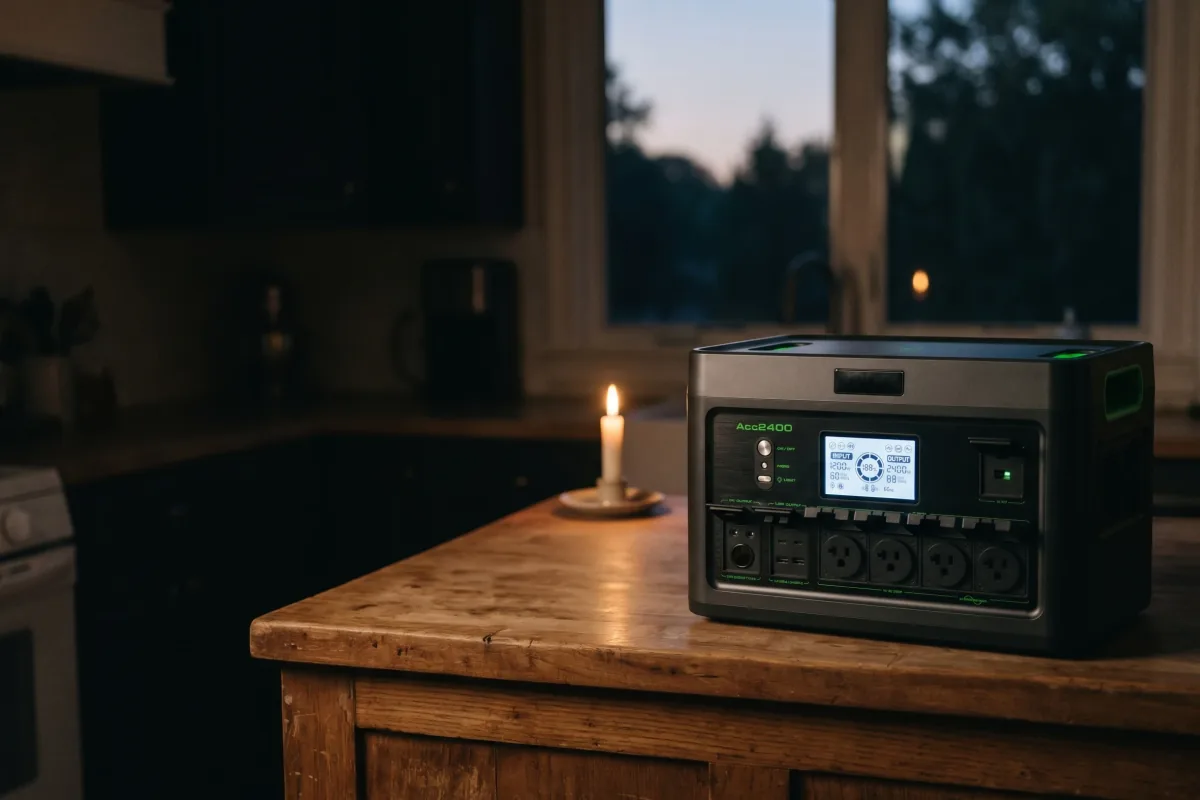
- GRECELL H2400: more capacity (1,843 Wh) and 2,400 W output, at a similar 55 lb, with a 10 ms switchover, but a 2-year warranty and not expandable.
The Yeti's edges are the 1.5 kWh in one box, the strong 12 V port, IPX4 and a 5-year warranty. Its rating of 6.4 sits below the Delta 3 Plus (8.9), C1000 Gen 2 (8.0) and Jackery 1000 Plus (6.8), and above the GRECELL H2400 (5.8), held back by no expansion, its weight for the capacity and wall charging that's slower per watt-hour.
Who should buy the Goal Zero Yeti 1500
Best for vehicle and cabin setups that need 1.5 kWh and a 405 W 12 V port in one IPX4 box.
Good fit: overlanding, truck and van setups that mostly stay put; cabins and job sites where 12 V tools and fridges matter; buyers who want more than 1 kWh in one weather-resistant unit with a 5-year warranty.
Is it worth it? Yes, if you want the most capacity in one rugged box and use 12 V gear; no, if you'd rather have a lighter station or room to add batteries, where the Delta 3 Plus is the better buy.
Look elsewhere if: you'll carry it often (the Delta 3 Plus is half the weight), want to grow capacity later, or charge mainly from solar and want more than 900 W. For more choices in this size, see the best portable power stations and, for camping, the best stations for camping.
FAQ
Yeti 1500 vs 1500X, Goal Zero vs Jackery, weight, lifespan, known problems and expansion
What's the difference between the Yeti 1500 and the Yeti 1500X?
The current 6th-generation Yeti 1500 replaces the older 1500X. By Goal Zero's own comparison it has a 2,000 W inverter, twice the AC outlets, LiFePO4 cells instead of NMC, and IPX4 water resistance. This review covers the new model (Goal Zero SKU 37300).
Is Goal Zero better than Jackery?
Neither is better overall; it depends on the model. The Yeti 1500 has more capacity and a stronger 12 V port than Jackery's Explorer 1000 Plus, but the Jackery is about 21 lb lighter, expands with Jackery's older Battery Pack 1000 Plus and has a higher surge rating. The Yeti carries a 5-year warranty; the Jackery 3 years plus 2 with registration.
How long does a Goal Zero Yeti 1500 last?
Goal Zero rates the battery for 4,000 cycles to 80% of its capacity. 4,000 cycles is over 75 years of weekly use, so age and storage, not cycles, will end its life first. See how long portable power stations last.
How much does the Yeti 1500 weigh?
The current Yeti 1500 weighs 52.75 lb, by Goal Zero's figure. (If you're looking at the older Yeti 1500X, see the 1500 vs 1500X answer above; this review covers the new model.) That's heavy for 1.5 kWh; the 1 to 1.3 kWh stations we review weigh about 24 to 35 lb.
Can you add batteries to the Yeti 1500?
No. Goal Zero says it isn't compatible with the Yeti Link expansion module or Yeti Tank batteries. If you'll want more capacity later, pick an expandable station.
Can the Yeti 1500 run a microwave?
Yes, one at a time: a typical microwave draws 600 to 1,200 W, well inside the 2,000 W inverter. Running it alongside a kettle or coffee maker would go over.
Is the Yeti 1500 waterproof?
No. It's rated IPX4, splash resistant, by Goal Zero. Keep it under cover in heavy rain and out of puddles.
Is the Yeti 1500 a solar generator?
It becomes one when you pair it with solar panels: "solar generator" is a marketing name for a power station sold with panels. See solar generator vs portable power station.
Can the Yeti 1500 power a home through a transfer switch?
Only 120 V circuits. It has no 240 V output and no expansion, so it suits a few essential circuits for hours rather than whole-home backup; see whole-home battery backup.
Does the Yeti 1500 have known problems?
Nothing the CPSC lists: there's no recall on any Yeti 1500. The practical limits are the ones in its specs: it won't charge below 32°F, it can't take extra batteries, it's heavy at 52.75 lb, and its under-15 ms switchover may be too slow for some desktop PCs. Complaints about the older 1500X don't carry over automatically: the new model changed the cells from NMC to LiFePO4 and the inverter to 2,000 W.
Are Goal Zero power stations good?
The new Yeti 1500 uses LiFePO4 cells, and Goal Zero gives a 5-year warranty on all its power stations. On our rating the Yeti 1500 lands mid-pack for its size: strong on longevity, backup and output, weak on weight and expansion.
Has the Yeti 1500 been recalled?
The CPSC lists no recall for any Yeti 1500 as of this review. Goal Zero has recalled other products (the Yeti 3000X, and Yeti Link modules with EC8 cables); check the recall list for updates.
What solar panels work with the Yeti 1500?
Any panels inside its two input limits: up to 600 W at 12.3–60 V and 20 A on the High Power Port, and up to 300 W at 13.2–30 V and 10 A on the 8mm port. Panels with other plugs need an adapter to match.